
REVIEW · TOURS
9 days Ancient Town Tour
Dali to Lijiang, a tea-road time machine. I love how this trip strings together English-speaking guidance with a hands-on route through Bai, Hui, Taoist, and Tibetan stops across Yunnan’s famous old trade road. I also like that most key costs are already handled, so you spend your time walking ancient lanes and scenic sights instead of budgeting for every admission. One real consideration: it is a bit of a marathon, with lots of driving days, so plan for long stretches in the car and a moderate walking pace.
You’ll get a smooth start and end, with pickup arranged from the airport or railway and daily transfers in an air-conditioned vehicle. In the feedback I paid attention to, guides named Nancy, Yanzi, and Cindy, plus drivers like Mr. Herr and Master Lee, were praised for clear explanations and practical restaurant picks. If you’re sensitive to smoke, also mention your preference at the start, since one group flagged a driver smoking concern.
In This Review
- Key highlights to plan around
- Entering Dali Old Town after airport pickup and hotel check-in
- Xizhou Morning Market and Bai house streets for a calmer local rhythm
- Hui tea and mosque stop at Donglianhua Village, then Weishan’s old-town wood lanes
- Weibaoshan Taoist Mountain and Nuodeng’s Millennium Bai village feel very different
- Shaxi Ancient Town, bridges on the road, and a day of walking by the river
- Shibaoshan Caves and cliffside Baoxiang Temple, then countryside rides from Shaxi
- Tiger Leaping Gorge to Shangri-La, canyon views followed by temple calm
- Songzanlin market and Ganden Sumtseling Monastery, then the ride into Lijiang
- Lijiang Ancient Town before crowds, Black Dragon Pool, then Baisha, Yuhu, and Shuhe
- Food, hotels, and the value math behind $1,820 for 9 days
- Getting through the driving days: what moderate fitness really means
- Should you book this Ancient Town Tour with Ciel Yunnan?
- FAQ
- How long is the Ancient Town Tour?
- Where does the tour start and where does it end?
- Is airport or railway pickup included?
- Is accommodation included in the price?
- Are meals included?
- Are admission tickets included?
- Is an English-speaking guide included?
- What is not included in the tour price?
- Is this a private tour?
- What fitness level do I need?
- If I want the higher altitude at Jade Dragon Snow Mountain, what should I do?
Key highlights to plan around
- Dali Old Town on Day 1, with entry included and an easy first evening after your arrival transfer
- Xizhou Morning Market in the morning, plus Bai folk houses for a slower, more local feel
- Weibaoshan Taoist temples, including the Ming and Qing era temple cluster on the Taoist mountain
- Tiger Leaping Gorge to Shangri-La, a big scenery day followed by a calm old-town stroll and a huge prayer wheel
- Songzanlin Market and Ganden Sumtseling Monastery, including the Little Potala style monastery visit
- Lijiang Ancient Town before the crowds, plus Black Dragon Pool and Baisha and Shuhe village time
Entering Dali Old Town after airport pickup and hotel check-in

Your tour day begins with a pickup from the airport or railway station. A guide holds a nameplate, and you head to your hotel by private car. The hotel check-in time is after 14:00, which matters because it shapes how you rest before you start sightseeing. If your arrival lands earlier in the day, you’ll want to pack light snacks and water so you are not stressed waiting.
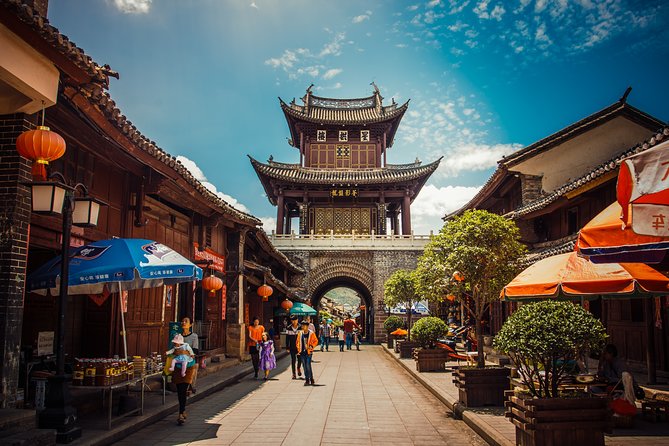
Once you’re settled, you go straight to Dali Old Town. This is not just a pretty postcard area. You’re walking in a region tied to the Nanzhao imperial capital, and that helps the streets feel more than decorative. Expect a relaxed start, since Day 1 is built for getting oriented: you arrive, drop bags, then ease into the old-town layout.
Practical tip: wear shoes you can walk in for longer stretches than you think. Old towns look compact on a map, but once you start turning corners, time adds up fast.
Xizhou Morning Market and Bai house streets for a calmer local rhythm
The next morning is a 09:00 hotel pickup and a drive to Xizhou Morning Market. The timing is the point. Early market hours tend to feel more like everyday life and less like performance for visitors. You’ll have time to see the market and then shift to the Bai cultural area.
Xizhou is famous for older, well-preserved folk houses of the Bai people. That means you’re not only looking at shops, you’re seeing traditional home-style architecture and street rhythms that shaped daily life. It’s one of those stops that quietly works, because the best moments often happen between the biggest sights, when you pause and watch how people move through the lanes.
This is also a good day to do your pacing. If you’re the type who likes photos, go early and take your time. If you’re the type who gets tired fast in markets, keep your shopping light and focus on the houses and street layout.
Hui tea and mosque stop at Donglianhua Village, then Weishan’s old-town wood lanes
After Xizhou, the route continues toward Weishan, with a standout cultural break at Donglianhua Village, a Hui minority settlement. The stop includes a visit to a Tea and Horse Museum and a local mosque. That combination is key. It reminds you that the Tea Horse Road was not only trade for goods, it was also an exchange of food culture, travel routes, and community life.
The museum time gives you context, and the mosque visit gives you a real-world contrast: the village is not staged for one type of visitor. You get a sense of how different traditions sit side by side in daily routine.
Then you reach Weishan Ancient City. Here the itinerary gives you time to wander: wooden houses, small stalls, and a museum with unique artifacts. This is a good contrast to Dali Old Town. Weishan tends to feel more intimate, with more room for casual browsing. It’s also a slower style of sightseeing day, which you’ll appreciate before the later driving stretches.
Drawback to keep in mind: the days keep moving, so treat your time in places like Weishan as a walk first, photo second. If you try to do everything like a checklist, you’ll feel rushed.
Weibaoshan Taoist Mountain and Nuodeng’s Millennium Bai village feel very different
Day 3 starts with the drive to Weibaoshan Mountain and the Taoist temples there. This is one of the most visually specific days in the whole trip. Weibaoshan is one of China’s famous Taoist mountains, and the site includes 22 Taoist temples built during the Ming and Qing dynasties. That’s a big deal because you’re not just seeing one main hall, you’re seeing clusters of temple spaces and architecture that reflect different eras.
This kind of stop rewards patience. It’s not a fast in-and-out. You’ll want time to notice roof lines, carvings, and the way each temple area feels separate even though they’re part of a single mountain complex.
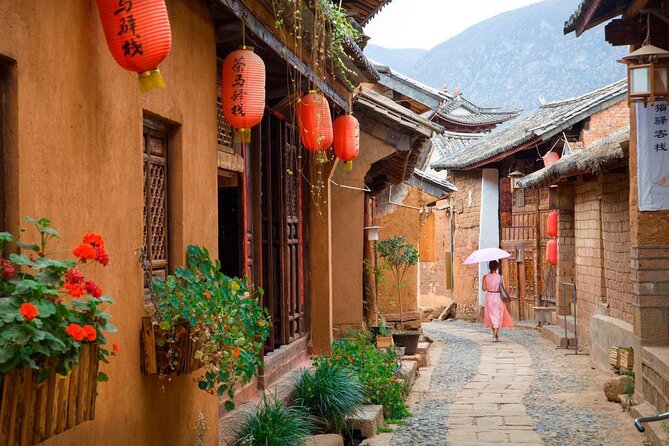
After that, you ride to Nuodengzhen, often called a Millennium Bai Village. It’s set in a mountainous area, and that isolation helps it feel like a real place rather than a set. The tour provides time to wander and admire the ancient buildings and cultural relics from the Ming and Qing dynasties.
A helpful way to experience Nuodeng: slow your pace. You’ll understand the village better by watching how the streets shape movement. You get a better feel for what stays and what changes.
Shaxi Ancient Town, bridges on the road, and a day of walking by the river
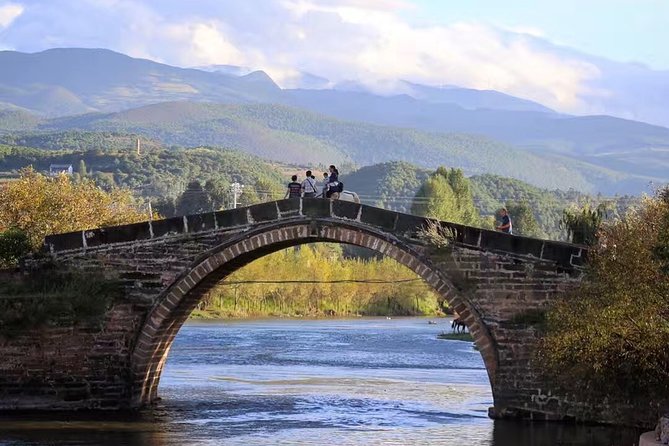
From Nuodeng, you head to Shaxi, a longer transfer day with a drive of about 4 to 5 hours. The route includes meeting ancient bridges along the way. Those bridges are not random roadside filler. They’re practical clues to how people and goods moved through the valleys.
When you arrive in Shaxi, you get a couple hours to explore the old town, the Shaxi River, and sites like Xingjiao Temple. There is also mention of a stage area in the town, which signals that Shaxi isn’t just architecture, it has spaces for public gatherings.
Shaxi works well if you like “one good loop” sightseeing. Instead of sprinting between far stops, you can walk near the river, check out the temple, then circle back through the old streets at a comfortable pace.
If you’re visiting during warm months, plan for sun and long walking time. Even if you are not climbing, old towns and riverside areas can still feel exposed.
Shibaoshan Caves and cliffside Baoxiang Temple, then countryside rides from Shaxi
The morning in Shibaoshan is built around a walk between Shibaoshan Caves and Baoxiang Temple, a cliffside temple with colorful Buddha statues kept inside. This is a strong “wow” combination because the setting and the subject matter both do the heavy lifting. The cliff placement makes the temple feel dramatic, and the interior statues add detail that you can look at longer than a quick glance.
After, there’s time for a hike between Shibaoshan Caves and Shaden. The exact time and difficulty aren’t spelled out, but the trip does ask for moderate physical fitness. Pack accordingly: you want shoes with grip, and a small day bag helps so you do not have to hold everything in your hands.
In the afternoon, you return to the Shaxi area and get countryside exploration options, including bike or horseback riding. The tour frames it as a chance to see the surroundings beyond the town core. This part is one of the better “change of pace” moments because you’re not stuck inside a single site.
Consideration: if you do not ride horses, you’ll still want to plan your biking effort. Even casual bike time can feel strenuous depending on road conditions and your comfort level.
Tiger Leaping Gorge to Shangri-La, canyon views followed by temple calm
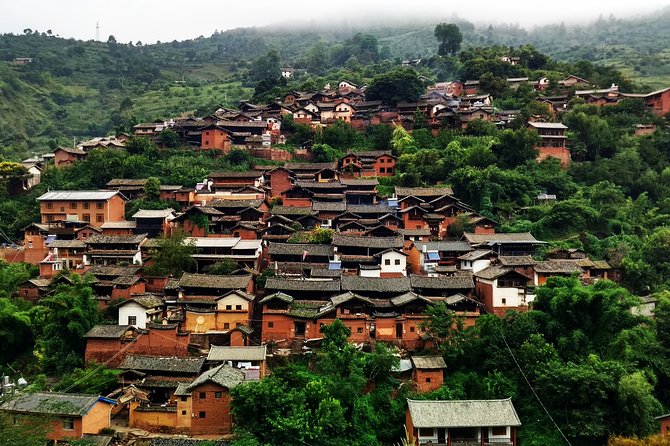
Day 6 is a classic Yunnan highlight day. You drive to Tiger Leaping Gorge (about 2 hours 30 minutes), then visit the canyon scenic area along the Jinsha River. This is the trip’s biggest scenery push on the calendar. Even when you keep expectations practical, Tiger Leaping Gorge is dramatic enough that it tends to reset your mood for the rest of the day.
Afterward, you continue to Shangri-La (about 2 hours 30 minutes). Once you arrive, you stroll through Shangri-La Old Town and visit Guishan Temple, known for a massive prayer wheel. That temple stop gives you a different tempo than the canyon views. It’s quieter, more local-feeling, and it lets you process what you just saw without nonstop movement.
Practical tip: this is a day where hydration matters. You’ll be traveling, you’ll be outside, and you’ll likely do more walking than you think, especially once you find your preferred viewpoint spots.
Songzanlin market and Ganden Sumtseling Monastery, then the ride into Lijiang
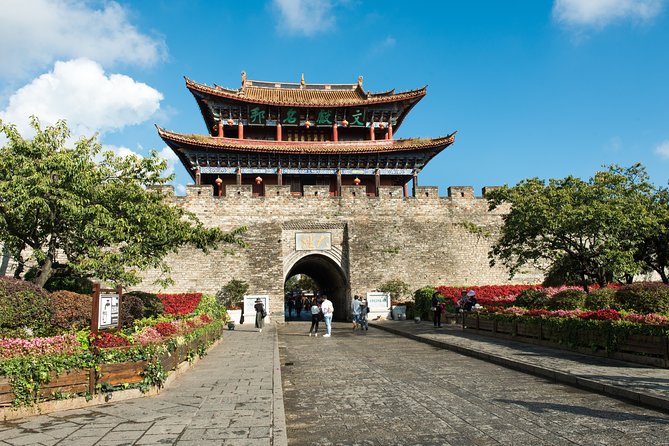
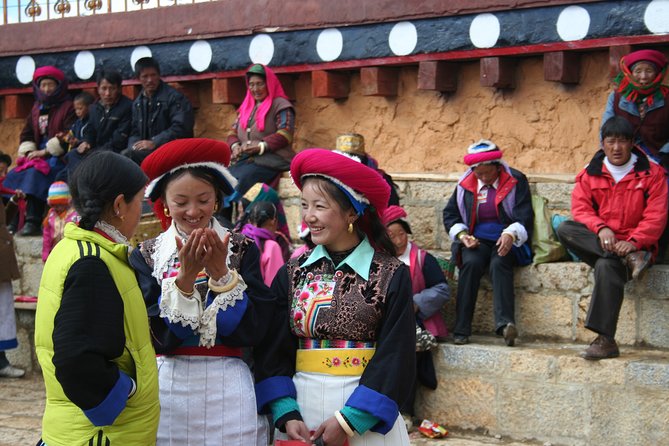
The morning pick-up brings you to a local Tibetan market around the Songzanlin Scenic Area. Then you visit Ganden Sumtseling Monastery, described as the largest Tibetan monastery in Yunnan and nicknamed Little Potala. That nickname is useful because it sets an expectation: you’re seeing a grand, monumental monastery complex rather than a small chapel.
This stop is included with admission, and it pairs well with the market visit because it connects culture to the everyday exchange of goods. Market time helps you understand what people value and how they live, and the monastery visit gives you the larger spiritual framework.
Then you continue to Lijiang, about a 4 to 5 hour transfer. This is also why the itinerary works for many people: you get a full cultural morning, then you shift into city mode.
One thing to watch: after a monastery and market, you’ll likely still want a comfortable evening. Make sure your hotel in Lijiang is where you can rest after the long drive.
Lijiang Ancient Town before crowds, Black Dragon Pool, then Baisha, Yuhu, and Shuhe
Lijiang is where the tour turns into “smart pacing.” You start with Lijiang Ancient Town early enough that you can explore before the busiest crowds build. This is one of the most practical choices in the whole program. Lijiang feels more human when you can walk without bumping into shoulder-to-shoulder traffic.
Then you visit Black Dragon Pool for the scenery and watch or join local square dancing. That’s a subtle but important cultural moment because it shifts the experience from sightseeing mode into everyday local life.
Later, the tour includes time in Baisha Village, including Lijiang Mural. Then you go to Jade Lake, also called Yuhu Village, for views over Jade Dragon Snow Mountain. From there, you also visit Naxi Baisha village and Shuhe village.
About the altitude: if you plan to go to higher altitude areas connected with Jade Dragon Snow Mountain, tell the tour team in advance so they can arrange the plan ahead of time. That request helps you avoid being stuck with a last-minute route that does not match what you want to do.
What I like about this day: it gives you a mix of architecture, a performance-like local activity, and then a nature view. You’re not trapped in one type of site.
Food, hotels, and the value math behind $1,820 for 9 days
This price, $1,820 for around 9 days, looks like a “package deal” number because it is. The real question is what you get that’s hard to assemble yourself. Here, you get an air-conditioned vehicle, an English-speaking guide, bottled water, accommodations, and arranged meals. Lunch is included 7 times, dinner 3 times, and breakfast 8 times.
You also get admission costs handled for some key attractions. For example, Dali Old Town includes an admission ticket, Donglianhua Village includes an admission ticket, and Weibaoshan Mountain and Shibaoshan caves and Baoxiang Temple also include admissions.
Value improves when you consider how many long transfers the route includes. Between Dali, Weishan, Nuodeng, Shaxi, Tiger Leaping Gorge, Shangri-La, and Lijiang, you’re paying for time and logistics, not just entry tickets. For many people, that is what turns a stressful trip into a calmer one.
From the feedback I focused on, a big strength is that restaurant picks and hotel choices were described as high quality and organized. Guides like Nancy and teams including Cindy, plus drivers such as Mr. Herr and Master Lee, were praised for professional handling and helping people eat well without wasting time searching.
A balanced caution: since meals and sightseeing time are scheduled, you’ll get less total freedom than a solo trip. If you love spontaneous detours, plan a little buffer time in the evenings.
Getting through the driving days: what moderate fitness really means
This is where you should be honest with yourself before you book. The tour does include time to wander, but it also has many long car legs. Examples based on the route timing include Dali to Weishan about 2 hours, Weishan to Nuodeng about 4 hours, Nuodeng to Shaxi about 4 to 5 hours, and Shaxi to Tiger Leaping Gorge about 2 hours 30 minutes.
The tour also states moderate physical fitness is recommended. That usually means you can handle steady walking, stairs or uneven surfaces in older towns, and some hiking time like the Shibaoshan caves to Shaden walk.
Practical approach:
- Bring comfortable walking shoes and a lightweight layer for temple interiors.
- Use breaks strategically. When you stop, stand up fully and stretch.
- If you have knee or stamina concerns, tell the guide early so they can adapt your pace.
Also consider air quality and smoke exposure if that bothers you. One group mentioned driver smoking as a concern, so it’s fair to set expectations up front.
Should you book this Ancient Town Tour with Ciel Yunnan?
I’d recommend this tour if you want a well-paced cultural route through Dali, Weishan, Nuodeng, Shaxi, Tiger Leaping Gorge, Shangri-La, and Lijiang, without having to plan each transfer or sort out most admissions yourself. It’s especially a good fit if you like ancient towns plus a few bigger “headline” sites, and you appreciate having an English-speaking guide keep context flowing.
Book it if:
- you want meals, accommodation, and major sights handled
- you prefer private group movement with an air-conditioned vehicle
- you want early Lijiang and Xizhou timing so you can walk before crowds
Skip it, or adjust expectations, if:
- you do not like long driving days
- you expect lots of free time with no schedule at all
- you need frequent rest breaks and your walking tolerance is low
My final advice: when you book, tell them your comfort level for long days in the car and what you want most from Jade Dragon Snow Mountain. That one conversation can turn the “view” into the experience you actually hoped for.
FAQ
How long is the Ancient Town Tour?
It is approximately 9 days.
Where does the tour start and where does it end?
It starts in Dali, with pickup arranged from the airport or railway station. It ends with pickup from your hotel in Lijiang to the airport or railway station for departure.
Is airport or railway pickup included?
Yes. On Day 1, a guide picks you up at the airport or railway station and transfers you to your hotel by private car.
Is accommodation included in the price?
Yes. Accommodation is included.
Are meals included?
Yes. The tour includes breakfast (8), lunch (7), and dinner (3), plus bottled water.
Are admission tickets included?
Some attractions have admission tickets included, while others are listed as free. For example, Day 1 Dali Old Town has an admission ticket included, while Xizhou Morning Market is listed as free.
Is an English-speaking guide included?
Yes. An English-speaking guide is included.
What is not included in the tour price?
Tips for the driver and guide, personal travel insurance, flight tickets, Chinese visa fee, and personal expenses are not included.
Is this a private tour?
Yes. It is a private tour/activity, and only your group will participate.
What fitness level do I need?
The tour recommends travelers have a moderate physical fitness level.
If I want the higher altitude at Jade Dragon Snow Mountain, what should I do?
You should inform the tour team in advance so they can make arrangements ahead of time.
Tours, compared.
 ★ 4.9From Beijing: Mutianyu Great Wall Tours with OptionsFrom $199,216 reviews
 ★ 4.8Beijing: Forbidden City Tour(Group/Private)-Tickets IncludedFrom $47,974 reviews
 ★ 4.8Beijing: T-Square & Forbidden City Group or Private TourFrom $174,446 reviews
 ★ 5.0Beijing: Mutianyu Great Wall Daily Tour with Ticket & LunchFrom $183,056 reviews
 ★ 5.0All-Inclusive Tour: Tiananmen Square, Forbidden City, Great WallFrom $1282,873 reviews
 ★ 5.0MuBus: Mutianyu Great Wall ENG/ESP/RUS Guided Bus TourFrom $202,361 reviews
 ★ 5.04-Hour Small Group Tour to Forbidden City with Entry TicketsFrom $151,863 reviews
 ★ 5.0Beijing Full Day Tours: Tiananmen Sq, Forbidden City, Great WallFrom $991,634 reviews