
REVIEW · CHINA
Beijing: Imperial Cuisine Experience & Cultural Performance
Royal dining, with a museum lesson.
At Yuxiandu Imperial Cuisine Museum, I like how the experience turns China’s imperial cuisine evolution into something you can actually sit through, not just read about. I also like the palace-style dinner that recreates meals once served at court. One thing to weigh, though, is the price of $137 per person, which can feel steep if you only care about the food and not the performance.
This is a 3 to 4 hour format that pairs museum time with meal plus a show, held on a set schedule. You’re not dressed up yourself, because traditional costume and makeup transformation are not included, but the performance is designed to deliver that historical look and feel.
In This Review
- Key Highlights Worth Marking on Your Map
- Yuxiandu Imperial Cuisine Museum: Imperial Food as a Timeline
- The Museum Experience: Dishes, Chefs, and Court Stories
- Your Royal-Style Meal: What’s Actually on the Table
- The Palace-Style Dining Setup: Atmosphere Without the Hassle
- Performance Right After Dinner: Music, Dance, and Period Look
- Price and Value in Beijing: What $137 Buys You
- Who Should Book, and Who Might Prefer Another Plan
- Should You Book This Imperial Cuisine Dinner and Show?
- FAQ
- Where is the Yuxiandu Imperial Cuisine Museum located?
- How long does the experience last?
- What’s included in the ticket?
- Are traditional costume and makeup transformation included for visitors?
- What time do I need to arrive for the lunch performance?
- What time do I need to arrive for the dinner performance?
- Is there a note about the QR code ticket?
- Is this activity wheelchair accessible?
Key Highlights Worth Marking on Your Map
- Five-millennium food timeline told through imperial dishes and court context
- Over a thousand historical artifacts including utensils and documents
- Royal-style dinner menu built around famous imperial favorites
- Palace-inspired dining room design meant to put you in the mood
- Cultural performance with music and dance that runs right after your meal
Still weighing it up? These Beijing bookings scored well when we went through them.
- From Beijing: Mutianyu Great Wall Tours with Options★ 4.9 · 9,216 reviews
- Beijing: Forbidden City Tour(Group/Private)-Tickets Included★ 4.8 · 7,974 reviews
- Beijing: T-Square & Forbidden City Group or Private Tour★ 4.8 · 4,446 reviews
- All-Inclusive Tour: Tiananmen Square, Forbidden City, Great Wall★ 5.0 · 2,873 reviews
Yuxiandu Imperial Cuisine Museum: Imperial Food as a Timeline
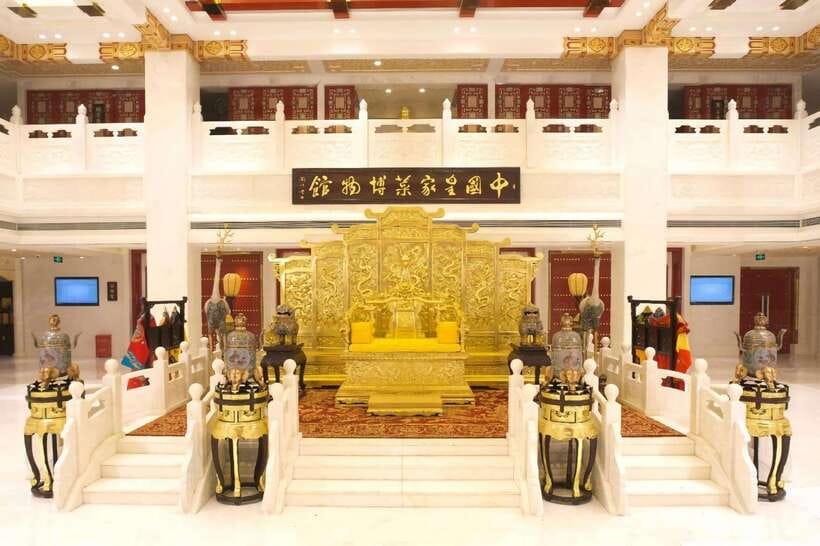
Yuxiandu Imperial Cuisine Museum in Beijing is built like a guided story of how royal eating habits changed over time. The focus is on Chinese imperial cuisine across five millennia, from ancient roots up through the Qing Dynasty era. Instead of treating food as a single theme, the museum frames it as culture, ceremony, and status.
What makes it feel more substantial is the scale and the “stuff you can see.” The collection includes over 1,000 historical artifacts, such as dining utensils and valuable documents. That matters because it gives the dinner and show more weight. You are not just attending a meal, you’re stepping into the logic of court dining: why certain ingredients were prized, how dishes were presented, and how imperial cooks shaped reputations.
This museum also operates as a working restaurant, so your education doesn’t end when you leave the exhibits. You slide from displays to dining, and the setting is designed to match that story. It’s located in Beijing’s Haidian District, near Sijiqing Bridge, which is helpful if you’re planning other Haidian-area sights.
The Museum Experience: Dishes, Chefs, and Court Stories
Inside, the museum showcases how royal dishes developed, and it also ties those dishes to the people and traditions behind them. You’ll encounter information on renowned royal dishes and chefs from throughout Chinese history, along with the stories surrounding legendary meals prepared for emperors and their courts.
I like this approach because it turns “What did they eat?” into “Why did they eat it?” Even if you don’t read every detail, the museum organizes the topic so you can connect the dots between eras and cooking styles. For a food-oriented trip, that’s a big win. For a pure show lover, it’s a quick education that sets up what comes next.
The museum is recognized as a national AAA-level tourist attraction, which is often a sign you can expect steady organization and service. In practical terms, that usually means smoother seating, clearer timing, and an experience that’s designed to run without chaos.
Your Royal-Style Meal: What’s Actually on the Table
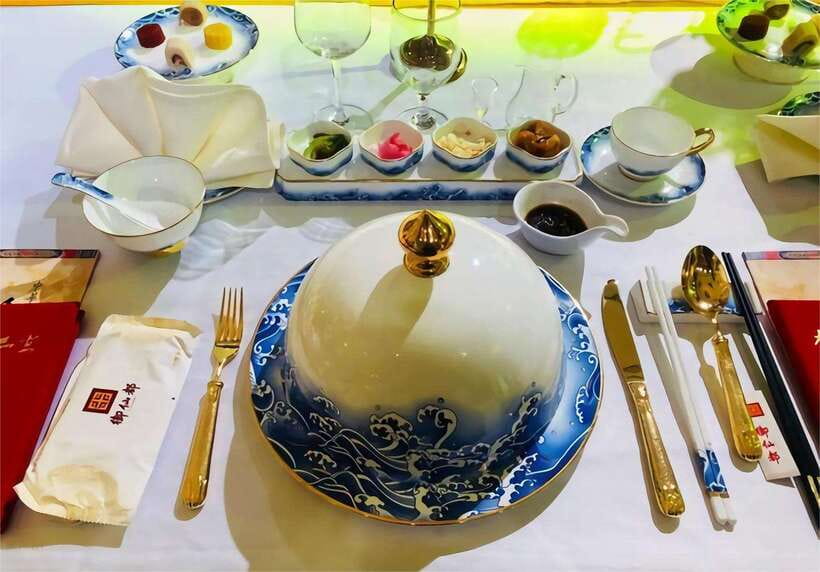
The dinner portion is the heart of the evening. The format replicates the sumptuous meals once enjoyed by royalty, and the menu is presented as a multi-part sequence rather than a single plate.
Here is what’s included on the menu, based on the provided schedule and listed dishes:
- Appetizer platter
- Braised sea cucumber with fish maw in casserole
- Marinated tofu and bamboo shoots
- Roast duck with jujube wood
- Chinese cabbage in soup
- Roasted lamb
- Longevity noodles with poached eggs
- Deep-fried dough sticks (youtiao) with milk
- Yogurt filled with honey
I like that the menu covers both land and sea ingredients, which helps you understand how imperial cooking wasn’t limited to one style. You also get a mix of textures: braised dishes, roasts, soups, noodles, and a classic breakfast item served in a sweet milky pairing with yogurt.
One practical consideration: this is not a “light snack” meal. It’s built to feel like a feast, which can be a lot if you’re used to small restaurant portions. If you tend to eat conservatively, pace yourself and plan water.
Also, the menu includes items like fish maw and sea cucumber. If you avoid those ingredients, you should treat the experience as something you may or may not enjoy based on your palate. The good news is that there are also tofu, bamboo shoots, cabbage soup, noodles, and lamb.
The Palace-Style Dining Setup: Atmosphere Without the Hassle
Dining happens in a room designed to resemble an ancient palace setting. That matters because it changes how you experience the meal. The goal isn’t just decoration, it’s timing and presentation. The restaurant design helps you shift mentally from “restaurant dinner” to “court dining recreation.”
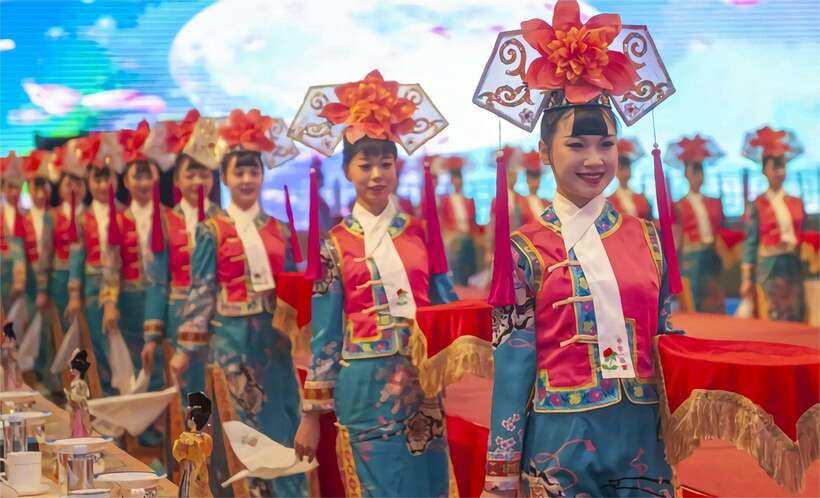
Even better, you don’t have to do costume makeup yourself. Traditional costume and makeup transformation are not included, so you’re not committed to a full dressing-up ritual. What you do get is the ambiance, and the feeling that the evening is themed from start to finish.
In other words, you can enjoy the theatrical side without the preparation side. That makes the experience easier to fit into a Beijing itinerary, especially if you have other plans the same day and don’t want extra time spent getting ready.
Performance Right After Dinner: Music, Dance, and Period Look
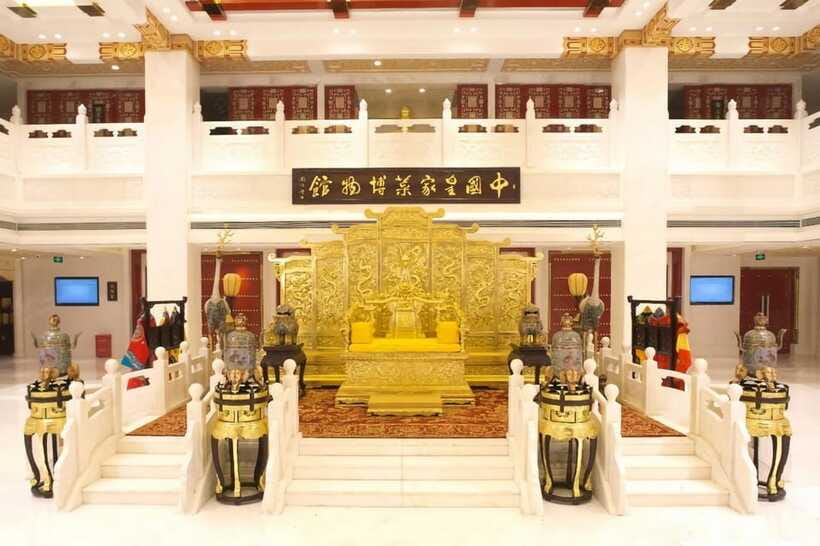
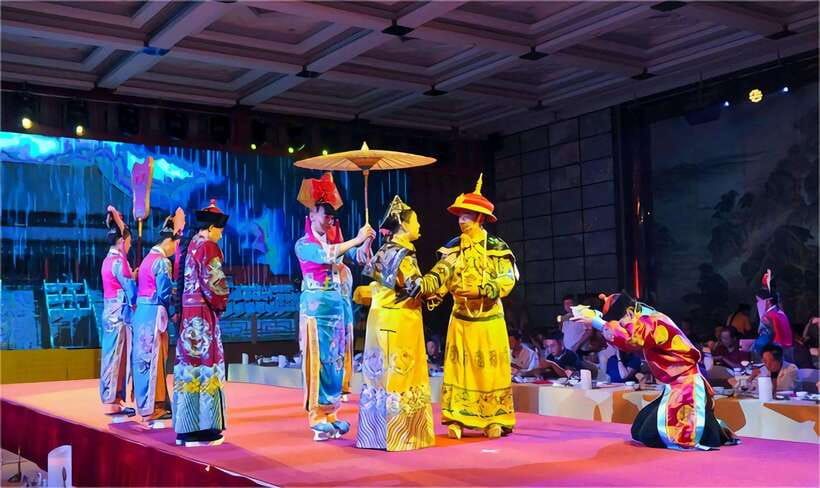
The cultural performance is paired directly with your meal, and timing is fixed. For lunch tickets, the lunch ticket checking time is 11:38 AM and the performance starts at 12:10 PM. For dinner tickets, ticket checking is at 6:28 PM, and the show begins at 6:50 PM.
This is one of those “small detail, big impact” situations. If you arrive late, you may miss the start or lose time getting seated. The important advice here is simple: arrive a few minutes before ticket checking so you can get through queues and be seated before your meal and performance start.
From the show descriptions, the performance focuses on historical presentation with music and dance, plus traditional costumes onstage. It’s designed to be colorful and engaging, so it works well even if you don’t speak much Chinese. You’re not dependent on understanding every word. The performance’s visual and musical cues do a lot of the work.
Price and Value in Beijing: What $137 Buys You
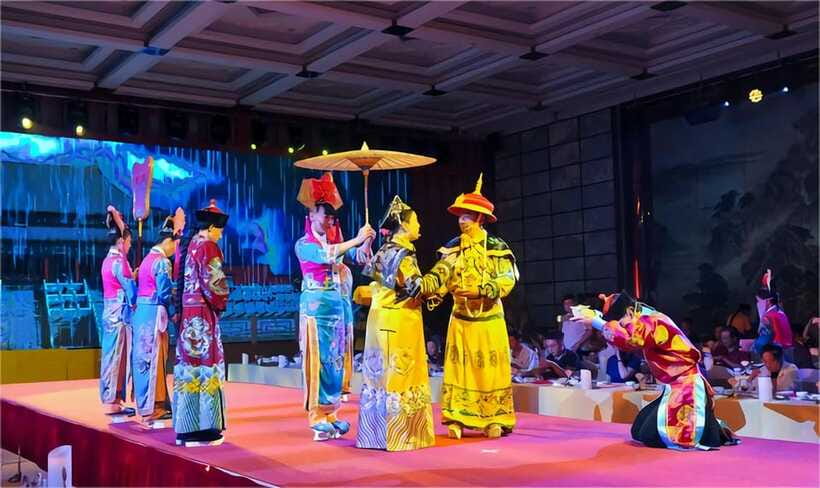
At $137 per person for a 3 to 4 hour experience, you’re paying for a package: meal plus performance, and the museum context that runs alongside it. That price can feel high if you measure value only by food calories. But if you think of it as a bundled cultural night, the math makes more sense.
You’re essentially getting:
- A museum experience centered on imperial cuisine history
- A multi-course feast-style meal
- A scheduled cultural performance
This kind of format costs more than a regular dumpling dinner because the staff, show coordination, and restaurant set design take effort to run on time. And the ticket structure is built around the meal-and-show flow, which is part of the experience.
Still, it’s fair to compare prices before you commit. One of the most useful tips from the information provided is that ticket pricing on some booking platforms can be higher than other options. If the cost is your biggest concern, check whether booking through alternative channels or directly can reduce the price.
Who Should Book, and Who Might Prefer Another Plan
This is a good fit if you:
- Want a single evening that blends food and culture
- Enjoy tasting a variety of Chinese dishes in one structured setting
- Like historical themes, especially the Qing and court dining angle
- Want the convenience of meal and performance tied to a schedule
It may not be the best fit if you:
- Strongly dislike ingredients like sea cucumber or fish maw
- Prefer fully flexible dining, where you can order à la carte
- Want visitor participation with costume and makeup, since traditional costume and makeup transformation are not included
- Are traveling with very young children, because it is not suitable for children under 2 years
If you’re the type who enjoys museum stops but hates “museum-only evenings,” this pairing is built for you. If you mostly want a show, you still get meal context, not just stage time.
Should You Book This Imperial Cuisine Dinner and Show?
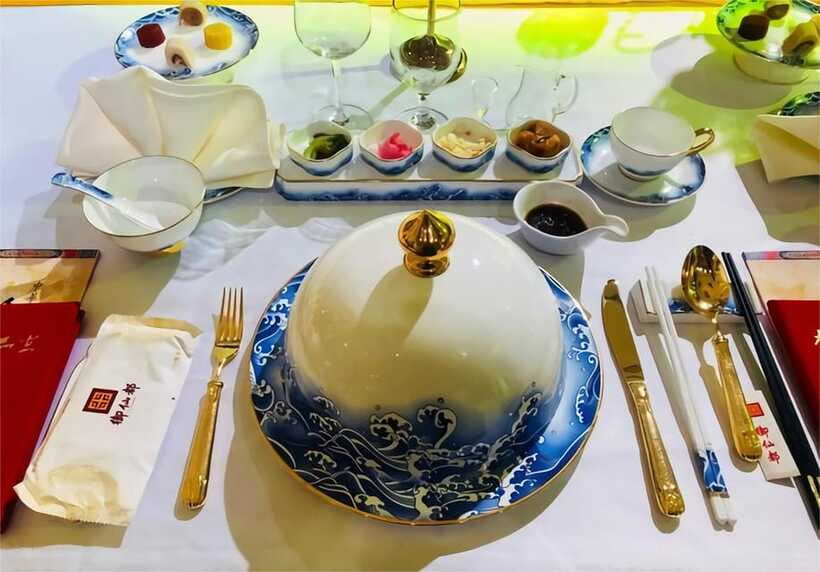
I’d book this if you want one well-defined cultural evening in Beijing, with a real food program attached to a museum setting. The strongest reason to go is the combination: museum timeline about imperial cuisine plus a feast-style dinner plus a performance that uses historical look, music, and dance. You’re not gambling on just one element.
You should think twice if you’re price-sensitive and your priority is only the food, because $137 is meaningful money. In that case, compare options and consider whether a different booking route might be cheaper.
FAQ
Where is the Yuxiandu Imperial Cuisine Museum located?
It’s in Beijing’s Haidian District, near Sijiqing Bridge.
How long does the experience last?
The duration is 3 to 4 hours.
What’s included in the ticket?
The ticket includes the meal and the performance.
Are traditional costume and makeup transformation included for visitors?
No. Traditional costume and makeup transformation are not included.
What time do I need to arrive for the lunch performance?
Lunch ticket checking is at 11:38 AM, and the performance starts at 12:10 PM. Arrive a few minutes early so you can get seated in time.
What time do I need to arrive for the dinner performance?
Dinner ticket checking is at 6:28 PM, and the show begins at 6:50 PM. Aim to arrive a few minutes early for seating and any queues.
Is there a note about the QR code ticket?
Yes. The QR code generated on the GetYourGuide platform after you place your order is not your actual ticket. Your real ticket is sent to you via email.
Is this activity wheelchair accessible?
Yes, it is wheelchair accessible.
More Tour Reviews in Beijing

Beijing, reviewed one booking at a time
- Xian: Must see Eternal Love or Camel Bell Legend show Ticket
★ 5.0 · 3 reviews - One day tour to downtown Tianjin from Beijing by high speed train
★ 5.0 · 3 reviews - Ming Tombs Sacred Way & Underground Palace & Water Wall P Tour
★ 5.0 · 3 reviews - Beijing Mutianyu Great Wall Small Group Tour
★ 4.5 · 3 reviews - Return Bus to Badaling Great Wall
★ 3.0 · 3 reviews - Private Tour to Lama Temple, Tian’anmen Square and Forbidden City
★ 5.0 · 3 reviews