
REVIEW · CHINA
Beijing liulichang : Learn Calligraphy orCarving from Master
You leave with a stamp, not a selfie. In Beijing’s Liulichang district, you get a hands-on workshop with a master artisan, plus a short stroll with local storytellers before you start making your own artwork.
I like that you can shape the class around your interests, not just watch from the sidelines. In particular, seal carving feels thoughtfully taught, with practice first and real support from interpreters, like the Bruce Gao setup some groups have experienced. One possible drawback: this is not a big-sight tour, so if you want palace-level viewing, plan that separately.
- Liulichang East Street start with a quick cultural walk before you reach the studio
- Pick one art form: calligraphy, fan painting, or seal carving
- Practice time is built in, especially for seal carving
- English and Chinese support, with interpreters when needed
- You take home a finished souvenir made with provided materials
- Small group feel, so you can ask questions and get personal guidance
In This Review
- Liulichang East Street First, Then Quiet Studio Time
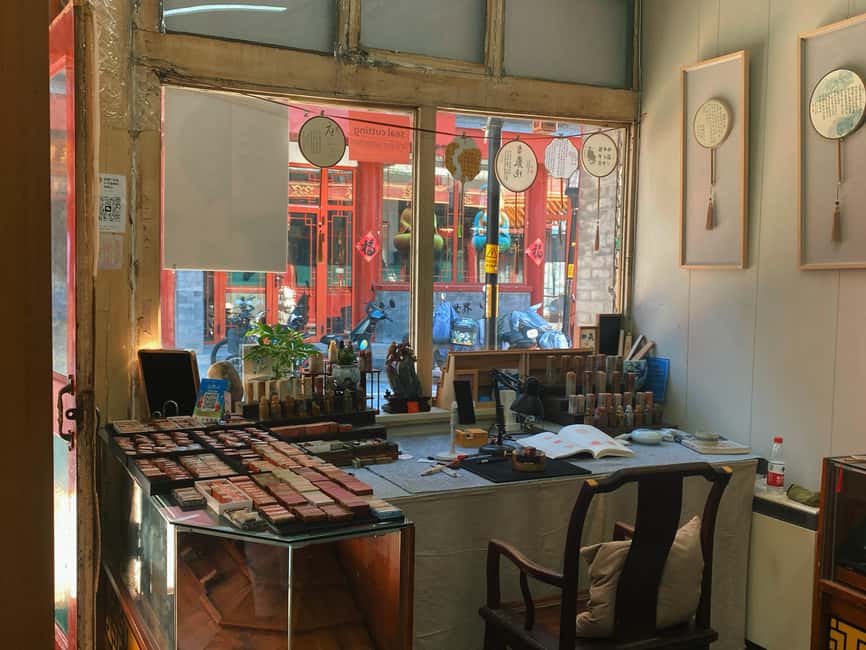
- Choose Your Art: Ink, Silk Fan, or Your Own Chinese Name Seal
- Inside the Workshop: What You Do, What You Learn, and Why It Works
- The Liulichang Storytelling Piece: Hidden Context Without the Noise
- Your Take-Home Souvenir: Something You Made, Not Just Bought
- Price and Value for $75: When It Costs Less Than a Museum Day
- Who This Workshop Suits Best (And Who Might Want to Skip It)
- Should You Book This Liulichang Calligraphy or Carving Workshop?
- FAQ
- How long is the Beijing Liulichang calligraphy or carving workshop?
- What can I choose to make during the workshop?
- Do I need any prior experience?
- Where do I meet the guide?
- Is transportation to the venue included?
- Is the workshop suitable for young children?
- FAQ
- Is the workshop wheelchair accessible?
- What languages will the instructor use?
- What materials are included?
- Will I get guidance from an expert?
- What do I take home at the end?
- Can I cancel if my plans change?
Liulichang East Street First, Then Quiet Studio Time
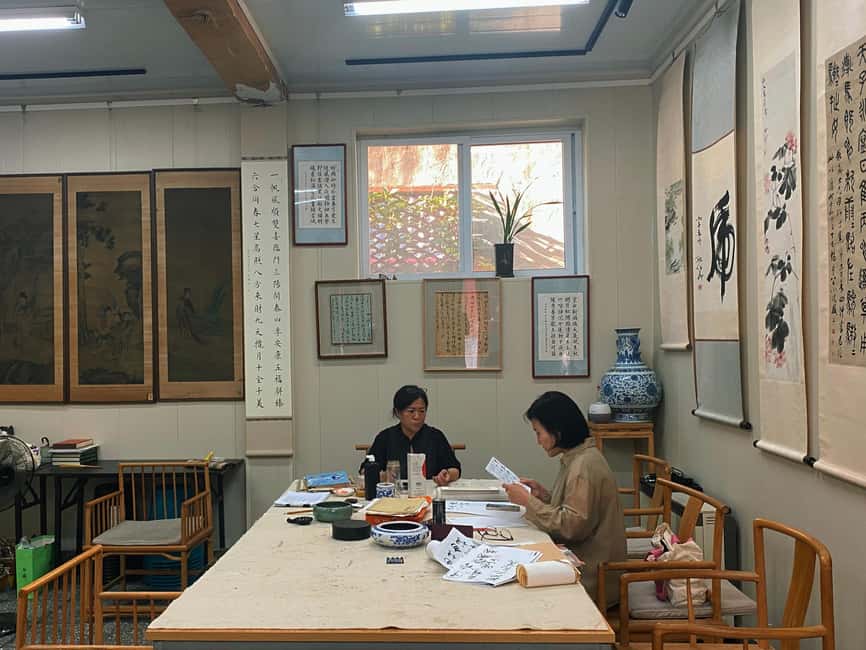
Beijing can feel like a nonstop shuffle of crowds, lines, and loud selling. This experience changes the pace on purpose. You meet at the small square entrance of Liulichang East Street, then you get a brief walk around Liulichang itself, so the workshop doesn’t feel like a random indoor activity dropped in your day.
I like how they frame Liulichang as a cultural district, not just a backdrop for photos. You’re given context for what you’re about to do, which makes the studio time feel more meaningful. In one setup, the guide uses an easy-to-spot sign, Sino-Voyages, and the group heads to the workshop from there.
The setting matters because you are about to do careful, patient work. Expect a calm studio atmosphere, with high-quality materials already set up for your chosen art. Since transportation to the venue is not included, you’ll want to plan your own trip to Liulichang, then let the experience do the rest.
Still weighing it up? These Beijing bookings scored well when we went through them.
- From Beijing: Mutianyu Great Wall Tours with Options★ 4.9 · 9,216 reviews
- Beijing: Forbidden City Tour(Group/Private)-Tickets Included★ 4.8 · 7,974 reviews
- Beijing: T-Square & Forbidden City Group or Private Tour★ 4.8 · 4,446 reviews
- All-Inclusive Tour: Tiananmen Square, Forbidden City, Great Wall★ 5.0 · 2,873 reviews
Choose Your Art: Ink, Silk Fan, or Your Own Chinese Name Seal
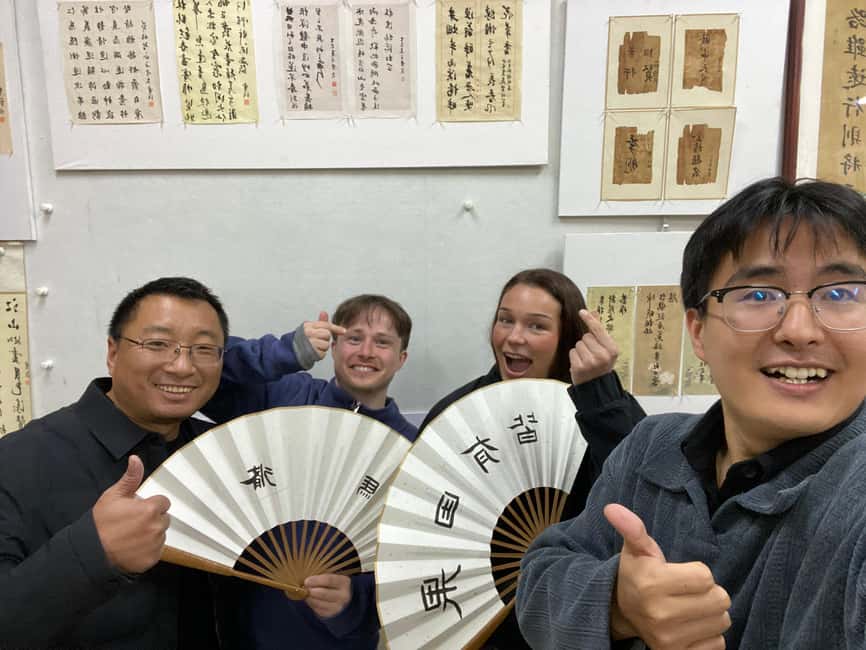
The core decision is simple, and that is a big part of the value. You choose one hands-on workshop: calligraphy, fan painting, or seal carving. No prior experience is needed, and the class is designed around beginners learning through doing.
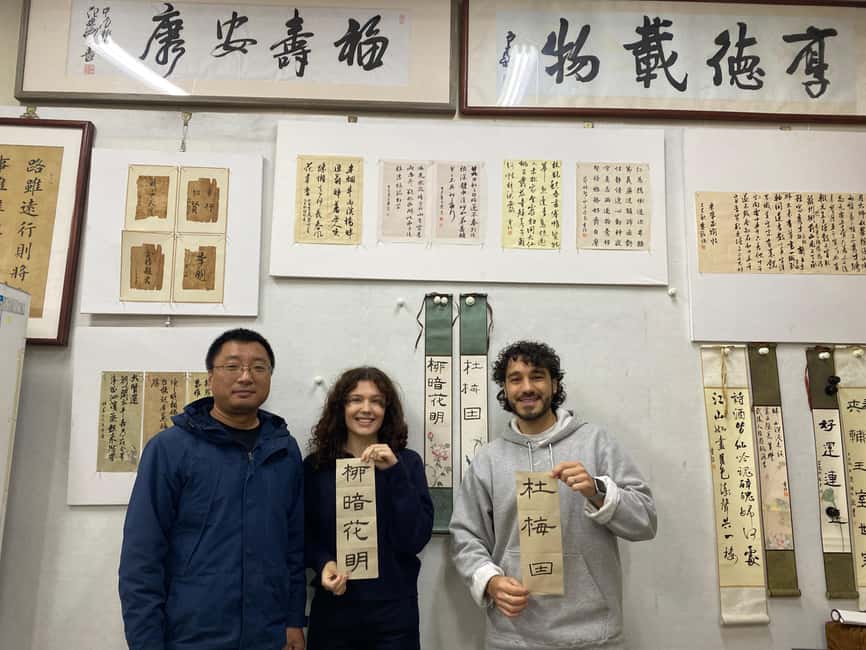
If you go for calligraphy, you’ll learn brush control and the focus that comes from slow repetition. The goal is to write a meaningful Chinese proverb or your own name on rice paper. That is a nice touch for visitors who want something personal, not generic wall art.
If you want color and design, fan painting uses a delicate silk round fan as your canvas. You paint your own motif, like bamboo or orchids, and end up with something both decorative and functional. It’s a good option if you’d like visual creativity more than writing practice.
If you want something truly signature, seal carving lets you craft your very own Chinese name chop, a traditional stamp used for centuries as a signature. You’ll carve the characters and leave with your personal seal.
Inside the Workshop: What You Do, What You Learn, and Why It Works
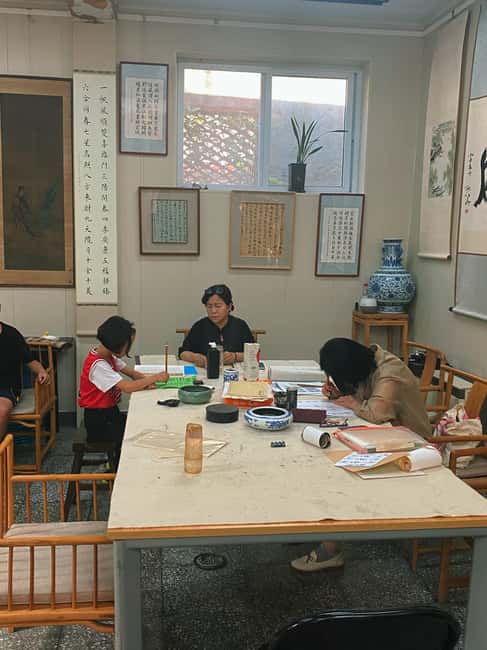
The workshop is structured like a craft lesson, not a quick souvenir factory. First you get guidance from an expert artisan in a traditional studio setting. Then you practice, adjust, and only after the basics do you move toward the piece you’ll take home.
For seal carving, the teaching style is especially beginner-friendly. One participant described doing a lot of practice on other stones before carving into the real piece. That makes sense, because carving mistakes are harder to fix than brush strokes. It also gives you confidence, since you get to make errors while the stakes are low.
You also get support for communication. The workshop instruction is available in English and Chinese, but in practice you may work with extra help depending on the session. In one group experience, interpreters were present to help bridge the conversation between the master and the students, including help from Bruce Gao and his friend team. That kind of support can be the difference between nodding politely and actually understanding the key technique.
For calligraphy, the learning is about rhythm: brushstrokes, pressure, and how each character is built. You aren’t asked to copy something blindly. Instead, you learn what you’re writing, then create a proverb or your name, which turns the exercise into a personal keepsake.
For fan painting, you learn how to work on a curved, delicate surface. Even if you pick a classic motif like bamboo or orchids, you’re still learning how the design and brush control work together on silk. That is more useful than you might think, because you leave with an object that requires real technique to look right.
The Liulichang Storytelling Piece: Hidden Context Without the Noise
A lot of Beijing tours “tell history” while moving fast and keeping you herded along. Here, the storytelling is meant to be part of the learning, not an extra lecture. You explore Liulichang with local storytellers who share hidden histories and personal anecdotes, which helps you understand why this district developed into an arts-and-culture hub.
I like that this feels personal. The experience is designed as a small group, which generally means you have time to ask questions and get straight answers, not just follow along. If you enjoy cultural context, the storytelling helps you connect the art forms to the people who actually used them.
You also get a break from crowd energy. The studio is positioned away from the busiest sightseeing rush, so your attention can stay on the work in front of you. That quiet focus is a surprising part of why the final souvenir feels more special, since you weren’t rushing.
Your Take-Home Souvenir: Something You Made, Not Just Bought
Here’s the part you’ll feel when you’re packing your bag: you leave with a personalized handmade artwork. You also know it came from your hands, which is different from shopping for the same style mass-produced somewhere else.
If you pick calligraphy, your outcome is rice paper with ink characters, written by you, using your chosen text. If you pick fan painting, you take home a silk round fan that is both decorative and usable. If you pick seal carving, you leave with a real name chop, carved by your own hand, meant to be used as a signature.
The value is not only the art object. It’s the craft knowledge you gain along the way. Even if you never become a calligrapher, you learn how Chinese characters are constructed, how brush pressure changes strokes, or how carving planning affects the final shape.
And because materials are provided, you don’t need to buy anything beforehand. You show up, choose your art form, and you create the souvenir as part of the session, with expert guidance.

Price and Value for $75: When It Costs Less Than a Museum Day
At about $75 per person for 2 to 2.5 hours, the price isn’t “cheap,” but it is practical. You’re paying for instructor time, expert artisan guidance, provided materials, and a finished work you take home. In many cities, a hands-on class plus a decent art shop might cost more than a sightseeing day.
What makes the value stand out is the combination: small-group attention and real making time. You’re not just watching someone demonstrate. You choose your project, you practice, and you leave holding the result.
Also consider how you’re spending time. If your Beijing plan is already heavy on major sights, this workshop is a smart balance. It gives you something different, and it’s a memory you can display later.
The only cost-side reminder: transportation isn’t included. If you’re coming from farther out, factor that into your plan so you don’t get surprised by extra travel time.
Who This Workshop Suits Best (And Who Might Want to Skip It)
This experience is ideal for you if you want a creative activity that feels cultural and hands-on. I’d especially recommend it if you like craft work, you enjoy learning through repetition, or you want a souvenir with real meaning.
It’s also a strong choice if you’re trying to get away from big tourist areas without giving up cultural substance. The Liulichang location and the quieter studio setting make it a good contrast to the busier parts of Beijing.
The workshop includes children under 5 restriction, so it’s not for very young kids. If you’re traveling as a couple or solo, the small group format can feel manageable. If you prefer private time, private or small groups are available.
If you hate crafts and just want a quick sightseeing stamp in your passport, this won’t scratch that itch. It’s a doing experience, so you’ll get more out of it if you’re willing to slow down and focus.
Should You Book This Liulichang Calligraphy or Carving Workshop?
Book it if you want a genuinely hands-on Beijing moment, with a master artisan feel and a souvenir you made yourself. The structure is beginner-friendly, materials are handled for you, and the small group setup makes questions and adjustments realistic.
Skip it only if your main goal is seeing famous sites and you are already packed with landmark time. Otherwise, this is one of the smarter ways to spend a couple of hours in Beijing, because you leave with both a physical keepsake and a better sense of how Chinese art is practiced, stroke by stroke and character by character.
FAQ
How long is the Beijing Liulichang calligraphy or carving workshop?
The experience lasts about 2 to 2.5 hours.
What can I choose to make during the workshop?
You choose one option: calligraphy, fan painting, or seal carving.
Do I need any prior experience?
No prior experience is needed. Curiosity is encouraged.
Where do I meet the guide?
Meet at the small square entrance of Liulichang East Street. Your guide will hold a sign that says Sino-Voyages.
Is transportation to the venue included?
No, transportation to the venue is not included.
Is the workshop suitable for young children?
It is not suitable for children under 5 years.
FAQ
Is the workshop wheelchair accessible?
Yes, the workshop is wheelchair accessible.
What languages will the instructor use?
Instruction is provided in English and Chinese.
What materials are included?
All high-quality materials for your selected activity are provided.
Will I get guidance from an expert?
Yes. You receive guidance from an expert artisan in a traditional studio setting.
What do I take home at the end?
You take home the personalized handmade artwork you created during the workshop.
Can I cancel if my plans change?
Free cancellation is available up to 24 hours in advance for a full refund.
More Tour Reviews in Beijing


Beijing, reviewed one booking at a time
- Xian: Must see Eternal Love or Camel Bell Legend show Ticket
★ 5.0 · 3 reviews - One day tour to downtown Tianjin from Beijing by high speed train
★ 5.0 · 3 reviews - Ming Tombs Sacred Way & Underground Palace & Water Wall P Tour
★ 5.0 · 3 reviews - Beijing Mutianyu Great Wall Small Group Tour
★ 4.5 · 3 reviews - Return Bus to Badaling Great Wall
★ 3.0 · 3 reviews - Private Tour to Lama Temple, Tian’anmen Square and Forbidden City
★ 5.0 · 3 reviews