
REVIEW · CHINA
Beijing Royal Banquet with Chinese culture prefermance
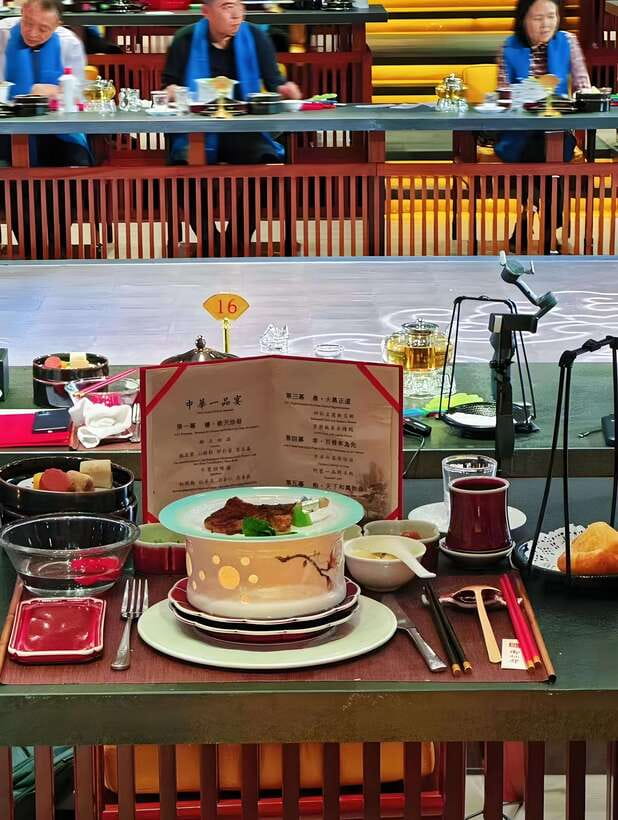
Royal banquet in Beijing feels like a court day. What makes this one interesting is the setting and the show: the Yuxiandu complex mixes a royal-cuisine museum with a tasting floor, and you get Chinese cultural performances while enjoying a true royal banquet style meal. I like that it is built for real viewing, not just eating, with a transparent, green, energy-saving central kitchen and a space that feels grand in scale.
I love the menu variety, from classic imperial favorites like roast duck to more adventurous items like braised sea cucumber with fish maw. The main drawback to consider is the format: it is a set banquet, so you do not get to swap courses, and you should expect ingredients that may be unfamiliar if you are picky.
In This Review
- Key Highlights You’ll Actually Care About
- Stepping Into Yuxiandu’s Royal Cuisine World
- The 2.5-Hour Banquet Flow After You Arrive
- Chinese Cultural Performances Paired With Your Courses
- The Set Menu Breakdown, From Appetizer Platter to Longevity Noodles
- Snacks and Appetizer Platter
- Braised Sea Cucumber With Fish Maw in Casserole
- Marinated Tofu and Bamboo Shoots
- Roast Duck With Jujube Wood
- Chinese Cabbage in Soup
- Roasted Lamb
- Longevity Noodles With Poached Eggs
- Deep-Fried Dough Sticks (Youtiao) With Milk
- Yoghurt Filled With Honey
- Why the Transparent, Green Central Kitchen Matters
- Price and Value at $150 for a 2.5-Hour Royal-Style Meal
- Who Should Book This Beijing Royal Banquet?
- Quick Reality Check Before You Go
- Should You Book This Beijing Royal Banquet?
- FAQ
- Where is the meeting point for the Beijing Royal Banquet?
- How long does the royal banquet experience last?
- What is included in the royal banquet?
- Is there Chinese cultural performance during the experience?
- Do I get skip-the-line entry?
- What languages are available for the host or greeter?
- What time should I arrive for lunch or dinner?
- What are the cancellation and reserve options?
Key Highlights You’ll Actually Care About
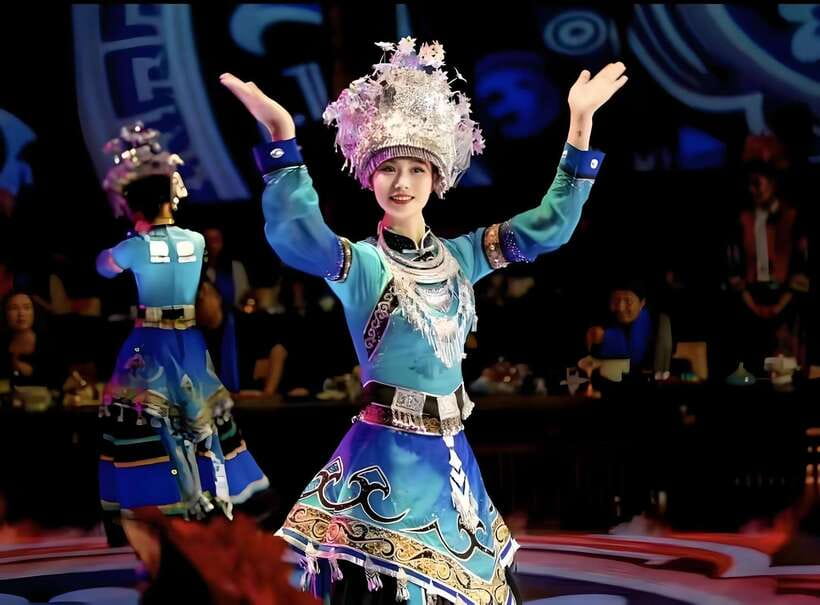
- Yuxiandu’s royal-cuisine spaces: about 1,500 square meters for the historical exhibition, plus more than 10,000 square meters for tasting.
- Skip-the-line access via a separate entrance, which matters in Beijing.
- A multi-course imperial-style menu with seafood, tofu, duck, lamb, soup, and noodles.
- Chinese cultural performances paired with dinner, so the meal feels like an event, not just a restaurant.
- A transparent central kitchen that is described as green, environmentally friendly, and energy-saving.
- Convenient languages and support, with Chinese and English host or greeter, plus wheelchair accessibility.
Still weighing it up? These Beijing bookings scored well when we went through them.
- From Beijing: Mutianyu Great Wall Tours with Options★ 4.9 · 9,216 reviews
- Beijing: Forbidden City Tour(Group/Private)-Tickets Included★ 4.8 · 7,974 reviews
- Beijing: T-Square & Forbidden City Group or Private Tour★ 4.8 · 4,446 reviews
- All-Inclusive Tour: Tiananmen Square, Forbidden City, Great Wall★ 5.0 · 2,873 reviews
Stepping Into Yuxiandu’s Royal Cuisine World
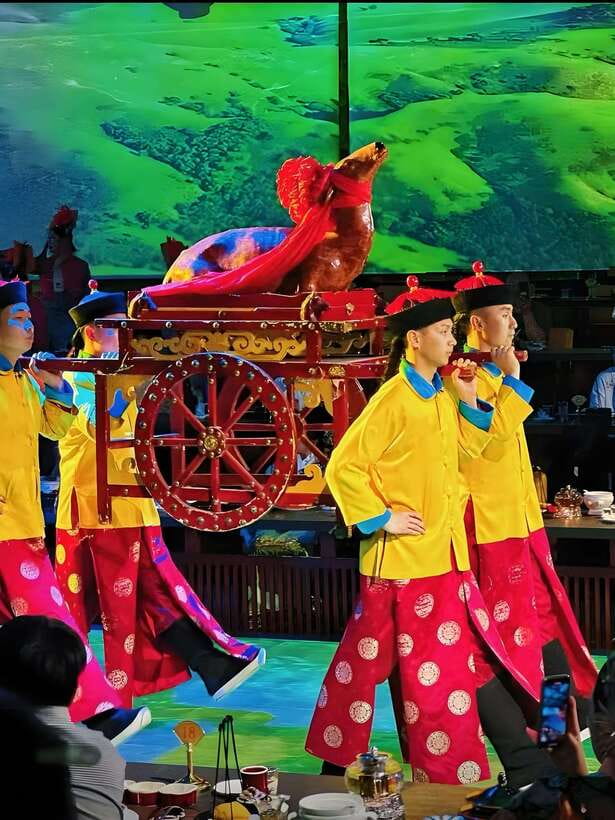
The Yuxiandu venue is the big reason to book this kind of dinner. It is not only a meal, it is a themed experience built around how royal cuisine was presented, taught, and served. You get both the museum side and the tasting side. The historical and cultural exhibition area is about 1,500 square meters, then the tasting experience goes much bigger, over 10,000 square meters.
That scale changes how you experience dinner. Instead of rushing through courses in a normal dining room, you get time in a place designed for atmosphere. Even the kitchen concept is part of the story. The central kitchen is described as transparent and focused on being green and energy-saving, which helps the experience feel modern without losing the “court-style” theme.
One more angle I appreciate: the venue is known for being visited by many celebrities and politicians. That does not mean you will see a red-carpet moment during your sitting, but it does signal that this is a polished, formal operation, not a casual gimmick.
The 2.5-Hour Banquet Flow After You Arrive
This is a short, focused experience, timed at 2.5 hours. That is a sweet spot in Beijing, because you can do something memorable without burning a whole evening. You’ll meet at No. 117, West Fourth Ring North Road, Haidian District, Beijing.
You also get a small but real advantage: skip-the-line through a separate entrance. If you have ever tried to enter popular venues during peak times, you already know the value of this. It keeps the experience moving and helps you settle in faster.
Then the evening becomes a sequence of courses, paired with Chinese cultural performances. Because the duration is fixed, the pacing is likely tighter than a normal dinner. I’d treat it like an event ticket, not like a sit-and-stay restaurant meal. Come hungry, and keep your phone charged, because you may want pictures of both the setting and the meal.
There are also clear arrival cutoffs. For lunch, arrive before 11:15. For dinner, arrive before 18:15. Plan to show up a bit earlier than the cutoff, even if you are confident you know where you are going.
Chinese Cultural Performances Paired With Your Courses
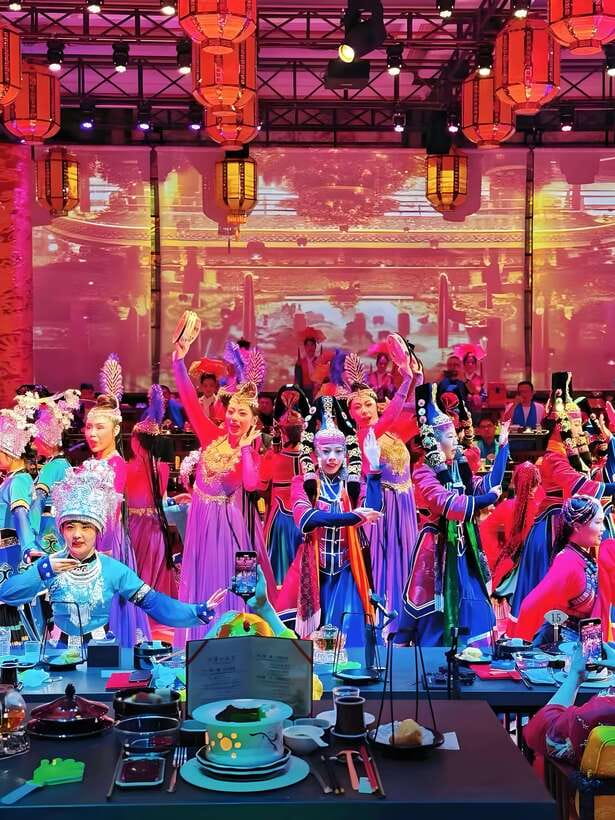
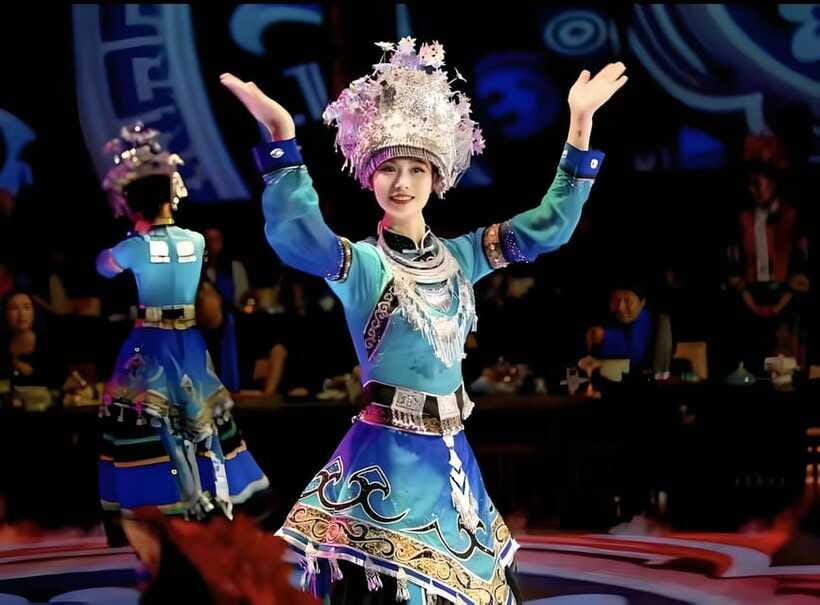
The performance part is not an afterthought. It is described as part of the royal experience, and that is exactly how it changes the meal. You are not only eating regional classics, you are watching a cultural presentation while the courses roll out.
This matters if you want more than food. Beijing has no shortage of great meals, but this format gives you a packaged cultural evening, where the timing and staging are meant to match the dinner rhythm. The result is that you leave with the memory of a show, not just a plate.
Because the host or greeter is available in Chinese and English, you should be able to ask basic questions if something on the program or menu needs context. No guide name is provided with the information you shared, so I can’t point you to a specific person, but the language support is there.
The Set Menu Breakdown, From Appetizer Platter to Longevity Noodles
The heart of this experience is the imperial-style set menu. Your banquet includes snacks and an appetizer platter, then a run of distinct courses. Here is what you can expect, and how to think about each dish.

Snacks and Appetizer Platter
You start with snacks plus an appetizer platter. This is your warm-up course, a chance to settle in and sample flavors before the heavier dishes arrive. If you are the type who likes to pace yourself, think of these first bites as a buffer. They also help you adjust if you are sensitive to strong aromatics or rich sauces later in the meal.
Braised Sea Cucumber With Fish Maw in Casserole
This is the flagship “royal banquet” style course. Sea cucumber and fish maw are both ingredient categories that tend to appear in high-end Chinese cuisine, often for texture and for the way they hold up in long braises. Served in a casserole format, it is likely richer and slower in taste than lighter appetizers.
If you love trying traditional luxury ingredients, this is one of the moments that makes the price feel more justified. If you do not like seafood textures, you can at least treat it as a learning bite rather than a make-or-break course.
Marinated Tofu and Bamboo Shoots
Then you get marinated tofu and bamboo shoots. This is a helpful balance. Tofu and shoots add contrast, with a different texture and a more vegetal note compared with braised items. Even if you are not vegetarian, this kind of course often acts like a palate refresher.
This is also where you can be a little more flexible in your enjoyment. If you like sauces and tender textures, you are likely to be comfortable here.
Roast Duck With Jujube Wood
Roast duck is one of the most memorable dishes in Chinese banquet culture, and this one is roasted with jujube wood. That detail matters because it points to a flavor approach tied to the roasting method, not just the duck itself.
I like these courses because they feel like the center of the meal, not a side dish. It is also the kind of food you usually want to eat slowly. Take a moment, notice the aroma, and do not rush your first bites. This is where the banquet vibe becomes real.
Chinese Cabbage in Soup
After rich meats and braised textures, Chinese cabbage in soup is the comfort interlude. Soups in this context often aim to lighten the overall feeling and help you reset before the next courses.
If you have a sensitive stomach, soup is also a practical choice. It can make the rest of the meal feel less heavy.
Roasted Lamb
Next comes roasted lamb. Lamb brings its own deep flavor and hearty satisfaction. If you enjoy strong, savory profiles, you’ll probably welcome this course. If you are not a lamb person, you may need to rely on the accompaniments and pacing to keep your enjoyment high.
The key here is expectation. Lamb in a banquet context is not subtle. It is meant to be bold.
Longevity Noodles With Poached Eggs
Then you reach longevity noodles with poached eggs. The name alone signals a symbolic role, and it usually serves as a warm, comforting closing act. Noodles are also practical: they help you feel full without needing another heavy meat course to finish.
I find this kind of final noodle dish is perfect for photos and for that last, satisfying bite where everything tastes like it belongs together.
Deep-Fried Dough Sticks (Youtiao) With Milk
Yes, you also get a traditional breakfast-style pairing, deep-fried dough sticks with milk. It is a fun switch, and it adds crunch and comfort to the meal.
If you already know youtiao, you’ll recognize the texture. If you have never tried it, this is a good moment because the milk likely makes the experience easier to enjoy than eating it plain.
Yoghurt Filled With Honey
Finally, you end with yoghurt filled with honey. This is a sweet, gentle finish after the savory courses. I like this ending because it feels more refreshing than a heavy dessert, and it helps you wrap the meal without leaving you stuffed to the point of regret.
Why the Transparent, Green Central Kitchen Matters
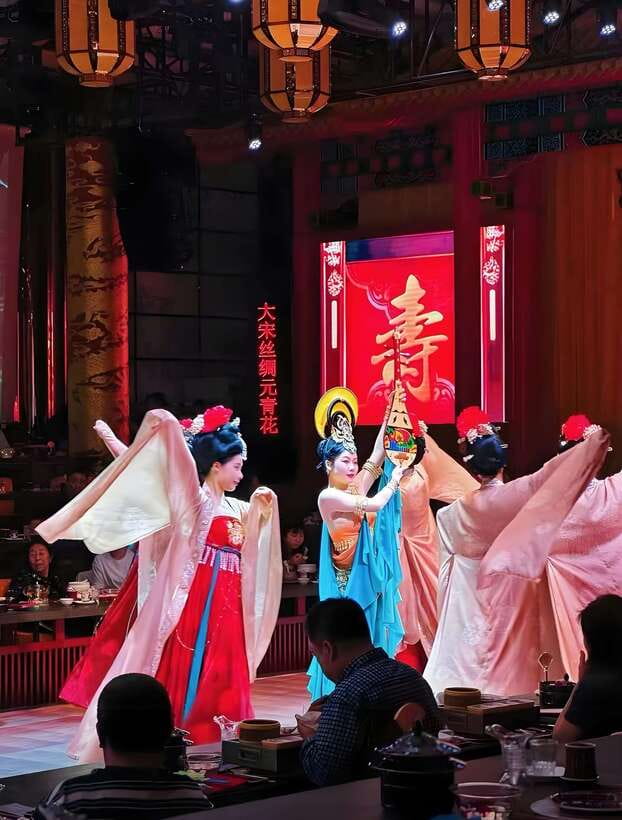
The information you shared includes a transparent, green, environmentally friendly, and energy-saving central kitchen. Even if you do not get a behind-the-scenes tour, the claim affects how you judge the venue.
For a visitor, it translates into trust. Transparent operations are usually easier to feel good about, and the energy-saving angle suggests the venue was built with modern systems in mind. Pair that with the museum-meets-tasting layout and you get a place that is trying to balance tradition and practical operations.
This is also part of why celebrity and politician visits make sense. Formal banquet culture needs consistency, and consistency depends on organization.
Price and Value at $150 for a 2.5-Hour Royal-Style Meal
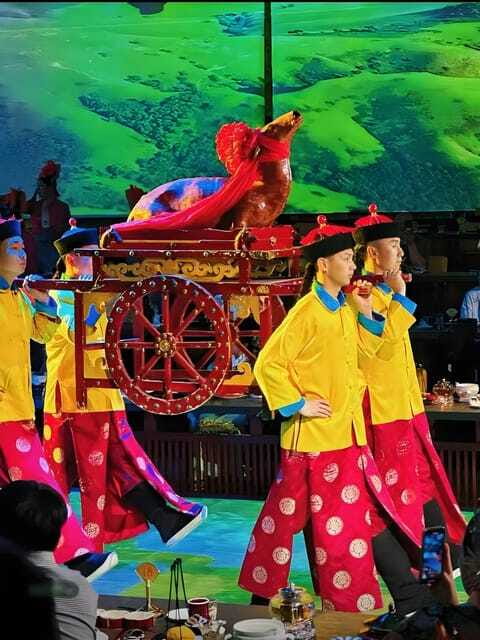
Let’s talk money in plain terms. At $150 per person for 2.5 hours, you are not paying for a single dish. You are paying for a full royal banquet experience, including snacks, multiple main and side courses, and the Chinese cultural performances.
So the value question becomes: do you want the full event, or do you just want good food? If you want a set menu with a structured flow and a show, this price starts to make sense. If you prefer to pick your own courses, or you only want one or two signature foods, you might feel like you are paying for extras.
To judge it well, look at what is included on your plate. You get duck, lamb, tofu and bamboo shoots, soup, longevity noodles, youtiao with milk, plus a sweet honey-filled yoghurt. That range is what you are buying. It’s the banquet, not just the ingredients.
Who Should Book This Beijing Royal Banquet?
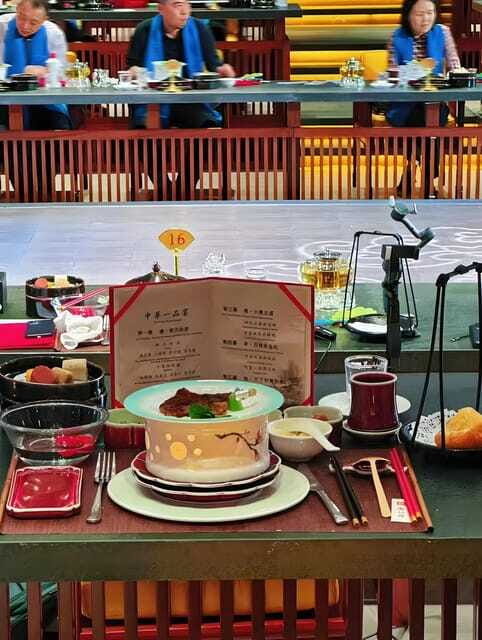
This experience is best for you if you fall into one of these buckets:
- You want an organized, once-in-a-visit royal-cuisine experience in Beijing, with cultural performances included.
- You like trying traditional high-status ingredients like braised sea cucumber and fish maw.
- You enjoy the “event format,” where the venue and pacing matter as much as the food.
- You want something wheelchair accessible, and you appreciate host support in Chinese and English.
It may not fit as well if you dislike set menus or if your food preferences are very specific. Because it is a fixed banquet, you should be ready for the exact course sequence.
Quick Reality Check Before You Go
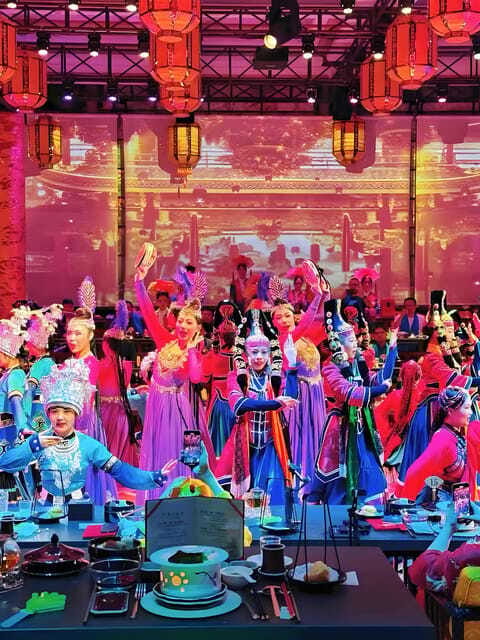
Two practical points help you enjoy this more.
First, plan your arrival. If you are doing lunch, arrive before 11:15. For dinner, arrive before 18:15. Being on time helps the whole show and meal run smoothly.
Second, eat like you are sampling. This is not a “maybe I’ll have room later” dinner. The courses are stacked, so pace yourself and treat the meal like a guided tasting.
Also, your provider is listed as cowbunny, and the format includes a royal banquet. That is the core promise: royal-style presentation, royal-style food, plus a cultural show.
Should You Book This Beijing Royal Banquet?
I think you should book it if you want a structured, memorable Beijing evening with Chinese cultural performances and a set menu that shows off royal-cuisine ideas. The Yuxiandu setting, with its museum scale and transparent, energy-conscious central kitchen concept, makes this feel like more than a meal.
Skip it if you hate set menus, dislike lamb or seafood-based banquet ingredients, or you simply want the freedom to order your favorites. In that case, you might get a better experience from a normal restaurant where you control the pace.
If you do book, go in hungry, arrive early, and let the courses teach you what royal cuisine tastes like in a modern, curated venue.
FAQ
Where is the meeting point for the Beijing Royal Banquet?
The meeting point is No. 117, West Fourth Ring North Road, Haidian District, Beijing, China.
How long does the royal banquet experience last?
The experience duration is 2.5 hours.
What is included in the royal banquet?
It includes a royal banquet with snacks, an appetizer platter, and multiple courses such as braised sea cucumber with fish maw, marinated tofu and bamboo shoots, roast duck with jujube wood, Chinese cabbage in soup, roasted lamb, longevity noodles with poached eggs, deep-fried dough sticks with milk, and yoghurt filled with honey.
Is there Chinese cultural performance during the experience?
Yes. The experience includes Chinese cultural performances as part of the royal experience.
Do I get skip-the-line entry?
Yes. You enter through a separate entrance to skip the line.
What languages are available for the host or greeter?
The host or greeter is available in Chinese and English.
What time should I arrive for lunch or dinner?
Please arrive before 11:15 for lunch, or before 18:15 for dinner.
What are the cancellation and reserve options?
You can cancel up to 24 hours in advance for a full refund. You can also reserve now and pay later, so you do not need to pay today.
More Tour Reviews in Beijing

Beijing, reviewed one booking at a time
- Xian: Must see Eternal Love or Camel Bell Legend show Ticket
★ 5.0 · 3 reviews - One day tour to downtown Tianjin from Beijing by high speed train
★ 5.0 · 3 reviews - Ming Tombs Sacred Way & Underground Palace & Water Wall P Tour
★ 5.0 · 3 reviews - Beijing Mutianyu Great Wall Small Group Tour
★ 4.5 · 3 reviews - Return Bus to Badaling Great Wall
★ 3.0 · 3 reviews - Private Tour to Lama Temple, Tian’anmen Square and Forbidden City
★ 5.0 · 3 reviews