
REVIEW · TICKETS
Beijing: Yonghe Lama Temple Entry Ticket
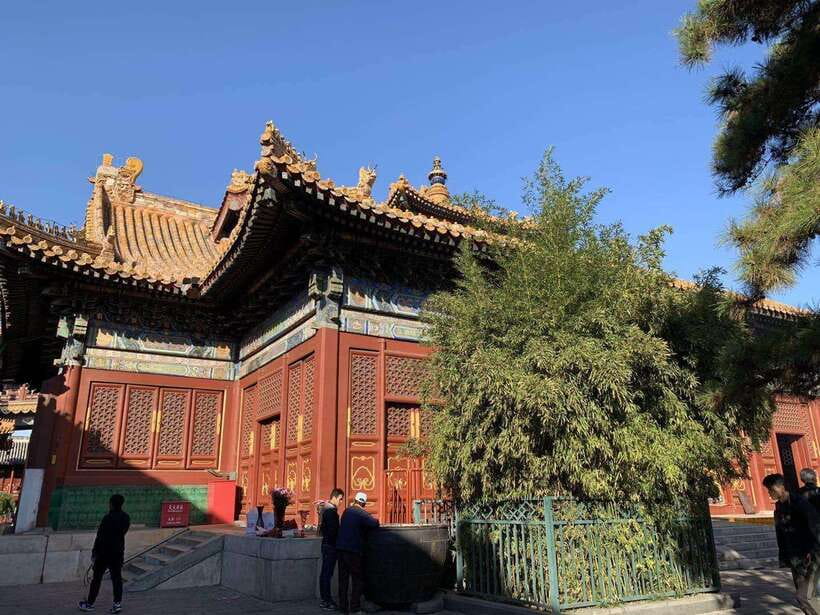
QR codes and temples are a great combo. Yonghe Lama Temple, also called the Yonghe Lamasery, is Beijing’s biggest Buddhist temple complex, and this ticket makes entry straightforward. You get to focus on the experience, not paperwork.
I particularly like the no-fuss entry: bring your passport, scan the right QR code, and you can enter the grounds. I also like what you’re visiting, because the Yonghe Lamasery is known as the largest and most well-preserved lamasery in today’s China, with a backstory that goes right into imperial politics.
One thing to watch is the QR code. The Get your guide QR is not valid, so you need to use the QR sent to your email or WhatsApp, or you’ll be stuck at the wrong scan.
In This Review
- Key Things I’d Focus On
- Yonghe Lama Temple, What You’re Really Paying For
- Ticket Entry in Beijing: QR Code and Passport Rules That Actually Matter
- Getting There Like a Local: Subway Line 2 or 5 to Yonghegong
- Subway directions
- Bus options if you’re already nearby
- What to Expect During Your Two-Hour Visit
- How I’d pace the time
- Wheelchair access
- The Yonghe Lamasery Story: Why the 1694 to 1744 Timeline Matters
- Why Skip the Ticket Line (and How That Changes Your Day)
- Who This Ticket Is Best For
- Price and Value: Is $9 Worth It?
- Should You Book This Yonghe Lama Temple Ticket?
- FAQ
- Do I need a special QR code to enter?
- What do I need to bring for entry?
- How long is the Yonghe Lama Temple visit?
- How much does the entry ticket cost?
- What’s included with the ticket?
- Is free cancellation available?
- Is the site wheelchair accessible?
Key Things I’d Focus On
- Use your QR code and passport for entry, no extra ticket swapping needed.
- Skip the ticket line so you can start exploring sooner.
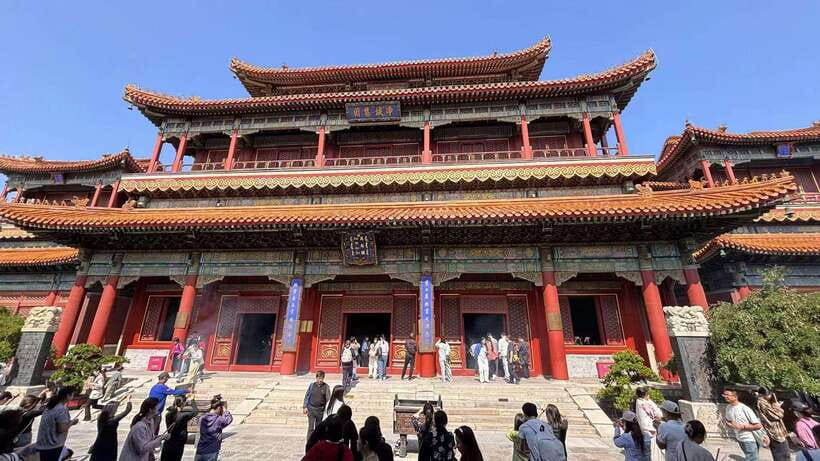
- Yonghe Lama Temple is Beijing’s principal Buddhist site, not just a small stop.
- Built in 1694 and transformed later into a monastic center with Tibetan and Chinese students.
- Largest, most preserved lamasery in present-day China, which shows in how you experience the site.
- Two hours is a realistic window to see the core highlights without rushing.
Other Beijing trips our reviewers kept returning to
- Beijing: Forbidden City Tour(Group/Private)-Tickets Included★ 4.8 · 7,974 reviews
- 4-Hour Small Group Tour to Forbidden City with Entry Tickets★ 5.0 · 1,863 reviews
- Beijing: Tiananmen Square Registration Service(Ticket)★ 4.5 · 1,704 reviews
- Beijing: The Temple of Heaven or Summer Palace Entry Ticket★ 4.6 · 1,286 reviews
Yonghe Lama Temple, What You’re Really Paying For
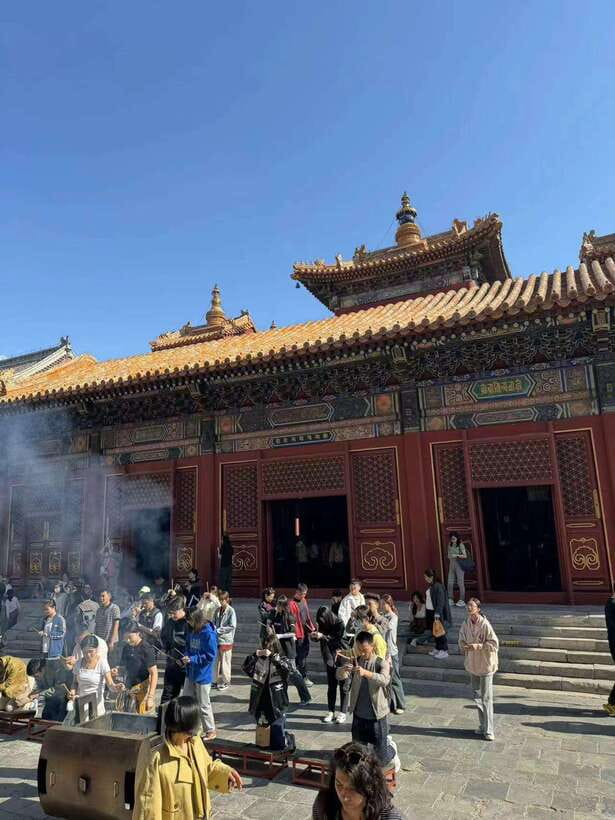
This is an entry ticket for Beijing’s Yonghe Lama Temple, the Yonghe Lamasery. It’s described as the principal and largest Buddhist Temple in Beijing, and the place draws people for one main reason: it’s big, important, and historically layered.
You’re paying about $9 per person, with the ticket and a booking services charge included. For a site of this stature, that’s solid value, especially because the ticket is set up to help you move faster. If you’re trying to fit Beijing’s “must sees” into a tight schedule, a two-hour slot is exactly the kind of time block that keeps your day from turning into a frantic sprint.
Also, it helps that this temple is not just a tourist facade. It was built in 1694 and later turned into a religious center. In other words, you’re not just looking at something old. You’re looking at something that has been used and reshaped for a long time.
Ticket Entry in Beijing: QR Code and Passport Rules That Actually Matter
Here’s the practical part, the part that saves time and stress. Your entry method is simple: use the QR code and your passport, and you can enter the park.
But there’s a critical wrinkle. The Get your guide QR is not valid. Before you go, check your email or WhatsApp for the right QR code. This matters because a non-working QR can cost you your entry window and create that annoying moment of standing in front of a scanner, realizing you brought the wrong code.
If you want this to feel effortless, do these two things before you leave for the temple:
- Make sure your QR code works on your phone without needing a new download at the last second.
- Bring your passport, since that’s explicitly part of the entry setup.
One more helpful detail: the ticket includes a line-skip. That does not mean you bypass all human processes everywhere, but it does mean your entry should be faster than walking up with no QR plan.
The result is a visit that feels controlled by your schedule. You’re less dependent on ticket counters, and more dependent on your own pacing.
Getting There Like a Local: Subway Line 2 or 5 to Yonghegong
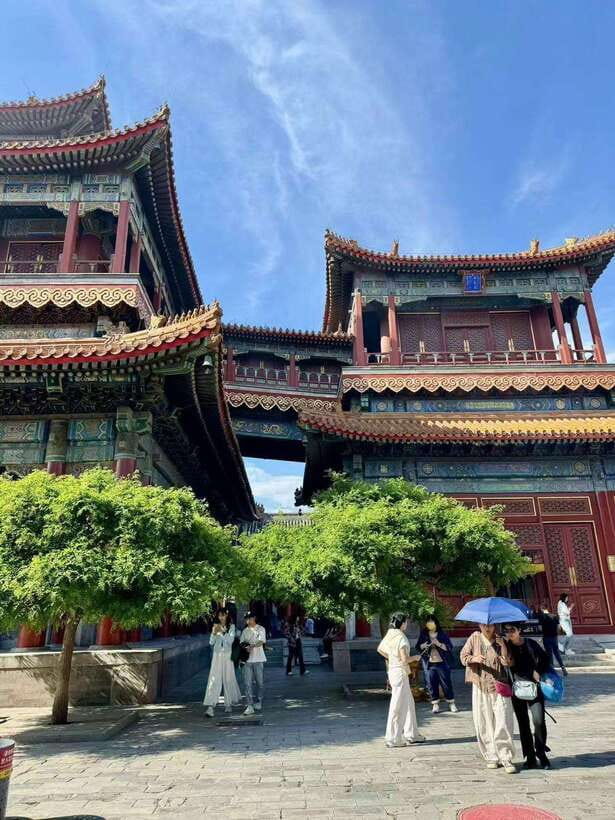
Yonghe Lama Temple sits in a very accessible part of Beijing. You can reach it by subway in a way that’s simple enough for a first-timer.
Subway directions
Take Subway Line 2 or Line 5 to Yonghegong (Yonghe Temple) Station. Exit at Exit F. Then walk south for a few meters, turn east, and you arrive after about a two-minute walk.
That short walk is a big deal. Beijing can be windy, crowded, and occasionally confusing around station exits. When the walk is only a couple minutes, you spend your energy looking forward, not wandering.
Bus options if you’re already nearby
If you’re moving around Beijing by bus, you have multiple routes:
- Bus 13, 116, 117, or 684 to Yonghegong Station
- Bus 13, 18, 44, 75, 116, 684, Te 2, or Te 12 to Yonghegong Qiao Dong Station
- Bus 117 or 125 to Yonghegong Qiao Bei Station
If you’re planning your day with other stops, this flexibility is useful. You can route around traffic and still get to the temple with minimal extra walking.
What to Expect During Your Two-Hour Visit
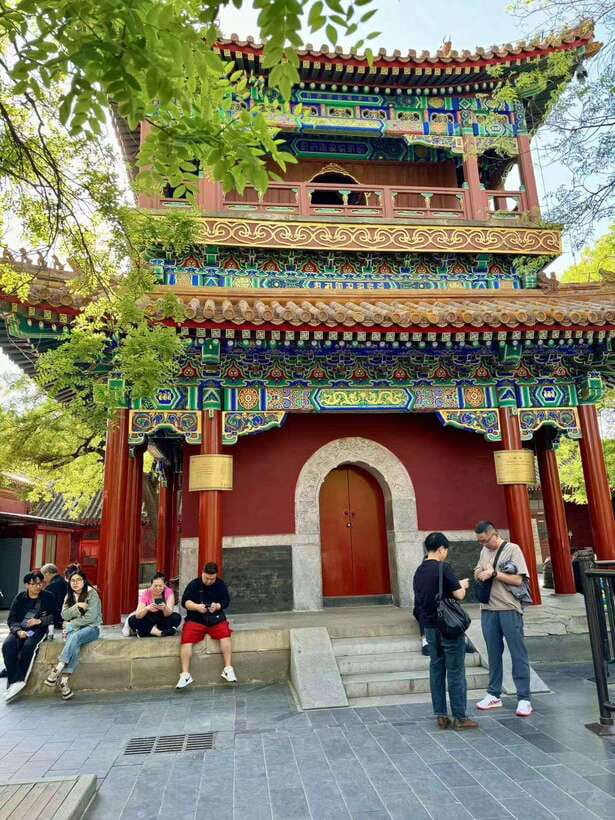
This ticket is for a 2-hour duration. That length is important because it shapes how you should tour. Yonghe Lama Temple is large enough that you can easily lose time. A two-hour visit works best when you go in with a plan: see the core areas, slow down for the parts that feel meaningful, then leave while you still feel unhurried.
Because this is an entry ticket format, you should expect to explore on your own rather than being locked into a detailed, moment-by-moment guided itinerary. The experience highlight is learning about the Yonghe Lamasery, so you’ll want to take advantage of any informational signage or self-guided cues once you’re inside.
How I’d pace the time
Think of your two hours as three mini segments:
- Enter, orient, and get oriented quickly. Use the first few minutes to get your bearings so you don’t keep doubling back.
- Focus on the key religious spaces and layout. This is the kind of site where the atmosphere and preservation matter. Slow down where you see the most visitors pause.
- Finish with time to linger. Don’t schedule your next stop so tightly that you feel rushed out the gate.
Even without naming every exact building or hall, the temple’s scale and preservation mean there’s a lot to take in. The highlight notes it as the largest and most perfectly preserved lamasery in present-day China, and that kind of reputation usually translates to a cohesive, well-kept complex that’s meant to be explored.
Wheelchair access
This ticket is marked wheelchair accessible. If mobility is part of your planning, that’s a helpful reassurance.
The Yonghe Lamasery Story: Why the 1694 to 1744 Timeline Matters
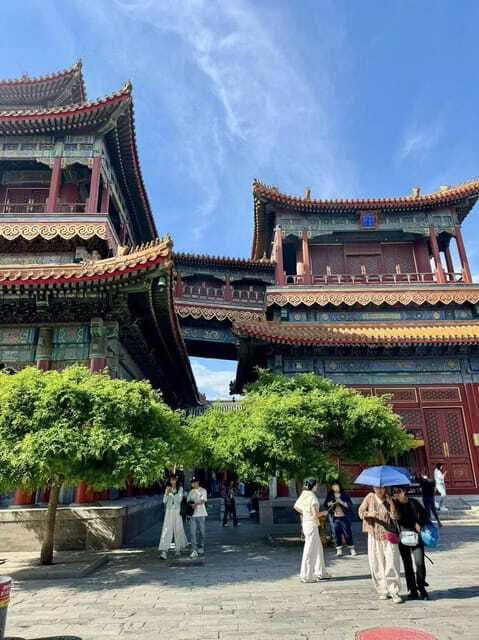
A lot of temples are old in a generic way. Yonghe Lama Temple is old in a very specific, political way. The site’s story is part of why it’s worth your time.
Here’s the timeline that helps you understand what you’re walking through:
- The temple was built in 1694 as part of the city wall for Emperor Yongzheng, before he became emperor in 1722.
- Emperor Yongzheng’s son, Emperor Qianlong, later sent for 300 Tibetan monks and 200 Chinese students in 1744.
- It became the dwelling of these monks and students, and from then on, it served as a temple and monastery.
- It’s considered one of the greatest Buddhist centers outside of Tibet.
What does this mean for your visit? It means the site is not only religious. It’s also a snapshot of how the Qing court managed culture and religion across regions. When you see how established and carefully maintained the complex is, that imperial patronage is the hidden backbone.
I like learning this kind of context because it changes how you read the place. Instead of thinking only about what it looks like, you start thinking about why it was built, how it was used, and why it gained significance over time.
Why Skip the Ticket Line (and How That Changes Your Day)
The listing highlights skip the ticket line, and it’s a practical perk. When you’re sightseeing in Beijing, time is the real luxury. Even if the line isn’t huge, it can eat up your energy, especially if you’re also dealing with crowds, weather, or a tight subway schedule.
With this ticket setup, you’re trying to shift your visit from waiting to exploring. Instead of spending part of your two hours inside a queue, you spend those minutes inside the temple grounds where it counts.
Just remember: line-skip only works if your QR code is correct. Since the Get your guide QR is not valid, the best use of the skip feature is to arrive ready with the right scan from your email or WhatsApp.
Who This Ticket Is Best For
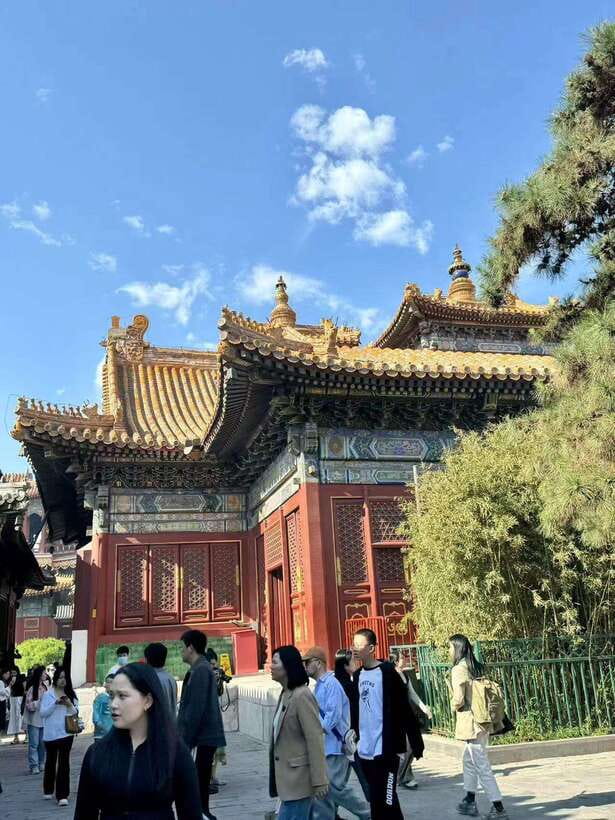
This Yonghe Lama Temple ticket is a good fit if you want:
- A short, high-impact visit in 2 hours
- An easy entry plan centered on QR and passport
- A major Beijing Buddhist stop that’s known as the principal and largest in the city
It’s especially useful for first-time Beijing visitors who are juggling multiple neighborhoods in a single day. With subway access via Line 2 or Line 5, the temple fits neatly into an efficient route.
If you prefer deeply guided experiences with detailed storytelling at each step, you might find two hours with an entry ticket format a bit brief. Still, the historical weight of Yonghe Lamasery is strong enough that a self-paced visit can be satisfying, as long as you’re willing to read what you see and pay attention to the site’s structure and preservation.
Price and Value: Is $9 Worth It?
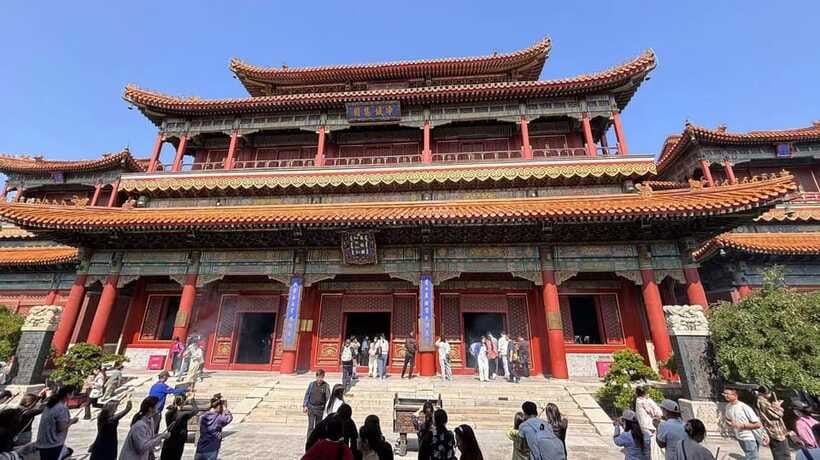
At about $9 per person, this ticket is priced to be approachable. The key question is what you get for that money.
You get:
- The Yonghe Lamasery ticket
- A booking services charge included in the total
So you are paying primarily for access plus the convenience layer that comes with booking. The bigger value play is the reduced friction at arrival, because the ticket is set up for QR entry and includes the promise to skip the ticket line.
When a major cultural site charges a low single-digit amount, I treat it as a “buy time and reduce stress” situation. You spend more of your trip actually inside the place and less time managing logistics.
Should You Book This Yonghe Lama Temple Ticket?
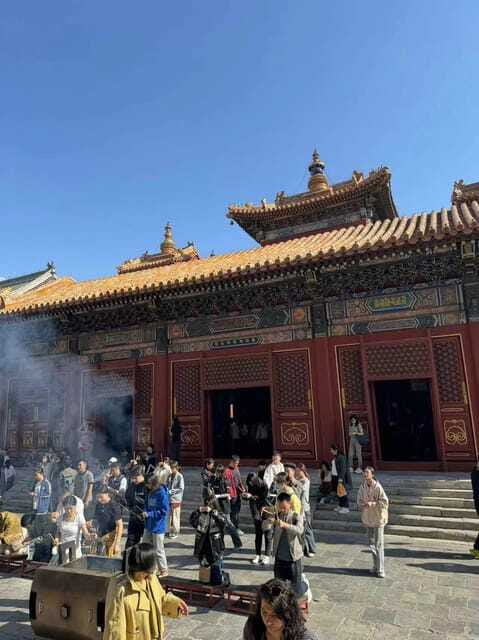
Yes, you should book it if you want a straightforward way to visit Beijing’s Yonghe Lama Temple without extra ticket-counter hassle. The value is strongest when you already plan to go, and you just need access that’s fast and predictable.
Book with extra attention to the one potential snag: the QR code. Make sure you have the correct QR from your email or WhatsApp, since the Get your guide QR is not valid. If you get that right, this becomes an easy, low-cost way to see a major religious site with a compelling 1694 to 1744 origin story.
FAQ
Do I need a special QR code to enter?
Yes. The Get your guide QR is not valid. You should check your email or WhatsApp for the right QR code, then use that QR with your passport to enter.
What do I need to bring for entry?
You need your QR code and your passport.
How long is the Yonghe Lama Temple visit?
The duration is listed as 2 hours.
How much does the entry ticket cost?
The price is listed as $9 per person.
What’s included with the ticket?
Included is the Yonghe Lamasery ticket and the ticket booking services charge.
Is free cancellation available?
Yes, free cancellation is available up to 24 hours in advance for a full refund.
Is the site wheelchair accessible?
Yes, the experience is marked wheelchair accessible.
More Tickets in Beijing
More Tour Reviews in Beijing


Beijing, reviewed one booking at a time
- Xian: Must see Eternal Love or Camel Bell Legend show Ticket
★ 5.0 · 3 reviews - One day tour to downtown Tianjin from Beijing by high speed train
★ 5.0 · 3 reviews - Ming Tombs Sacred Way & Underground Palace & Water Wall P Tour
★ 5.0 · 3 reviews - Beijing Mutianyu Great Wall Small Group Tour
★ 4.5 · 3 reviews - Return Bus to Badaling Great Wall
★ 3.0 · 3 reviews - Private Tour to Lama Temple, Tian’anmen Square and Forbidden City
★ 5.0 · 3 reviews
Tickets, compared.
 ★ 4.8Beijing: Forbidden City Tour(Group/Private)-Tickets IncludedFrom $47,974 reviews
 ★ 5.0Beijing: Mutianyu Great Wall Daily Tour with Ticket & LunchFrom $183,056 reviews
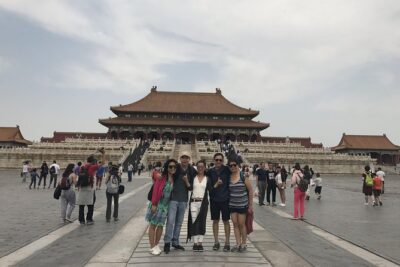 ★ 5.04-Hour Small Group Tour to Forbidden City with Entry TicketsFrom $151,863 reviews
 ★ 4.5Beijing: Tiananmen Square Registration Service(Ticket)From $31,704 reviews
 ★ 4.6Beijing: The Temple of Heaven or Summer Palace Entry TicketFrom $71,286 reviews
 ★ 4.9Beijing: Mutianyu Gt Wall Trip, Depart 8-10am Bus w/ TicketsFrom $181,256 reviews
 ★ 5.0Forbidden City&T-Square Small GroupTours w/ ticket(Eng/Esp Guide)From $11995 reviews
 ★ 4.3Beijing: The Forbidden City or Tiananmen Square Entry TicketFrom $4836 reviews