
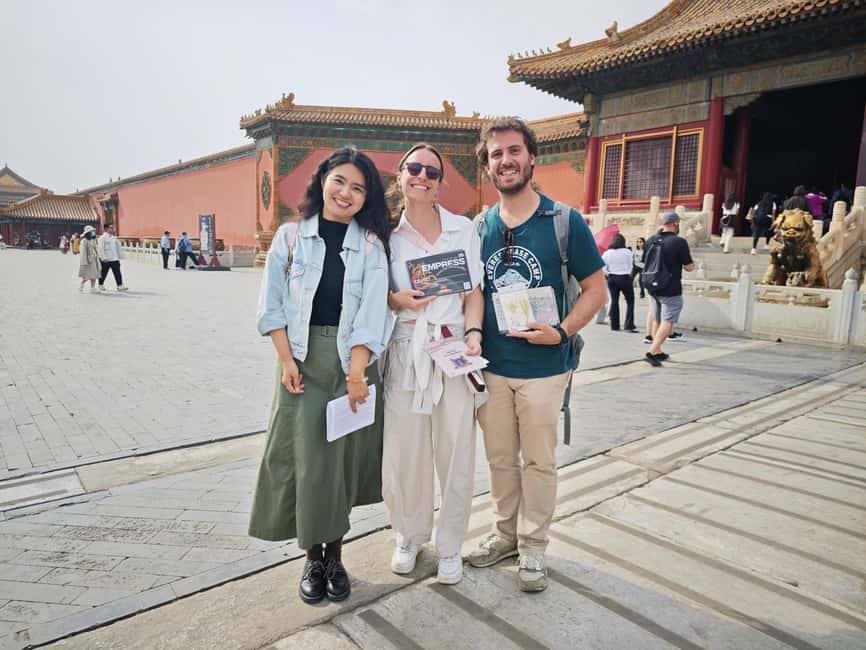
REVIEW · FORBIDDEN CITY & PALACE MUSEUM TOURS
Beijing:Forbidden City–Reveal Secrets Behind Red Walls
Red walls hide real stories.
This Forbidden City Decoder experience turns the Ming-Qing capital into a walkable puzzle, with guides guiding you through palace symbolism and the 1420 to 1912 timeline. I like the interactive identity game format that keeps you looking at details instead of just listening. I also like the “memory preservation” focus, including edited photo or video keepsakes.
You get a clear, hour-by-hour path along the classic Central Axis, so you do not wander. I especially appreciate that the team behind the tour is known for handling questions and making the pace feel light, with guides Coco and Molly specifically praised for clear explanations and photo-heavy attention. One consideration: security checks at the gates can add extra waiting time on busy days, so build in patience.
In This Review
- Key Takeaways Before You Go
- The Forbidden City as a Decoder, Not a Lecture
- Choose Your Plan: Small-Group Decoder, Private Guide, or Ticket Only
- Option A: Forbidden City Decoder Small-Group (3.5 to 4 hours)
- Option B: Forbidden City Decoder Private Tour (4 to 4.5 hours)
- Option C: Ticket Only
- Where You Start and How the Walk Flows
- Meridian Gate to the Three Harmony Halls: The Core Palace Logic
- Palace of Heavenly Purity and Hall of Union: Power Meets Ritual
- Palace of Earthly Tranquility: The Tea and Food Tasting Break
- Imperial Garden and Gate of Divine Prowess: Finish With a View
- What You Actually Learn: Yin-Yang, Five Elements, and the Timeline
- Architecture, as in symbolism
- Philosophy, as in balance
- History timeline, 1420 to 1912
- Ancient religion and sacrificial culture
- Guides Coco and Molly: Why the Tone Is Often the Best Part
- Price and Value: Why $10 Can Be a Deal If You Pick the Right Option
- Practical Tips That Save You Stress on Arrival
- Who This Tour Fits Best
- Should You Book This Forbidden City Decoder Tour?
- FAQ
- How long is the Forbidden City experience?
- What does the tour price include?
- Are there different tour options?
- Do I need a handbook during the tour?
- Where is the meeting point?
- What time does the tour start?
- Is a passport required?
- Is the Clock and jewelry museum included?
- What is not allowed at the site?
- Is cancellation free?
Key Takeaways Before You Go
- Choose your package smartly: decoder small-group, private, or ticket-only if you want to go solo with the basics.
- You follow the Central Axis: Meridian Gate through the major halls, then the residential palaces and garden.
- Expect a themed learning game: imperial symbolism plus a detective-style way to connect what you see to what it means.
- Plan for a longer tea break: at Palace of Earthly Tranquility you get tea, dessert, a tea ceremony, and food tasting time.
- Bring ID and expect checks: passport or ID is required, and site security is separate from the ticket line.
More ways through the gates
- Beijing: Forbidden City Tour(Group/Private)-Tickets Included★ 4.8 · 7,974 reviews
- Beijing: T-Square & Forbidden City Group or Private Tour★ 4.8 · 4,446 reviews
- All-Inclusive Tour: Tiananmen Square, Forbidden City, Great Wall★ 5.0 · 2,873 reviews
- 4-Hour Small Group Tour to Forbidden City with Entry Tickets★ 5.0 · 1,863 reviews
The Forbidden City as a Decoder, Not a Lecture
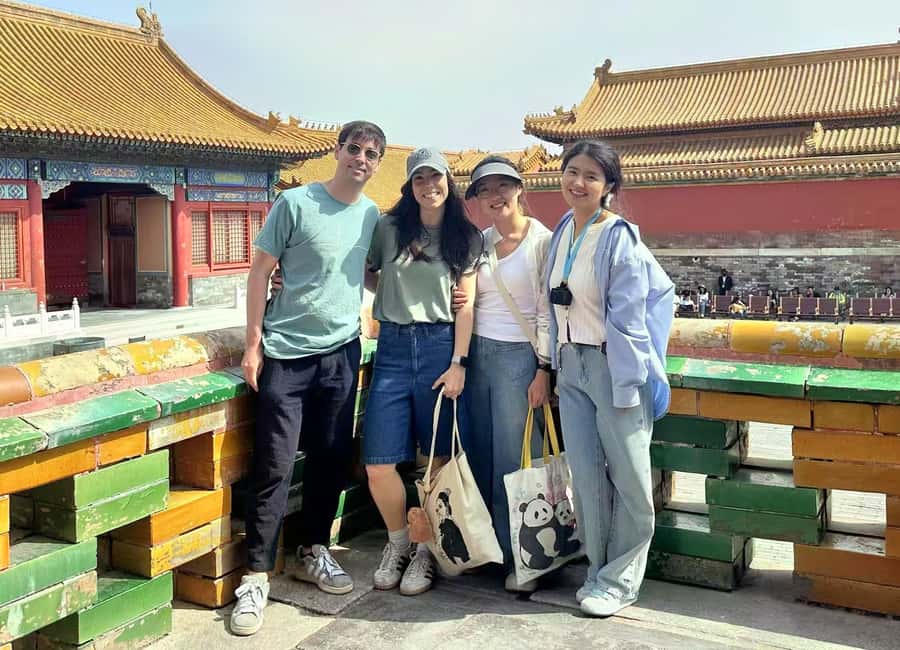
The Forbidden City can feel like a museum maze if you only get facts. This tour is built around the idea that the palace teaches you its logic, through layout, colors, and ritual symbols. You are not just told what the buildings represent, you get prompts to spot clues as you move.
That matters because the site is enormous, and the story behind it is not simple. The “decoder” framing helps you connect what you see to why it was designed that way. Think of it as turning a famous place into something you can actually read with your eyes.
Choose Your Plan: Small-Group Decoder, Private Guide, or Ticket Only
You basically have three ways to do this, depending on your style and how much interaction you want.
Option A: Forbidden City Decoder Small-Group (3.5 to 4 hours)
This is the sweet spot if you like structure but still want energy. You meet at Donghua Gate, and the start times are 8:30 or 12:30. You will need the illustrated handbook during the trip, and the route centers on iconic stops along the Central Axis.
Small group here is not a throwaway label. It is meant to keep tour quality high, so you can ask questions and stay with the storyline without lagging behind.
Option B: Forbidden City Decoder Private Tour (4 to 4.5 hours)
If you want a slower pace or a route that can bend to your interests, private is a strong fit. You meet at Donghua Gate with the same 8:30 or 12:30 starts, and you still use the illustrated handbook. This option supports customized routes and itinerary arrangements.
This is the better pick if you know what you want, like more time on the major halls, more discussion on symbolism, or more photo time at particular angles.
Other Beijing trips our reviewers kept returning to
Option C: Ticket Only
If you only want the entry ticket and none of the attraction storytelling, this is the option. It includes the Forbidden City ticket but not the storyteller guide.
If you choose this, you will want to be comfortable exploring on your own with other guides or offline resources, because the “decoder” part is what ties the visit together.
Where You Start and How the Walk Flows

You will start from areas that can vary depending on your booking. For the decoder options you meet at Donghua Gate, but there are also listed starting location options around 午门, Donghuamen Street, and 东华门. Either way, you are set up for a classic procession style walk.
The route starts with the big statement gates and halls, then moves into the imperial living and administrative spaces. It finishes at 神武门, which gives you a clean end point and a feeling of closure after hours of palace geometry.
Here’s what the flow looks like, in plain terms. You begin at the Meridian Gate, then you work through the Gate of Supreme Harmony and the three harmony halls. After that you transition into the inner palaces, then into the garden side of the complex, and finally you exit at Shenwu Gate.
Meridian Gate to the Three Harmony Halls: The Core Palace Logic

The Meridian Gate is your first “okay, now I get it” moment. You spend about 30 minutes here, with guidance focused on what the placement and scale are doing. This is where you start seeing why the Central Axis matters so much in imperial design.
Next comes the Gate of Supreme Harmony. With a shorter stop, about 15 minutes, this is more of a threshold moment. You are meant to notice the gate as a divider between the outer ceremonial space and the deeper ritual areas.
Then you hit the Hall of Supreme Harmony, the biggest headline hall in the set. You get around 40 minutes here. The guide’s role is important, because otherwise you can stand there with photos and miss the story the hall is trying to tell.
After that, the itinerary continues with the Hall of Central Harmony and the Hall of Preserving Harmony. Central Harmony is about 10 minutes, and Preserving Harmony is about 20 minutes. You have a planned break and photo stop around there too, with about 15 minutes free time.
One practical note: the Central Axis sequence moves you through high-interest zones that can get crowded. Your best strategy is to keep your eyes moving and your expectations realistic. The guide’s job is to keep the time meaningful, not just fast.
Palace of Heavenly Purity and Hall of Union: Power Meets Ritual

Once you leave the outer harmony spaces, the tone shifts. You enter the Palace of Heavenly Purity for about 40 minutes. This is a key stop because it is one of the spaces associated with the emperor’s central role in the court.
Then you move to the Hall of Union for around 10 minutes. Short stop, but these inner halls are where the architecture and court symbolism begin to feel less like a monument and more like a system.
The tour’s theme is useful here. The “decoder” approach helps you think in layers, not just in names. You start asking, why would a particular hall exist here, and why would that matter to the way power was performed?
Palace of Earthly Tranquility: The Tea and Food Tasting Break
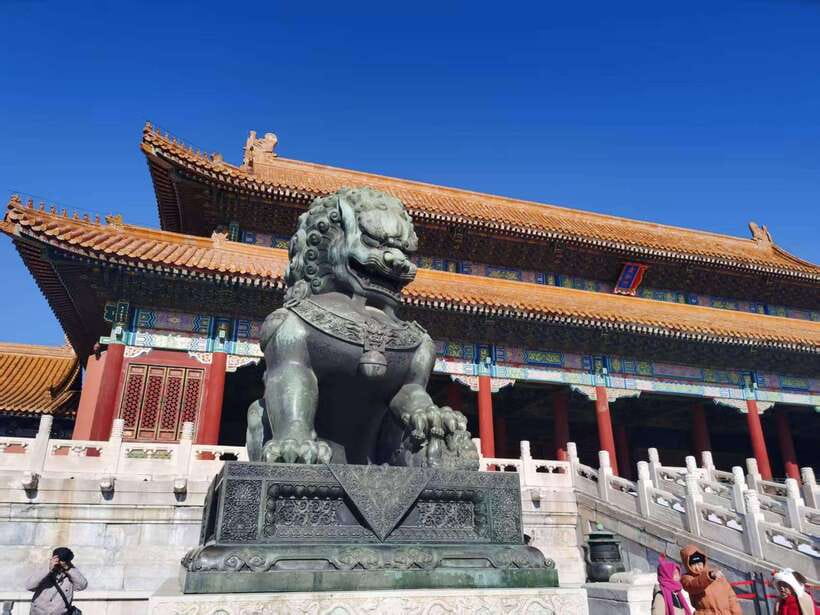
This part is one of the most practical perks of the tour design. Palace of Earthly Tranquility takes about 20 minutes for guided sightseeing, then you get a longer reset.
At that point, you spend about one hour on break time with tea and dessert. You also get a tea ceremony and food tasting. If you want a breather, this is your moment, and it also keeps the tour from becoming a nonstop march.
Why this matters: tea time is not just a snack stop. It fits the tour’s focus on ancient ritual and culture, so the break feels connected rather than random.
If you are sensitive to pacing, it helps that the itinerary includes this structured pause. You can refill your energy before the garden area.
Imperial Garden and Gate of Divine Prowess: Finish With a View
After Palace of Earthly Tranquility, you move toward the Imperial Garden. The guided portion is about 15 minutes, then you get a shorter photo stop and free time of around 10 minutes.
Gardens in this complex are not like modern parks. They are part of how the imperial lifestyle was staged, and you get more of that “why it is shaped this way” understanding when you have a guide talking symbolism while you look.
You finish with the Gate of Divine Prowess for about 10 minutes, then you end at 神武门. The exit point helps you avoid the typical “now what” feeling people get after a long site visit.
What You Actually Learn: Yin-Yang, Five Elements, and the Timeline
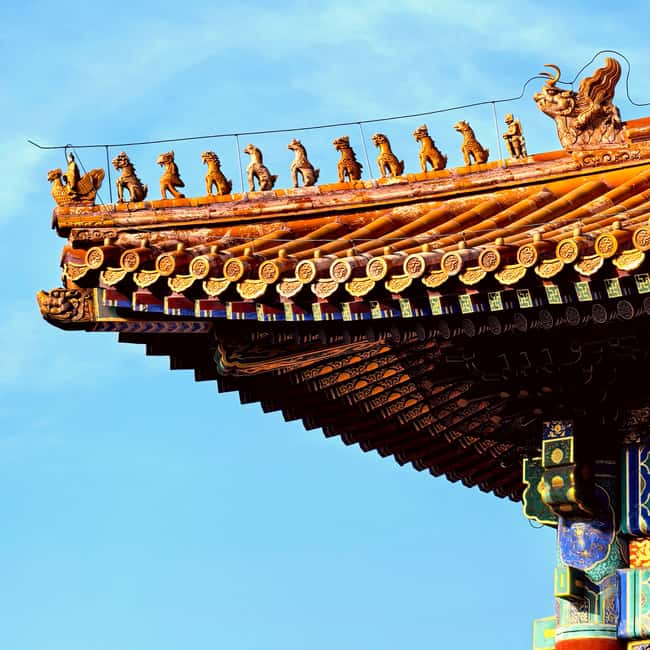
The tour’s educational content is not just names of halls. It’s built around a 4-part framework: architecture, philosophy, history, and culture.
Architecture, as in symbolism
You are guided through how imperial symbolism shows up in ancient Chinese architecture. This helps you read the site beyond the obvious scale. You start noticing how design choices communicate order and authority.
Philosophy, as in balance
The philosophy portion focuses on Yin-Yang balance and the Five Elements Theory. This matters because it gives you a lens for interpreting what you are seeing, not just a set of separate facts.
History timeline, 1420 to 1912
You also get a Year of 1420 to 1912 timeline through pivotal events. That range helps you understand the Forbidden City as something that changes over centuries, not as a frozen snapshot.
Ancient religion and sacrificial culture
You get cultural context tied to ancient religion and sacrificial culture. Even if you do not remember every term, you will likely remember the idea that the court’s daily life was tied to ceremony and meaning.
I also love that the guides use an interactive deduction style. Some of the praise for this experience specifically highlights a game structure where you observe, reason, and then receive the enriched explanation afterward. That design makes the info stick.
Guides Coco and Molly: Why the Tone Is Often the Best Part
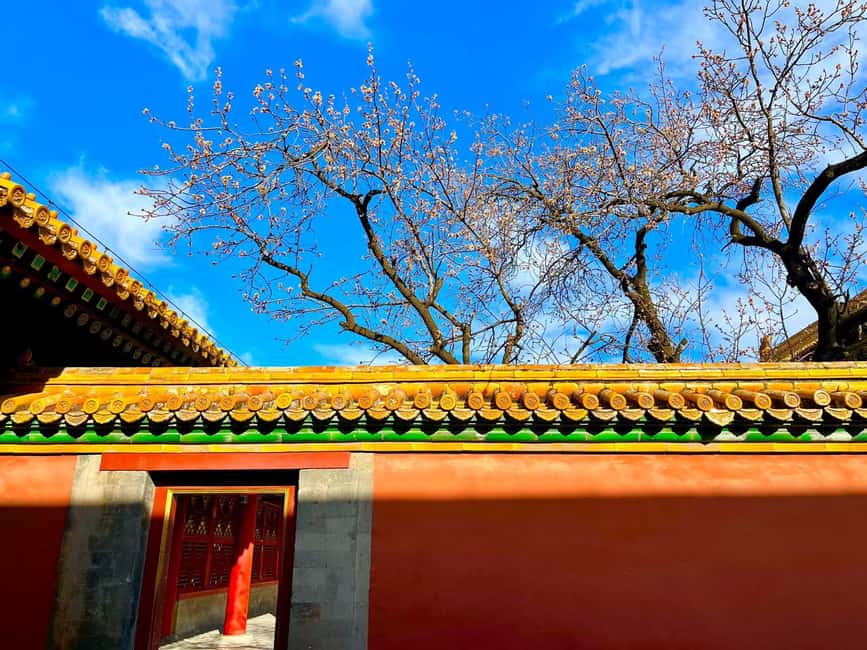
The guide team is part of the reason this tour gets such high marks. Coco and Molly are the names that show up most, and they are praised for being able to handle lots of questions without turning the visit stiff.
One review-style detail that is especially useful for you: the guides are known for combining direct explanations with prompts. That means you are not just passively receiving info. You are doing something, even if it is as simple as making a quick deduction from what you are standing in front of.
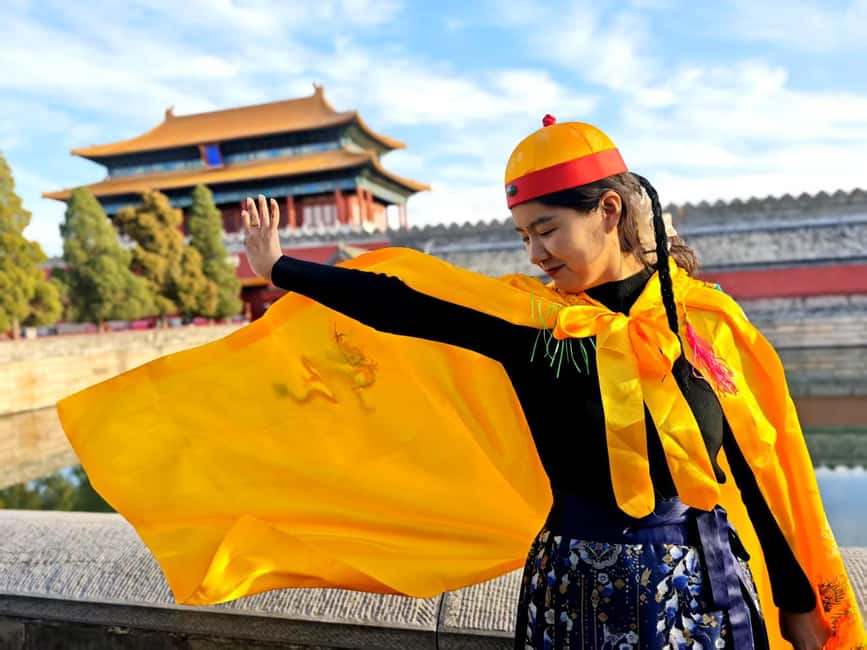
There is also a strong “memory side” focus. Coco is praised for taking many photos from photogenic angles and even filming the whole tour with a bodycam style approach so you can receive a video of your visit.
That kind of attention is value, not fluff, because it saves you from needing to constantly stop and reposition your phone while you are trying to understand the site.
Price and Value: Why $10 Can Be a Deal If You Pick the Right Option
At $10 per person, the biggest question is value: what do you actually get for that price?
You get entry to the Forbidden City, a guide in English or Chinese, and edited photos. You also get a structured path through major sites, plus the themed learning format that makes time feel productive.
You do not get drinks and snacks included, and you do not get entry to the clock and jewelry museum. So you still want to plan for your own water and any extra interests beyond the core Forbidden City route.
But for a large, ticketed world-famous attraction, $10 becomes interesting when you factor in guide time plus the included memory editing. If you would otherwise struggle through the complex alone, paying for that guidance is often cheaper than paying for a better viewpoint later after you realize you missed the storyline.
Practical Tips That Save You Stress on Arrival
This site runs on checks. Your tour includes entry to the Forbidden City, but you still need to pass mandatory security screening at the entry points. Waiting time can be high during peak seasons and it is separate from the ticket line.
Bring your passport or ID card, because your passport is required for sights entry. Also plan for weather. The tour is generally open during rainy or snowy days unless government closures happen due to heavy weather.
What you should avoid bringing is clearly listed: weapons or sharp objects, alcohol and drugs, and pets (assistance dogs are allowed). If you pack light and follow the rules, you move faster.
Also, this tour is not suitable for wheelchair users, and it is not suitable for people over 95 years. If that affects you, I would look for an alternative that matches your mobility needs.
Who This Tour Fits Best
This is a good fit if you want structure, but not a stiff lecture. The decoder format works especially well when you like symbolism, architecture, and the kind of thinking that turns a big sight into smaller discoveries.
It also suits you if you like photos but hate the awkward “stop, shoot, and hope” routine. The included edited photos and the guide’s photo attention help your final set look like you actually spent time looking.
If you prefer total independence and only want the ticket, Option C makes sense. But if you want the stories behind the red walls and the reason each hall feels different, Options A or B are the stronger choice.
Should You Book This Forbidden City Decoder Tour?
I would book it if you want the Forbidden City to feel readable. The combination of guided Central Axis pacing, themed learning about architecture and philosophy, and the memory-focused photo and video support makes it feel like more than a ticket with a voice.
I would think twice if you hate security-line friction or you know your schedule is too tight for peak crowds. This is still a world-famous site with real entry checks, so the tour’s best experience comes when you show up with patience.
FAQ
How long is the Forbidden City experience?
The experience is listed as 4 hours. The small-group and private options run about 3.5 to 4 hours and 4 to 4.5 hours respectively.
What does the tour price include?
It includes entry to the Forbidden City, an English/Chinese-speaking guide, and edited photos. The experience also includes the tea and dessert portion during the route.
Are there different tour options?
Yes. You can choose Option A Forbidden City Decoder Small-Group, Option B Forbidden City Decoder Private tour, or Option C Ticket Only.
Do I need a handbook during the tour?
For Option A and Option B, an illustrated handbook is needed during the trip.
Where is the meeting point?
Meeting point may vary depending on the option booked. The decoder options meet at Donghua Gate, and other starting location options include 午门, Donghuamen Street, and 东华门.
What time does the tour start?
The listed start times for the decoder options are 8:30 and 12:30.
Is a passport required?
Yes. Your passport is required for sights entry.
Is the Clock and jewelry museum included?
No. Entry to the clock and jewelry museum is not included.
What is not allowed at the site?
Weapons or sharp objects, pets (assistance dogs allowed), and alcohol and drugs are not allowed.
Is cancellation free?
You can cancel up to 24 hours in advance for a full refund.
More City Tours in Beijing


More Tour Reviews in Beijing


Inside The Forbidden City, More Visits
Beijing, reviewed one booking at a time
- Xian: Must see Eternal Love or Camel Bell Legend show Ticket
★ 5.0 · 3 reviews - One day tour to downtown Tianjin from Beijing by high speed train
★ 5.0 · 3 reviews - Ming Tombs Sacred Way & Underground Palace & Water Wall P Tour
★ 5.0 · 3 reviews - Beijing Mutianyu Great Wall Small Group Tour
★ 4.5 · 3 reviews - Return Bus to Badaling Great Wall
★ 3.0 · 3 reviews - Private Tour to Lama Temple, Tian’anmen Square and Forbidden City
★ 5.0 · 3 reviews
Forbidden City & Palace Museum Tours, compared.
 ★ 4.8Beijing: Forbidden City Tour(Group/Private)-Tickets IncludedFrom $47,974 reviews
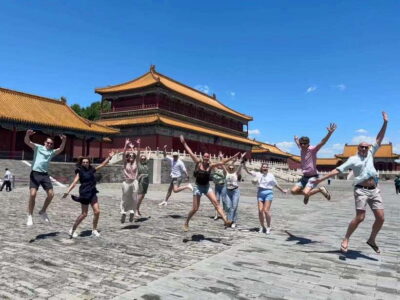 ★ 4.8Beijing: T-Square & Forbidden City Group or Private TourFrom $174,446 reviews
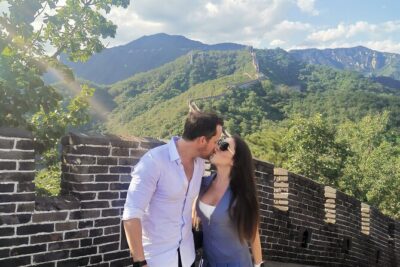 ★ 5.0All-Inclusive Tour: Tiananmen Square, Forbidden City, Great WallFrom $1282,873 reviews
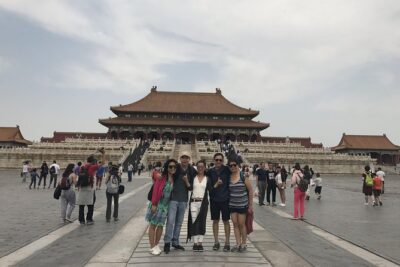 ★ 5.04-Hour Small Group Tour to Forbidden City with Entry TicketsFrom $151,863 reviews
 ★ 5.0Beijing Full Day Tours: Tiananmen Sq, Forbidden City, Great WallFrom $991,634 reviews
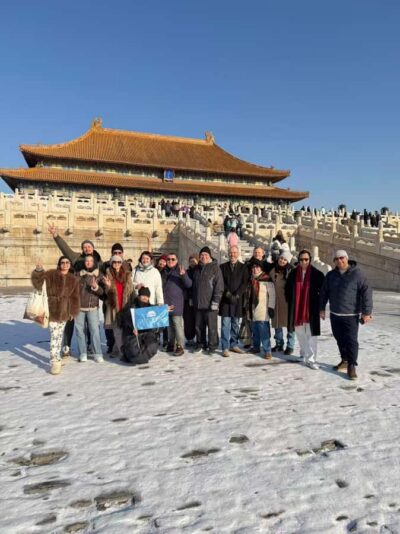 ★ 4.6Beijing: Tianmen Square, Forbidden City & Royal Museum ToursFrom $41,288 reviews
 ★ 4.9Beijing: Forbidden City and Tian’anmen Square Waking TourFrom $21,002 reviews
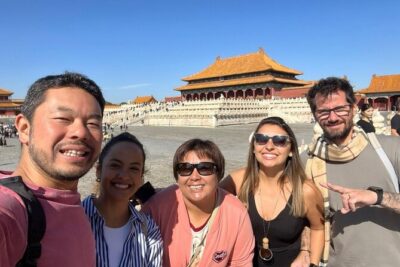 ★ 5.0Forbidden City&T-Square Small GroupTours w/ ticket(Eng/Esp Guide)From $11995 reviews
Browse the lists this tour appears in