
REVIEW · CHONGQING CITY TOURS
Chongqing 1941 theatre: Tea Art Performance with Folk Art
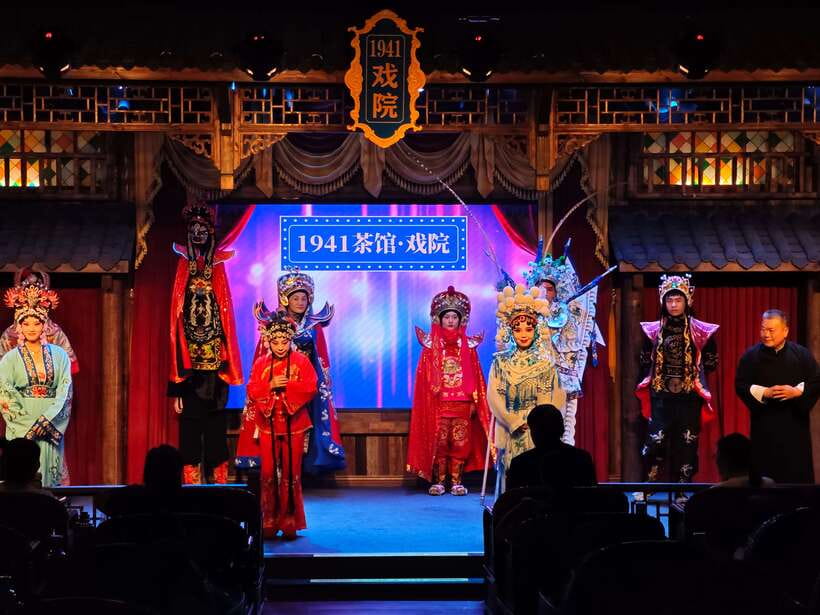
A tea show with real street-style energy. At Chongqing 1941 Theatre, you get a short indoor performance built around tea, folk arts, and close-up theatrics, with a big payoff if you’re willing to sit near the front. I especially like the tea-and-snack setup that keeps the mood casual, and the way the show rotates through different styles without dragging. The main drawback is timing and pacing, since it’s only 45 minutes, so you will want to pair it with something else nearby.
You’ll walk in, get seated, and watch artisans and performers move through a mini program that includes Sichuan drama, music, and stage tricks. The tea part matters because you have to arrive early, and tea can be missed if you’re late. Also, the program is in Chinese, so you’ll rely on visuals, music, and story rhythm more than subtitles.
In This Review
- Key things to know before you go
- Finding Chongqing 1941 Theatre, and why the start time matters
- What you actually get for the $31 ticket
- The 45-minute show flow: tea first, then a rotating mini-festival
- Sichuan drama Human Good with kung fu: the choreography you can’t miss
- Long Mouth Pot Tea Art: the 1.2-meter teapot moment
- Pipa performance: how the music lands without translation
- Quyi Money Board: singing and storytelling in plain rhythm
- Face-changing style theater and other quick-hit folk customs
- Snacks, covered bowl tea, and the late-arrival risk
- Ticket value reality check: great variety, but short and basic on language
- Who this show suits best, and who should think twice
- Should you book Chongqing 1941 Theatre Tea Art Performance?
- FAQ
- How long is the Chongqing 1941 theatre tea art performance?
- What is the price per person?
- What is the meeting point?
- Is the performance indoors?
- What is included in the ticket?
- What happens if I’m late?
Key things to know before you go
- Arrive early for your tea: tea is tied to timeliness, not just seating.
- It’s a 45-minute indoor show: plan it like an evening opener, not a full evening plan.
- A 1.2-meter teapot tea trick: the Long Mouth Pot Tea Art is a show-stopper moment.
- Sichuan drama meets kung fu: you’ll see physical choreography alongside opera-style storytelling.
- Pipa and Quyi add variety: music and storytelling keep you engaged even if you miss some spoken details.
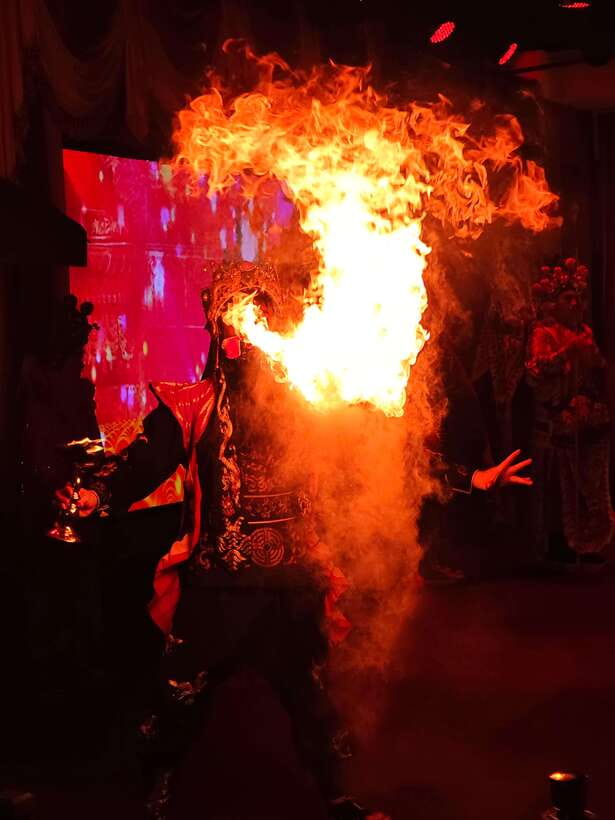
- Face-changing style theater may happen up close: expect bold makeup and dramatic reveals close to the audience.
Chongqing by day and after dark
- Chongqing Wulong National Park Private Tour★ 5.0 · 87 reviews
- Chongqing: Two Rivers Night Cruise- Yangtze & Jialing Rivers★ 4.5 · 64 reviews
- Chongqing deep explore & private car service including meals★ 4.9 · 51 reviews
- Chongqing: 1-day Essential Guided City Tour without Car★ 5.0 · 44 reviews
Finding Chongqing 1941 Theatre, and why the start time matters
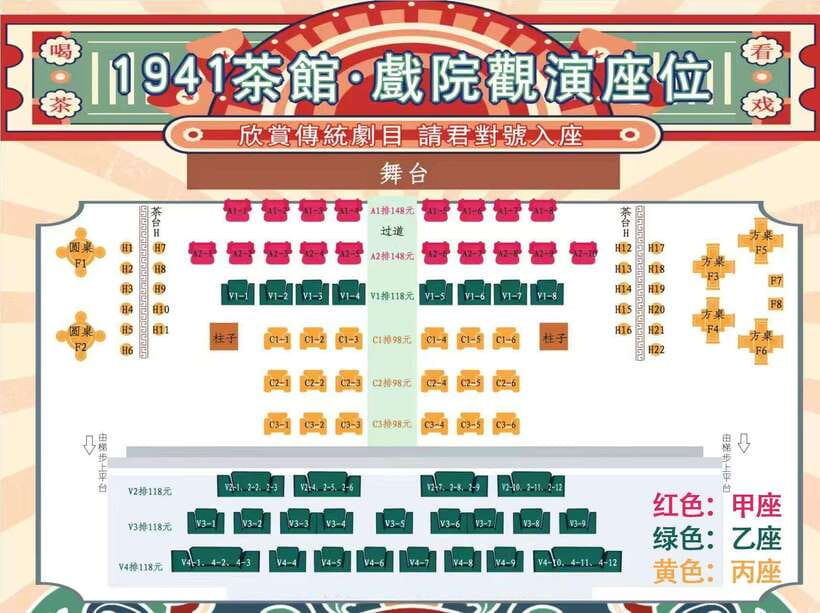
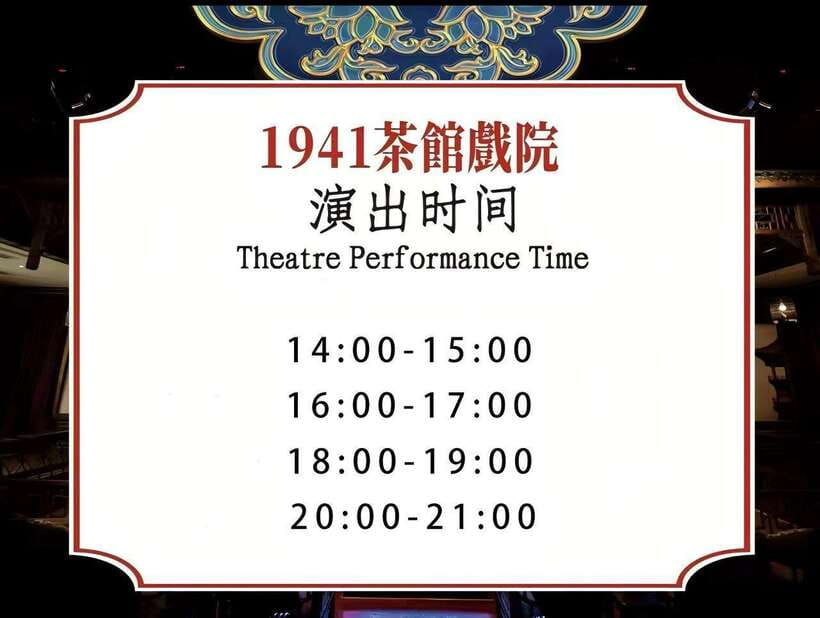
This show is indoors, so you’re spared from Chongqing’s weather swings, but you gain a new rule: timing. You’re told to arrive 30 minutes before the activity starts. That’s not just for check-in. It’s because the included tea service is tied to the program, and tea will not be provided if you’re late.
Meeting point is specific: the Yutian building garage entrance, next to the time elevator to the 8th floor. If you’re coming from a distance, I’d treat this like a “find-and-stay” mission. Once you locate the entrance, give yourself extra minutes to avoid rushing. Even in a short show, a rushed arrival can knock your tea experience off the rails.
The host or greeter is Chinese, and the show language is Chinese. Translation isn’t mentioned as part of the plan, so don’t assume you’ll get an English explanation. Instead, aim for a seat where you can clearly see faces, hands, and the stage flow. That is how you’ll make sense of most moments.
What you actually get for the $31 ticket
The price is $31 per person, and the package is simple. Your ticket covers the traditional performance plus a covered bowl tea and a special snack per person. Tea is part of the pacing, and it helps you stay in the “tea house” mindset instead of thinking of this as a generic stage show.
That tea-and-snack combo is the reason I think this activity is good value for the right traveler. You’re not just paying to watch. You’re tasting something while you watch artisans perform, which turns the room into a shared experience. For many people, that’s the difference between “I watched a show” and “I felt part of the show.”
You should know what’s not included. There’s no transportation to and from the activity, and you’ll cover personal expenses on your own. So budget for local transit, and if you’re eating before or after, bring a small snack plan in case your schedule is tight.
One practical cost tip I’d pass along: if you are very price-sensitive, it can pay to compare ticket pricing at the venue before committing. Some people have found that buying in advance costs more than paying at the location. If you do prebook, you’re usually buying convenience and seat certainty, but if you’re flexible, checking first can help you avoid overpaying.
The 45-minute show flow: tea first, then a rotating mini-festival
Think of this as a compact sampler of Sichuan and broader Chinese folk performance styles. You get around 45 minutes total, and the show moves through multiple acts so you’re never stuck watching the same thing for too long.
A typical flow goes like this:
- You’re seated and the tea service starts, usually with a covered bowl style pour.
- The stage shifts into performance segments, mixing drama, martial energy, music, and stage craft.
- The show ends with a closer audience moment, including opportunities like photos with performers, depending on how the night’s flow goes.
The included tea is described as Gaiwan tea from Chongqing, and the service is paired with a snack. That matters because you’re not expected to sit empty-handed while the program finds its rhythm. The snack is part of the pacing, too.
Sichuan drama Human Good with kung fu: the choreography you can’t miss
One of the billed highlights is a performance of the Sichuan drama Human Good, with kung fu. Even if you don’t follow every spoken line, kung fu scenes work because they’re visual. You’ll watch timing, stance, and stage movement do the storytelling work.
What makes this segment valuable for you is its contrast. Tea art can feel delicate. Opera can feel formal. Kung fu adds speed, muscle, and a kind of grounded intensity. In a short show, that contrast keeps you awake and interested.
Also, Sichuan drama is known for expressive performance style. Here, the “watching closely” part matters. Don’t sit so far back that you only see broad gestures. If you want to understand what the performers are doing, get a seat where you can catch facial expression and hand movement, not just the silhouette.
Long Mouth Pot Tea Art: the 1.2-meter teapot moment
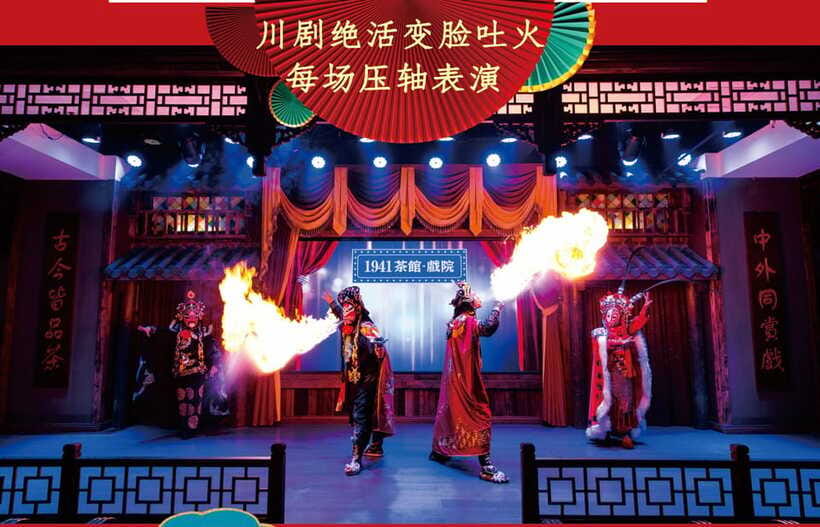
If I had to pick the visual signature of this show, it’s the Long Mouth Pot Tea Art. You’ll see a 1.2-meter long teapot, and the whole point is that the technique looks impossible until you see it performed.
For you, the trick is not just in the gadget. It’s in the control. Long-spout tea work requires stable posture and precise pouring so the moment stays elegant and not chaotic. Watching a skilled artisan handle something that long turns tea into a performance, not just a drink.
This is where the tea-and-show combo really pays off. Since you get the tea service during the program, you can compare the performance style to what you’re tasting. It’s one of those rare cultural shows where the prop and the plate in front of you are connected.
Pipa performance: how the music lands without translation
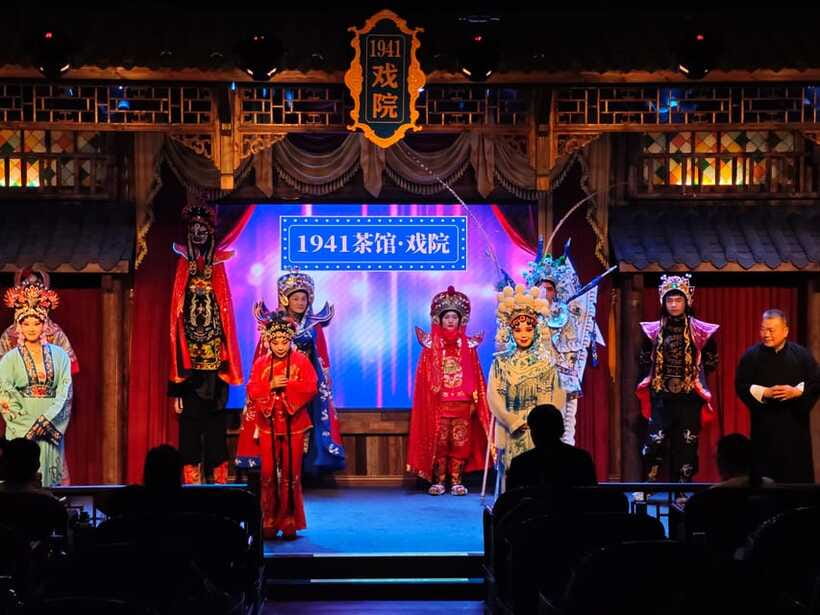
Another key highlight is the Pipa performance, described as beautiful and sonorous, with an interwoven sound. The pipa can carry a lot of emotional detail even when you don’t understand the spoken context, because the phrasing and tone do much of the communication.
Why this matters for non-Chinese speakers:
- Music gives you a framework for the program’s emotional shifts.
- Even without dialogue, you can follow the rise and fall of melodies.
- The pipa segment is a natural reset between more physically intense parts like kung fu.
If you like traditional Chinese instruments, this is the moment that may feel most like a “pure” performance. I’d treat it like a mini concert inside a tea show, and give it your full attention. Put your phone away for a couple minutes if you can, so you don’t miss the subtle timing.
Quyi Money Board: singing and storytelling in plain rhythm
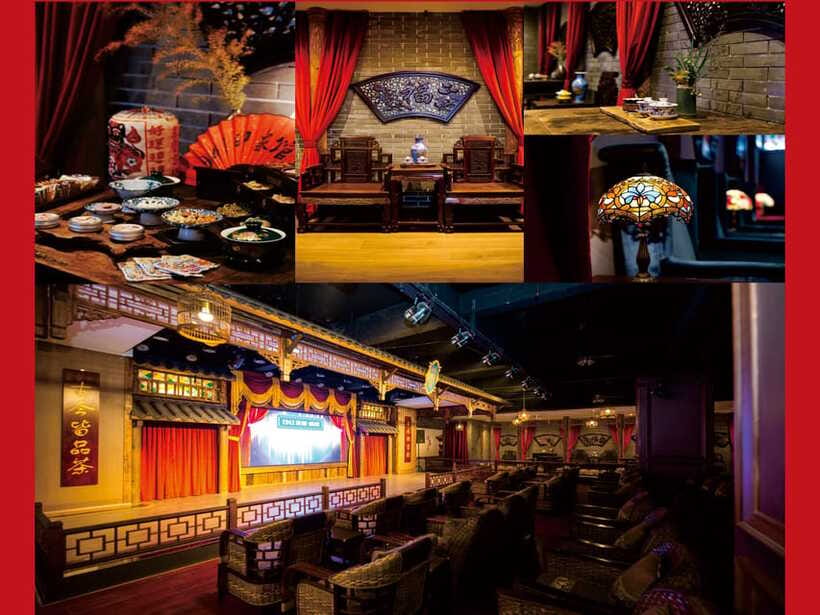
You also get Quyi Money Board programming, described as singing and storytelling. Quyi is a broad category, but the core is human voice plus narrative rhythm. This is the segment where you may feel the least “translation needed” depending on how the performers pace the stories.
The Money Board element suggests a percussive or rhythmic component used to shape the storytelling beat. That means the tempo and delivery can carry the meaning even when specific words are unknown. It also helps you stay engaged, since the performers keep switching between spoken narration and sung parts.
For you, the practical move is to watch the performer’s body language. In quyi-style storytelling, gestures often cue irony, excitement, or emphasis. When you track that, you’ll understand more than you think you will.
Face-changing style theater and other quick-hit folk customs
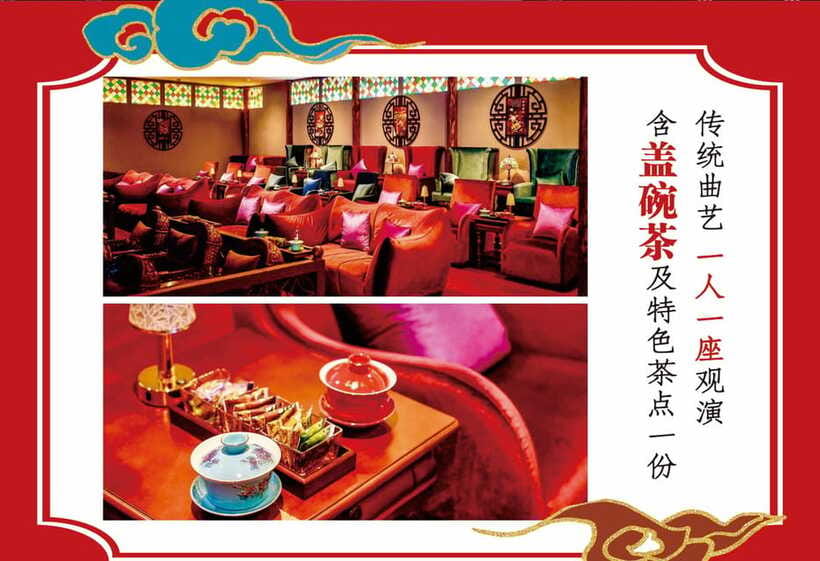
One of the show elements is the close-up look at facial makeup that can be unpredictable, part of a rotation of folk art styles, traditional music, magic, and folk customs. That’s the “stop and stare” portion of the show.
This is also where audience position can matter. If you sit close, you may catch more of the mechanics and transformation moments. One standout detail from participant experience is that being up near the front can lead to constant interaction, not just passive watching.
So if you care about this side of the program, choose your seat with intention. Don’t hide behind a wall of heads. Look for a position where you can see faces clearly and you can also see how performers enter and move through the space.
Snacks, covered bowl tea, and the late-arrival risk
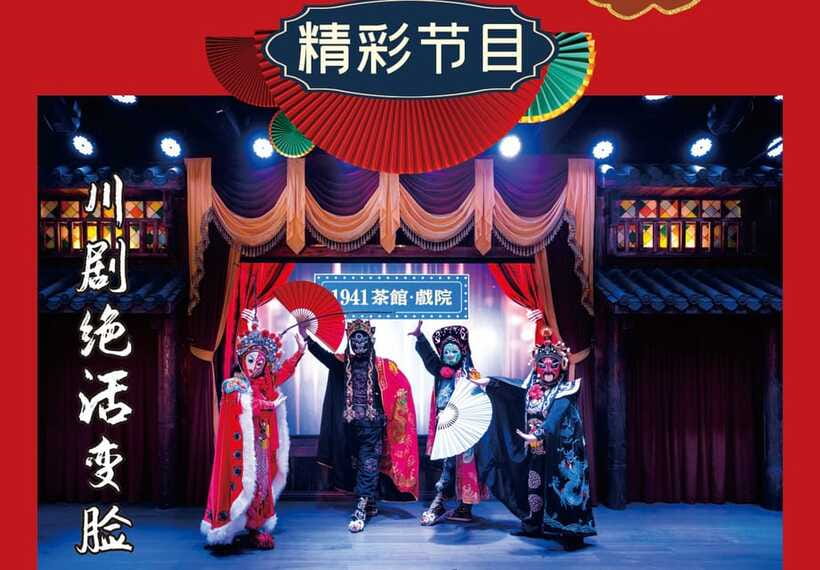
Let’s talk food, because it’s part of the value. You get a special snack plus a covered bowl tea. The tea is not stated as being provided if you’re late, so this is the main place where travel planning can affect your experience.
If you tend to arrive right at the start time, adjust. Arrive early, use the extra time to settle, and then let the tea service be part of the fun. If you get busy sightseeing beforehand, consider eating something simple before you go. One note that comes up is that the snack can be nuts and similar items, so you might prefer not to arrive truly hungry.
The big takeaway: treat the tea like a timed service, not a buffet.
Ticket value reality check: great variety, but short and basic on language
The show has a rating of 3.8 from 8 reviews, which tells you to keep expectations grounded. The strongest praise tends to cluster around the variety of acts, the quality of performance, and audience closeness if you sit near the front. People also highlight the tea and snack pairing as a good piece of the experience, not just a cheap add-on.
The tradeoff is simple. It’s short. At 45 minutes, it’s not a long evening event. If you’re hoping for a deep, multi-hour cultural immersion, you might feel it moves quickly. The flip side is that the compact format can be great when you’re tired, short on time, or you want a cultural stop without committing to a long program.
Language is another factor. Since it’s Chinese, the “understanding” level depends on your tolerance for nonverbal storytelling. If you enjoy music, visual theater, and skilled hands on stage, you’ll be fine. If you need every spoken word explained, this may feel thin.
Who this show suits best, and who should think twice
This is a strong match for:
- First-time visitors to Chongqing who want an easy indoor cultural experience.
- Travelers who like tea culture and don’t mind that it’s part of a performance, not a quiet ritual.
- People who enjoy variety shows, where drama, music, and stage craft all show up in one stop.
- Anyone who values getting close to performers, since the program can include direct audience engagement.
It may be less satisfying for:
- Travelers who want a long, slow-paced performance.
- Anyone who needs English narration or subtitles to fully understand the content.
- People who often miss early start times, because the tea service is tied to arriving early.
Should you book Chongqing 1941 Theatre Tea Art Performance?
I’d book it if you want a fun, compact evening that blends tea art with multiple forms of Chinese folk performance, and you’re the kind of person who enjoys watching hands, faces, and stage technique closely.
Skip or think twice if you’re only coming for one specific art form and you need lots of time to explore it. Also be honest about your schedule. Since tea service is tied to being early, arriving on time is part of getting your money’s worth here.
If you decide to go, show up with a calm plan, aim for a good view, and treat the tea as part of the show. That mindset turns 45 minutes into a real memory, not just another ticket you used up.
FAQ
How long is the Chongqing 1941 theatre tea art performance?
The performance lasts 45 minutes.
What is the price per person?
It costs $31 per person.
What is the meeting point?
Meet at the Yutian building garage entrance next to the time elevator to the 8th floor.
Is the performance indoors?
Yes, it is indoors.
What is included in the ticket?
The ticket includes the traditional performance, plus the covered bowl tea and a special snack per person.
What happens if I’m late?
Tea will not be provided if you are late.
Chongqing, Day And Night


Chongqing, reviewed one booking at a time
- Chongqing Private Tour Pandas City Must See Hot Pot All in one
★ 5.0 · 3 reviews - Chongqing 1949 Ticket Epic Historical Spectacle
★ 5.0 · 3 reviews - Chongqing Night Tour: River Cruise and Hidden Views
★ 5.0 · 3 reviews - Chongqing One-Day Trip: Wulong’s 3 Essentials
★ 4.6 · 3 reviews - Chongqing: Private Food Tour and Magical Night Views
★ 5.0 · 3 reviews - 2Day Wulong Karst Park+Dazu Carvings World Heritage Private Tour
★ 5.0 · 4 reviews
Chongqing City Tours, compared.
 ★ 5.0Chongqing Wulong National Park Private TourFrom $29987 reviews
 ★ 4.5Chongqing: Two Rivers Night Cruise- Yangtze & Jialing RiversFrom $3864 reviews
 ★ 4.9Chongqing deep explore & private car service including mealsFrom $18751 reviews
 ★ 5.0Chongqing: 1-day Essential Guided City Tour without CarFrom $15544 reviews
 ★ 5.0Chongqing private luxury city tour: Must-sees All in OneFrom $1039 reviews
 ★ 5.0Chongqing: Magic Night View and Secret Viewing Spots TourFrom $8827 reviews
 ★ 5.0Chongqing Wulong: All inclusive luxury private trip to 2 spotsFrom $1026 reviews
 ★ 5.0All-In-One Chongqing Trendy Spots Private TourFrom $22026 reviews
Browse the lists this tour appears in