
REVIEW · CHINA
Cultural Chengdu In Depth
Chengdu culture comes with your own practice. This all-day walking experience strings together Tai Chi and calligraphy with real local downtime at a teahouse and a chance to play Mahjong. I love how the day is practical, not just lecture-style, and I also like that it ends in a place regular Chengdu locals actually use, People’s Park. One thing to consider: you’ll do a good chunk of walking and classes, so wear comfy shoes, and plan to pay for your own food and drinks.
You might meet guides such as Sheldon or Cecile, and the common thread in the best outings is how organized and caring the leaders are. They keep the flow smooth between activities, explain the why behind what you’re doing, and adjust if your group needs a slower pace. The day also leans into traditional themes like Taoism and Fengshui, so you’re not only copying moves or brush strokes, you’re learning the ideas those arts connect to.
Expect a hands-on walking day, starting near Fuqin in Qingyang District and finishing at People’s Park. It’s built for most people who want culture that feels physical and friendly, not museum-cold. If you want quiet sightseeing, this isn’t that. If you want a fun morning exercise, an art class, and local tea-house energy, it’s a strong fit.
In This Review
- Key highlights you should care about
- The Big Idea: learn Chengdu by doing, not just watching
- Getting started near Fuqin, then walking your way into Chengdu culture
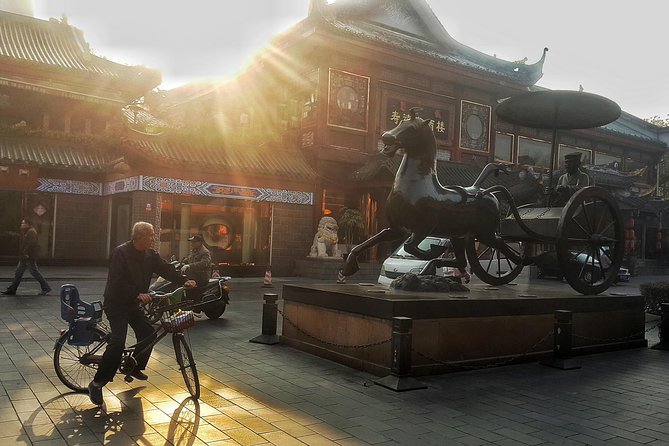
- Stop 0: the ancient-style downtown street walk and its photo-friendly architecture
- Stop 1: Chengdu Culture Park Tai Chi class with a local master
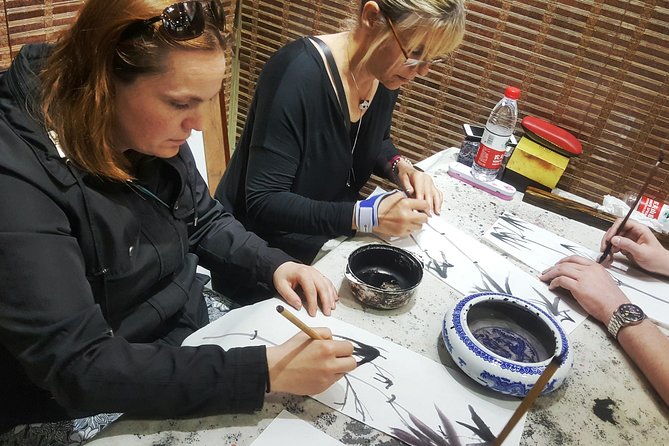
- Stop 2: Song Xian Qiao antique and art market calligraphy studio session
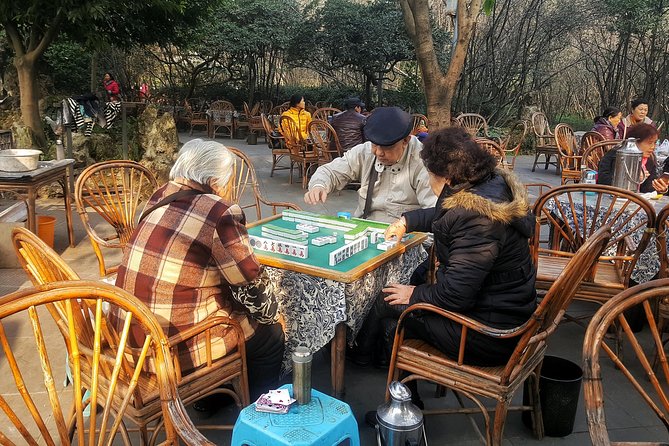
- Stop 3: Renmin Park teahouse, tea, and learning Mahjong
- Taoism and Fengshui themes, explained through everyday traditions
- Walking pace and the practical flow of a 6-hour day
- Price and value: is $113.85 a fair deal?
- Who this tour is best for
- Should you book Cultural Chengdu In Depth?
- FAQ
- What does the tour focus on?
- How long is the tour?
- Where does the tour start and what time does it begin?
- Is food and drinks included?
- What is included in the price?
- Is it a private tour?
- Do I need to bring a ticket?
- Can I cancel for a refund?
- Is the tour near public transportation?
Key highlights you should care about
- Tai Chi with a local master at Chengdu Culture Park, focused on basic moves you can actually follow
- Calligraphy and Chinese painting instruction at Song Xian Qiao Antique and Art Market with time to wander the antiques
- People’s Park teahouse time, including tea drinking and learning Mahjong where locals hang out
- A downtown ancient-style street walk, with architecture that’s the main event for photos and people-watching
- A guide-led, private-group format, so you can ask questions and keep the day on track
Still weighing it up? These Chengdu bookings scored well when we went through them.
- Chengdu: Giant Panda Breeding Research Base Ticket★ 4.5 · 580 reviews
- Half-Day Chengdu Cooking Class with a Local Market Visit★ 5.0 · 465 reviews
- Tuktuk Food Tour Through Chengdu’s Local Eats★ 5.0 · 435 reviews
- Private Half-Day Chengdu Panda Breeding Center Tour with Optional Volunteer★ 5.0 · 353 reviews
The Big Idea: learn Chengdu by doing, not just watching
This tour is built around traditional Chinese skills you can practice in real time. Tai Chi is movement, calligraphy is focus, and Mahjong is social math wrapped in tradition. Then you slow down with tea in a teahouse that’s known for being a long-running local meeting spot, not a theme-park set.
The best value here is the structure. You’re not bouncing randomly between “must-sees.” You follow a simple route, with a class at each main stop, plus a little free time to look around where the real commerce happens, like the antique and art market.
You’ll also hear how these traditions connect. The day’s theme covers Taoism and customs alongside practical pointers about Fengshui and the philosophies behind the arts. Even if you don’t master everything in one visit, you come away with a clearer mental map for why Tai Chi feels the way it does and why calligraphy is treated like more than decoration.
Getting started near Fuqin, then walking your way into Chengdu culture
You start at 9:00 am near Fuqin in Qingyang District. That matters because the morning energy is when people are out doing daily routines, including the kind of group stretching and practice you’ll see around the parks.
The tour is designed to run for about 6 hours, and the stops are clustered so you can walk between them comfortably as a group. It ends at People’s Park, near People’s Park Station, which is handy for continuing your day on the metro and buses.
Also note the tour is private for your group. That’s a big deal for a “class day,” because a private format makes it easier to pace the learning, ask what you don’t understand, and keep things from turning into a hurried assembly line.
Stop 0: the ancient-style downtown street walk and its photo-friendly architecture
Before the classes, you get a walking segment along an ancient-style street in downtown Chengdu. This part isn’t just “get from A to B.” It’s aimed at the built environment, the architectural details that make old Chengdu feel distinct.
For you, this is the warm-up. It helps you shift your brain from modern city mode into traditional city mode before you start learning Tai Chi and calligraphy. And practically, it’s also a nice way to stretch your legs early, before sitting down for instruction.
If you’re the type who hates standing still, this stop is a good match. If you prefer long museum breaks, you might want to take it slower here, because after this the schedule becomes more active.
Stop 1: Chengdu Culture Park Tai Chi class with a local master
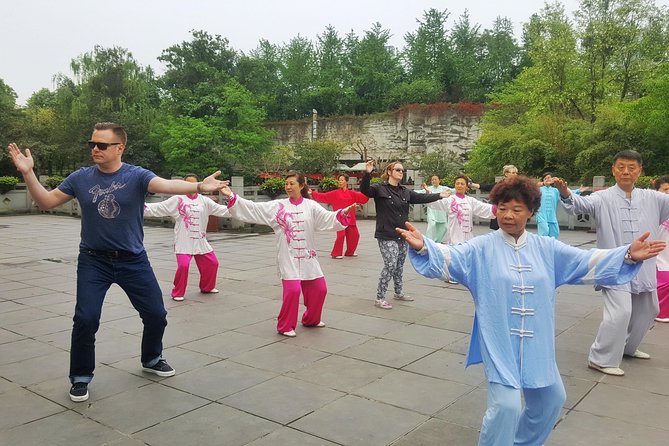
At Chengdu Culture Park, the main event is a Tai Chi class. You join a group session led by a local master, and you work on basic moves. The goal isn’t to turn you into a kung fu pro by lunchtime. It’s to give you the movement fundamentals and the rhythm behind the practice.
This is one of the strongest parts of the day for most people because Tai Chi is beginner-friendly when it’s taught well. You’re doing slow, controlled motions, so it’s easy to follow even if you’ve never tried it before. And the setting helps: the park vibe supports the idea of daily practice, not showy performance.
You also get a dose of local morning energy here. People’s exercise routines and the presence of tea houses around the park area help the class feel connected to how the city actually lives.
Possible drawback: plan to dress in comfortable layers. You’ll be moving, but the slow pace means you can feel temperature swings while you catch your breath between reps.




Stop 2: Song Xian Qiao antique and art market calligraphy studio session
Next comes Song Xian Qiao Antique and Art Market, where you meet the master in a calligraphy studio space and learn Chinese painting and calligraphy. This stop is about technique and mindset. Brush work asks for steadiness, patience, and attention to how each stroke sits on the page.
For value, this is a great pairing with Tai Chi. Tai Chi is about control through the body. Calligraphy is control through the wrist, arm, and breath. Same theme, different medium. By the time you reach the brush, your brain is already warmed up to the idea that traditional practice is about consistency, not speed.
After the class, you get free time to explore the antique market. This is your chance to compare what you just learned with what’s actually for sale. Even if you don’t buy anything, it helps you notice styles and materials, and it’s a good way to ask your guide questions while you look around.
Tip for your day: treat the free time as part of learning. If you only stroll, you might miss the small details that make this market interesting. Look for how the characters are formed, the ink tone, and the differences in paper or finish.
Stop 3: Renmin Park teahouse, tea, and learning Mahjong
Your final cultural anchor is Renmin Park Teahouse in People’s Park. This is a popular local hangout, and the teahouse experience is tied to a long tradition of open-air tea-drinking culture.
You’re served tea, then you learn Mahjong. Mahjong can look intimidating at first because there are many pieces and rules. But the tour framing makes it less about memorizing everything and more about learning how the game works and joining in. The teahouse environment also keeps it friendly and social, the way Mahjong is meant to be.
Why this matters: Mahjong is not just a game in Chengdu. It’s a way people connect, pass time, and build community. So when you sit down at the table, you’re experiencing a slice of daily culture, not just playing a Western-style board game for novelty.
Practical consideration: Mahjong at a teahouse can be a bit of a sensory experience, with noise and crowd energy. If you’re sensitive to busy settings, bring a bit of patience. The upside is that it feels local, not staged.
Taoism and Fengshui themes, explained through everyday traditions
The tour’s overview includes Taoism and Fengshui instruction, and you’ll feel those ideas woven into the way the day is taught. Tai Chi often gets discussed in terms of balance and alignment, and Taoism is one of the cultural lenses used to explain that balance. Calligraphy, similarly, isn’t just about making symbols look pretty. It’s about discipline and intention, which ties back to traditional philosophical ideas.
Fengshui, as a concept, is about how people relate to spaces and energy flow. Even if you don’t get a full “consultation,” the guide’s storytelling approach helps you understand why people pay attention to rooms, directions, and the feel of a place.
For you as a visitor, this is the difference between doing activities and actually getting something out of them. You leave with questions you can keep exploring later, and you’re less likely to treat the day like a checklist.
Walking pace and the practical flow of a 6-hour day
This is a walking-oriented plan with scheduled activity blocks. Morning starts early, and then you move into classes and market time. The itinerary timing you’ll feel is:
- a street stroll for atmosphere and photos
- Tai Chi for active learning
- a calligraphy lesson followed by market exploration
- teahouse tea time and Mahjong learning
Because it’s private and guide-led, you won’t be stuck waiting awkwardly with strangers while the guide handles paperwork. Instead, you’ll transition between stops in a way that keeps momentum.
One consideration: food and drinks are not included. You’ll want to either eat before the tour begins or plan where you can grab something near the parks and market areas. The tour includes tea time, but that doesn’t replace a full meal.
Price and value: is $113.85 a fair deal?
At $113.85 per person, this tour sits in the “worth it if you’ll use the activities” category. The reason is simple: you’re not only getting a guide. You’re getting admission-related fees for the stops where tickets are part of the plan, plus instruction for both Tai Chi and calligraphy, and included teahouse experiences with Mahjong.
Let’s break down the value logic:
- Instruction time usually costs more than a standard walking tour because it takes a teacher and structured practice
- Tea-house time and Mahjong learning are included, which adds a real local element
- The guided format reduces your guesswork. Chengdu’s parks and markets are easy to visit on your own, but it’s harder to know what to do when you get there.
You might still ask: what if you don’t like hands-on learning? Then the price feels higher. But if you enjoy participating, asking questions, and trying cultural skills even at a beginner level, the package makes sense.
Also, group discounts are mentioned, so if you’re traveling with friends or family, your per-person cost can improve.
Who this tour is best for
This is a strong match if you:
- want a Chengdu cultural day that feels active and social
- like learning practical traditions like Tai Chi and calligraphy
- enjoy parks, tea culture, and local-style hangouts over formal sightseeing
It’s also a good choice for families and first-timers because the tour is structured around short lessons and breaks, not long lectures. The format says most travelers can participate, and it allows service animals.
If you’re the kind of traveler who wants quiet, minimal interaction, this may feel like too much teaching time. And if you want food included, you’ll need to plan that separately since food and drinks are not included.
Should you book Cultural Chengdu In Depth?
If you’re choosing between a standard sightseeing loop and a hands-on cultural day, I’d lean toward this one. You get two real skill lessons in a single day, then you cap it with a teahouse and Mahjong where the point is to join in, not just watch.
Book it if you want Chengdu to feel lived-in. Book it if you like the idea of practicing in a park, writing characters with a brush, and learning a game at a table that feels like it belongs to locals.
Skip it or reconsider if you hate structured activities, expect food to be covered, or prefer long free time with no classes. Otherwise, this is the kind of tour that gives you stories you can explain later, because you were doing the culture, not just passing by it.
FAQ
What does the tour focus on?
The experience focuses on Chengdu culture through a walking day that includes a Taichi class, a calligraphy and Chinese painting class, tea drinking, and learning Mahjong, plus visits to markets and a teahouse.
How long is the tour?
It runs for about 6 hours.
Where does the tour start and what time does it begin?
It starts at 9:00 am near Fuqin, Qingyang District, Chengdu, and ends at People’s Park.
Is food and drinks included?
No. Food and drinks are not included.
What is included in the price?
The tour includes a professional guide, national park fee, the Taichi class, the calligraphy class, tea drinking and Mahjong, a souvenir market visit, and the tour team’s help throughout.
Is it a private tour?
Yes. It’s listed as a private tour/activity, meaning only your group participates.
Do I need to bring a ticket?
You’ll receive a mobile ticket, and admission tickets are included for the class and teahouse stops.
Can I cancel for a refund?
Yes. You can cancel up to 24 hours in advance for a full refund. If you cancel less than 24 hours before the start time, you won’t be refunded.
Is the tour near public transportation?
Yes. The meeting and end points are near public transportation, including People’s Park Station near the end.
More Tour Reviews in Chengdu




Chengdu, reviewed one booking at a time
- Wolong Panda Base Volunteering Program from Chengdu
★ 5.0 · 3 reviews - Mt Emei and Giant Buddha 2 Days Tour
★ 4.5 · 3 reviews - Half-Day Private Hot-Pot Cooking Class with a Local Market Visit
★ 5.0 · 3 reviews - Private 1-Day: Panda and Chengdu Local Life (Make Vlog for you)
★ 5.0 · 3 reviews - Ticket reservation for Chengdu Giant Panda Breeding Base
★ 5.0 · 3 reviews - Sanxingdui Museum Small Group Tour with Optional Panda Base
★ 5.0 · 3 reviews