
REVIEW · GUANGZHOU & CANTON HERITAGE TOURS
Guangzhou: Textile Hub and Garment Factory Half-day Tour
Textiles turn fast here, and you can see why. This 2-hour Guangzhou textile tour explains China Speed and walks you through Zhongda Textile Hub, showing how fabric choices can turn into finished clothing on a tight timeline. I especially like the direct access to the people behind orders, order takers, and factory owners, not just a glossy showroom story. I also like that you get a hands-on feel for the workflow, including what happens after fabric selection, all the way to sewing and packaging.
The main catch is that this area is active and a little chaotic, with lots of e-scooters and close quarters. The fix is simple: wear comfortable shoes, and expect to move quickly.
In This Review
- Key Highlights You Can Actually Use
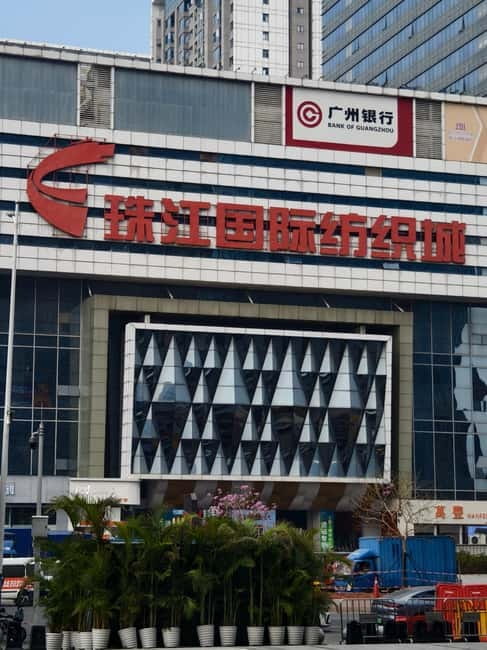
- Where the Tour Starts at Zhujiang International Textile City A
- China Speed in 48 Hours: The Workflow Story You’ll Hear
- Zhongda Textile Hub: Seeing How Fabric Sourcing Works in Clusters
- Urban Work-Live Areas: The Human Side of Fast Labor
- Inside the Garment Factory: Sewing, Labels, and Pattern Rooms
- Meeting Order Takers and Factory Owners: How Collaboration Really Moves
- Value and Price: Is $89 Worth a Two-Hour Textile Factory Window?
- Who This Guangzhou Textile Tour Fits Best
- How to Make the Most of Your Visit
- Should You Book This Guangzhou Textile Hub Tour?
- FAQ
- How long is the Guangzhou Textile Hub and Garment Factory Half-day Tour?
- What group size is this tour?
- Is the tour guide available in English?
- Where is the meeting point?
- What should I bring or wear?
- Are meals included?
- Is the tour wheelchair accessible?
Key Highlights You Can Actually Use
- Zhongda Textile Hub: a dense cluster where you can compare fabric sources in the same walking circuit
- 48-hour garment logic: learn how orders move fast, and what the system relies on
- Order takers and owners: ask the practical questions about lead times, matching, and production flow
- Urban work-live setup: see how flexible labor helps factories react to what orders require
- Factory floor walkthrough: watch sewing step by step, plus what goes into labels and packing
- Small group size: limited to 10 participants, so questions do not get lost
Cantonese Guangzhou, more of it
- Customised Private Guangzhou City Tour with Flexible Itinerary★ 5.0 · 107 reviews
- Private Guangzhou Full Day City Tour with Old and New Highlights★ 5.0 · 62 reviews
- Reputable Private Guangzhou Tour Guide Service by Xaq★ 5.0 · 60 reviews
- Guangzhou Baiyun Airport Guangzhou Hotels:Private with Meet & Great Service★ 5.0 · 50 reviews
Where the Tour Starts at Zhujiang International Textile City A
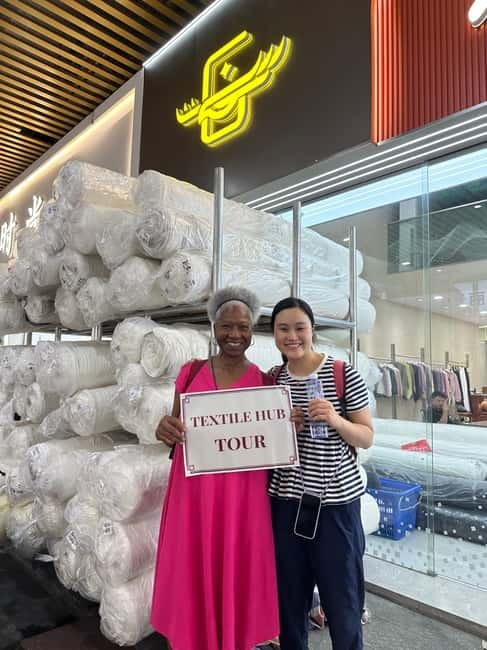
The meeting point is the main entrance of Zhujiang International Textile City Area A, right at a traffic light intersection. Look for a shop called 恒泰超泓, where your guide stands holding a sign that says Textile Hub Tour with Authentic Tour Asia.
If you’re using Didi, set your destination to 海珠合生新天地. That mall is across the street from the meeting point, so you can line up on one clear landmark instead of guessing side streets.
If you’re taking the subway, go to Line 11 and get off at 逸景路站. Use Exit C, walk west about 10 minutes, and follow the main road, with your back to the morning sun.
Tip: come ready to walk. Even though the tour lasts only about two hours, the pace inside the textile zones is real, and your shoes will notice it.
China Speed in 48 Hours: The Workflow Story You’ll Hear
The tour is built around a simple idea: in Guangzhou, production can move extremely quickly once the order is defined. You’ll hear how the textile and garment ecosystem supports that speed, including the handoffs between fabric sourcing, garment cutting, sewing, and finishing.
What makes this useful for you is that the tour does not treat the supply chain like magic. It frames the fast turnaround as a system of many small decisions, plus tight local coordination, so orders can be answered without waiting for everything to go through one giant decision-maker.
During the factory and market visits, you’ll also learn what “fast” actually means in practice. It is not just speed for speed’s sake, it is about matching the right materials, hitting the right steps in the right order, and keeping communication flowing between the people who take orders and the people who build garments.
That is where the emphasis on meeting order takers and factory owners matters most. You get a clearer view of how collaboration works when many participants contribute their part, instead of one central authority trying to control everything.
Zhongda Textile Hub: Seeing How Fabric Sourcing Works in Clusters
The first guided stop focuses on Guangzhou’s dense textile cluster, centered on Zhongda Textile Hub. This is where the value is not only in what you see, but in how the market is organized.
In a concentrated area like this, you can compare fabric types and sources with less backtracking. The guide leads you through stalls in a way that helps you spot patterns like fabric variety by proximity, and how suppliers adapt based on what orders are asking for.
This is also one of the places where you can ask practical sourcing questions. If you care about texture, fabric weight, color consistency, or how a material behaves after cutting and sewing, this market environment is where those topics come to life.
There is a real tradeoff though. This part of the city is busy and can feel tight, with lots of e-scooters weaving through pedestrian space. Your best move is to stick close to your guide, keep your eyes up, and slow your pace whenever you need to take in details.
Urban Work-Live Areas: The Human Side of Fast Labor
Between market walking and factory time, the tour includes a look at urban village areas and a work-live lifestyle. This is where the “China Speed” story becomes more human and more understandable.
You’ll see how workers’ live-work setup can support production needs that change with orders. Instead of viewing labor as something that only happens inside a factory at fixed hours, you get a clearer sense of how flexibility can help production react when demands shift.
For you, this part helps connect the business side to the reality of daily work. It can also shape how you think about production reliability and communication, because schedules and responsibilities look different in a work-live environment than they do in more separated industrial zones.
Respect matters here. This is an active place where people work and live, so you should follow your guide’s instructions closely, stay aware of foot traffic, and avoid anything that interrupts daily routines. Smoking is not allowed on the tour, so treat that as a firm boundary.

Inside the Garment Factory: Sewing, Labels, and Pattern Rooms
The second secret stop includes factory visits, where you get to see garment production firsthand. This is the part that tends to click for people coming from fashion, retail, or supply chain backgrounds, because you go from abstract sourcing terms to visible steps on the floor.
You’ll see the process from fabric selection through the parts that happen before garments are finished. One standout detail is that you can observe how items are assembled in bulk for large international markets, with staff sewing garments piece by piece. In factory walkthroughs, you can also expect to see labeling and packaging steps, including what goes into boxes.
A very memorable element, if your factory visit includes the pattern area, is seeing how patterns are prepared. In at least one tour experience, an owner walked the group through the pattern process, including the room where patterns sent by designers are laid out on fabric. That kind of detail is gold when you’re trying to understand how designers’ intent becomes real production layouts.
The practical takeaway for you is that speed is tied to preparation. If patterns, cutting, and materials are ready and communication is clear, the sewing lines can run more smoothly. If those inputs are vague, speed slows down fast.
This is also where you can ask questions that matter for quality. You might ask how they check fit consistency, how fabric variation is handled, or how orders are interpreted when specifications are not perfectly standardized.
Meeting Order Takers and Factory Owners: How Collaboration Really Moves
A core feature of the tour is direct conversation with people who take orders and people who run production. That is the part that most improves your odds of success if you are sourcing or building a brand.
In many sourcing experiences, you only meet product sellers. Here, you spend time with the connectors, the ones who translate what a buyer wants into what a factory can build. That translation role shapes timelines, minimums, and what is feasible to change at the last minute.
The tour emphasizes self-driven collaboration without one central controller. In plain terms, you’re seeing how local coordination works when many players each handle their piece and then communicate forward quickly.
What you’ll likely notice is that questions get answered in a more operational way. Instead of vague promises, you can focus on what will happen next: what gets prepared, what gets confirmed, and what steps follow once an order is accepted.
If you’re building relationships, this is also where you can start networking in a way that feels real. Meeting the people who actually run production changes how you evaluate partners later.
Value and Price: Is $89 Worth a Two-Hour Textile Factory Window?
The price is $89 per person for a short, structured experience. On paper, two hours does not sound like a lot, but this tour packs multiple parts of the supply chain into one loop: market fabric sourcing, order context, and factory production viewing.
Here’s why it can feel like value. You get an expert industry guide, you get access to fabric sources and factory owners, and you get time to ask questions. Those are hard to replicate if you try to walk around Zhongda on your own, especially when the area is fast-moving and chaotic.
Also, small group size matters. With a limit of 10 participants, you’re not fighting for attention while trying to learn specifics about the garment pipeline. That matters for business travelers, entrepreneurs, and sourcing teams who want actionable answers, not just photos.
Two notes so you set expectations: private transportation is not included, and meals and beverages are not included. Plan around that, and treat it as a working session, not a relaxed lunch tour.
Who This Guangzhou Textile Tour Fits Best
This tour is designed for sourcing professionals in fashion, manufacturing, supply chain, and retail. If your work involves turning ideas into bulk orders, it’s the right kind of reality check.
It also fits fashion entrepreneurs who want to understand production timelines before committing to suppliers. Seeing how garments can be sewn quickly in bulk helps you think more clearly about what timelines you can promise, what you need to confirm early, and what you should document.
If sewing is your hobby, you may still love it. Factory walkthroughs that include pattern handling and step-by-step sewing are fascinating even when you are not buying wholesale right now.
One group that should think twice is anyone with wheelchair needs. The tour is not suitable for wheelchair users, likely because of the walking and the busy environment.
If you want quiet, museum-style pacing, this is not that. This is a working industry district, and your experience is shaped by the pace.
How to Make the Most of Your Visit
Because the tour involves lots of walking and a busy street environment, your main job is to stay grounded and ready. Comfortable shoes matter more than almost anything else.
Come with a few questions that connect to real sourcing decisions. For example, ask how fabric selection affects production speed, or how they interpret order requirements once the order is taken. If you care about customization, ask what kinds of changes are easiest after the order is confirmed.
Also, use the direct access to people to build clarity. If you are evaluating partners, your goal is not to admire the factory, it is to understand how communication and production steps line up under time pressure.
Should You Book This Guangzhou Textile Hub Tour?
If you want a fast, practical view of how Guangzhou turns fabric into garments, this tour is a smart choice. The combination of market cluster walking, urban work-live context, and factory walkthrough gives you a supply chain story you can actually use.
Book it if you are working in fashion sourcing, retail buying, supply chain planning, or manufacturing evaluation, and you want to ask real questions directly to order takers and factory owners. It also works well if you’re a small business owner who needs to understand lead times before signing agreements.
Skip it if you need a slow-paced experience, mobility accommodations, or a tour that focuses more on sightseeing than production. This is about industry, speed, and the people who make fast orders happen.
If you’re deciding now, remember this: you get free cancellation up to 24 hours in advance for a full refund, so you can keep flexibility in your schedule.
FAQ
How long is the Guangzhou Textile Hub and Garment Factory Half-day Tour?
It runs for about 2 hours.
What group size is this tour?
The tour is limited to a small group, with up to 10 participants.
Is the tour guide available in English?
Yes, the live tour guide speaks English.
Where is the meeting point?
Meet at the main entrance of Zhujiang International Textile City Area A (珠江国际纺织城A区正门). Your guide will stand in front of the 恒泰超泓 shop holding a sign for the Textile Hub Tour.
What should I bring or wear?
Wear comfortable shoes. There is a lot of walking and the area can be chaotic with e-scooters.
Are meals included?
No, meals and beverages are not included.
Is the tour wheelchair accessible?
No, the tour is not suitable for wheelchair users.
More Tours in Guangzhou




More Tour Reviews in Guangzhou
Guangzhou, Cantonese And Old
Guangzhou, reviewed one booking at a time
- Glass Bridge and Water Falls Private Car Service from Guangzou
★ 4.5 · 3 reviews - 4-Hour Private Tour for Layover Travellers via Guangzhou Airport
★ 5.0 · 3 reviews - Private Guangzhou Business Tour to Visit Factory and Local Market
★ 5.0 · 3 reviews - Private Guangzhou Night Tour with Canton Tower and Bar Hopping
★ 5.0 · 4 reviews - Guangzhou Historical Day Tour By Metro & Boat
★ 5.0 · 4 reviews - Guangzhou VIP Car Tour– Tailored Sightseeing & Shopping Adventure
★ 5.0 · 4 reviews
Guangzhou & Canton Heritage Tours, compared.
 ★ 5.0Guided Cycle Tour of GuangzhouFrom $83164 reviews
 ★ 5.0Customised Private Guangzhou City Tour with Flexible ItineraryFrom $180107 reviews
 ★ 5.0Private Guangzhou Full Day City Tour with Old and New HighlightsFrom $15562 reviews
 ★ 5.0Reputable Private Guangzhou Tour Guide Service by XaqFrom $560 reviews
 ★ 5.0Guangzhou Foodie TourFrom $6540 reviews
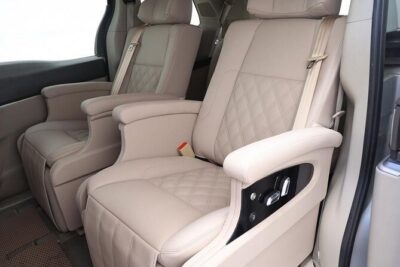 ★ 5.0Custom Private Guangzhou Tour with Local Guide and Private CarFrom $839 reviews
 ★ 3.8Guangzhou: Pearl River 1-hour Night Cruise (Optional Piers)From $1539 reviews
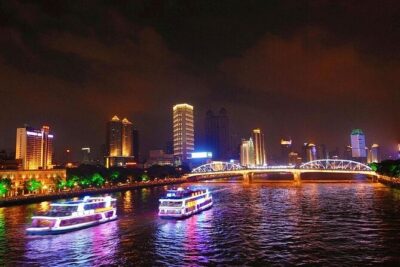 ★ 5.0Guangzhou Pearl River Night Cruise and Canton Tower Private TourFrom $14039 reviews
Browse the lists this tour appears in