
REVIEW · CHINA
Hands On Chinese Cave Murals with Local Expert
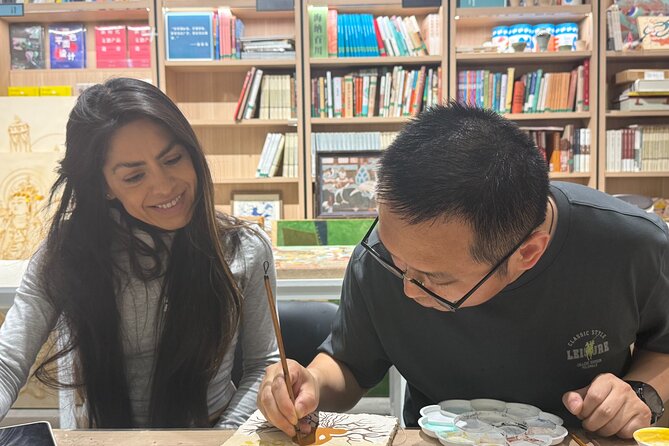
Cave art, made personal in three hours. In this hands-on workshop in Shanghai, I like how the instructor brings Dunhuang mural tradition into the room, not just facts. You’re guided through the look and meaning of the images, then you put those ideas into your own brushwork.
I also love the materials and the feel of the process. You’ll trace and paint with mineral pigments, work on clay boards, and slow down in a calm studio that makes the class feel genuinely meditative.
The one catch to plan for: this is a mural workshop, not a trip into real cave chambers. If you want actual cave interiors, your best bet is pairing this class with other sightseeing.
In This Review
- Key things to know before you paint
- Arriving at 515 Yi Shan Lu, and what the 3-hour rhythm feels like
- Choosing your mural theme: Buddhas, Bodhisattvas, and Nine-colored Deer
- What you actually do: tracing and painting step-by-step with traditional tools
- Why mineral pigments and clay boards matter more than you think
- The instructor’s approach: translating cave art into something you can reproduce
- Your final artwork: making it yours while staying true to the mural pattern
- Who this workshop is best for in Shanghai
- Price and value: $99 for real materials and guided practice
- Practical planning tips before you go
- Should you book this cave mural workshop?
- FAQ
- How long is the hands-on Chinese cave murals workshop?
- How much does the tour cost?
- Where is the meeting point in Shanghai?
- Will I receive a mobile ticket?
- What themes can I choose from for the mural patterns?
- What materials will we use?
- How many people are in the group?
- Is the workshop suitable for most travelers?
- Are service animals allowed?
- What is the cancellation policy?
Key things to know before you paint
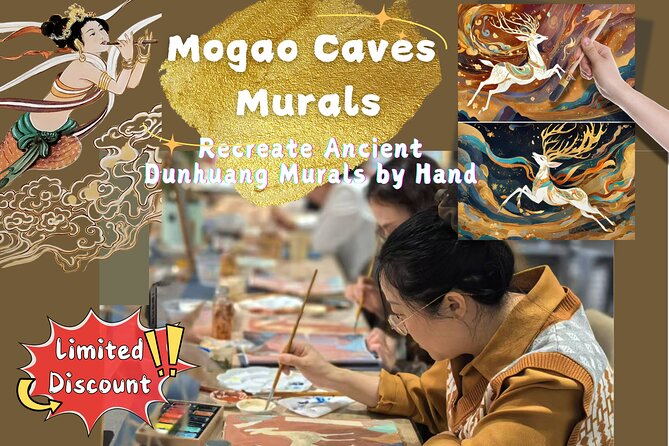
- Small group setting with a maximum of 20 people, so you’re not lost in a crowd.
- Dunhuang-focused instruction from someone steeped in the art and culture behind cave murals.
- Hands-on technique using mineral pigments, clay boards, and traditional tools.
- Multiple mural themes like Buddhas, Bodhisattvas, and the Nine-colored Deer from folktales.
- A quiet classroom pace that makes it easy to concentrate and finish your own artwork.
- Take-home results that reflect both the original pattern and your personal color choices.
Still weighing it up? These Shanghai bookings scored well when we went through them.
- Authentic Local Food Tour in Central Shanghai★ 5.0 · 1,382 reviews
- Zhujiajiao Water Town and Shanghai City Private Day Tour★ 5.0 · 1,016 reviews
- Private Shanghai Full Day City Tour with Old and New Highlights★ 5.0 · 995 reviews
- Shanghai: Hop-on Hop-off Bus Ticket and Optional Attractions★ 3.4 · 692 reviews
Arriving at 515 Yi Shan Lu, and what the 3-hour rhythm feels like
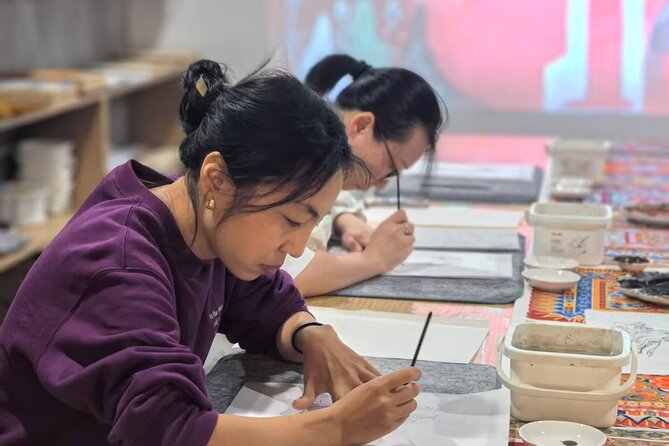
This workshop starts at 515 Yi Shan Lu in Xu Hui Qu, Shanghai, and it ends back at the same meeting point. The class runs about 3 hours, so it fits well between a morning of city walking and an evening meal without turning your day into a logistics project.
Because it’s near public transportation and uses a mobile ticket, you can keep things simple. I’d still suggest arriving a bit early, so you can settle in before the instructor starts guiding your materials and pattern choices. Once you’re inside, the studio vibe matters: the atmosphere is described as peaceful, which changes how you experience art-making. You’re not racing, you’re learning by doing.
Choosing your mural theme: Buddhas, Bodhisattvas, and Nine-colored Deer
One of the most enjoyable parts is picking your design before you begin. You can choose from traditional mural patterns such as majestic Buddhas, graceful Bodhisattvas, or mythical creatures like the Nine-colored Deer from ancient Chinese folktales.
That choice affects more than the final image. It shapes your mindset for the work. If you pick a Bodhisattva, you’ll likely spend more time thinking about balance and expression. If you go with the deer story element, your attention tends to drift toward character and detail as you place colors and marks.
In the studio, you’ll trace or paint based on the pattern you select. That’s a big deal for first-timers, because you’re not starting from a blank page. You’re building from a structure that already belongs to historic mural traditions, then adding your own touches within that framework.
What you actually do: tracing and painting step-by-step with traditional tools
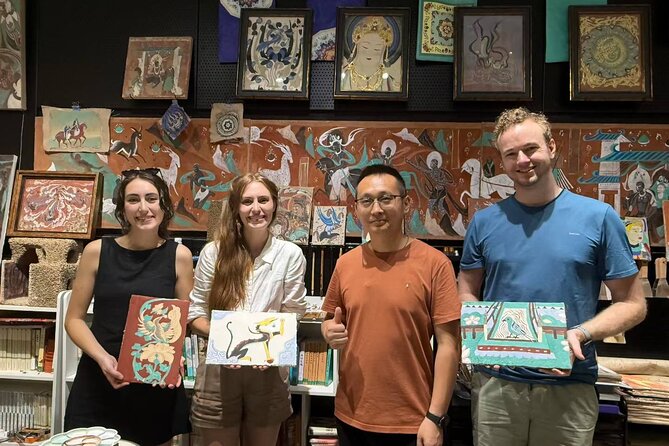
This is not a lecture-first experience. The core of the class is hands-on recreation of Dunhuang murals, using materials meant to mimic the texture and approach of older methods.
You’ll trace or paint using authentic materials like:
- mineral pigments
- clay boards
- traditional tools
The practical value here is clarity. When you’re physically tracing lines and practicing brush control, the instructor’s cultural context becomes easier to remember. It stops being abstract. You understand why the image is built the way it is because you’re replicating the construction yourself.
And the process has a repeatable rhythm. You work, pause, adjust, and then continue. Reviews describe the full session as peaceful, and that tracks with the workshop structure: fewer distractions, more time on careful strokes, and a calm pace that helps you avoid rushing your own artwork.
Why mineral pigments and clay boards matter more than you think
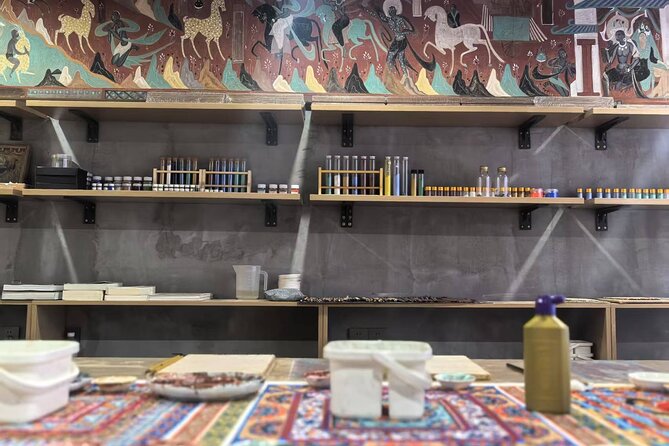
Mineral pigments sound fancy, but in a class like this, they change the experience in real ways. Pigments made from minerals often behave differently from typical classroom paints, and your brush marks can feel more deliberate. You’re paying attention to how color sits on the surface, how layers build, and how the materials respond to technique.
The clay board base also matters. A mural isn’t just a picture, it’s a surface story. Working on a clay-like board gives your hand a different feedback loop than paper. It encourages slower, more controlled movements, which is exactly what a meditative workshop should do.
One more benefit that’s easy to miss until you’re in the room: mineral pigments push you to think about color selection. You’re not just copying a reference. You’re making choices that fit the pattern, and that’s where the class becomes personal.




The instructor’s approach: translating cave art into something you can reproduce
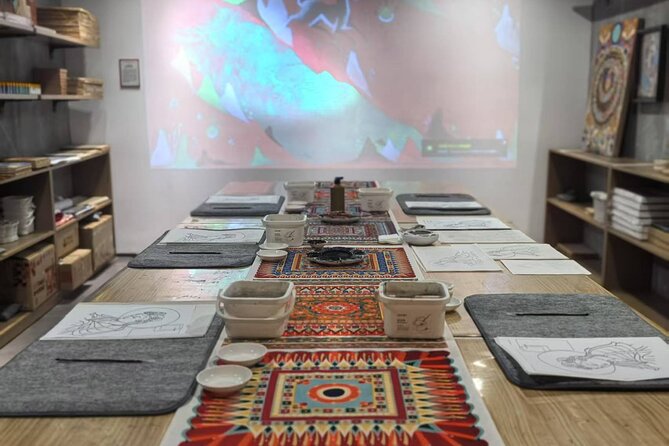
The instruction is the reason this workshop feels more than craft time. The instructor is described as having deep expertise in Dunhuang art and culture, and you can feel it in how the teaching connects technique to tradition.
Instead of treating the mural as a decoration project, the instructor focuses on how historic cave murals were made, how figures were composed, and how patterns carried meaning. That’s helpful even if your Chinese art background is basic. You learn what you’re looking at, and then you learn how to recreate the look through practical steps.
Reviews also highlight the teacher’s professionalism and patience. That matters for hands-on learning because you need time to get your technique right. If you’re the kind of person who worries you’ll “mess it up,” a patient instructor is the difference between frustration and real confidence.
Your final artwork: making it yours while staying true to the mural pattern
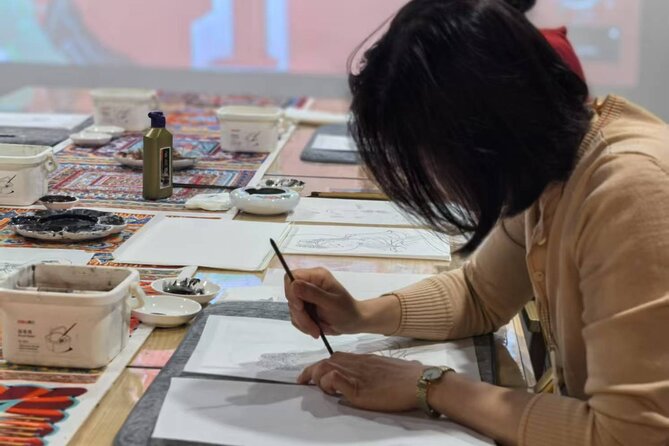
You end the workshop with a beautiful artwork created by you. The key point is not that your work must look identical to a museum standard. The class is built around recreating mural patterns, then letting you add your own touches.
You’ll be tracing or painting your chosen design, and you’re guided as you add color. Some students even described the teacher helping them create colors so their final result matched the vibe they were aiming for. That kind of small, targeted help can boost your confidence a lot, especially if you haven’t painted with mineral pigments before.
The finished piece also becomes a souvenir with real meaning. It’s not just a picture you bought. It’s an object that records time spent learning a technique, following a tradition, and making decisions with your own hand.
Who this workshop is best for in Shanghai
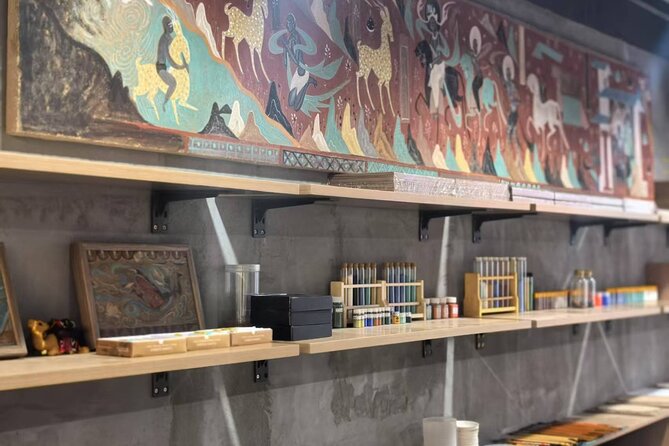
This is a strong match if you want something calm, creative, and culturally grounded. If your Shanghai plans are heavy on museums and fast sightseeing, this class gives you a different kind of engagement. You’re learning through making, not just reading labels.
It’s also a good fit if you like structured guidance. Because you pick from traditional mural patterns and work from tracing or set designs, you’re not thrown into chaos. Most travelers can participate, which suggests the class supports beginners.
Consider it especially if you’re drawn to:
- Chinese spiritual and artistic traditions
- stories represented in mural imagery
- slow travel moments where you can focus
If what you want most is a high-energy tour with lots of outdoor photo stops, this one may feel more like a studio day than a city adventure.
Price and value: $99 for real materials and guided practice
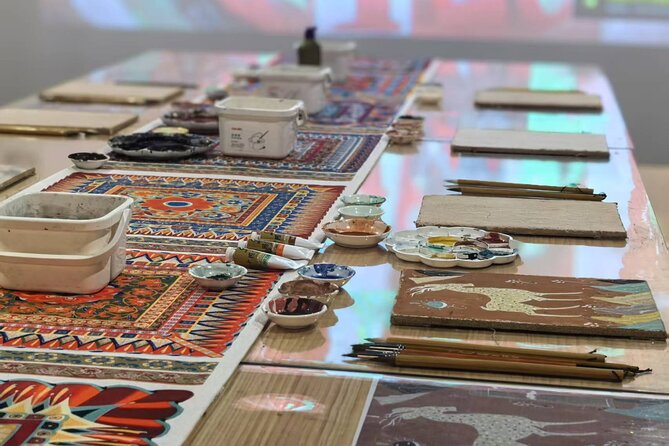
At $99.00 per person for around 3 hours, the value depends on what you’re comparing it to. If you compare it to a generic art class, this one leans more toward cultural specificity and authentic materials. You’re using mineral pigments, clay boards, and traditional tools, and you have an instructor who connects technique to Dunhuang mural culture.
You’re also paying for time and attention. With a maximum group size of 20, the experience is less likely to become a one-size-fits-all production line. That matters when you need feedback on brush handling and color application.
The price makes more sense when you remember the output: you leave with a finished artwork you made yourself. For a workshop that takes you beyond watching and actually building, $99 can feel reasonable, especially in a city where many cultural experiences cost much more for less hands-on work.
Practical planning tips before you go
This is a studio workshop, so your day plan should match that energy. Wear comfortable clothes you don’t mind getting a little pigment dust on, and keep bags small so you have room to work.
Bring a calm mindset. The best results come when you slow down enough to let the instructor’s guidance and the materials do their job. Also, you’ll likely be focused for the whole session, so plan for dinner afterward rather than stacking it right in the middle of the class.
Finally, don’t underestimate the meeting point logistics. Start at 515 Yi Shan Lu, and then the experience ends back there. Give yourself time to reach the area smoothly, since near public transportation is helpful, but it’s still better to arrive without stress.
Should you book this cave mural workshop?
I think you should book it if you want a quiet, skill-based experience that connects directly to Dunhuang cave mural tradition. The combination of expert instruction, authentic materials, and a peaceful studio pace makes it a meaningful use of time in Shanghai.
Skip it if your main goal is to tour actual cave sites, because this is a workshop, not a cave visit. Also, if you prefer pure sightseeing over making things, you might find a studio day less exciting.
If you’re on the fence, here’s my simple decision rule: if you’d enjoy learning by tracing, painting, and building a take-home artwork, this class is a great bet for you.
FAQ
How long is the hands-on Chinese cave murals workshop?
The workshop lasts about 3 hours.
How much does the tour cost?
It costs $99.00 per person.
Where is the meeting point in Shanghai?
The start point is 515 Yi Shan Lu, Xu Hui Qu, Shang Hai Shi, China, 200235.
Will I receive a mobile ticket?
Yes, the ticket is described as mobile.
What themes can I choose from for the mural patterns?
You can choose traditional mural patterns such as Buddhas, Bodhisattvas, or mythical creatures like the Nine-colored Deer.
What materials will we use?
You’ll use authentic materials including mineral pigments, clay boards, and traditional tools.
How many people are in the group?
The experience has a maximum of 20 travelers.
Is the workshop suitable for most travelers?
Yes, most travelers can participate.
Are service animals allowed?
Yes, service animals are allowed.
What is the cancellation policy?
Free cancellation is available, and you can cancel up to 24 hours in advance for a full refund. If you cancel less than 24 hours before the start time, the amount paid is not refunded.
More Tour Reviews in Shanghai



Shanghai, reviewed one booking at a time
- Zhujiajiao Water Town and Shanghai City Highlights Private Day Tour
★ 5.0 · 3 reviews - Zhujiajiao Water Town Private Tour with Local Farm Visit and Fruit Picking
★ 5.0 · 3 reviews - Tongli Water Town Self-Guided Tour with Private Transfer from Shanghai
★ 5.0 · 3 reviews - Shanghai by Night with Fine Local Dinner and VIP River Cruise Experiences
★ 5.0 · 3 reviews - Shanghai Acrobatic Show Tickets
★ 5.0 · 3 reviews - Private Shanghai Layover Tour to Zhaojialou Water Town with Lunch or Dinner
★ 5.0 · 3 reviews