
REVIEW · TERRACOTTA ARMY TOURS
Terracotta Warriors Museum Ticket with Professional English-speaking tour guide
The line is the real monster. With a professional English-speaking guide, you get guaranteed skip-the-line entry into Xi’an’s Terracotta Warriors Museum complex.
You’ll spend about 2-3 hours seeing the big underground army and hearing how it was built, arranged, and staged for the First Emperor.
I like that the tour takes you past the main highlights in a smart order, including Pits 1-3 and the mausoleum area. I also like the added stop at the Bronze Chariots Exhibition, so you don’t just see soldiers, you see the broader tech and display culture of Qin China.
One thing to consider: the site can get very packed, and on busy days the pace can feel tight. Some guides may also try to steer you toward museum add-ons or shops, so go in with a clear no if you are not shopping.
In This Review
- Key things I’d mark on your itinerary
- Entering The Terracotta Warriors Museum With Real Line-Skip Time
- Meeting Your English-Speaking Guide, Then Getting Oriented Fast
- Pit 1, Pit 2, Pit 3: How the Tour Keeps the Army Straight
- Pit 1: The centerpiece feeling
- Pit 2 and Pit 3: Variation within the system
- Mausoleum area: the bigger frame
- The Mausoleum Story: Why It Feels Bigger Than Just Statues
- Bronze Chariots Exhibition Area: A Great Contrast Stop
- Price and Logistics: What You Get for $45.87
- Crowds, Pace, and the Sales Pressure Reality
- Who This Tour Fits Best (And Who Might Want a Different Plan)
- Should You Book This Terracotta Warriors Tour?
- FAQ
- How long is the Terracotta Warriors Museum tour?
- What’s included in the price?
- Do I get skip-the-line entry?
- Is lunch included?
- Is hotel pickup or an air-conditioned vehicle included?
- Which areas of the site will I visit?
- What if the weather is bad or I need to cancel?
Key things I’d mark on your itinerary
- Guaranteed skip-the-line entry helps you beat the worst delays at peak hours.
- Professional English guide explanations make the pits easier to understand fast.
- Pit 1, 2, and 3 give you a real sense of different troop groupings.
- First Emperor context covers why Ying Zheng started building his tomb so young.
- Bronze chariots exhibition access adds variety beyond the terracotta army.
Other approaches to the warriors
- Mini Group Xian Day Tour to Terracotta Army, City Wall, Pagoda and Muslim Bazaar★ 5.0 · 1,320 reviews
- Customized Private Day Tour of Terracotta Warriors and Xi’an★ 5.0 · 513 reviews
- Half-Day Mini Group Xian Tour to Terracotta Warriors Museum★ 5.0 · 467 reviews
- Terracotta Army Ticket★ 5.0 · 334 reviews
Entering The Terracotta Warriors Museum With Real Line-Skip Time
The Terracotta Warriors site is famous for a reason, but the experience can be ruined by waiting. This tour is designed around the practical problem: you show up and you go in without the slow ticket-office shuffle. That matters, because the museum complex is so popular that even an hour of delay changes the whole day.
When you arrive, you’re not left to figure it out on your own. Your English-speaking guide handles the rhythm of the entrance and then gives you the story in a way that sticks. You’ll hear how the site fits into the bigger Qin story, including the fact that the First Emperor, Ying Zheng, began construction of his mausoleum at age 13. That detail turns the figures from “cool statues” into a plan built for power, control, and afterlife belief.
I also like that the tour doesn’t treat this as a quick photo stop. The timing is built for understanding, not just snapshots. You’re looking at 2-3 hours, which is long enough to connect the pits, and short enough to stay energized when the crowd level climbs.
Meeting Your English-Speaking Guide, Then Getting Oriented Fast
One of the best parts of a guided visit here is orientation. The pits are spread out and the structures can feel confusing if you are reading signage in a crush of people. With a guide, you get a clear route and the right context before you reach each pit.
Guides associated with this tour have been praised for clear English and patient pacing. Names that come up in past groups include Chelsea, Aurora, Freya, Alice, Cynthia, Nancy, Peter, Jimmy, and Christina. The common thread is that the guide doesn’t just recite facts, they explain what you are looking at and why it matters, even when you ask questions.
You should also plan for sound. One group noted that their guide, Peter, provided a small headset so the narration was easy to follow. Not every guide may do this, but it’s a hint that clarity is taken seriously. If you prefer hearing every word, bring a willingness to stand where your guide tells you.
Practical note: you are not doing this with hotel pickup included, so you need to be at the right place yourself. In past tours, the meeting point was at the museum ticket area, with the guide meeting you outside before you go in together. Build in time for getting there, especially if you are arriving during peak traffic hours.
Pit 1, Pit 2, Pit 3: How the Tour Keeps the Army Straight
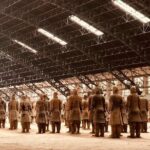
This is where the tour earns its money. The Terracotta Army is not one simple room. The site is organized around multiple pits, each showing different arrangements, and the guide helps you make sense of that layout instead of drifting from one angle to another.
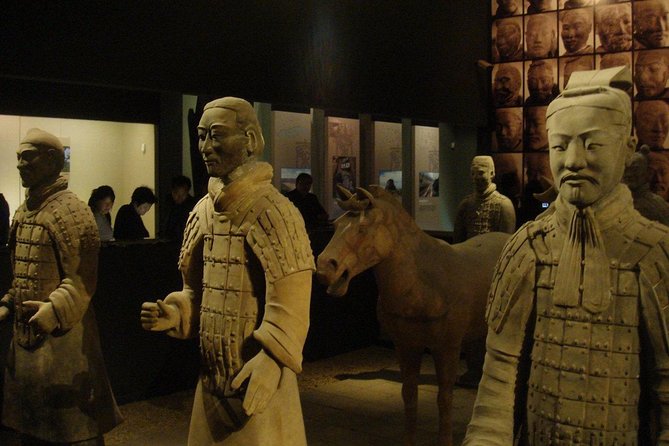
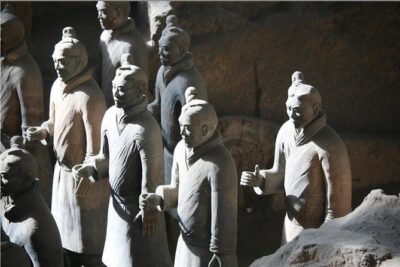
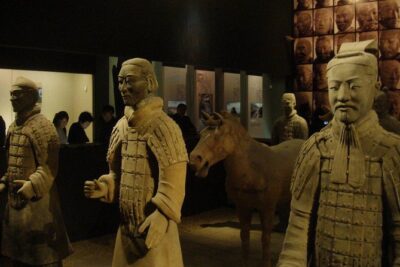
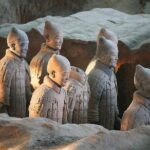
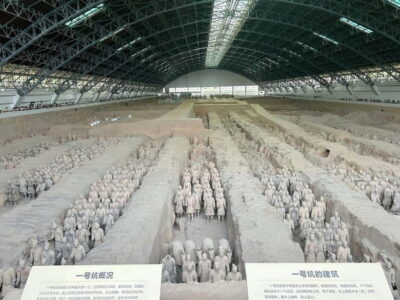
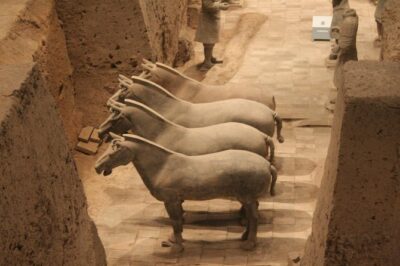
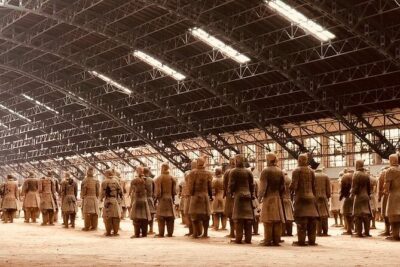
You’ll access the First Emperor’s Terracotta Army Exhibition Area, including Pit 1, Pit 2, and Pit 3. Even if you’ve seen photos before, the real impact hits harder when you understand what each pit is showing. The underground army is massive, and the figures are life-size. You’ll see troops and horses, and you’ll notice that the soldiers have distinct facial expressions. That human detail is the point. This is not a generic crowd scene, it is a designed set of characters.
Pit 1: The centerpiece feeling
Pit 1 is the one most people imagine. It’s also the one most likely to be packed. The guide’s value here is keeping your attention on the right things: scale, formation, and the idea that this was an engineered display of power. Standing in front of it, you can feel how the Qin Emperor unified the six warring states and then tried to stage the afterlife as an extension of rule.
Other Xian trips our reviewers kept returning to

Pit 2 and Pit 3: Variation within the system
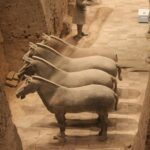
Pit 2 and Pit 3 are crucial because they show that the army was not one uniform grouping. You’re still seeing troops and horse-related elements, but the arrangements help you understand that the mausoleum complex wasn’t just filled with statues. It was organized, categorized, and planned.
The guide’s narration helps here. Without it, you can spend your time hunting for the “most impressive” section, instead of learning why the differences exist. With a guide, the pits start to feel like a connected story: different units, different roles, same goal.
Mausoleum area: the bigger frame
Even when most of your time is spent in the pits, you get a sense that this is one site built for a single person and their worldview. The tour includes the mausoleum site context as well, so you don’t leave feeling like you only saw a display warehouse. You’ll hear about the project’s scale, including the staggering number of people and years involved. One detail that sticks from the tour overview is the scope: about 720,000 men and 38 years were required to complete the vast project.
The Mausoleum Story: Why It Feels Bigger Than Just Statues
The Terracotta Warriors are extraordinary partly because of what they represent. You are not just looking at art. You are looking at an imperial strategy made visible.
This tour explains the Qin unification theme and the emperor’s personal stake. Ying Zheng began building his tomb at 13, which means the whole mausoleum project was not a late-life whim. It was part of a long-term plan for authority and legacy. That changes how you read the figures. They stop being “cool ancient dudes” and become a message about power and organization.
You’ll also learn about how the sculptures were created. That part matters because it turns mystery into method. When you understand the craftsmanship and the intent behind the production, you start noticing details that you’d otherwise miss. Even if your time is limited, the guided framing helps you see better than you could alone.
There’s also a preservation angle. You may not catch it from a quick walk-through, but the guide often points out the restoration and protection efforts. On a packed day, those small cues help you slow down and actually look, instead of treating the visit like a checklist.
Bronze Chariots Exhibition Area: A Great Contrast Stop
Not every Terracotta Warriors tour includes the Bronze Chariots Exhibition area, but this one does. That’s a smart choice because it breaks up the monotony of seeing only soldiers.
After you’ve absorbed the scale of the pits, the bronze chariots provide a different kind of impressive. They show that the Qin tomb project wasn’t only about ground troops. It also included high-status vehicles and display-ready pieces that belong to the same imperial message. You’ll see how the chariots fit into the larger idea of military power staged for the afterlife.
From a visitor-experience standpoint, this stop is also a momentum saver. If you do Terracotta Warriors as only “walk, stare, repeat,” your energy can drop fast. The bronze chariots give your eyes something new, and they help you remember the site as more than one iconic pit.
Price and Logistics: What You Get for $45.87
At $45.87 per person, this tour isn’t the cheapest way to visit the museum complex, but it is also not overpriced when you look at what’s included. The ticket is part of the deal, including admission to the Terracotta Warriors Museum and access to the exhibition areas that cover Pit 1, 2, and 3. On top of that, you get a professional English-speaking guide.
Here’s why that matters for value: you are paying for time, clarity, and reduced friction. The skip-the-line promise is not a small perk. Waiting in a giant line here can cost you the exact hours you’d use to see the pits in the best order. If you land at the wrong time slot, you can lose your chance to enjoy the experience rather than just survive it.
Also, this tour does not include lunch, and it does not include an air-conditioned vehicle. That means you should plan your basic comfort. If you need a midday meal, decide in advance where you will eat after the tour. If you are heat-sensitive, bring water and plan your shade breaks. The guide can often help with recommendations, but the tour package itself does not include food or vehicle comforts.
Group discounts are mentioned, too. If you have a small group, ask about whether the price can drop for your exact group size. This can turn the value into a real bargain versus DIY entry plus hunting for English support inside the museum.
Crowds, Pace, and the Sales Pressure Reality
Let’s talk about the two big human factors at this site: crowds and control of your time.
The Terracotta Warriors Museum is packed, especially during holidays. This is why the tour’s guide component is so useful. A strong guide helps you move in a way that saves steps and reduces the time you spend standing still. One guide, Aurora, was praised for patient, clear explanations, and Chelsea was repeatedly praised for navigating crowds and making sure visitors could get photos they wanted without losing the story.
Still, consider the pace on very busy days. If you’re the type who wants to linger for deep detail, you might feel rushed. That’s not unusual at a site this popular. Go in with a plan: decide which pit angles you truly care about and let the guide steer the rest.
Now, the other consideration: shopping pressure. Some past experiences mentioned a guide pushing items and trying to sell add-ons, and one person said it felt like nonstop heckling. I can’t guarantee how every guide behaves, but you can protect yourself. Start with a clear expectation at the beginning that you are here for the museum and not for shopping, and keep your answers short if someone tries to change the plan.
If you are sensitive to that kind of sales energy, you may prefer a smaller group setting or a guide who is known for sticking to the tour focus. In the better experiences, guides helped visitors understand the pits first and then offered optional recommendations without making it uncomfortable.
Who This Tour Fits Best (And Who Might Want a Different Plan)
This tour is a great fit if you want:
- English explanations that actually connect the pits into one story
- Skip-the-line entry to protect your time
- A 2-3 hour structured visit that works well for a half-day schedule
- Access to Pit 1, 2, and 3 plus the bronze chariots exhibition area
It may be less ideal if you:
- Hate group settings and prefer total freedom with no guidance
- Want to spend much longer than 2-3 hours taking photos, reading everything slowly, and repeating sections
- Are extremely bothered by any shopping talk and might not like a guide who tries to steer you into museum sales areas
For most people doing Xi’an for a day or two, this is exactly the sweet spot. You’re getting the main pits, the key context, and a bonus exhibition stop without turning it into a full day.
Should You Book This Terracotta Warriors Tour?
I’d book it if you value saving time and getting the site explained in clear English. The biggest practical win is guaranteed skip-the-line entry, paired with access to Pit 1, 2, and 3 and the bronze chariots exhibition area. For $45.87, the combo of guide and included ticket access usually beats the DIY approach, especially when crowds are heavy.
I would hesitate only if you know you want a slow, no-pressure museum experience, or if you are worried about sales pitches. If that’s you, go in firm about what you do and don’t want, and focus your energy on the pits.
If you do book, do two things before you go: wear comfortable shoes, and decide your must-see list inside the complex. Then let the guide do what they are hired for, translate the chaos into a route you understand.
FAQ
How long is the Terracotta Warriors Museum tour?
The tour runs about 2-3 hours.
What’s included in the price?
It includes the entrance ticket to Emperor Qin Shihuang’s Terracotta Warriors Museum, access to Pit 1, Pit 2, and Pit 3 exhibition areas, and a professional English-speaking tour guide.
Do I get skip-the-line entry?
Yes. The tour is described as guaranteed to skip the entrance lines.
Is lunch included?
No. Lunch is not included.
Is hotel pickup or an air-conditioned vehicle included?
No. Air-conditioned vehicle transport is not included, and hotel pickup is not listed as part of the package.
Which areas of the site will I visit?
You’ll visit several pits including Pit 1, Pit 2, and Pit 3, plus the mausoleum site context, and you’ll have access to the Bronze Chariots Exhibition area.
What if the weather is bad or I need to cancel?
The experience requires good weather. If it’s canceled due to poor weather, you’ll be offered a different date or a full refund. You can cancel for a full refund up to 24 hours in advance.
More Tours in Xian
- Mini Group Xian Day Tour to Terracotta Army, City Wall, Pagoda and Muslim Bazaar
★ 5.0 · 1,320 reviews


More Tour Reviews in Xian
- Mini Group Xian Day Tour to Terracotta Army, City Wall, Pagoda and Muslim Bazaar
★ 5.0 · 1,320 reviews
The Warriors, More Ways To See Them
- Mini Group Xian Day Tour to Terracotta Army, City Wall, Pagoda and Muslim Bazaar
★ 5.0 · 1,320 reviews
Xian, reviewed one booking at a time
- Xian Group Tour: Terracotta Army, Big Wild Goose Pagoda,City Wall
★ 5.0 · 3 reviews - Xi’an Silk Road Legend Musical with round-trip transfer
★ 5.0 · 3 reviews - Day Trip to Hukou Waterfall and Huangdi Mausoleum
★ 5.0 · 3 reviews - Private Day Tour of Terracotta Warriors,Cave House and Han Yangling Mausoleum
★ 5.0 · 3 reviews - Huaqing Palace Adult Ticket[Direct Subway Access]
★ 5.0 · 3 reviews - Xi’an: Morning Terracotta Army Tour with Local Family Lunch
★ 5.0 · 3 reviews
Terracotta Army Tours, compared.
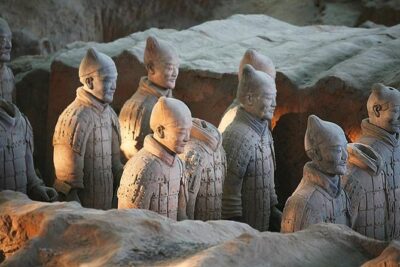 ★ 5.0Mini Group Xian Day Tour to Terracotta Army, City Wall, Pagoda and Muslim BazaarFrom $491,320 reviews
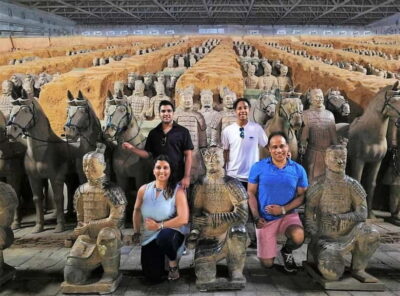 ★ 5.0Xi’an: Terracotta Army Mini Group or Private TourFrom $36926 reviews
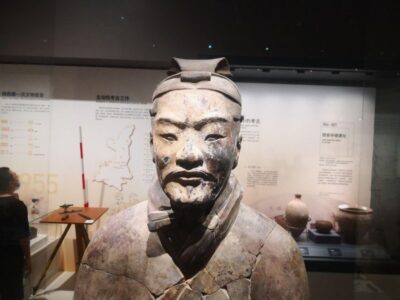 ★ 4.6Xian: Terracotta Army Ticket & Guided Bus Tour with OptionsFrom $28579 reviews
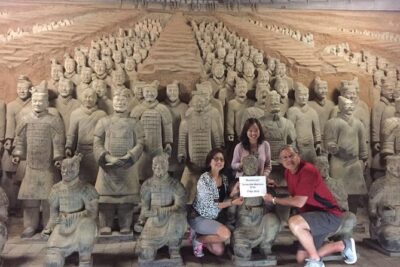 ★ 5.0Customized Private Day Tour of Terracotta Warriors and Xi’anFrom $109513 reviews
 ★ 4.9Xi’an: Exclusive Terracotta Army Tour & Local Family LunchFrom $24484 reviews
 ★ 5.0Half-Day Mini Group Xian Tour to Terracotta Warriors MuseumFrom $49467 reviews
 ★ 5.0Terracotta Army TicketFrom $28334 reviews
 ★ 5.0Private Customizable Terracotta Warriors Day Tour with OptionsFrom $108324 reviews
Browse the lists this tour appears in