
REVIEW · MUSEUMS
Beijing: China National Film Museum Entry Reservation
A museum about movies can sound dry, until you see the scope. The China National Film Museum (CNFM) is a big, purpose-built place for Chinese film history, with 21 exhibition halls and 6 movie halls packed into a 2-hour visit.
What I like most is the way the museum explains how film changed over time, not just famous titles, and how it spotlights the creative work behind the screen. You’ll also get an English version of the textual and visual guide, which helps a lot in a place where signage is often Chinese-first.
One consideration: this museum can feel less tourist-friendly if you rely only on label text, since some information is only in Mandarin, so you should plan to lean on the provided guide.
In This Review
- Key highlights worth knowing before you go
- What the China National Film Museum really gives you (and why it matters)
- Navigating 21 exhibition halls in a 2-hour visit (the pace game)
- First floor: Themed opening stop and a reason to start strong
- Floors 2 to 4: The main exhibition, A Century of History, A Century of Glory
- Movie halls and the IMAX GT option, what’s included and what isn’t
- Entering with your QR code, so you don’t waste time at the gate
- Language reality check: how to handle Chinese-first signage
- Price and value: what $4.82 buys you in Beijing
- Who should book this (and who should consider another plan)
- Helpful tips so you actually enjoy the full 2 hours
- Should you book the Beijing China National Film Museum entry reservation?
- FAQ
- How long is the China National Film Museum visit?
- Does the ticket include movie screenings in the movie halls?
- How do I enter the museum using my reservation?
- What language support is included?
- What should I bring for entry?
- Is smoking allowed inside the museum?
Key highlights worth knowing before you go
- QR code entry that bypasses the ticket line, so your time goes to the exhibits, not waiting
- A Century of History, A Century of Glory across multiple floors, built for understanding film development step-by-step
- Themed first-floor exhibition that sets a narrative tone before you hit the main film timeline
- Six movie halls, including an IMAX GT hall, with options beyond the static galleries
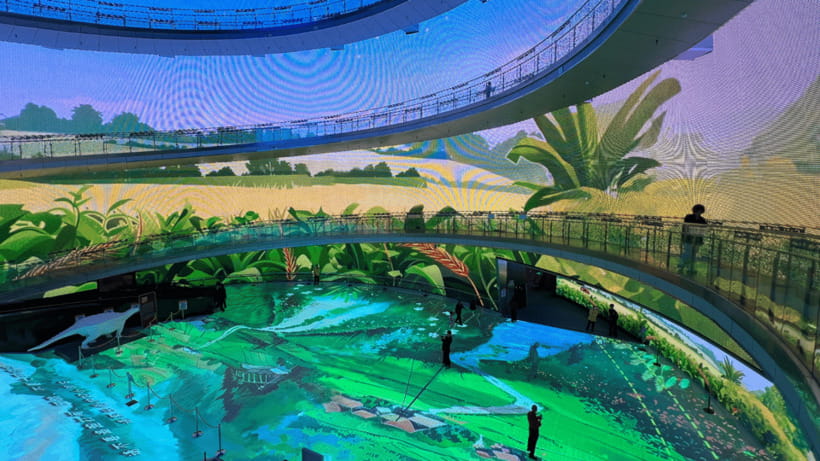
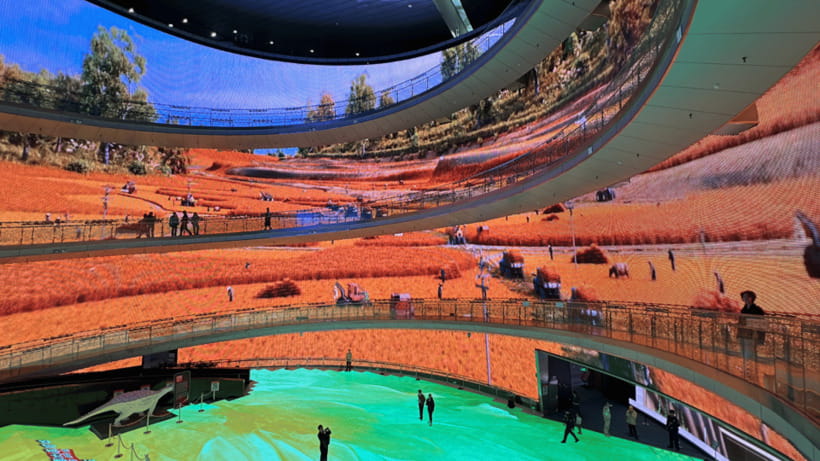
- A dinosaur-themed display area near the entrance that pops as a fun, unexpected moment
- Friendly, helpful staff who can make the experience feel easier even if language is a hurdle
Other Beijing trips our reviewers kept returning to
- Beijing: Tianmen Square, Forbidden City & Royal Museum Tours★ 4.6 · 1,288 reviews
- Beijing:Jingshan Park (Palace Museum Garden) Ticket★ 4.5 · 185 reviews
- Beijing Half Day: National Museum of China In-depth Tour with Subway Transfer★ 5.0 · 70 reviews
- Beijing’s Forbidden City with Special Viewing of Treasure Gallery and the Great Wall Ruins at Badaling★ 4.5 · 24 reviews
What the China National Film Museum really gives you (and why it matters)
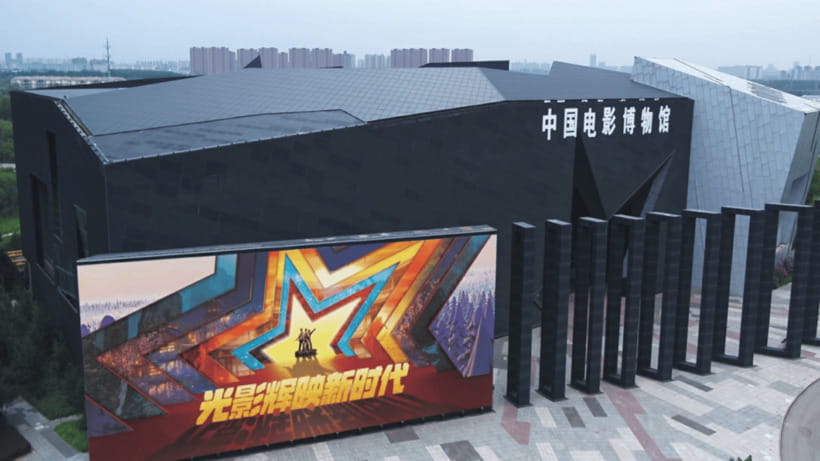
CNFM is not a small, niche museum. It is a large-scale public cultural institution in Beijing, founded on December 29, 2005 and opened to the public on February 10, 2007. It takes up about 8.7 acres, with nearly 38,000 square meters of architectural space.
Why this matters for you: a museum with this scale can easily become overwhelming. CNFM is designed to structure that overwhelm into a clear story about Chinese cinema, from earlier stages to later achievements. Instead of a random collection of posters and props, you get an organized walkthrough of how films developed, how artists shaped the industry, and how filmmaking is actually made.
You’ll also notice the museum is built for motion. With six movie halls and at least one IMAX GT hall, the place is clearly meant for watching, not only reading. Even if you skip paid screenings, the museum’s “film first” design changes how the exhibits feel. They’re not museum objects. They’re a behind-the-scenes path toward cinema.
Navigating 21 exhibition halls in a 2-hour visit (the pace game)
CNFM has 21 exhibition halls across multiple floors, plus 6 movie halls. Your timed visit is about 2 hours, which means you need a strategy. The good news is the museum organizes key content by floors, so you can move with purpose.
Here’s the practical way to think about it:
- First, focus on the big storyline exhibits (the main timeline floors).
- Then, skim or sample the rest, especially anything that looks interactive or visually heavy.
- Finally, decide whether you want to use part of your time on a movie hall. Paid screenings are not included, so treat this as optional.
If you try to “see everything,” you will rush and end up tired. If you choose the main timeline and allow yourself to enjoy a couple of standout installations, the visit works well for most people, even without a deep background in film studies.
Also, keep in mind that some info is likely in Chinese only. That’s not a dealbreaker, but it affects how much you can read in the galleries. You’ll get more out of it if you use the English guide and rely on visuals when text is dense.
First floor: Themed opening stop and a reason to start strong
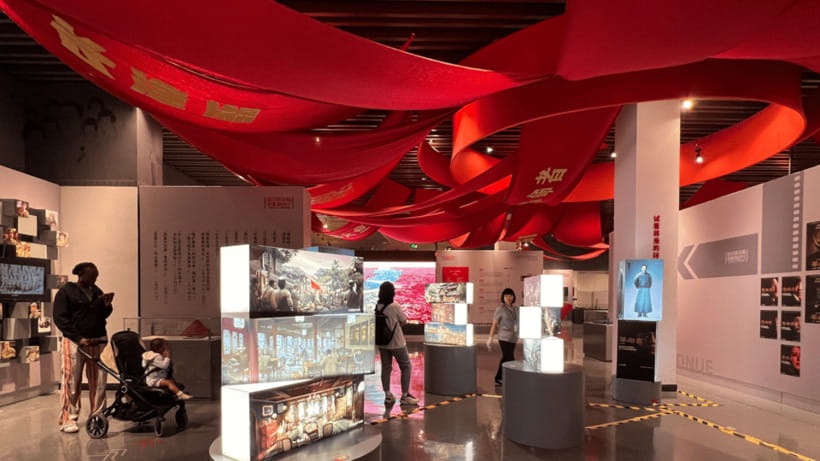
On the first floor, CNFM features a theme exhibition called The Theme Exhibition of A New Journey of Struggle. Think of this floor as your warm-up and context layer.
What to do here:
- Take a few minutes to orient yourself. This is where the museum starts telling you what to watch for and how to interpret what comes next.
- Look for the visual storytelling style. Even when you can’t read everything, you can usually understand the museum’s emphasis through layout, images, and exhibit sequencing.
One extra reason to start on the first floor: it sets you up for the bigger, longer-running exhibition upstairs. Without this framing, the timeline floors can feel like a wall of information. With it, the museum becomes easier to follow.
And yes, there’s a moment many people remember: an entrance area with dinosaur displays. It’s an unexpected pop of fun in a film museum, and it helps break the seriousness of the subject right at the start.
Floors 2 to 4: The main exhibition, A Century of History, A Century of Glory
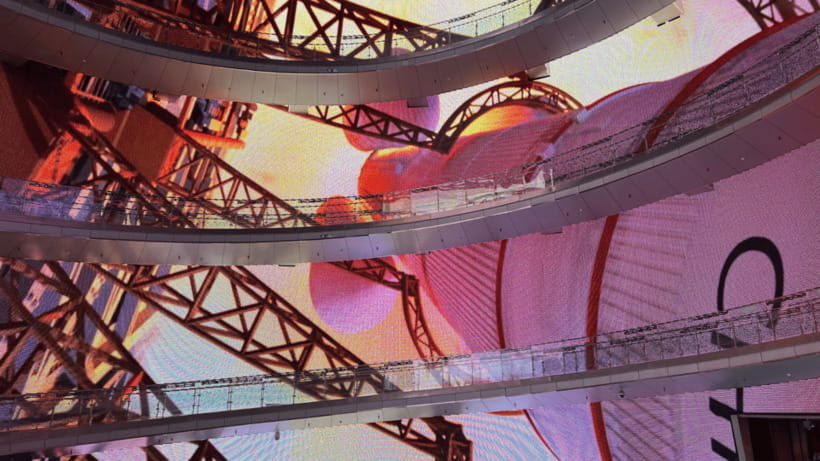
This is the core of the museum visit. On the second, third, and fourth floors, CNFM presents A Century of History, A Century of Glory.
This exhibition is built around several goals:
- showing a century-long history of Chinese films
- presenting film development across different periods and stages
- highlighting the significant artistic achievements of numerous film-makers
- explaining “secrets of film making” (so you understand more about how film is produced and why certain techniques matter)
Why you’ll probably enjoy this even if you are not a film scholar: the museum is trying to connect the dots. You’re not only seeing what was made. You’re also being nudged toward how and why it evolved.
How I’d approach these floors in a short visit:
- Spend extra time on the sections that explain process. Those are the ones that usually feel most rewarding to non-experts.
- Treat the film-makers’ achievements as your “anchor points.” When you find a name or milestone that clicks visually, linger. It makes the surrounding sections easier to interpret.
- If you hit a wall of text, switch to visuals and look for diagram-style displays, images, or staged scenes. The guide helps, but visuals will keep you moving.
One real-world consideration: several visitors noted the museum information can be Mandarin-only. That means you may not want to rely on reading every label. Instead, use the English guide to keep your momentum and avoid frustration.


Movie halls and the IMAX GT option, what’s included and what isn’t
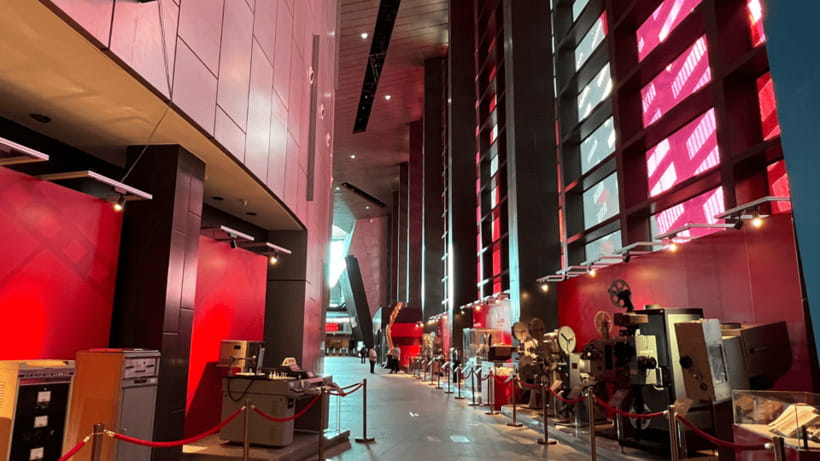
CNFM has six movie halls, including an IMAX GT hall. This is where the museum’s “film” identity becomes physical.
Here’s the key point for your planning: movie screenings are not included. So you might be able to enter/see the halls depending on how the museum operates on your day, but the actual show tickets (if you choose one) will cost extra.
Even if you don’t buy a screening, the movie-hall presence changes how the exhibits land. It helps you remember that film is not just history, it’s an ongoing industry built on technology, production choices, and audience experience.
If you do decide to add a paid screening, the best move is to do it only if you still have time to enjoy the main timeline. A 2-hour visit can get tight fast, and CNFM is not a “rush through everything” museum.
Entering with your QR code, so you don’t waste time at the gate
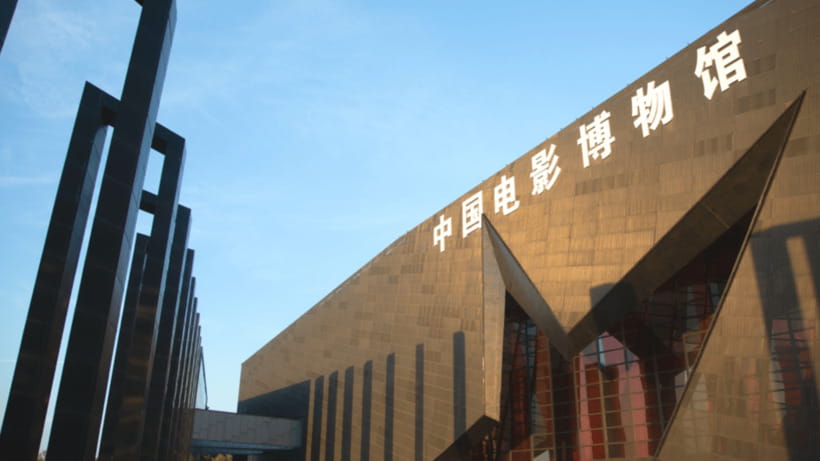
CNFM entry is designed to be smooth with a reserved ticket. After you place your order, you’ll receive an e-ticket via email or WhatsApp. Your admission is based on the QR code that you receive separately.
This detail matters:
- The QR code you get from the GetYourGuide app is not your entry ticket.
- You must use the QR code sent separately for admission.
Practical tip for your day: save the admission QR code where you can access it quickly on arrival. Don’t assume you’ll be able to find it if your phone battery is low or your email is buried.
Also bring your passport. That’s listed as required for entry.
Once inside, the museum’s scale will do the rest. You’ll naturally gravitate toward the main floors, but having the ticket sorted early keeps you from losing your best minutes.
Language reality check: how to handle Chinese-first signage
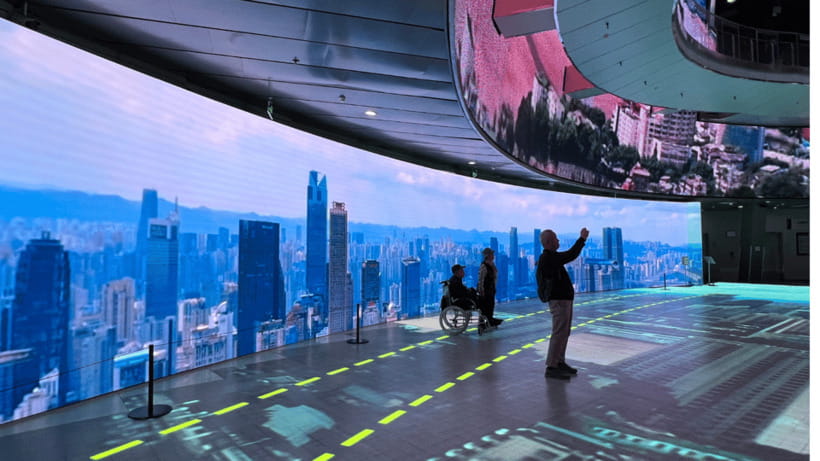
The museum experience can be very rewarding, but language is the one variable you should expect.
You might notice:
- Exhibit text and labels can be mostly in Mandarin
- Some visitors found it not ideal for non-Chinese speakers if they expected to read everything on the walls
That said, your booking includes an English version of the textual and visual guide. If you use it actively, you can still get a lot out of the museum. When labels are hard to read, the guide helps you understand what you’re looking at and why it’s in the timeline.
My advice: don’t try to translate every line. Use the guide to interpret the story, then let the visuals do the heavy lifting. You’ll finish your 2 hours feeling informed, not annoyed.
Price and value: what $4.82 buys you in Beijing
At $4.82 per person for a 2-hour reservation, this is a strong value on paper. You’re paying for:
- entry reservation for CNFM
- an English version of the guide (textual and visual)
For Beijing, where many museums and attractions can add up fast, this is a budget-friendly way to cover a lot of ground in one stop. The museum’s scale supports that value too. You’re not just entering a room or two. You’re stepping into a big, structured experience with multiple floors and film-focused halls.
The only cost you may add is optional:
- paid movie screenings (not included)
- any personal expenses you choose while you’re there
If you want film culture without burning your day budget, CNFM is one of the more sensible options.
Who should book this (and who should consider another plan)
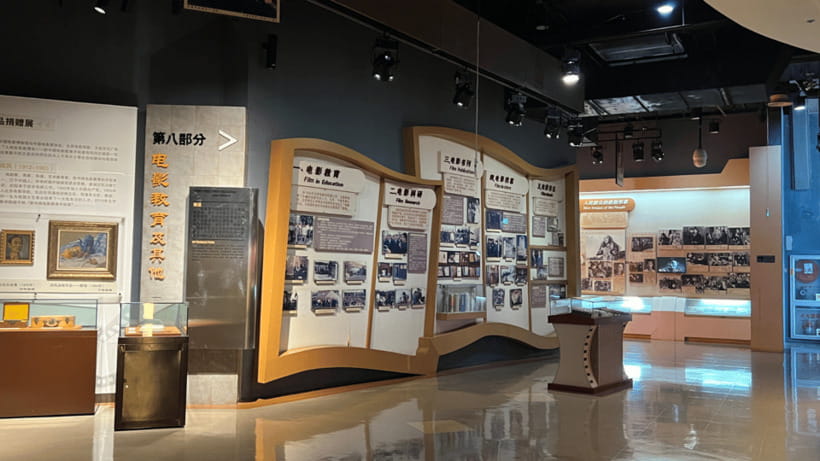
This is best for you if:
- you like movies as an art form, not just as entertainment
- you want a clear, timeline-style understanding of Chinese cinema
- you’re okay using a guide and relying on visuals where labels are dense
It can be less ideal if:
- you expect fully English interpretive text across every gallery
- you need a live guide to explain everything, since this experience does not include a live guide
Still, even with language limits, the museum has plenty of visual structure, plus clear major sections by floor. And the dinosaur-themed entrance area is the kind of moment that makes the visit feel less like homework and more like discovery.
Also, the staff are described as friendly and helpful. That matters, especially when you are navigating a large building and want to confirm where to go next.
Helpful tips so you actually enjoy the full 2 hours
CNFM is large. Your goal is to feel paced, not rushed. Here’s how to make the time work.
- Start with the first floor theme exhibition, then commit to the second to fourth floors main exhibition. That combination gives you the museum’s main story.
- If you spot the dinosaur display near the entrance, don’t treat it as a detour. It’s a fun reset and a memorable contrast point.
- Watch for the sections that feel about process, filmmaking choices, and how the industry works. Those are usually the most satisfying when you have limited time.
- Consider the movie halls at the end. If you add a paid screening, do it only if you’re not sacrificing the core exhibition time.
And because smoking is not allowed, plan to handle any breaks outside the galleries without needing to rush back in.
Should you book the Beijing China National Film Museum entry reservation?
Yes, if you want a film-focused museum that feels organized and gives you a real sense of how Chinese cinema developed. The price is low for what you get, and the included English guide meaningfully improves the experience if you are not reading Mandarin well.
I would book it if you like structured stories, timeline-style exhibits, and visuals that explain creative work. I’d think twice if you need a live guide and you want fully English interpretation in every corner. In that case, the museum might feel like work instead of discovery.
If you do book, go in with a simple plan: first floor for context, floors 2 to 4 for the main exhibition, and only then decide what to do about movie halls.
FAQ
How long is the China National Film Museum visit?
The duration is 2 hours, so you’ll want to focus on the main exhibition areas within that time.
Does the ticket include movie screenings in the movie halls?
No. The cost of paid movie screenings is not included.
How do I enter the museum using my reservation?
After you order, you will receive an e-ticket via email or WhatsApp. Use the QR code provided separately for admission. The QR code from the GetYourGuide app is not your entry ticket.
What language support is included?
An English version of the textual and visual guide is included.
What should I bring for entry?
You should bring your passport.
Is smoking allowed inside the museum?
Smoking is not allowed.
More Museums in Beijing

More Tour Reviews in Beijing



Beijing, reviewed one booking at a time
- Xian: Must see Eternal Love or Camel Bell Legend show Ticket
★ 5.0 · 3 reviews - One day tour to downtown Tianjin from Beijing by high speed train
★ 5.0 · 3 reviews - Ming Tombs Sacred Way & Underground Palace & Water Wall P Tour
★ 5.0 · 3 reviews - Beijing Mutianyu Great Wall Small Group Tour
★ 4.5 · 3 reviews - Return Bus to Badaling Great Wall
★ 3.0 · 3 reviews - Private Tour to Lama Temple, Tian’anmen Square and Forbidden City
★ 5.0 · 3 reviews
Museums, compared.
 ★ 4.6Beijing: Tianmen Square, Forbidden City & Royal Museum ToursFrom $41,288 reviews
 ★ 5.0Half-Day Mini Group Xian Tour to Terracotta Warriors MuseumFrom $49467 reviews
 ★ 4.5Beijing:Jingshan Park (Palace Museum Garden) TicketFrom $6185 reviews
 ★ 5.0Private Chengdu Day Tour: Giant Pandas and Jinsha Site MuseumFrom $169142 reviews
 ★ 5.0Private Xi’an Tour: Terracotta Warriors, Hanyangling Museum, Cave HomesFrom $175101 reviews
 ★ 4.5Xi’an: Terracotta Army Museum Group TourFrom $2085 reviews
 ★ 5.0Beijing Half Day: National Museum of China In-depth Tour with Subway TransferFrom $11470 reviews
 ★ 4.5Terracotta Warriors Museum Ticket with Professional English-speaking tour guideFrom $4553 reviews
Browse the lists this tour appears in