
REVIEW · BEIJING HUTONG TOURS
Beijing Hutong Walking Tour History, Architecture and Local Life
That first alley turn changes how Beijing feels.
This Beijing hutong walking tour connects everyday local life with big, memorable architecture, from a Chinese-style church to temple courtyards and pagoda views. You start at Xisi Subway Station and finish near Financial Street, so you get a clean contrast between old lanes and the modern city edges.
I especially like how the route is built around specific places you can actually point to, not vague ideas. You also get the kind of guidance that helps you notice details, like how doorways and layouts relate to how people lived and moved through the space.
I love that the day is efficient and value-forward. Most stops are listed with free admission, and you get bottled water plus a complimentary traditional Beijing drink. The group stays small, up to 10 people, so you have a better shot at asking questions as you walk, including door-and-layout questions that guides like Lori are known for explaining.
One thing to plan around: this experience is weather dependent, so hot rain or cold wind can change the feel of the day. Also, one main temple stop is listed as if open, so you might need to accept a swap or limited access depending on on-site hours.
In This Review
- Key things you will notice on this hutong walk
- How this 3-hour hutong route keeps the city in focus
- Stop by stop: church to pagoda views in one connected walk
- Stop 1: Xishiku Church and its Chinese touch
- Stop 2: Beijing Guangji Temple and finger paintings
- Stop 3: Zhengyang Shuju, the Wansong Brick Pagoda, and old Beijing images
- Stop 4: Zhuanta Lane, an oldest-hutong walk for real daily life
- Stop 5: Lidai Diwang Miao and honoring ancestors
- Stop 6: White Stupa Temple (Miaoying or Baita Si) and pagoda types
- Why the hutong layout talk is the real value
- Price and value: what $49 buys you in actual walking time
- Getting on and off the route: start, finish, and why it matters
- Practical tips for comfort in old-city lanes
- Who this tour suits best
- Should you book this Beijing Hutong Walking Tour?
- FAQ
- How much does the Beijing Hutong Walking Tour cost?
- How long is the tour?
- Where does the tour start?
- Where does the tour end?
- What is included in the price?
- Are admission tickets included?
- How big is the group?
- Is the tour outdoors?
- What is the cancellation policy?
Key things you will notice on this hutong walk
- Xisi Subway start, then an easy walk-through of historic neighborhoods toward the Financial Street area
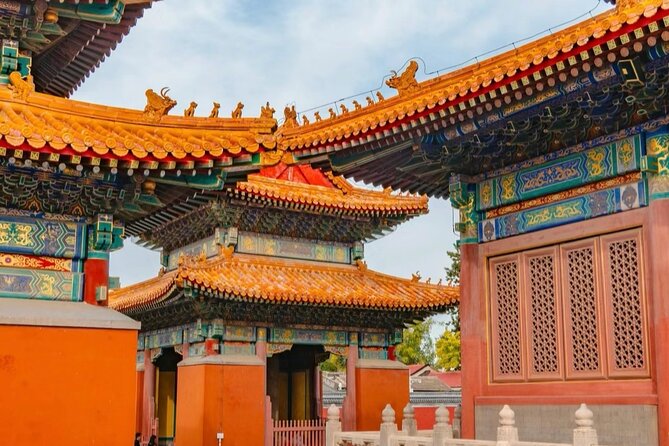
- Church, temples, and pagodas in one route, with most admission tickets free
- Oldest-hutong style lane time at Zhuanta Lane, built for seeing daily life close up
- Architecture framed in plain language, including how layouts and door significance shape what you see
- Small group size (max 10), which usually makes Q and A practical
- A included traditional Beijing drink plus bottled water, so you are not scrambling mid-walk
Deeper into the hutongs
- Beijing Hutong Walking Food and Beer Tour at Hidden Restaurants★ 5.0 · 1,132 reviews
- Temple Heaven, Summer Palace, Lama Temple, Hutong Bus Tour★ 4.7 · 319 reviews
- Temple of Heaven, Summer Palace, Lama Temple, Hutong Tours★ 5.0 · 311 reviews
- Beijing Private Hutong Food Walking Tour★ 5.0 · 299 reviews
How this 3-hour hutong route keeps the city in focus
This tour is about 3 hours total, and that total includes walking time between stops. That matters because hutongs are not a one-straight-line sightseeing strip, they are a patchwork of lanes, gates, courtyards, and small turns. A time-limited walk like this helps you get your bearings fast without turning the day into a marathon.
The route also uses a smart contrast. You move from older lanes and temple compounds toward the modern Financial Street side at the end point near 阜成门站 (Fuchengmen Station). Even if you have only a day or two in Beijing, that old-to-new progression gives you a real sense of where the city has been and where it is going.
I also like that it is set up for first-timers and returning visitors alike. First-timers get structure and context. If you already know Beijing basics, you can focus on comparing architectural forms like courtyards, temple structures, and pagoda styles without losing time.
Stop by stop: church to pagoda views in one connected walk
You will get a sequence of landmarks that feel different from each other, but still part of the same old-city rhythm. Each stop is short, so the day stays moving, not stalled.
Stop 1: Xishiku Church and its Chinese touch
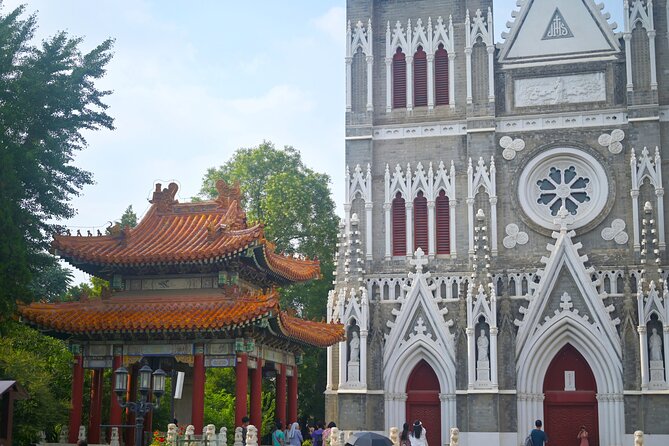
You start with a quick visit to Xishiku Church, described as Beijing’s earliest church with a unique Chinese touch and a story behind it. This is a helpful warm-up stop because it sets a tone: Beijing’s “old” is not only temples and imperial sites. It also includes the way newer institutions took root in older settings.
Because the stop is brief (around 10 minutes) you should treat it like an orientation moment. Look at how the building relates to its surroundings, then use your guide’s story to connect what you see to the wider city timeline.
Stop 2: Beijing Guangji Temple and finger paintings
Next is Beijing Guangji Temple (about 20 minutes), where you can see traditional Chinese temple architecture and ancient finger paintings. Even if you have seen other temple compounds, this stop is built around a very specific detail, the finger paintings. That gives your eyes a job beyond “look at the buildings.”
Finger paintings are not something you casually stumble upon while walking, so pay attention to whatever context your guide gives about what you are seeing. Take a moment to notice how the artwork is placed and how it fits the space around it.
Other Beijing trips our reviewers kept returning to

Stop 3: Zhengyang Shuju, the Wansong Brick Pagoda, and old Beijing images
At Zhengyang Shuju, you will see the Wansong Brick Pagoda from the Yuan Dynasty and also explore a collection of old Beijing images inside a Siheyuan. This is one of the stops that can really stick in your mind because it combines a specific time period (Yuan Dynasty) with a visual record of the city.
The pacing here is around 20 minutes. Use that time to do two things: first, look carefully at the pagoda exterior, then shift attention to the Siheyuan photo collection. That pairing helps you connect architecture to how people depicted daily life and the look of neighborhoods.
Stop 4: Zhuanta Lane, an oldest-hutong walk for real daily life
Then you get Zhuanta Lane, which is presented as one of Beijing’s oldest hutongs. The point is simple: you get to walk through an authentic-feeling lane and glimpse how locals live.
This stop is only about 15 minutes, so do not rush your senses. Keep your head up while walking, not only down at the curb. If your guide points out how locals use gates, thresholds, or how homes face the lane, that is the kind of detail that makes hutongs feel real instead of purely scenic.
Stop 5: Lidai Diwang Miao and honoring ancestors
After the lane walk, you visit Lidai Diwang Miao (Temple of Previous Dynasties), about 20 minutes. The tour notes that if it is open, you will see grand palatial structures and learn how Chinese tradition honors ancestors.
This stop is included with admission for this location. That usually signals it is a key site on the route. Since it is partly conditional on access, be flexible. If it is open, take time to look at the scale and the way the compound is organized. If access is limited, keep your focus on what you can still see and ask your guide what would normally be the highlight when it is fully open.
Stop 6: White Stupa Temple (Miaoying or Baita Si) and pagoda types
The day ends at White Stupa Temple, also known as Miaoying or Baita Si, for about 15 minutes. You view the exterior design of the White Stupa from a nearby cafe balcony, and your guide introduces different types of Chinese pagodas.
That balcony angle is smart. From the street alone, pagodas can feel partially blocked. A higher vantage point helps you see the full exterior and understand proportions. If you care about architecture, this is the moment to slow down slightly, take a clear look, and follow your guide’s explanation of pagoda types.
Why the hutong layout talk is the real value
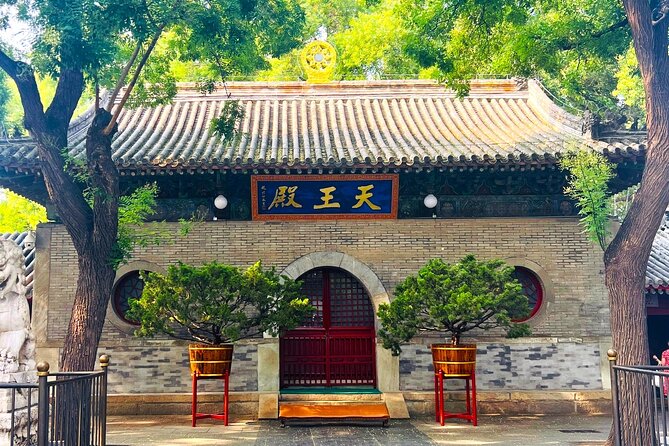
The most memorable hutong tours are not the ones where you collect photos. They are the ones where you learn how to read the neighborhood. This tour aims for that, including guidance on how hutongs and traditional courtyards are laid out and how elements like doors matter.
If your guide uses examples like the ones described by Lori, you will likely get explanations that sound practical, not academic. Door and entry symbolism can help you interpret the difference between a place meant for public view and a place meant for private life.
I also like that the itinerary is designed to mix “look at this structure” with “walk this lane.” At Zhuanta Lane you get your eyes on daily movement. At the Siheyuan-linked stops you get the context of courtyards and old-city images. Together, it turns hutongs into a living map.
Price and value: what $49 buys you in actual walking time
At $49 per person, this is priced like a practical small-group cultural walk, not a museum-heavy day. And the value is helped by what is included.
You get bottled water and a complimentary traditional Beijing drink, plus all fees and taxes. The key economic piece is that most stops list admission as free. The Temple of Previous Dynasties is the one with admission included, so you are not paying extra at multiple sites.
You also pay for time saved. Planning a route that links church, multiple temple compounds, and pagoda views while staying in a walkable zone can be a hassle, especially if you are still learning how Beijing neighborhoods connect.
If you like tours that give you structure without overloading your schedule, you will likely feel good about this price. If you want deep museum-level ticket time at every stop, you may wish you had a longer itinerary, since the pace is intentionally compact.
Getting on and off the route: start, finish, and why it matters
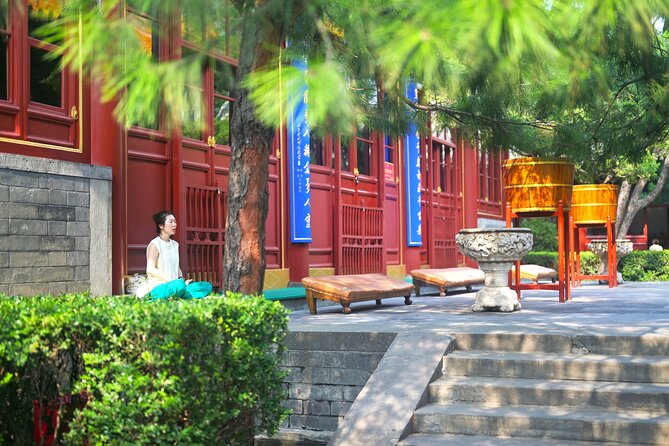
This walk starts near Xisi Subway Station and ends near 阜成门站 (Fuchengmen Station) at Exit C, Southeast, close to Financial Street. That is a practical setup because both ends are tied to rail access.
You do not need private transportation for this tour, which is good value. It is also listed as near public transportation, which matters if you want flexibility for lunch afterward. A finish near the Financial Street area can be helpful when you want more dining options without retracing your steps for long.
Your ticket is mobile, so bring a charged phone. And since the maximum group size is 10, you should not worry about a huge crowd bottleneck at every gate, but you still want to walk at a comfortable speed for your group.
Practical tips for comfort in old-city lanes
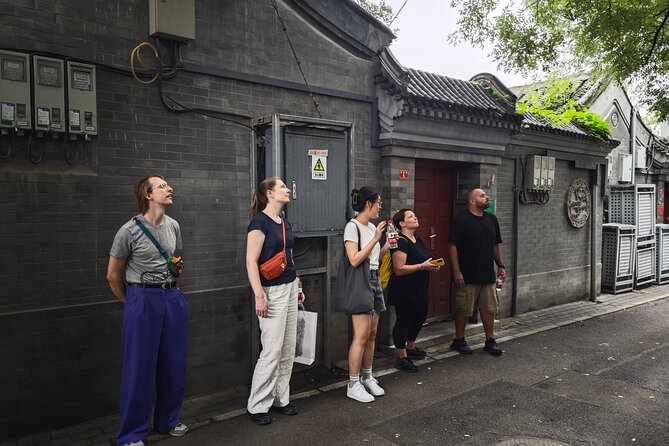
The tour requires good weather, so plan for the basics. Wear shoes you trust on uneven lane surfaces. Bring sun protection for clear days, and an outer layer if the air is chilly. Even with water included, you will feel better if you top up and go at an easy pace.
Pack light. You will be moving between several stops, and you do not want your day to be a coat-and-bag shuffle.
If you are the type who loves asking questions, this is a good fit. Small-group tours make it easier to get answers while you are looking at the actual place, like the pagoda exterior or the temple compound layout.
And do not ignore the included traditional Beijing drink. It is not just a perk, it is a small cultural anchor that ties the day together, especially if you are already eating locally later.
Who this tour suits best
This tour works especially well if you:
- Want a first Beijing hutong experience with built-in structure
- Like architecture but also want a lane-level look at local life
- Prefer a short, well-paced outing around 3 hours
- Enjoy guided explanations, including details like door significance and site context
- Appreciate an itinerary where most admissions are free
It may feel less ideal if you:
- Need lots of individual time inside temples, since most stops are relatively short
- Are looking for a long, uninterrupted walk with minimal stops
- Are visiting on a day where weather is likely to be poor, since the tour requires good weather
Should you book this Beijing Hutong Walking Tour?
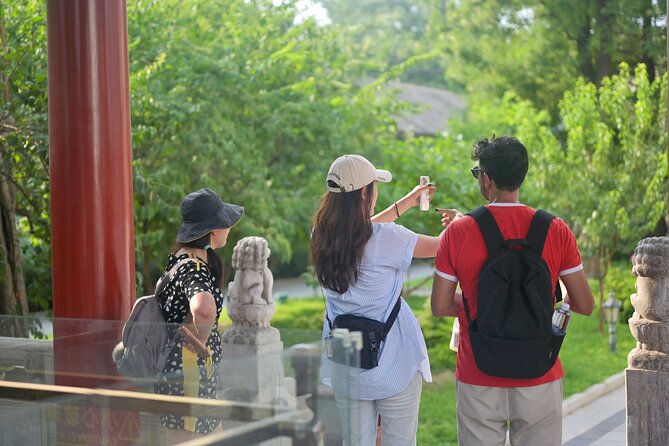
If you want a fast way to understand how old Beijing still functions as daily life, I think you should seriously consider booking. The best part is the balance: you walk a real hutong lane, then you connect what you saw to temples, a church, and pagoda architecture. The small group size plus guide attention makes it feel less like a checklist.
If you value value, this tour has a strong case. The $49 price is supported by bottled water, a traditional Beijing drink, and multiple free-admission stops. That keeps costs predictable while still giving you meaningful sites, including the Yuan Dynasty Wansong Brick Pagoda and the White Stupa area.
My only cautious note is the weather dependence and the possibility that a specific temple visit is only if open. If your dates are flexible, you will likely have an easier time making this fit.
FAQ
How much does the Beijing Hutong Walking Tour cost?
It costs $49.00 per person.
How long is the tour?
The tour duration is approximately 3 hours, and that total includes travel time between locations.
Where does the tour start?
The tour starts near Xisi Subway Station (meeting point includes Xisi, Xicheng District) and you start by Exit C at Fuchengmen on Line 2.
Where does the tour end?
It ends at 阜成门站 (Fuchengmen Station) at Exit C, Southeast, near Financial Street in Xicheng District.
What is included in the price?
All fees and taxes are included, along with bottled water and a complimentary traditional Beijing drink.
Are admission tickets included?
Admission tickets are listed as free for several stops, and the Temple of Previous Dynasties admission is included.
How big is the group?
The tour has a maximum of 10 travelers.
Is the tour outdoors?
The itinerary includes walking between several sites, and the experience requires good weather.
What is the cancellation policy?
You can cancel for free up to 24 hours in advance for a full refund. If you cancel less than 24 hours before the start time, the amount you paid is not refunded.
More Tours in Beijing



More Tour Reviews in Beijing
Further Into The Hutongs




Beijing, reviewed one booking at a time
- Xian: Must see Eternal Love or Camel Bell Legend show Ticket
★ 5.0 · 3 reviews - One day tour to downtown Tianjin from Beijing by high speed train
★ 5.0 · 3 reviews - Ming Tombs Sacred Way & Underground Palace & Water Wall P Tour
★ 5.0 · 3 reviews - Beijing Mutianyu Great Wall Small Group Tour
★ 4.5 · 3 reviews - Return Bus to Badaling Great Wall
★ 3.0 · 3 reviews - Private Tour to Lama Temple, Tian’anmen Square and Forbidden City
★ 5.0 · 3 reviews
Beijing Hutong Tours, compared.
 ★ 5.0Beijing Hutong Walking Food and Beer Tour at Hidden RestaurantsFrom $801,132 reviews
 ★ 4.7Temple Heaven, Summer Palace, Lama Temple, Hutong Bus TourFrom $58319 reviews
 ★ 5.0Temple of Heaven, Summer Palace, Lama Temple, Hutong ToursFrom $99311 reviews
 ★ 5.0Beijing Private Hutong Food Walking TourFrom $82299 reviews
 ★ 5.0The Hutong Experience by BikeFrom $150163 reviews
 ★ 5.0Beijing: Hutong Culinary Walking Tour with 15+ TastingsFrom $76162 reviews
 ★ 5.0Beijing Hutong Breakfast Food TourFrom $45155 reviews
 ★ 5.0Beijing City Walk: Explore Hutongs Life and Old BeijingFrom $15146 reviews
Browse the lists this tour appears in