

REVIEW · BEIJING HUTONG TOURS
Beijing Hutongs Walking Tour
Hutongs can feel like a maze. This walking tour keeps the pace easy and the group small, so you can actually follow the lanes instead of just taking photos and guessing. I love the relaxed, local-feeling flow and the chance to see courtyard homes tied to famous names.
One big plus is the way the guide turns the streets into story, including topics like Chinese time-keeping and the fate of the last emperor. You’ll also get that useful crowd control, max 15 people, so questions do not get lost in the shuffle.
The one drawback to plan for is timing. You need to show up at the exact metro exit for the meeting point, because if you’re late the tour may move on without you.
In This Review
- Key highlights from this Beijing hutongs walk
- Hutongs in Beijing: Why this tour works when the streets don’t
- Getting started at the right metro exit near Nanluoguxiang
- Bell and Drum Towers, your compass for the hutong maze
- Nanluoguxiang Lane: grey courtyard walls and old-tree atmosphere
- Mao’er Hutong stories: more than lanes, actual character history
- Empress’s Mansion and Puyi’s empress Wanrong
- The Qianhai and Houhai connection: walking by water between stories
- How much value is $30 for 1.5 to 2 hours?
- What the small group size changes for you
- Timing tip: be at the meeting point early
- Who this tour suits best, and who should think twice
- Should you book this Beijing Hutongs Walking Tour?
- FAQ
- How long is the Beijing Hutongs walking tour?
- How much does the tour cost?
- Is there an English-speaking guide?
- How big is the group?
- Where do I meet the guide?
- Where does the tour end?
- Do I need a printed ticket?
- Are service animals allowed?
- Can I cancel for a refund?
Key highlights from this Beijing hutongs walk

- Max group size of 15 keeps it interactive and easy to ask questions
- English-speaking guide explains what you’re seeing, not just where to stand for a picture
- Bell and Drum Towers area start gives you an orientation point near major sights
- Nanluoguxiang and Mao’er Hutong offer the traditional lane experience many first-timers miss
- Empress’s Mansion link to Wanrong makes the stories feel specific, not vague
- Stops around Qianhai and Houhai add a scenic finish beyond pure alleys
Deeper into the hutongs
- Beijing Hutong Walking Food and Beer Tour at Hidden Restaurants★ 5.0 · 1,132 reviews
- Temple Heaven, Summer Palace, Lama Temple, Hutong Bus Tour★ 4.7 · 319 reviews
- Temple of Heaven, Summer Palace, Lama Temple, Hutong Tours★ 5.0 · 311 reviews
- Beijing Private Hutong Food Walking Tour★ 5.0 · 299 reviews
Hutongs in Beijing: Why this tour works when the streets don’t

Beijing’s hutongs are charming, but they can also be confusing fast. The lanes twist, the entrances look similar, and it’s easy to end up walking in circles if you go on your own. This tour is built for that reality. You get a human plan, not just directions.
I like that the pace stays laid-back, not rushed. It matters because hutong wandering is slow by nature, and you’ll want time to look at courtyards, doorways, and the small details that make these neighborhoods different from big-ticket sights.
The other reason this tour clicks is that it focuses on a side of the city many people skip. Instead of only grand imperial structures, you move through the traditional downtown lanes where everyday Beijing life historically unfolded. That shift changes how the city feels.
Getting started at the right metro exit near Nanluoguxiang
Your meeting point is in the Nanluoguxiang area, near South Luogu Lane (南锣鼓巷南口). The stated metro option is Line 8 or Line 6, Nanluoguxiang station, and you should use Exit E (南锣鼓巷地铁站E出口).
This is practical advice: take a screenshot of the exact exit number and show it to yourself on arrival. In older subway layouts, exits can be renamed or confusing if you’re walking quickly or following the wrong signage.
Start time is 10:00 am, and the whole experience runs about 1 hour 30 minutes to 2 hours. That timing is ideal for a first or second half-day, when you still want orientation but you do not want to burn your whole day.
Bell and Drum Towers, your compass for the hutong maze
The first stop is the Bell and Drum Towers area. Even if you have already seen big sights in Beijing, using this as your launching point helps you understand why the hutongs fit the city the way they do.
From here, you head into the lane network that surrounds the towers. The benefit is simple: you’re not starting in the smallest alley possible. You begin near a major landmark and then let the smaller streets pull you in.
If you’re hoping for a pure walking workout, this is not that. It’s more of a strolling rhythm, with time for explanations and photo pauses. If you want lots of steps and long distances, you might need extra exploring afterward on your own.
Nanluoguxiang Lane: grey courtyard walls and old-tree atmosphere
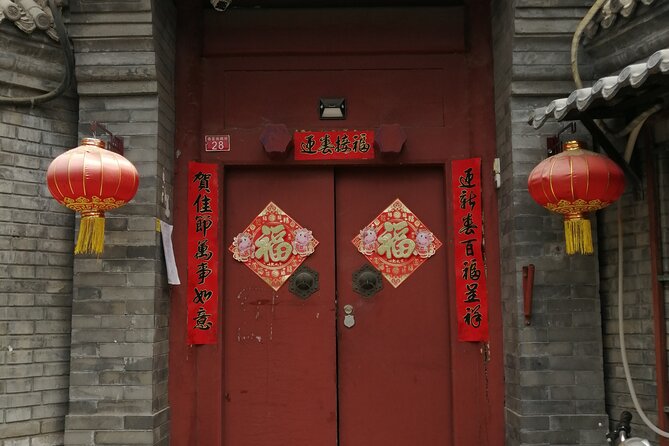
After you get going, you’ll walk to Nanluoguxiang, a lane that takes you back to the Yuan Dynasty era through its traditional layout. You’ll see the classic hutong look: grey-colored vernacular courtyard houses, often paired with old trees.
What to pay attention to here is the architecture language. Courtyard homes in hutong neighborhoods are not just scenery, they reflect how families lived around open space. In other parts of Beijing, you might only notice the street front. In these lanes, the courtyard idea pulls your attention inward.
This is where the guide’s explanations make your walk more than a photo scroll. You’ll get context about traditional building logic and how the lanes functioned as lived-in space, not just alleyways.
A small consideration: Nanluoguxiang can be busy compared to the quieter end of hutong life. A small group helps, but if you dislike crowds, go in with the expectation that this is a central, well-known area.
Other Beijing trips our reviewers kept returning to


Mao’er Hutong stories: more than lanes, actual character history
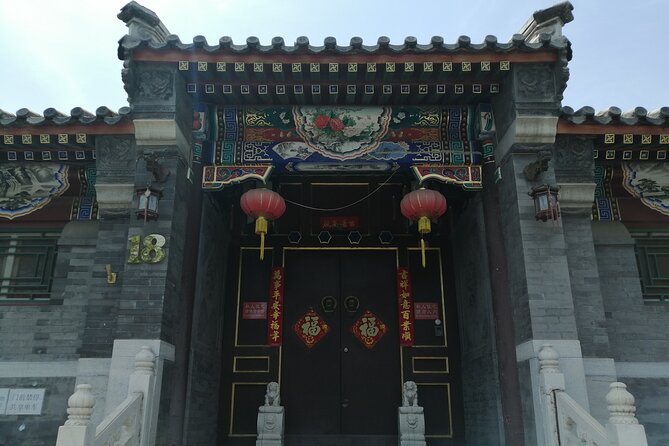
Next comes Mao’er Hutong, where the atmosphere shifts from lane scenery into story territory. The focus here is on the “people behind the place,” with the guide linking famous buildings to character stories you can follow as you walk.
Mao’er Hutong is also a great place to practice how to look. Instead of hunting for the biggest sight, you start noticing the rhythm: where the lane narrows, how the courtyards sit back, and how a single building can carry a whole biography.
This is also one of the most engaging parts of the tour because the guide brings in details you can’t easily find on a street sign. Topics mentioned include Chinese time-keeping and the fate of the last emperor, which you then connect to what you see around you.
Empress’s Mansion and Puyi’s empress Wanrong
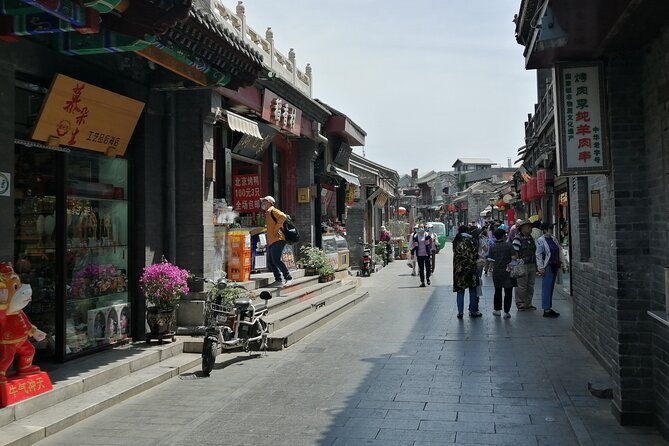
One stop is at Empress’s Mansion, a former residence connected to Puyi’s empress Wanrong. This is the kind of detail that makes a hutong walk feel tangible. Instead of vague history, you get a specific person tied to a specific address-like location in the lanes.
Plan for a photo moment here. The guide sets you up for pictures, and it’s a natural pause in the walking. If you enjoy photo stops but hate when they feel awkward, this is handled in a way that still keeps the tour moving.
The bigger value is how the story changes your view. Once you know the connection to Wanrong, you tend to interpret the building differently. The courtyard becomes not only architecture, but context.
The Qianhai and Houhai connection: walking by water between stories
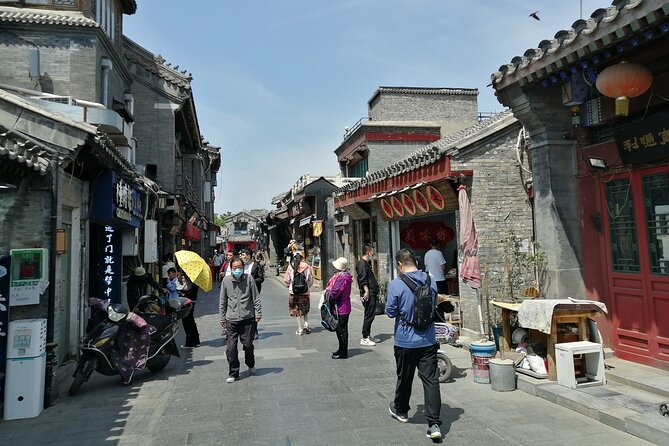
As the tour continues, you’ll see a narrow channel that joins Qianhai Lake and Houhai Lake. This part adds a calmer visual break from tight alley walls and gives you a different kind of Beijing scene.
Water matters in hutong neighborhoods because it creates a second geography layer. You stop thinking only in terms of lanes and start seeing how neighborhoods connect through waterways and nearby landmarks.
It’s also a smart way to end the experience with variety. Even if you love history, a tour that keeps the visuals changing stays easier on your attention span.
How much value is $30 for 1.5 to 2 hours?
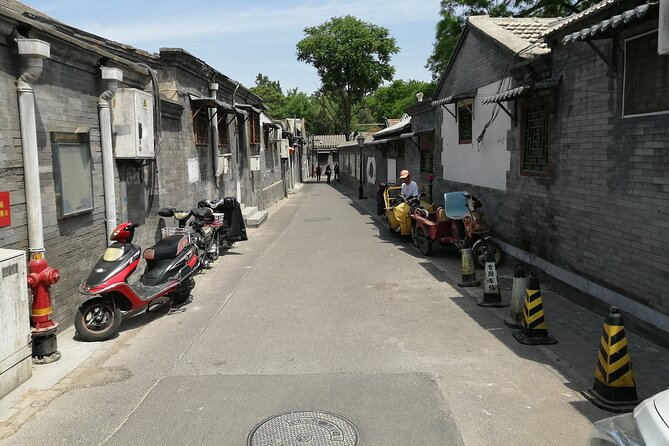
At $30 per person, this hutongs walking tour sits in the sweet spot for many visitors. It’s not free, and you are paying for something that’s hard to DIY well: a guided thread that turns a confusing lane network into a story you can follow.
You’re also paying for practical help that matters on day one. With a small group and an English-speaking guide, you get explanations on the spot, rather than guessing what you’re looking at later. That time savings is real value, especially if you’re still learning how to navigate the city.
The tour length is also a big part of the value. If you have limited energy, 1 hour 30 minutes to 2 hours is enough to get oriented without turning the hutongs into an all-day commitment.
If you’re the type of person who loves reading guidebooks and then walking alone, you might not need a tour. But if you want the city explained in a way that matches what you’re seeing right now, this is a good use of time.
What the small group size changes for you
With a maximum of 15 people, this tour is set up so the guide can keep track of the group and handle questions. That sounds like a small detail, but it affects your whole experience.
In a crowded tour, you just watch. In a small one, you can ask about what a lane name means, what a building connection implies, or why a certain detail matters. The guide is also the type who uses engagement, including quizzes, which helps you retain the stories instead of letting them pass by.
The result is a more personal stroll where you feel like you’re walking with someone who knows how to make the hutong landscape legible.
Timing tip: be at the meeting point early
One thing I’d take seriously before you go is punctuality. The tour starts at 10:00 am, and the meeting point is specifically tied to the Nanluoguxiang metro access area, including Exit E.
If you’re late, you can end up missing the start and losing the thread. So I suggest arriving early enough that you’re not rushing around the station trying to match signs to your map. Give yourself buffer time, then stand where the meeting is identified.
Who this tour suits best, and who should think twice
This is ideal for you if:
- It’s your first trip to Beijing and you want an easy way to get oriented in the hutongs
- You prefer guided storytelling over pure sightseeing
- You like small groups and conversations, not just a marching line
It may be less ideal if:
- You want a long, high-distance walk
- You dislike any crowds, including the more central hutong lanes like Nanluoguxiang
- You prefer total independence and do not want a structured route
Also, the tour notes that most people can participate, and it allows service animals. If you have mobility concerns, you still should consider that hutong lanes can be uneven and narrow, even when the tour pace is relaxed.
Should you book this Beijing Hutongs Walking Tour?
Yes, I’d book it if you want a smart first hit of hutongs with real explanations. The best reason is the combination of small group size, English guidance, and lane-level storytelling that connects to specific places, like Empress’s Mansion tied to Wanrong.
Skip it only if you already have a solid plan for self-guided hutong navigation and you mainly want long walks or fewer people around you. If your goal is to understand the city’s everyday fabric, not just its monuments, this tour gives you that foundation quickly.
If you do book, go in with two simple moves: wear comfy walking shoes, and show up early at the correct Nanluoguxiang station Exit E so you start with the group and not from behind it.
FAQ
How long is the Beijing Hutongs walking tour?
It lasts about 1 hour 30 minutes to 2 hours.
How much does the tour cost?
The price is $30.00 per person.
Is there an English-speaking guide?
Yes, the tour includes an English-speaking guide.
How big is the group?
The maximum group size is 15 travelers.
Where do I meet the guide?
Meet at South Luogu Lane in Nan Luo Gu Xiang, Dong Cheng Qu, Beijing, with the metro option of Line 8 or Line 6 Nanluoguxiang station Exit E.
Where does the tour end?
The tour ends in the Houhai area in the Xicheng District, and it finishes at the Drum Tower area.
Do I need a printed ticket?
No, it uses a mobile ticket.
Are service animals allowed?
Yes, service animals are allowed.
Can I cancel for a refund?
Yes, you can cancel for a full refund up to 24 hours before the experience’s start time.
More Tours in Beijing





More Tour Reviews in Beijing
Further Into The Hutongs




Beijing, reviewed one booking at a time
- Xian: Must see Eternal Love or Camel Bell Legend show Ticket
★ 5.0 · 3 reviews - One day tour to downtown Tianjin from Beijing by high speed train
★ 5.0 · 3 reviews - Ming Tombs Sacred Way & Underground Palace & Water Wall P Tour
★ 5.0 · 3 reviews - Beijing Mutianyu Great Wall Small Group Tour
★ 4.5 · 3 reviews - Return Bus to Badaling Great Wall
★ 3.0 · 3 reviews - Private Tour to Lama Temple, Tian’anmen Square and Forbidden City
★ 5.0 · 3 reviews
Beijing Hutong Tours, compared.
 ★ 5.0Beijing Hutong Walking Food and Beer Tour at Hidden RestaurantsFrom $801,132 reviews
 ★ 4.7Temple Heaven, Summer Palace, Lama Temple, Hutong Bus TourFrom $58319 reviews
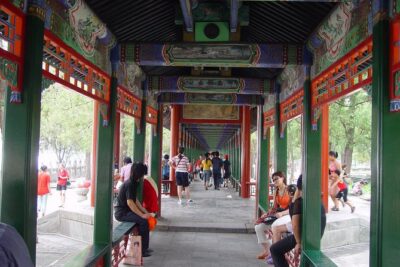 ★ 5.0Temple of Heaven, Summer Palace, Lama Temple, Hutong ToursFrom $99311 reviews
 ★ 5.0Beijing Private Hutong Food Walking TourFrom $82299 reviews
 ★ 5.0The Hutong Experience by BikeFrom $150163 reviews
 ★ 5.0Beijing: Hutong Culinary Walking Tour with 15+ TastingsFrom $76162 reviews
 ★ 5.0Beijing Hutong Breakfast Food TourFrom $45155 reviews
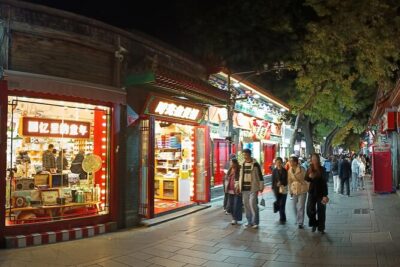 ★ 5.0Beijing City Walk: Explore Hutongs Life and Old BeijingFrom $15146 reviews
Browse the lists this tour appears in