
REVIEW · WALKING TOURS
Private 2-Hour Walking Tour of Shanghai’s Jewish Ghetto
Hongkou tells a Jewish Shanghai story. In a tight 2-hour private walk, you get the refugee-era context plus the street-level feel of this neighborhood. It is a history tour you can actually see, not just read.
I like that the walk is anchored at the Shanghai Jewish Refugees Museum (Ohel Moishe Synagogue), built on a real synagogue site tied to refugees. I also like the way the route mixes memorial space with daily-life streets, so the Jewish quarter feels human-sized, not just museum-sized.
One possible drawback: the last stop is Xiahai Temple, a Buddhist temple connected to the ghetto era. If your priority is strictly Jewish sites, you may wish the schedule spent more time inside Jewish-focused spaces.
In This Review
- Key things I’d watch for on this Hongkou walk
- Why Hongkou is the real starting point for Jewish Shanghai
- Meeting at Changyang Road, and what a private walk changes
- Ohel Moishe Synagogue and the Jewish Refugees Museum experience
- The Joint Distribution Committee and Huoshan Park memorial moment
- Walking the Jewish ghetto neighborhood for everyday-life context
- Xiahai Temple, the fish man connection, and why it’s included
- Guide quality, and names that came up repeatedly
- Price and value for a 2-hour private tour
- How to get the most out of two hours
- Who this tour suits best, and who might rethink it
- Should you book this Shanghai Jewish Ghetto walking tour?
- FAQ
- How long is the Private 2-Hour Walking Tour of Shanghai’s Jewish Ghetto?
- Where does the tour start, and does it end nearby?
- Is the tour private or group-based?
- What is included in the price?
- Are museum or temple admissions included?
- What if the weather is bad, can I cancel?
Key things I’d watch for on this Hongkou walk
- Private 2-hour pacing that fits a morning or afternoon without turning into a half-day slog
- Ohel Moishe Synagogue museum visit at the center of the story, not as an afterthought
- Aid and memorial stops around the Joint Distribution Committee and Huoshan Park
- Street time in a local neighborhood, with everyday details you can’t get from a map
- Xiahai Temple closure points, which some people love and others find tangential
Other Shanghai trips our reviewers kept returning to
- Shanghai City Guided Walking Tour | China’s 1st and Best Rated★ 5.0 · 285 reviews
- Shanghai Highlights Walking Tour With A Real Local★ 4.9 · 153 reviews
- Shanghai Breakfast Walking Tour of Former French Concession★ 5.0 · 139 reviews
- Private Shanghai Evening Street Food Walking and Cruise Tour★ 5.0 · 123 reviews
Why Hongkou is the real starting point for Jewish Shanghai
Shanghai’s Jewish story is not only about synagogues and big headlines. It also lives in neighborhoods, help networks, and ordinary streets that turned into survival geography. This tour’s focus on Hongkou District is what makes it work as a guided experience.
You’ll hear how Shanghai became a refuge for Jewish families facing danger in Europe, and how community organizations and local places shaped what came next. The route is built to show those links, so you can connect the museum exhibits to real corners you pass on foot.
For me, the best value in this kind of tour is perspective. Instead of treating Jewish history as a sealed-off chapter, you start to see it as part of the city’s everyday fabric.
Meeting at Changyang Road, and what a private walk changes
You meet at Changyang Road (Chang Yang Lu, Yang Pu Qu) and you end back near the meeting point. It’s designed as a true private tour, meaning just your party with a local English-speaking guide, not a rotating crowd.
That private setup matters in a place like this because the route is partly about reading cues. A guide can point out what to look at, explain how the neighborhood shifted, and adjust the pace if questions come up. In the feedback I saw from guide experiences, guests appreciated when the guide could slow down at key moments.
One practical point: there’s no hotel pickup or drop-off included. If you’re staying far from Yangpu, plan a transit route to the meeting point and give yourself a small buffer.
Ohel Moishe Synagogue and the Jewish Refugees Museum experience
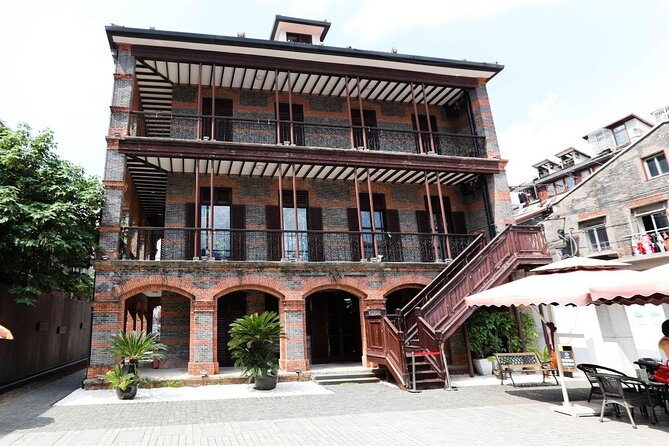
The tour’s first big anchor is the Shanghai Jewish Refugees Museum (Ohel Moishe Synagogue). The museum sits on the site of the synagogue that attracted refugees during turbulent times, so the setting is part of the meaning.
Inside, you’ll get the background for the refugee story and the way Jewish community life took root in Shanghai under pressure. Even when you’ve read a bit online, the museum context tends to do two things fast: it gives names and it gives timelines.
The pacing here is important. If you want the Jewish portion to be the whole day, a 2-hour format can feel tight. But if you want a guided overview that also leads you into the neighborhood streets, the museum stop is exactly the right launch pad.
A number of guests highlighted how moving this stop can be, especially for people with family connections to refugees who spent years in China. That emotional weight is real, and it’s one reason this walk can feel more personal than typical urban history tours.
The Joint Distribution Committee and Huoshan Park memorial moment
After the museum, the walk continues through the area with stops that connect help and memory. You pass the American Jewish Joint Distribution Committee and hear about the kind of aid offered to refugees in the community.
Then you move into Huoshan Park, where you get a quieter break with a monument memorializing Jewish immigrants. This is not just a photo stop. It’s a chance to absorb the scale of what happened, before you switch back to street-level life.
What I like about this sequence is that it turns abstract history into human systems. Aid organizations, memorials, and public spaces do not exist for decoration. They show how people organized survival, and how later generations chose to remember.
If you’re the type who gets restless during museum time, Huoshan Park can also be a helpful reset. It breaks up the mental load and lets the story settle in.
Other Shanghai trips our reviewers kept returning to

Walking the Jewish ghetto neighborhood for everyday-life context
The middle of the tour is where the “walking” part becomes more than movement. You enter a local neighborhood and learn about daily life shaped by the ghetto period.
This is where the guide’s approach can make or break the experience. Guests who loved the walk often mentioned the value of seeing how the area functions today, while hearing how it once functioned for refugees. When a guide can connect the two, you come away with a clearer sense of continuity.
You may also spend time around the thriving center with sights like craft shops, fresh seafood stalls, and rustic restaurants, depending on the route day. That matters because ghetto history did not exist in a vacuum. People still needed food, supplies, routine, and social space.
If you’re worried about this portion becoming too general, here’s the practical way to handle it: ask your guide to tie what you’re seeing to the specific time period the museum covers. With a good guide, the “what” and the “why” lock together.
Xiahai Temple, the fish man connection, and why it’s included
The final stop is Xiahai Temple, known as the fish man temple in the past. The tour explains how a Buddhist temple played a role within the Jewish ghetto context, linking religious space to survival-era reality.
This is also where opinions can split. Some people see it as a fascinating example of how different communities and needs intersected under pressure. Others feel the tour leans away from explicitly Jewish sites late in the walk.
So who should like this part? If you enjoy history as social overlap, you’ll probably find it rewarding. If you came for synagogue-only focus and museum-only depth, you might feel the last portion changes the tone.
Either way, it’s a useful reminder that history is not always neatly separated into themed categories. Urban life creates shared spaces, and hardship can force unlikely overlaps.
Guide quality, and names that came up repeatedly
This tour is run by Shanghai Pathways, and the experience is guided by local English-speaking hosts. In the feedback I reviewed, the guide name often came up because the tour style can vary from person to person.
Mason (sometimes spelled Masin) was mentioned for being personable and highly informed, including moments where the guide shared personal family context connected to Jewish refugees. Annie was also praised for strong English, enthusiasm, and taking guests into residential spaces to show how people lived during the war years. Zoe and Mary came up too, with praise for pacing and clarity, including adapting when weather disrupted plans.
At the same time, some people felt the museum did most of the heavy lifting, and that the later temple portion did not match their expectations. A smaller number said their guide explanations lacked sensitivity or depth around Jewish meaning.
My practical takeaway: if you have a strong preference for Jewish history content over religious-site crossovers, email or message ahead and state that clearly. Ask how the guide plans to balance Jewish-focused stops with the temple and local-neighborhood portion. The tour is short, so focus matters.
Price and value for a 2-hour private tour
The price is $131.28 per person for about 2 hours. You’ll usually book around 21 days in advance, and it offers group discounts and a mobile ticket.
Is it worth it? For a private walk, the main value is time with a guide who can connect details on the ground. In short tours, the guide’s storytelling matters more than extra stops, because there just isn’t time to wander without interpretation.
Where value can feel uneven is when you compare “guided overview” to “guided deep dive.” The museum is included, and it does a lot for the story. But if you’re the type who can read exhibits independently and you only want the most essential Jewish sites, you might feel you could do part of it on your own and spend your guided time on fewer targets.
If you want the best chance of value, aim for this tour when you:
- have limited time in Shanghai’s Jewish-history area
- care about emotional context, not just facts
- enjoy learning from locals who can point out what most visitors miss
If you want only museum-level content, consider building your day around the museum first, then using a guided segment for the street-level context.
How to get the most out of two hours
Two hours sounds short because it is short. So do a little prep and you’ll enjoy it more.
Wear comfortable walking shoes, because you’ll be on foot through Hongkou streets and parks. Bring a light layer too, since weather can turn quickly and you may still walk through even if it rains.
The best strategy is to come with two or three questions. For example, ask how the aid system worked, what the memorial connects to, or why a Buddhist temple is part of this particular story route. When you ask targeted questions, the guide can spend more time where you care most.
Also, take a slower moment at the museum and the memorial. In emotionally heavy topics, rushing steals the point. If you’re traveling with family or anyone with personal connections to the refugee story, this is the time to pause and absorb.
Who this tour suits best, and who might rethink it
This is a strong fit for first-timers in Shanghai who want a focused route through Hongkou’s Jewish refugee story. It also suits people who like context, not just individual sights.
It’s a good choice if you want:
- a museum visit at the Ohel Moishe Synagogue site
- a walk that ties history to the present-day neighborhood
- a private guide you can question directly
It might not be your best match if:
- you only want explicitly Jewish religious sites
- you already know the museum material and want more varied Jewish landmarks instead
- you’re sensitive to any portion that feels less connected to the Jewish focus you expect
The temple stop is the key decision point. If you’re unsure, ask about the emphasis your guide plans to place on Jewish-focused stops during booking.
Should you book this Shanghai Jewish Ghetto walking tour?
I’d book it if you want a short, private, street-connected introduction to Jewish refugee life in Hongkou, with a guide who can explain how help, memory, and daily life connect. The museum foundation plus the park memorial plus the neighborhood walking is a workable structure for limited time.
I’d think twice if your ideal day is purely Jewish sites with no room for cross-religious or cross-site context. In that case, you may feel the Xiahai Temple portion changes the balance.
If you do book, send a quick message ahead about your priorities. Ask for more time where you care most, and treat the temple stop as either an interesting intersection point or a possible mismatch, depending on your interests. For many people, the emotional museum moment and the guided street context are exactly why they chose this tour in the first place.
FAQ
How long is the Private 2-Hour Walking Tour of Shanghai’s Jewish Ghetto?
The tour lasts about 2 hours.
Where does the tour start, and does it end nearby?
The meeting point is Changyang Road (Chang Yang Lu, Yang Pu Qu, Shang Hai Shi, China). The tour ends back at the meeting point.
Is the tour private or group-based?
It is a private tour/activity, meaning only your group participates.
What is included in the price?
Included items are a private walking tour and a local English-speaking guide. Food and drinks are not included.
Are museum or temple admissions included?
The Jewish Refugees Museum (Ohel Moishe Synagogue) is listed as included. Xiahai Temple is listed as included. Other stops show free admission.
What if the weather is bad, can I cancel?
The information provided says you can cancel for a full refund if you cancel up to 24 hours in advance of the experience’s start time. Service animals are allowed, and the tour is near public transportation.
More Walking Tours in Shanghai

More Tours in Shanghai



More Tour Reviews in Shanghai

Shanghai, reviewed one booking at a time
- Zhujiajiao Water Town and Shanghai City Highlights Private Day Tour
★ 5.0 · 3 reviews - Zhujiajiao Water Town Private Tour with Local Farm Visit and Fruit Picking
★ 5.0 · 3 reviews - Tongli Water Town Self-Guided Tour with Private Transfer from Shanghai
★ 5.0 · 3 reviews - Shanghai by Night with Fine Local Dinner and VIP River Cruise Experiences
★ 5.0 · 3 reviews - Shanghai Acrobatic Show Tickets
★ 5.0 · 3 reviews - Private Shanghai Layover Tour to Zhaojialou Water Town with Lunch or Dinner
★ 5.0 · 3 reviews
Walking Tours, compared.
 ★ 5.0Beijing Hutong Walking Food and Beer Tour at Hidden RestaurantsFrom $801,132 reviews
 ★ 5.0Private Beijing Walking Tour of the Forbidden City with 7 OptionsFrom $75675 reviews
 ★ 5.0Forbidden City Private Walking Tour with Optional SightsFrom $90400 reviews
 ★ 5.0Beijing Private Hutong Food Walking TourFrom $82299 reviews
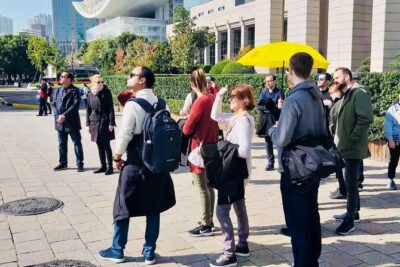 ★ 5.0Shanghai City Guided Walking Tour | China’s 1st and Best RatedFrom $5285 reviews
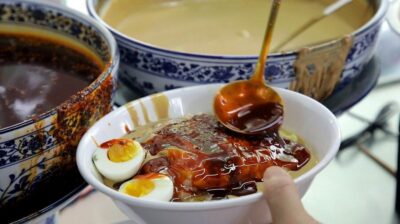 ★ 5.0Beijing: Hutong Culinary Walking Tour with 15+ TastingsFrom $76162 reviews
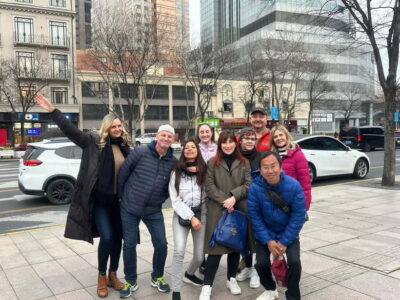 ★ 4.9Shanghai Highlights Walking Tour With A Real LocalFrom $34153 reviews
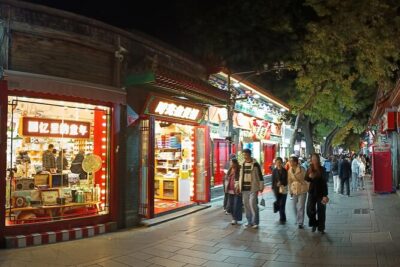 ★ 5.0Beijing City Walk: Explore Hutongs Life and Old BeijingFrom $15146 reviews
Browse the lists this tour appears in