

REVIEW · HISTORICAL TOURS
Beijing: Bell and Drum Towers Entry Ticket—Historic Landmark
Beijing has a city clock you can walk into. This Bell and Drum Towers ticket takes you to the northern end of the central axis, where old Beijing told time with sound, drums, and bells. I like that it is self-paced but still structured, and that you get a clear historical picture with an English PDF guidebook.
Two things I especially like: climbing the Drum Tower for a chance to catch a short drum demonstration, and seeing the scale of the Yongle-era bell and the Drum Tower’s drum set-up in person. It is one of those rare stops where the buildings feel like tools, not just monuments.
One consideration: the drum performance is not guaranteed on your exact minute, since the timing can vary based on the onsite schedule. If you are arriving strictly for a show time, you will want a little flexibility in your day.
In This Review
- Key things to know before you go
- Bell and Drum Towers, the old Beijing clockwork you can still see
- Your 4-hour plan, skipping lines and pacing yourself
- Drum Tower Beijing, 25 drums, a top climb, and a chance at the 5-minute show
- Bell Tower Beijing and the 63-ton Yongle-era bell
- Using the English PDF guidebook to turn walking into real understanding
- What the north-south layout adds to the experience
- Practical details that affect your visit (more than you think)
- Price and ticket value: is $13 a fair deal?
- Who this Bell and Drum Towers ticket suits best
- Should you book this ticket? My quick decision guide
- FAQ
- How long does the Bell and Drum Towers visit take?
- What does the ticket include?
- Is a live tour guide included?
- Is there a chance to see a drum performance?
- Do I need to bring an ID?
- Is the guidebook available in English?
- Does the ticket help you avoid long lines?
- What is the cancellation policy?
- Where is this activity located?
Key things to know before you go

- Both towers included: you get Bell Tower and Drum Tower admission in one ticket
- Drum Tower top access: climb up and you might catch a short drumming performance (about 5 minutes)
- Huge imperial artifacts: the bell and drums are presented as major craftsmanship, not small displays
- Self-guided with English support: an English PDF guidebook is included so you can move at your pace
- Central Beijing convenience: this is an easy cultural stop when you are already planning around central sights
- Good booking support: communication from the provider is reported as responsive via WhatsApp
Other Beijing trips our reviewers kept returning to
- Beijing: Forbidden City Tour(Group/Private)-Tickets Included★ 4.8 · 7,974 reviews
- 4-Hour Small Group Tour to Forbidden City with Entry Tickets★ 5.0 · 1,863 reviews
- Beijing: Tiananmen Square Registration Service(Ticket)★ 4.5 · 1,704 reviews
- Beijing: The Temple of Heaven or Summer Palace Entry Ticket★ 4.6 · 1,286 reviews
Bell and Drum Towers, the old Beijing clockwork you can still see
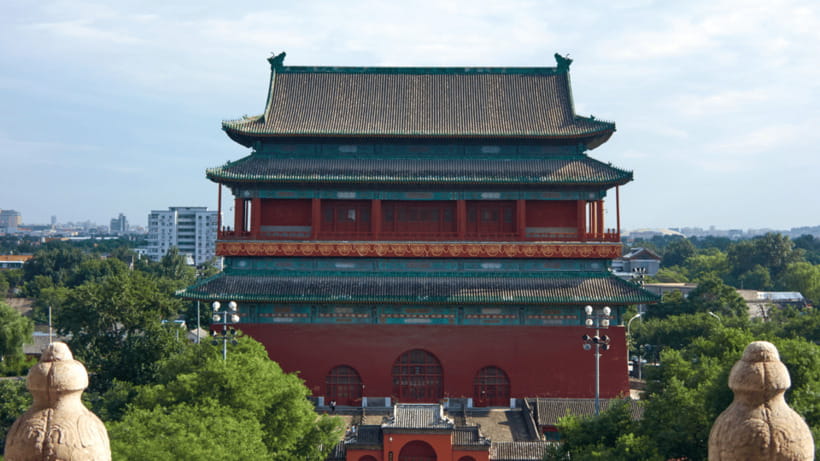
The Bell and Drum Towers were built to do a job: mark the day and reset the rhythm of city life. Together they formed a timekeeping system tied to old daily cues, often summarized as a dusk drum and a morning bell.
You will learn that the complex has roots going back to the Yuan Dynasty, and that the layout matters. The towers sit at the northern end of Beijing’s central axis, and their north-south arrangement is part of how the site was designed to work.
What makes this worth your attention is the scale. The Drum Tower housed 25 drums, and the famous bell connected to the Ming Dynasty, the Yongle-era bell, weighs an eye-opening 63 tons. This is not just a photo stop. It is a place where the city’s schedule used to be made audible.
Your 4-hour plan, skipping lines and pacing yourself
This ticket is set for a 4-hour visit window, and that is a comfortable amount of time for both towers at a relaxed pace. Because it is self-guided, you can spend longer where you feel pulled in, like the drum displays or the bigger bell areas.
Plan it like this in your head. First, get oriented inside the complex, then focus on the Drum Tower experience, including the climb. After that, shift to the Bell Tower and spend time walking the spaces that explain what the bell did and why that bell became such a big deal.
The ticket also includes skip the ticket line, which is a real time-saver in busy Beijing. And since you are not tied to a live tour script, you can adjust on the fly if you hear drumming starting or if crowds are moving quickly.
Bring your passport or ID card. That requirement is simple, but it is worth having ready before you stand at the entrance.
Drum Tower Beijing, 25 drums, a top climb, and a chance at the 5-minute show

The Drum Tower is the more action-friendly part of the complex. You are dealing with a site built around sound cues, so even without a formal performance, the space makes sense. You can connect the museum-like details to how the city used to run on timed signals.
A key highlight here is that the ticket gives you access to climb to the top of the Drum Tower. That climb is what matters for two reasons. One, it gives you a better sense of the tower’s vertical scale. Two, it puts you in the right place to catch the daily drum demonstration if it lines up with your visit.
The demonstration is described as about 5 minutes, and the exact timing can vary based on what the onsite schedule is doing that day. That is why I treat it like a bonus rather than the main guarantee.
If you want the best odds, give yourself time. Arriving with a rushed checklist mindset can backfire here, because you may reach the top after the sound starts. Instead, plan for the top climb early in your visit window so you are not forced into waiting with no flexibility.
Also, pay attention to how staff manage the space. Even when you are self-guided, these places often have flow changes for demonstrations. A calm pace and a willingness to adjust will make your visit smoother.
Bell Tower Beijing and the 63-ton Yongle-era bell

After the Drum Tower, the Bell Tower shifts the mood. If the Drum Tower feels like it is meant to pull the city into motion, the Bell Tower feels like the finishing signal, the part that punctuates the day.
The big story is the Yongle-era bell, with a weight listed at 63 tons. The ticket framing calls it the King of Ancient Bells, which you will understand as soon as you see how the site presents it as a top-level imperial craft.
One of the reasons I think this pairing works so well is the contrast. You are not just seeing one artifact. You are seeing a system where drums and bells complement each other across the city’s rhythm. The north-south design makes that relationship feel intentional rather than random.
As you walk, focus on how the complex explains its historical role. Even if you are not fluent in Chinese, the physical setting helps you understand the logic: a bell that could carry, a tower designed around being heard, and a layout that linked the sound to the city’s schedule.
Other Beijing trips our reviewers kept returning to
Using the English PDF guidebook to turn walking into real understanding
You get an English PDF guidebook included with the ticket, and I recommend treating it like your on-site compass. Since there is no live tour guide or guide included, your best value comes from using the guidebook to connect what you see to what it meant.
Because the experience is self-paced, the guidebook also helps you avoid the common problem of reading nothing and then forgetting what you saw 30 minutes later. Look at the guidebook, then walk to the corresponding areas. That simple pattern keeps your visit from feeling like wandering.
The PDF format is practical, too. You can read in short bursts between key stops, which fits a 4-hour visit window. If you prefer going faster, you can skim. If you like detail, you can slow down and take notes mentally.
And if you are the type who likes to ask questions, it can help that communication from the provider is reported as strong via WhatsApp. That does not replace the guidebook, but it can save you if you get confused about where to go next.
What the north-south layout adds to the experience
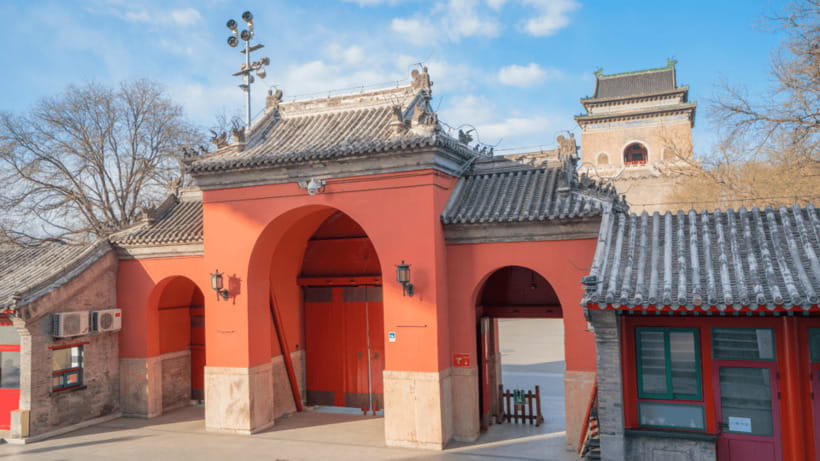
This complex is designed with the city axis in mind, and it is not an afterthought. The Bell and Drum Towers sit at the northern end of Beijing’s central axis, and that placement helps you grasp how the imperial city planned space for order and meaning.
When buildings are placed intentionally like this, you start noticing how people used to experience the city. You are standing in a place that was meant to organize daily life through time cues, not just provide views.
That is why I think history lovers usually rate this highly. You get both the objects, the drums and bell, and the structural idea behind them, a planned city rhythm.
Practical details that affect your visit (more than you think)

This is a straightforward ticket visit, but a few small planning moves make a big difference.
First, wear shoes that handle steps. You are climbing to the top of the Drum Tower, so you want traction and comfort. Even if you are fit, you do not want to be thinking about your feet instead of the site.
Second, build some flexibility into your timing for the drumming. Since the performance timing can vary, rushing through the Drum Tower is risky if you care about seeing it.
Third, keep your expectations realistic. This is focused, not endless. The ticket is built for about 4 hours, so you should view it as a concentrated cultural stop that pairs well with other central Beijing sights.
Price and ticket value: is $13 a fair deal?

At about $13 per person, this ticket looks like strong value, mainly because it combines three things that usually cost separate time or money: access to both towers, a useful English PDF guidebook, and the ability to skip the ticket line.
If you are comparing it to other sightseeing options in Beijing, the value is less about luxury and more about access plus understanding. You are not paying for a big guided production. You are paying for the ability to see the site properly and learn while you are there.
The duration also matters. A 4-hour window is long enough to take in both towers and still feel like you did not sprint through it. That is a better deal than a short ticket that leaves you hungry for more, or a guided tour that you need to keep up with.
Who this Bell and Drum Towers ticket suits best
I would book this if you like cultural sites where the building explains a function. The Drum Tower and Bell Tower are timekeeping landmarks, so you will probably enjoy it more than a stop that is mostly about decoration.
It also fits photographers who want historical architecture and a clear sense of how the towers work as a pair. Even if you do not consider yourself a photographer, the site’s physical storytelling makes it easy to take satisfying shots.
This is also a good fit for travelers who want a calm visit without needing to match a group pace. Since it is self-guided, you can linger.
Where it might be less ideal is for people who expect a fixed, guaranteed performance moment. The drum demonstration is a chance, not a promise, because timing can shift.
Should you book this ticket? My quick decision guide
Book it if you want a focused, high-value look at how Beijing’s old timekeeping system worked. You get both towers, an English PDF guidebook, and a visit length that is realistic for real learning.
Skip or rethink it only if your main goal is a guaranteed performance at a specific time. Since the Drum Tower top can offer drumming only when the onsite schedule aligns, this works best when you are flexible.
If you like history that you can physically walk through, this is one of those straightforward tickets that pays off quickly.
FAQ
How long does the Bell and Drum Towers visit take?
The duration is listed as 4 hours. That gives you time to visit both towers at a self-guided pace.
What does the ticket include?
It includes entry tickets for both the Bell Tower and the Drum Tower, plus an English PDF guidebook.
Is a live tour guide included?
No. This experience includes tickets and a PDF guidebook, but it does not list a live tour guide or an in-person guide.
Is there a chance to see a drum performance?
Yes. If you climb to the top of the Drum Tower, you may see a drum performance that is described as about 5 minutes, and the exact timing can vary based on the onsite schedule.
Do I need to bring an ID?
Yes. You should bring your passport or ID card.
Is the guidebook available in English?
Yes. An English PDF guidebook is included.
Does the ticket help you avoid long lines?
Yes. It includes skip the ticket line.
What is the cancellation policy?
Free cancellation is available up to 24 hours in advance for a full refund.
Where is this activity located?
It takes place in Northern China, in Beijing, and the highlights describe convenient access in central Beijing.
More Historical Tours in Beijing





More Tickets in Beijing





More Tour Reviews in Beijing




Beijing, reviewed one booking at a time
- Xian: Must see Eternal Love or Camel Bell Legend show Ticket
★ 5.0 · 3 reviews - One day tour to downtown Tianjin from Beijing by high speed train
★ 5.0 · 3 reviews - Ming Tombs Sacred Way & Underground Palace & Water Wall P Tour
★ 5.0 · 3 reviews - Beijing Mutianyu Great Wall Small Group Tour
★ 4.5 · 3 reviews - Return Bus to Badaling Great Wall
★ 3.0 · 3 reviews - Private Tour to Lama Temple, Tian’anmen Square and Forbidden City
★ 5.0 · 3 reviews
Historical Tours, compared.
 ★ 4.0Beijing Historical Tour II including Summer Palace, Lama Temple & Panda GardenFrom $93187 reviews
 ★ 4.0Beijing Historical Tour I – Forbidden City, Tiananmen Square & Temple of HeavenFrom $93120 reviews
 ★ 5.0Tour of Jewish Shanghai led by a Jewish History ExpertFrom $96106 reviews
 ★ 5.0Beijing Historic City Guided Walking Tour + Calligraphy CreationFrom $559 reviews
 ★ 5.0Beijing Culture: Tea Ceremony, Heritage Instrument & CalligraphyFrom $7857 reviews
 ★ 5.0All inclusive Two-Day Xi’an private Heritage TourFrom $25033 reviews
 ★ 5.02-Hour Beijing Private Forbidden City Tour: History & HighlightsFrom $8028 reviews
 ★ 4.5Xi’an Full Day Sightseeing Tour – Shaanxi History Museum, Big Wild Goose Pagoda, Ancient City WallFrom $21926 reviews
Browse the lists this tour appears in