
REVIEW · HISTORICAL TOURS
Tour of Jewish Shanghai led by a Jewish History Expert
Shanghai hides a WWII escape story in plain sight. This half-day tour connects the dots between Baghdadi-Jewish Shanghai and the wartime refugees who reached Hongkou, with stops that feel real instead of textbook. I especially like starting at the Peace Hotel on the Bund and ending with the Shanghai Jewish Refugees Museum in the Ohel Moishe Synagogue. One thing to keep in mind: you will do some walking through Hongkou back lanes, so wear shoes that can handle uneven streets.
You get a historical expert guide plus air-conditioned vehicle rides between sites, which makes the 4-hour plan easier than doing it on your own. It also helps that the group is capped at 22, so you can actually hear the stories and ask questions without the tour turning into a shuffle.
In This Review
- Key things I’d watch for on this Jewish Shanghai tour
- Starting on the Bund: Peace Hotel, city views, and the Baghdadi link
- Crossing into Hongkou: walking the streets that became a refuge
- Huoshan Park: the WWII memorial moment that stops the story from drifting
- Ohel Moishe Synagogue, now the Jewish Refugees Museum
- How the tour explains Jewish immigration waves, from Shanghai’s pull to wartime arrival
- Timing and pacing: fitting Hongkou into a 4-hour plan
- Price and value: what $96 buys in real terms
- Who this tour is for, and who should choose something else
- Should you book this Jewish Shanghai tour?
- FAQ
- Where do I meet the guide?
- What time does the tour start?
- How long is the tour?
- Is the Jewish Refugees Museum ticket included?
- Do I need hotel pickup or drop-off?
- Is food included?
- Is the tour mostly walking?
- How many people are in the group?
- What weather conditions does the tour run in?
- Can I cancel for a full refund?
Key things I’d watch for on this Jewish Shanghai tour
- Peace Hotel, Bund views, and Sir Victor Sassoon’s legacy: you start with a skyline moment, then get the city context.
- Hongkou, also called Shanghai Ghetto: you walk the streets where thousands of refugees were forced to live.
- Jewish Refugees Museum inside Ohel Moishe Synagogue: you see the WWII-era story housed in a former synagogue.
- Huoshan Park memorial and memorial plaque focus: you pause on the human cost, not just the facts.
- Stories with multiple threads: the tour ties together Baghdadi–Jewish residents, Chinese migrant workers, and refugees from war-torn Europe.
Other Shanghai trips our reviewers kept returning to
- 4-Hour Private Shanghai Art and History Tour★ 5.0 · 8 reviews
- Private Full Day Tour: Shanghai Colonial History Tour★ 5.0 · 6 reviews
- Shanghai Propaganda and History Walking Tour★ 5.0 · 5 reviews
Starting on the Bund: Peace Hotel, city views, and the Baghdadi link
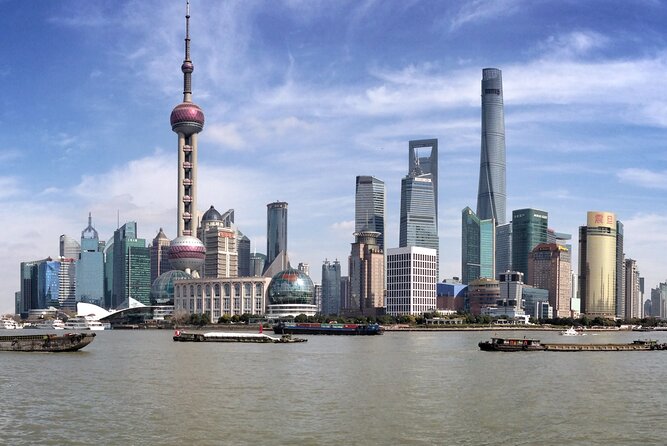
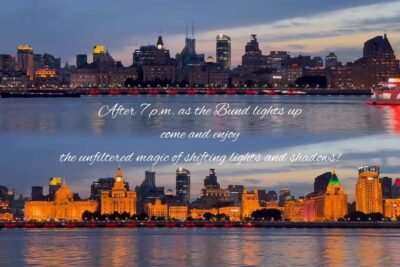
The tour begins with you meeting your guide at the Peace Hotel on Shanghai’s Bund riverfront. This matters more than it sounds. The Bund is where you get your bearings fast, and your guide uses those riverfront views to set up why Shanghai attracted Jewish communities in the first place.
You will also hear about the city’s Baghdadi-Jewish legacy, tied to people who shaped Shanghai’s commercial world. The tour even mentions a Baghdadi–Jewish real estate developer, a detail I like because it grounds the history in something concrete you can picture. It is not just dates. It is how trade, property, and migration shaped where people lived and worked.
Then you shift from the grandeur of the Bund to the everyday Hongkou streets. That contrast is the point. Shanghai’s Jewish story is not only about museums. It is also about geography, neighborhoods, and how people were pushed into specific places by war and policy.
Crossing into Hongkou: walking the streets that became a refuge
After the Bund setup, the tour heads to Hongkou district. Hongkou is commonly associated with the wartime Shanghai Ghetto, where thousands of Jewish refugees lived during World War II.
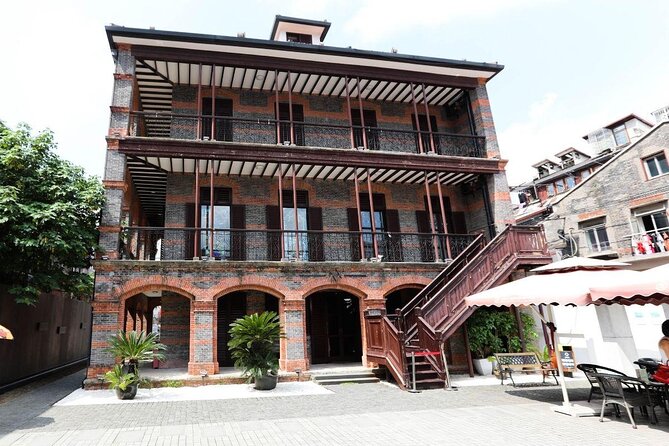
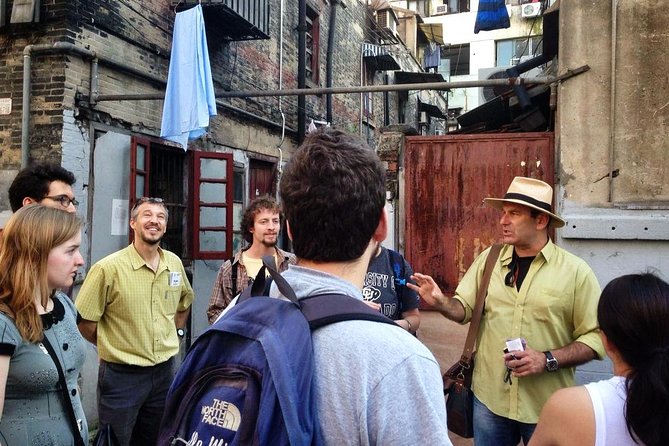
Here is where the tour earns its value. Your guide does not just drop place names. You explore back lanes and learn how the neighborhood functioned as a survival space. The tour also includes a stop to see a Chinese home where Jewish refugees used to live. Even when the building itself looks ordinary today, the story changes everything about how you read it.
In a few places, the tour weaves in the wider social picture: the way Chinese migrant workers and local residents interacted with the refugee community, and how those connections shaped daily life. If you care about history that includes more than one group, this is a strong part of the tour.
A practical note: while the tour includes private transportation, Hongkou is not a drive-through. Expect enough walking that you should dress for comfort, especially if you take the morning departure when you might still feel a bit of Shanghai heat.
Huoshan Park: the WWII memorial moment that stops the story from drifting
One of the most moving segments is the memorial stop at Huoshan Park. The tour includes a monument to Jewish refugees of WWII, along with a memorial plaque focus during the Hongkou portion.
I like this stop because it gives the timeline an emotional anchor. Many city tours rush past commemoration points, treating them like photo ops. Here, your guide uses the memorial setting to keep the discussion tied to the stakes of escape and displacement, not just the outline of events.
It also helps that the park stop breaks up the walking. Your feet get a reset, and your brain gets a reset too. After you learn the mechanics of where people were housed, the memorial is where you absorb what that housing meant in human terms.
Ohel Moishe Synagogue, now the Jewish Refugees Museum
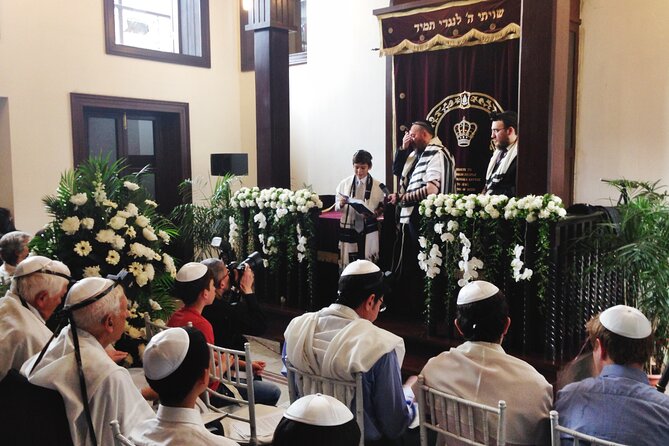
The big destination is the Shanghai Jewish Refugees Museum, located in the former Ohel Moishe Synagogue. This is the kind of stop that works even if you think you are not a museum person.
Why? Because the building’s original purpose makes the exhibits feel specific. Instead of imagining what a synagogue was like in wartime Shanghai, you are inside a place that already carried that community identity before it became a museum setting.
The tour also states that admission to this museum is included. That is a small detail with real value. You avoid last-minute ticket confusion and keep the schedule flowing, which matters on a half-day itinerary.
What you should expect from this stop is a guided interpretation of Jewish life and refugee experience in Shanghai, framed through the museum’s perspective. Your guide connects what you are seeing to the neighborhood walk you just did, so the museum does not feel like a separate attraction. It feels like the explanation of the streets.
If your mind likes context, this is where you can mentally zoom out from a few streets to a whole story: why Shanghai, what changed over time, and how survival created new community structures.
How the tour explains Jewish immigration waves, from Shanghai’s pull to wartime arrival
One of the core goals is to understand different waves of Jewish immigration to Shanghai. The tour does not treat the community as a single moment in time. You learn there were earlier arrivals and later waves, with different reasons for coming and different patterns of settlement.
From the tour description, you will hear about:
- the Baghdadi-Jewish presence and its role in the city’s development
- later Jewish immigration linked to the crisis of World War II
- refugees from war-torn Europe and how they ended up concentrated in Hongkou
This structure is smart for first-time visitors. If you land in Shanghai and only hear about WWII refugees, you miss the longer setup: why people were already there, and how Shanghai’s existing networks and community life influenced what happened next.
I also appreciate how the tour includes broader human threads. The mention of Chinese migrant workers helps prevent the story from becoming a two-party narrative of refugees only. War reshaped Shanghai for everyone living there.
Timing and pacing: fitting Hongkou into a 4-hour plan
The tour runs about 4 hours. It operates in both the morning and afternoon, but the tour guidance recommends the morning tour due to daylight constraints.
That recommendation is practical. This tour covers multiple neighborhoods and includes memorial and museum time. Short daylight can make the schedule feel tight, especially in winter or shoulder seasons.
Group size is capped at 22 travelers, which generally keeps things from getting too chaotic. The tour also includes private transportation and an air-conditioned vehicle, which is a win in Shanghai’s weather. You are not stuck between distant stops entirely on foot.
What you should do to make the day feel smooth:
- Wear comfortable shoes for Hongkou streets and back lanes
- Bring a hat or sunscreen, Shanghai sun can be strong even in shorter outings
- Carry water. Food and drinks are not included, so plan for your own snack break if you want one
Price and value: what $96 buys in real terms
At $96 per person for an approximately 4-hour half-day, the value depends on what you want from your Shanghai time.
This price includes:
- a historical expert guide
- private transportation
- an air-conditioned vehicle
- museum admission to the Jewish Refugees Museum (the Shanghai Jewish Refugees Museum stop lists admission ticket included)
It does not include:
- hotel pickup and drop-off
- food and drinks
Here is how I’d think about the math. If you tried to do Hongkou and the museum on your own, you would still need to figure out how to interpret the neighborhood without missing context. The guide is the difference between seeing buildings and understanding what those buildings meant during the war years.
The included museum ticket is also meaningful on a half-day. It prevents one of the most common travel frustrations: spending time on ticket lines when your schedule is tight.
For me, this is worth it if you want:
- a guided explanation tied directly to the sites
- a clear narrative about Jewish immigration waves
- less guesswork about what to notice in Hongkou
If you prefer to wander freely without a structured guide, the price might feel less necessary. But if you want the story told in the exact places where it happened, the guided format is the main selling point.
Who this tour is for, and who should choose something else
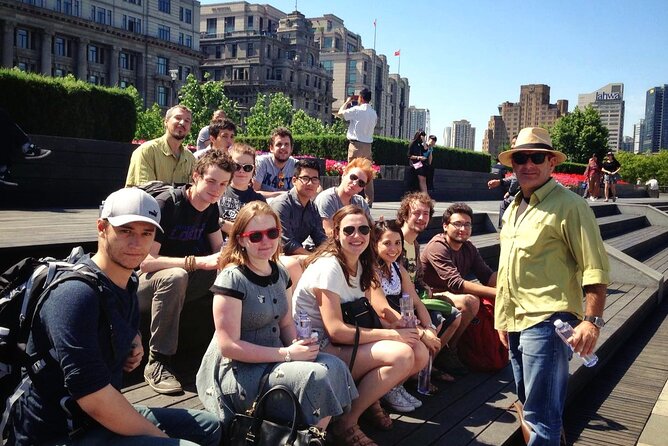
This is a great match if you want Jewish Shanghai history without spending a full day. It also works well if you care about sensitive topics handled with care, since the tour includes memorial stops and a museum housed in a former synagogue.
It may be less ideal if:
- you dislike walking through residential lanes
- you only want broad overviews and not neighborhood-level detail
- you are visiting with limited mobility and cannot manage uneven streets (the tour does include vehicle transport, but the Hongkou part is still on foot)
For most people, it is a strong way to add depth to a Shanghai visit. You also get a nice geographic arc: Bund context, Hongkou reality, museum explanation.
Should you book this Jewish Shanghai tour?
I’d book it if you want a focused, half-day way to understand why Shanghai became a refuge, and how Jewish communities shaped and were shaped by the city. The best reason is the combination of location plus interpretation. You start at a landmark on the Bund, you walk the Hongkou lanes, and you end in the Jewish Refugees Museum housed in the former Ohel Moishe Synagogue.
Book with extra confidence if:
- you like tours led by strong historians and story-focused guides
- you want the Hongkou memorial and museum stops tied together into one narrative
- you want the museum admission included so your schedule stays tight
And book with one practical mindset shift: this is history you feel in streets and rooms, not just a list of sights. If that is your kind of travel, you will leave with a Shanghai you did not know you were going to see.
FAQ
Where do I meet the guide?
You meet your guide at the Peace Hotel on Shanghai’s Bund riverfront. The start location is also listed near Nanjing Road East (Nan Jing Dong Lu).
What time does the tour start?
The start time shown is 9:30 am.
How long is the tour?
The duration is about 4 hours.
Is the Jewish Refugees Museum ticket included?
Yes. Admission for the Shanghai Jewish Refugees Museum stop is included.
Do I need hotel pickup or drop-off?
No. Hotel pickup and drop-off are not included.
Is food included?
No. Food and drinks are not included.
Is the tour mostly walking?
There is walking, including time exploring the back lanes of Hongkou. The tour also includes private transportation between stops.
How many people are in the group?
The maximum group size is 22 travelers.
What weather conditions does the tour run in?
The tour operates in all weather conditions, so dress appropriately.
Can I cancel for a full refund?
Yes, free cancellation is available up to 24 hours before the experience’s start time.
More Historical Tours in Shanghai
More Tours in Shanghai

More Tour Reviews in Shanghai

Shanghai, reviewed one booking at a time
- Zhujiajiao Water Town and Shanghai City Highlights Private Day Tour
★ 5.0 · 3 reviews - Zhujiajiao Water Town Private Tour with Local Farm Visit and Fruit Picking
★ 5.0 · 3 reviews - Tongli Water Town Self-Guided Tour with Private Transfer from Shanghai
★ 5.0 · 3 reviews - Shanghai by Night with Fine Local Dinner and VIP River Cruise Experiences
★ 5.0 · 3 reviews - Shanghai Acrobatic Show Tickets
★ 5.0 · 3 reviews - Private Shanghai Layover Tour to Zhaojialou Water Town with Lunch or Dinner
★ 5.0 · 3 reviews
Historical Tours, compared.
 ★ 4.0Beijing Historical Tour II including Summer Palace, Lama Temple & Panda GardenFrom $93187 reviews
 ★ 4.0Beijing Historical Tour I – Forbidden City, Tiananmen Square & Temple of HeavenFrom $93120 reviews
 ★ 5.0Beijing Historic City Guided Walking Tour + Calligraphy CreationFrom $559 reviews
 ★ 5.0Beijing Culture: Tea Ceremony, Heritage Instrument & CalligraphyFrom $7857 reviews
 ★ 5.0All inclusive Two-Day Xi’an private Heritage TourFrom $25033 reviews
 ★ 5.02-Hour Beijing Private Forbidden City Tour: History & HighlightsFrom $8028 reviews
 ★ 4.5Xi’an Full Day Sightseeing Tour – Shaanxi History Museum, Big Wild Goose Pagoda, Ancient City WallFrom $21926 reviews
 ★ 4.5Private Historical Tour: Guangzhou City Sightseeing Including LunchFrom $23924 reviews
Browse the lists this tour appears in