
REVIEW · CHINESE TEA HOUSE EXPERIENCES
Beijing Culture: Tea Ceremony, Heritage Instrument & Calligraphy
Tea, music, and writing, all in 2.5 hours. This Beijing workshop is built for people who want hands-on culture, not a staged performance, with national-level masters teaching in a calm, private space.
I like the format because you actually do the work, from brewing and tasting tea to learning a Guqin melody and practicing Chinese calligraphy with guidance. I also like the size, it caps at 8 travelers, so the pace stays personal.
One thing to consider: you need good weather, since the experience can be canceled if conditions are poor, and your transportation to the venue is on you.
In This Review
- Key highlights you’ll feel right away
- What this 2.5-hour Beijing workshop is really like
- A calm private heritage venue beats the usual crowd noise
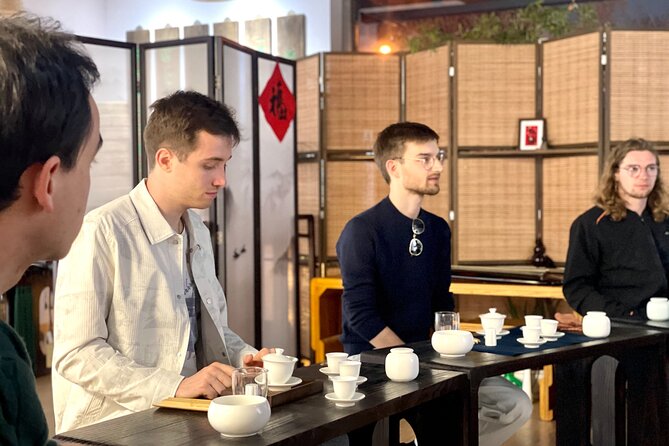
- Tea ceremony with a national tea master, plus tasting
- What you’ll likely notice in the tea session
- Who this part suits best
- Guqin in two steps: live melody first, then hands-on practice
- Why the two-step approach works
- What to expect emotionally
- Calligraphy workshop: writing real Chinese characters with guidance
- A common win: writing your Chinese name
- Skills you build, even if you never become a calligrapher
- Traditional outfit rental: part ritual, part photo moment
- The bilingual guide: context that actually helps
- It’s not a show, and that changes everything
- Price and value: $78.60 for three core arts
- What is not included
- Meeting point and getting there without stress
- Timing, small group energy, and what to wear
- Who should book this experience in Beijing
- Should you book Beijing Culture: Tea Ceremony, Heritage Instrument and Calligraphy?
- FAQ
- What is the duration of the Beijing tea, Guqin, and calligraphy experience?
- Where does the tour start and end?
- What is included in the ticket price?
- Is transportation to and from the venue included?
- Do I need to know anything about tea, Guqin, or calligraphy beforehand?
- How big is the group?
- Is the guide provided in English?
- What happens if the weather is poor?
Key highlights you’ll feel right away
- National tea master guides a real tea ceremony and tasting
- Guqin includes a live performance plus a hands-on learning session
- Calligraphy practice helps you write characters with expert direction
- Small group (max 8) keeps the mood quiet and easy to follow
- Traditional outfit rental is included for ritual and photos
- Bilingual guide with an M.A. in History and Sociology adds context to what you do
More tea, poured properly
- Traditional Chinese Tea Ceremony Experience★ 4.7 · 74 reviews
- Beijing Culture: Tea Ceremony, Heritage Instrument & Calligraphy★ 5.0 · 57 reviews
- Chinese Tea ceremony in Beijing Hutong courtyard★ 4.7 · 26 reviews
- Private Beijing Markets Tour with Tea Tasting at Hongqiao Pearl Market★ 5.0 · 18 reviews
What this 2.5-hour Beijing workshop is really like
If you have ever left a museum with photos but no real understanding, this is the opposite. In one compact block of time, you learn three practical skills tied to daily life in Chinese culture: tea, the Guqin, and calligraphy.
The heart of the experience is simple. You start in a serene, air-conditioned heritage venue that is closed to the public. Then you move through the three pillars of the session with artists who teach the meaning behind the movements, not just the motions.
A calm private heritage venue beats the usual crowd noise
Beijing can be intense. Even the most interesting sights can feel like a conveyor belt. This experience is different because the setting is quieter by design. You are in a private heritage space, and the group size is kept small.
That quiet matters. Tea, Guqin, and calligraphy all reward slower attention. When the room is controlled and the pace is gentle, you can focus on technique, not just surviving crowds.
Tea ceremony with a national tea master, plus tasting
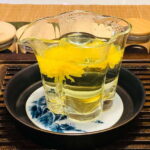
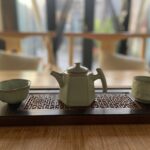
The tea portion is where the tone gets set. Instead of rushing through a script, you get a traditional tea ceremony guided by a certified tea master. The goal is not just to sip something warm, it is to understand what you are doing and why the ritual matters.
What you’ll likely notice in the tea session
- The ceremony is paced, with attention to each step
- You taste the tea you brew, so it becomes sensory, not just instructional
- The guide helps you connect the ritual to meaning, not only process
If you like experiences that slow your brain down, this part tends to land hardest. Tea ceremony is often explained as calm, but here you are learning the actual cadence of the ritual.
Other Beijing trips our reviewers kept returning to



Who this part suits best
You do not need to be a tea person. The workshop is set up so you can follow along and participate. If you enjoy food rituals, mindful activities, or learning through doing, you will probably like this segment a lot.
Guqin in two steps: live melody first, then hands-on practice
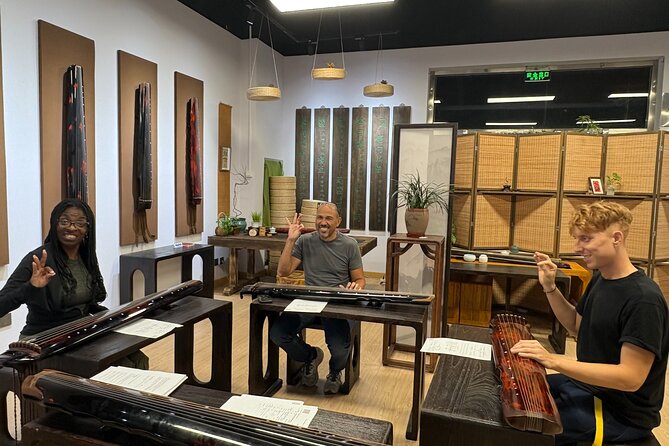
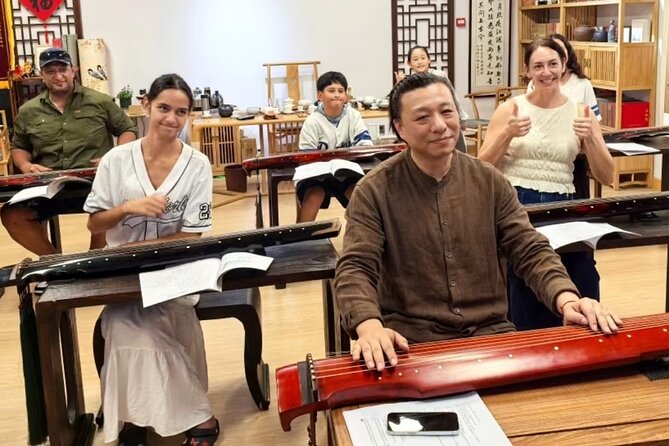
The Guqin is China’s most revered ancient instrument, and this session treats it that way. First, there is a live Guqin performance by a national-level heritage artist. Then you get a hands-on learning session.
Why the two-step approach works
A lot of music workshops start with theory. This one starts with sound. You hear the melody, then you translate it into technique. That sequence makes it easier to understand what you are trying to do before your fingers are involved.
In practical terms, you get:
- A live performance that frames the instrument’s voice
- A guided session where you play and learn a full melody
What to expect emotionally
This is not a loud concert. The Guqin is intimate by nature, and the experience runs in a quiet setting. If you enjoy feeling music as something almost physical, this is the kind of session that can surprise you.
Calligraphy workshop: writing real Chinese characters with guidance
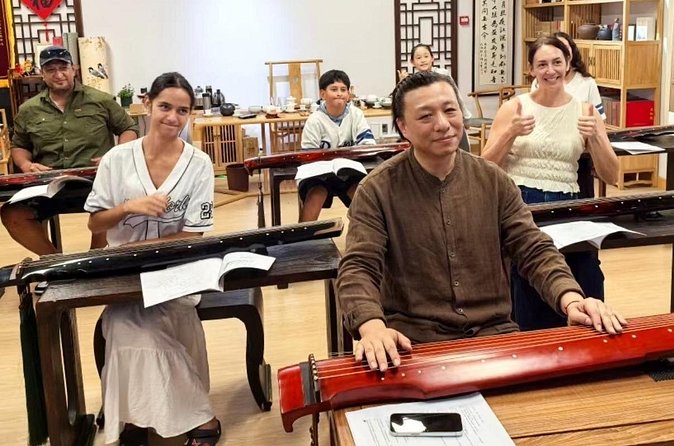
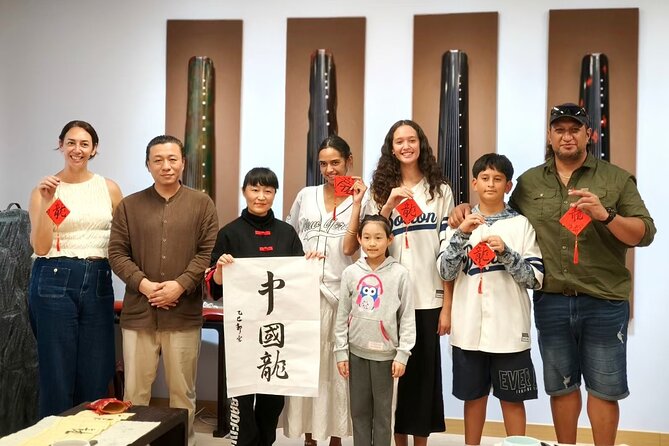
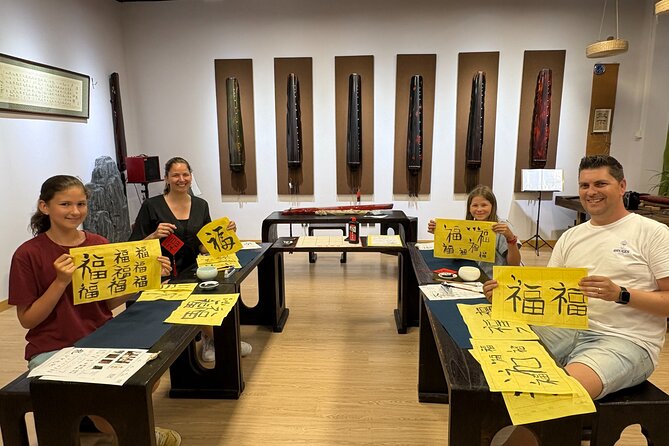
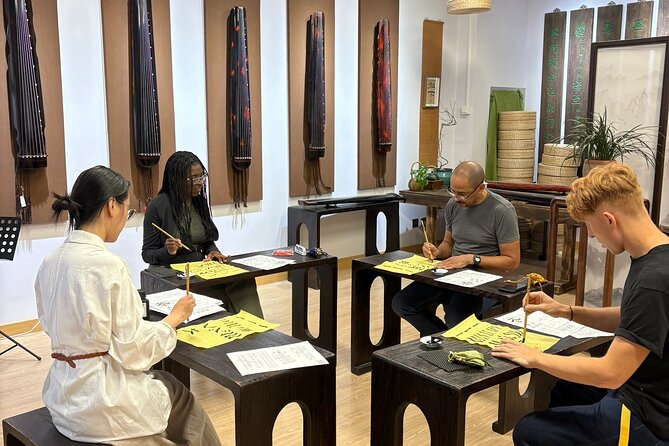
After tea and music, you move into calligraphy. This is not a quick souvenir. You write Chinese characters with expert guidance, so you experience the basics of brush control and structure.
The calligraphy part is also the most beginner-friendly in a tricky way. You can start with almost nothing and still get value, because the teacher can shape your attempt step by step. You will likely learn how the strokes connect and how to think about form.
A common win: writing your Chinese name
One of the memorable outcomes from this kind of workshop is writing your Chinese name in characters and keeping what you produce. The session is designed to make the practice feel personal, not generic.
Skills you build, even if you never become a calligrapher
- How a brush moves in controlled strokes
- How characters are built from parts, not just copied
- Patience, because calligraphy cannot be rushed
If you like crafts, you will appreciate that the workshop makes you slow down in a productive way. If you hate crafts, try to think of this as a cultural workout for your attention, not just art class.
Traditional outfit rental: part ritual, part photo moment
You get traditional outfit attire rental included for ritual and photos. That usually means you can dress for the moment while learning and then take images in a way that feels connected to what you are doing.
This is a real value add, especially if you are trying to balance sightseeing photos with experiences that actually feel meaningful. The outfit helps you step into the scene without turning it into a costume party.
The bilingual guide: context that actually helps
A big differentiator is the guide. You get a bilingual guide with an M.A. in History and Sociology. That background matters because the session includes cultural meaning, not just technique.
In other words, you are less likely to leave with three disconnected activities. Instead, you get the thread linking tea ritual, the Guqin’s place in tradition, and calligraphy as a visual language.
If you like explanations that respect nuance, this is the part that helps the learning stick.
It’s not a show, and that changes everything
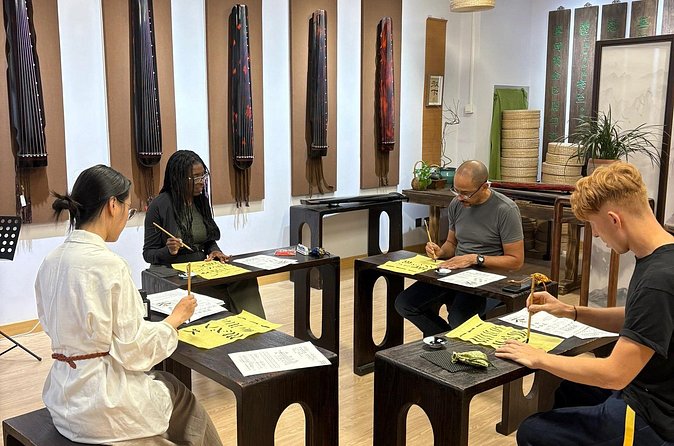
The experience is designed for participation, not passive watching. That matters in two ways.
First, the pacing is shaped around understanding. You can ask questions in English, and you can slow down when something feels hard, especially with calligraphy and instrument technique.
Second, the small group format keeps the mood human. You are not an audience. You are in the same room as the teachers, learning alongside the group.
Price and value: $78.60 for three core arts
At $78.60 per person for about 2 hours 30 minutes, this is not a bargain deal. But it also is not a high-end luxury pricing trick.
You are paying for:
- A private heritage venue experience
- Certified tea instruction and tea tasting
- Live Guqin performance plus a learning session
- Calligraphy teaching with expert guidance
- Traditional outfit rental
- A bilingual guide with formal academic training
- A small group cap of 8 travelers
Also, you are getting something that most tours cannot package in one go: three different skills with direct coaching. Many Beijing experiences either show you culture or sell you a photo. This one asks you to work a little, so you leave with more than memories.
What is not included
Transportation to and from the venue is not included. Meals outside the provided tea snacks are also not included. Plan to handle your lunch or dinner on your own based on your schedule.
Meeting point and getting there without stress
You meet at 813 Creative Park, located in Chaoyang (address area: VGP3+CCX, 100124). The tour ends back at the meeting point.
The tour notes it is near public transportation, which is helpful. Still, since transportation is not included, I recommend you plan your route early and give yourself buffer time, especially if you are using taxis or ride-hailing apps in Beijing.
You also get a mobile ticket, so make sure you have your ticket accessible on your phone.
Timing, small group energy, and what to wear
The experience runs about 2 hours 30 minutes. Because it is hands-on, think about comfort over fashion. You might be seated for tea, holding a brush for calligraphy practice, and following along for Guqin learning.
For outfit rental, you will likely change into traditional attire as part of the session. Wear something you can manage easily, and keep in mind you may want to bring something simple for covering your shoes or for changing back afterward, depending on how the venue handles the ritual flow. (The exact process is not spelled out, so keep your expectations flexible.)
Who should book this experience in Beijing
This is a great match if you:
- Want a break from crowded sightseeing
- Prefer learning through your hands, not just watching
- Like quiet, focused cultural activities
- Enjoy tea, music, writing, or crafts
- Want a smaller group experience with real instruction
It might not be ideal if you are looking for a fast-paced checklist tour or if you only want surface-level photo ops. This is the kind of activity where participation is the point, even when you are a beginner.
Should you book Beijing Culture: Tea Ceremony, Heritage Instrument and Calligraphy?
Yes, if you want the most memorable part of your Beijing trip to be cultural practice, not just cultural consumption. The combination is strong, tea gives atmosphere, Guqin adds music and discipline, calligraphy adds a personal skill you can take home.
Book it especially if you have already hit a couple of big-name sights and you want something that feels calmer and more intentional. And if you are the type who likes explanations that connect meaning to action, the bilingual guide with academic training is a plus.
The one real decision point is logistics. Make sure you can handle getting to 813 Creative Park on your own, and remember the experience depends on good weather.
If you want a quiet, hands-on slice of Chinese heritage that actually teaches you something, this is a smart use of 2.5 hours in Beijing.
FAQ
What is the duration of the Beijing tea, Guqin, and calligraphy experience?
It lasts about 2 hours 30 minutes.
Where does the tour start and end?
The meeting point is 813 Creative Park (VGP3+CCX, Chaoyang, China, 100124), and the experience ends back at the meeting point.
What is included in the ticket price?
You get a traditional tea ceremony with tea tasting, a live Guqin performance, a hands-on Guqin learning session, a Chinese calligraphy workshop, traditional outfit attire rental for ritual and photos, and a bilingual guide.
Is transportation to and from the venue included?
No, transportation to and from the venue is not included.
Do I need to know anything about tea, Guqin, or calligraphy beforehand?
No. The experience says most travelers can participate, and the activities are taught with expert guidance.
How big is the group?
The maximum group size is 8 travelers.
Is the guide provided in English?
Yes, the guide provides bilingual service, and the guidance is described as being in English.
What happens if the weather is poor?
The experience requires good weather. If it is canceled due to poor weather, you will be offered a different date or a full refund.
More Historical Tours in Beijing


More Tour Reviews in Beijing

More Tea, Poured Properly

Beijing, reviewed one booking at a time
- Xian: Must see Eternal Love or Camel Bell Legend show Ticket
★ 5.0 · 3 reviews - One day tour to downtown Tianjin from Beijing by high speed train
★ 5.0 · 3 reviews - Ming Tombs Sacred Way & Underground Palace & Water Wall P Tour
★ 5.0 · 3 reviews - Beijing Mutianyu Great Wall Small Group Tour
★ 4.5 · 3 reviews - Return Bus to Badaling Great Wall
★ 3.0 · 3 reviews - Private Tour to Lama Temple, Tian’anmen Square and Forbidden City
★ 5.0 · 3 reviews
Chinese Tea House Experiences, compared.
 ★ 5.0One-Day Hangzhou Dragon Well Tea Culture & West Lake Private TourFrom $27098 reviews
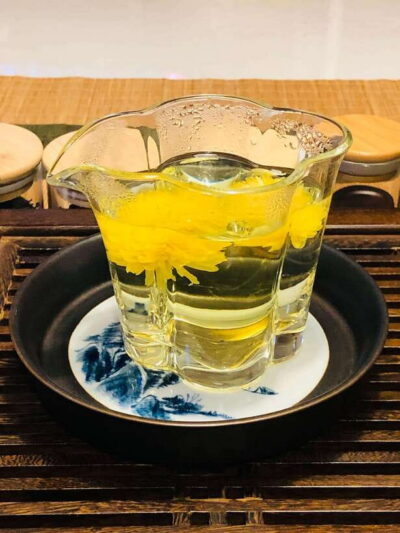 ★ 4.7Traditional Chinese Tea Ceremony ExperienceFrom $974 reviews
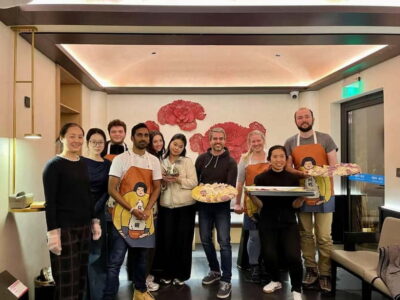 ★ 4.7Beijing: Dumpling Making Workshop with Meal and TeaFrom $3569 reviews
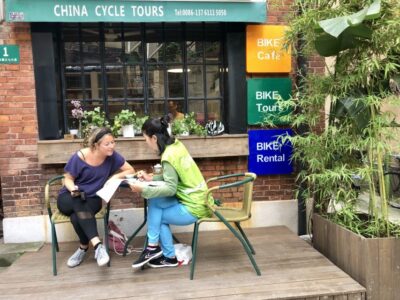 ★ 4.5Biking Real Shanghai& Tea Tasting ExperienceFrom $8845 reviews
 ★ 5.0Tea Village in lost Town and Buddha 1 day tourFrom $16932 reviews
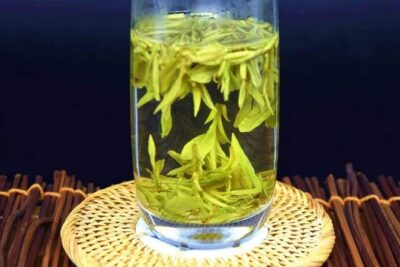 ★ 5.0Authentic Hangzhou Longjing Tea Culture Experience TourFrom $5232 reviews
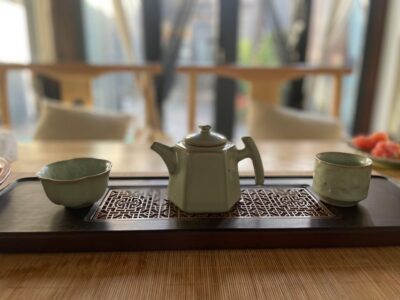 ★ 4.7Chinese Tea ceremony in Beijing Hutong courtyardFrom $3126 reviews
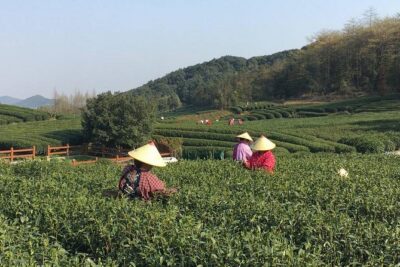 ★ 5.0Half-Day Hangzhou Yunxi Bamboo Forest and Tea Plantation ExperienceFrom $13022 reviews
Browse the lists this tour appears in