
REVIEW · MUSEUMS
Chengdu: Du Fu Thatched Cottage Museum Ticket for Adult
Du Fu still speaks through this garden. At Du Fu Thatched Cottage Museum, I love the way Tang poetry shows up in real places, not just books, and I love the calm classical garden setting around Huanhua Stream. One thing to plan for: the site covers nearly 300 acres, so if you dislike lots of walking, you may want to pace yourself instead of rushing from hall to hall.
You’re visiting the former Chengdu residence of Du Fu, who fled chaos during the An Lushan Rebellion in 759 AD and stayed here for nearly four years. The museum combines Ming and Qing architectural features with recreated spaces, so you get history and atmosphere in the same visit, plus a big collection of Du Fu materials if you want to go deeper.
In This Review
- Key highlights worth your attention
- Arriving at 37 Qinghua Road in Qingyang District
- Following the main axis: Front Gate to Poetry History Hall
- Poetry History Hall and the calligraphy you can actually read
- The reconstructed Thatched Hut and Du Fu’s Chengdu rhythm
- Gongbu Shrine and the poet community of Sichuan
- Museum collections with over 30,000 Du Fu materials
- Price and value for a $15 adult museum visit
- How to pace your day, since it is nearly 300 acres
- Ticket logistics that matter: passport ID and no physical ticket
- Who should book this Du Fu Thatched Cottage ticket
- Should you book this Du Fu Thatched Cottage Museum ticket?
- FAQ
- What is included in the Du Fu Thatched Cottage Museum adult ticket?
- Where is the Du Fu Thatched Cottage Museum located?
- Do I need a physical ticket to enter?
- What time is the museum entry available?
- What do I need to book, and what do I need to bring?
- How big is the group for this experience?
Key highlights worth your attention
- Du Fu’s Chengdu exile story: 759 AD flight, nearly four years in Chengdu, and 240+ poems written here
- A garden laid out like a classic campus: buildings aligned along a central axis, with corridors and auxiliary structures
- The Poetry History Hall focus: Du Fu statue and plaques with famous calligraphy
- Reconstructed thatched hut area: a look at the rustic living setup by Huanhua Stream
- Gongbu Shrine and Sichuan poets: Du Fu honored alongside Huang Tingjian and Lu You
- Big museum collection: over 30,000 items, including ancient editions, manuscripts, and translations
Other Chengdu trips our reviewers kept returning to
- Chengdu: Giant Panda Breeding Research Base Ticket★ 4.5 · 580 reviews
- Chengdu: Sichuan Opera Shu Feng Yan Yun Evening Show Ticket★ 4.7 · 185 reviews
- Chengdu Sichuan Opera Show Ticket – Shu Feng Ya Yun★ 4.4 · 73 reviews
- Chengdu Panda Research Base Tickets And Optional Private Tour★ 4.5 · 48 reviews
Arriving at 37 Qinghua Road in Qingyang District
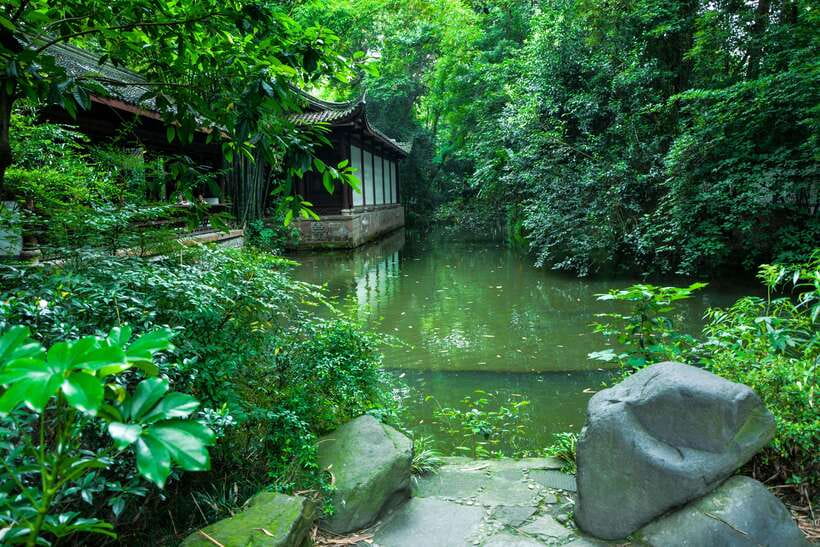
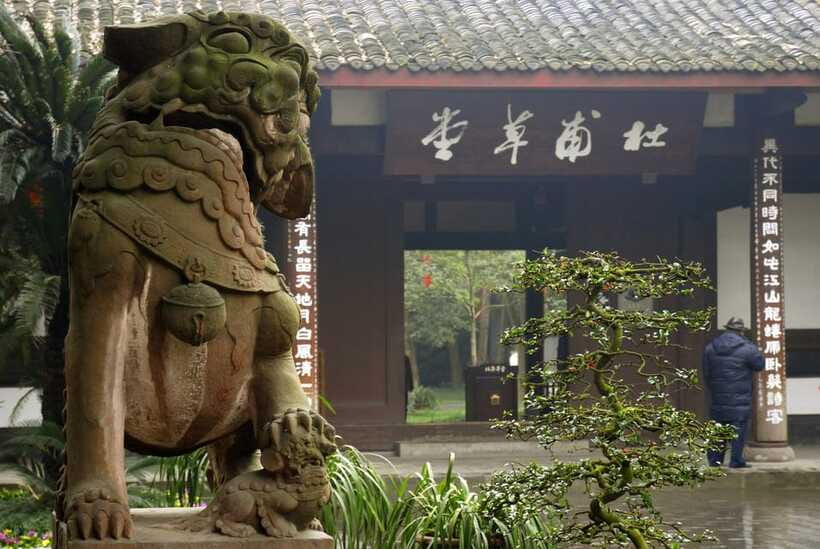
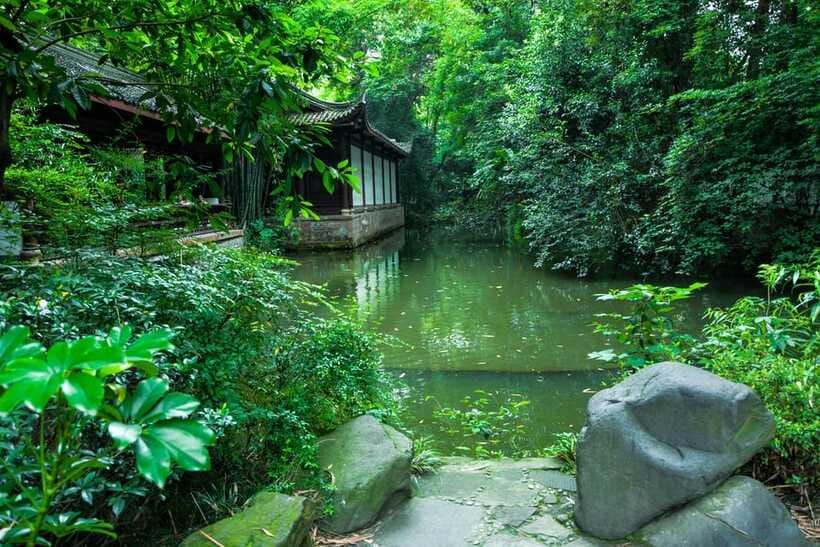
This ticket gets you admission to the Du Fu Thatched Cottage Museum at 37 Qinghua Road in Chengdu’s Qingyang District. The setting is part of the point. Even before you reach the main halls, you’re walking through a designed landscape, with bamboo groves, gardens, and flowing water shaping the mood.
What I like about this place is the clarity of the experience. Du Fu’s life in Chengdu is tied to specific landscape features, especially the idea of his hut by Huanhua Stream. The museum is also spread out, so you can treat it like a leisurely cultural walk rather than a quick checklist. If you’re the type who likes to slow down and read inscriptions, this is your kind of stop.
One practical note: because the grounds span nearly 300 acres, going at a relaxed pace helps. If you try to “power visit,” you’ll likely miss small details, like the way different halls frame the poet’s legacy.
Following the main axis: Front Gate to Poetry History Hall
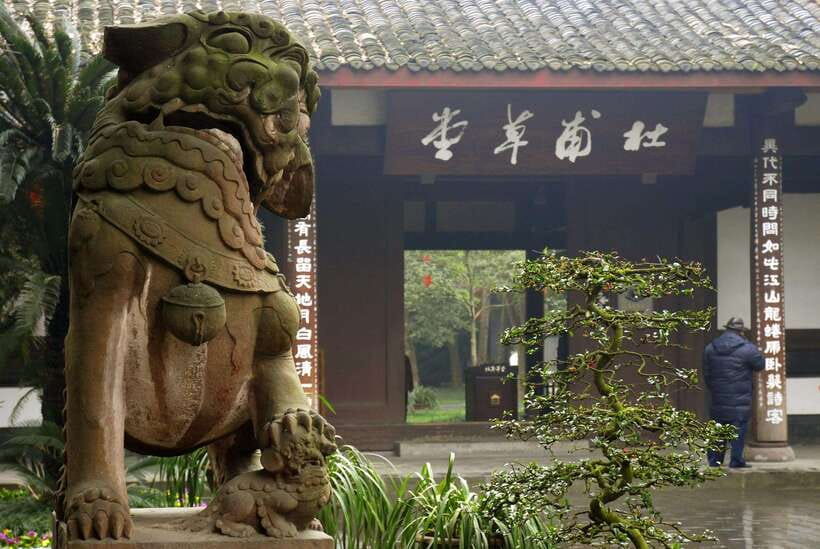
The site is organized with the main structures aligned along a central axis. That layout matters because it turns your walk into a guided feeling, even without a complicated route plan. You move from the entrance sequence into larger indoor spaces, then out again into shrine areas and reconstructed living zones.
As you enter, look for these major stops along the main line: the Front Gate, Grand Lobby, Poetry History Hall, Chaimen Gate, and then the Gongbu Shrine. Flanking that central approach, there are symmetrical corridors and auxiliary buildings, which makes it easier to understand how the estate is composed.
This structure also helps you connect the dots. Du Fu’s story is not treated like a single statue in a single room. Instead, it’s staged across gates and halls, which fits what Tang poetry was doing socially: recording realities, reflecting on hardship, and preserving memory. If you enjoy places that feel designed, not accidental, you’ll likely appreciate the way the grounds guide your attention.
Poetry History Hall and the calligraphy you can actually read
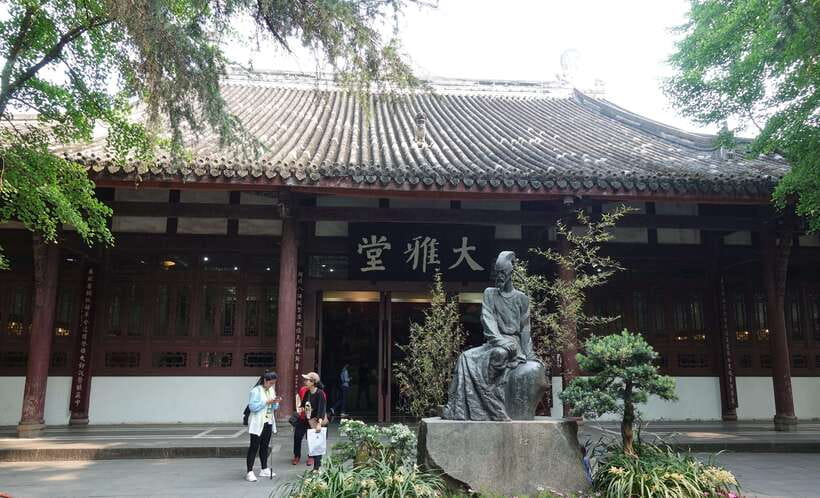
The Poetry History Hall is the centerpiece. Expect a statue of Du Fu plus plaques featuring famous calligraphy. Even if you do not read Chinese characters fluently, the visual power is there. You’re not just looking at text as information. You’re seeing it as art, like a bridge between handwriting, culture, and emotion.
This is where your visit shifts from sightseeing to meaning. Du Fu lived through serious upheaval, and the poetry linked to his Chengdu years is known for observing real life in Tang society. The museum’s central placement of Poetry History Hall reinforces that Du Fu is not presented only as a literary figure. He’s presented as a witness.
Also, pay attention to how the plaques are treated. Calligraphy is a big part of how Chinese culture communicates values and status across time. Standing in the hall, you get a better sense of why written form became a cultural treasure, not just communication. If you’re the type who gets bored by “artifact rooms,” spend extra time here and treat it like your main cultural lesson for the day.
The reconstructed Thatched Hut and Du Fu’s Chengdu rhythm
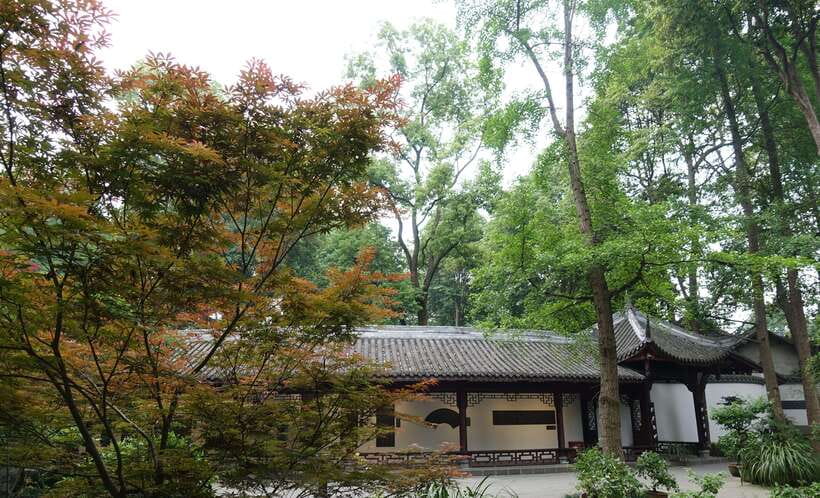
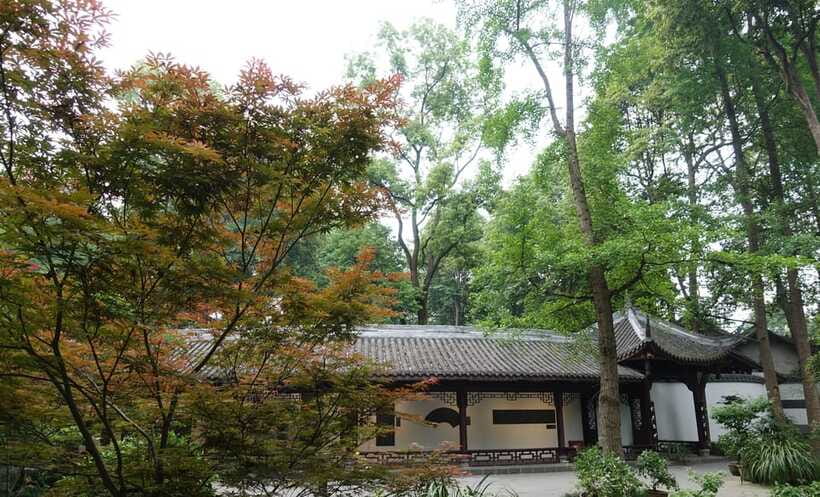
A big reason people come is to see the reconstructed Thatched Hut Area. This part replicates Du Fu’s rustic dwelling so you can get a feel for his pastoral lifestyle while he lived by Huanhua Stream. Think of it as a physical interpretation, not a single object under glass.
The timeline behind it makes the hut area hit harder. In winter 759 AD, Du Fu fled amid the An Lushan Rebellion and settled in Chengdu. By the following spring, with help from friends, he built a thatched hut by Huanhua Stream. The museum connects that moment to a creative burst, with Du Fu composing over 240 poems during the nearly four years he lived here.
As you walk through the recreated space, you can almost sense how daily life fed the writing. The gardens and water nearby help too. Even though what you see is reconstructed, the setting supports the idea of a poet working close to nature, while still writing about people and society.
If you visit on a hot or rainy day, this is still usually pleasant, but plan for outdoor walking. The hut zone is not meant to be a cool, closed-room experience.
Other Chengdu trips our reviewers kept returning to

Gongbu Shrine and the poet community of Sichuan
The Gongbu Shrine honors Du Fu alongside other notable poets, including Huang Tingjian and Lu You, who also resided in Sichuan. This detail matters because it frames Du Fu as part of a regional poetic conversation, not a lone historical figure.
When you stand in a shrine space, the tone is different. You’re not just collecting facts about where Du Fu lived. You’re encountering a cultural practice, the way later generations formalized respect for literary achievement. The shrine’s role in the route also helps you close the loop of the day’s story: you went from the poet’s setting, to his poetry focus, and then to his honored place in a bigger landscape of Chinese literature.
This section works especially well if you are curious about why certain writers became symbols of intellectual life in China. The shrine offers a simple entry point into that question, without turning your visit into a lecture.
Museum collections with over 30,000 Du Fu materials
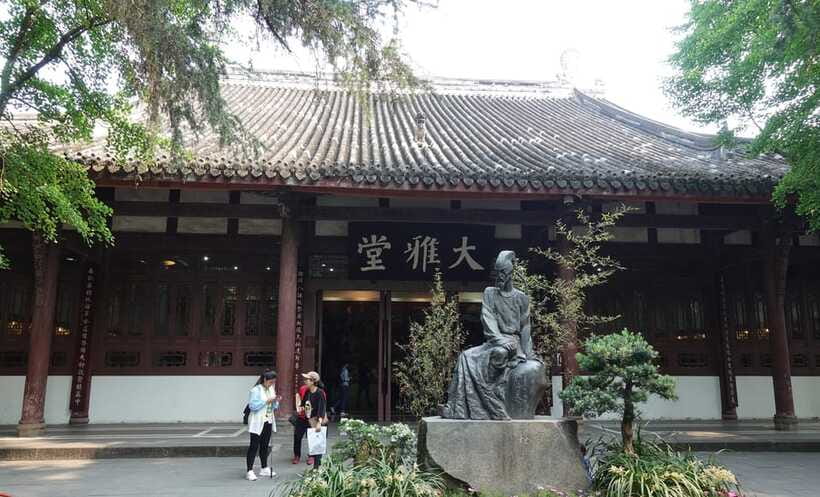
Admission is not only about walking outside. Inside, the museum holds over 30,000 items, including ancient editions, manuscripts, and translations of Du Fu’s works. If you want to go beyond atmosphere and read texts in context, this is the portion that rewards you.
Here’s the key value for you: the museum material lets you treat Du Fu as more than a name. Ancient editions show how the works were preserved and circulated. Manuscripts connect to the writing process. Translations reflect how the poetry travels across languages and time.
Even if you do not plan to study every item, knowing the collection is large changes how you view the calligraphy plaques and the staged spaces. The museum becomes a hub, not just a memorial. It’s a place where Du Fu’s legacy is cared for through documentation and scholarship.
One consideration: a collection of 30,000 items can be mentally overwhelming. If you’re short on time, focus on the main halls first, then spend a shorter block of time browsing collections in a way that feels comfortable to you. You do not need to see everything to leave with a meaningful visit.
Price and value for a $15 adult museum visit
The adult ticket price is $15 per person, and what you get is straight-up admission to the Du Fu Thatched Cottage Museum. That’s solid value in a city where many cultural sites charge similarly but offer far less combination of landscape, storytelling, and collections.
The value also comes from duration. Your ticket is valid for 1 day, and the museum entry window runs 09:00 to 18:00. That gives you the flexibility to match your energy level. If you want to linger over inscriptions and garden scenes, you can. If you want a more efficient route, you can still fit in the key areas.
Also, you’re paying for a whole context, not a single exhibit. The main axis buildings, the Poetry History Hall focus, the reconstructed hut area, and the shrine stop all connect to the same life story of Du Fu in Chengdu. And then, on top of that, you get access to a large collection of materials tied to his writings.
How to pace your day, since it is nearly 300 acres
Because the grounds cover nearly 300 acres, your pacing is the difference between a relaxing cultural walk and a tiring slog. I suggest you pick a simple strategy before you go in: do the central axis first, then spend time in the areas that feel most meaningful to you.
A practical flow looks like this:
- Start with the main gate sequence and Grand Lobby to orient yourself.
- Spend real time in Poetry History Hall, since it anchors the poetry theme.
- Move along to the hut area and let the outdoor setting slow you down.
- Finish with Gongbu Shrine so the day lands with the honor and poet-community angle.
- Add museum collection browsing based on your interest level.
If you’re visiting in peak times, remember the site is open through the afternoon, so you can shift your schedule slightly to avoid the most crowded moments. Small group size is listed as limited to 10 participants, which usually helps keep things calmer at entry and movement, but the site is still a popular cultural destination.
Bring comfortable shoes. The grounds are meant to be walked.
Ticket logistics that matter: passport ID and no physical ticket
This experience is easy to enter once you’re prepared. You do not need a physical ticket. Use your ID or e-voucher for verification at the entry gates.
Two details you should not ignore:
- Passport ID is needed to book.
- At entry, you use your passport-based ID for verification.
There’s also a helpful flexibility point: entry is available at all main gates of the museum, so you can match your approach to where you arrive from.
If you like planning with less stress, you’ll appreciate that you can pick from a 1-day validity window and use the museum during 09:00 to 18:00.
One possible drawback in real life is the passport dependency. If you forget the passport, or if your booking info does not match, entry could become a hassle. Keep your documents together.
Who should book this Du Fu Thatched Cottage ticket
You’ll likely enjoy this ticket if you care about one of these things:
- Tang poetry and Du Fu’s life story told through place-based history
- Classical Chinese garden design and a calmer pace than “museum sprinting”
- A cultural stop where outdoors and indoor learning connect
It is also a strong choice for first-time Chengdu visitors who want a cultural foundation beyond food and nightlife. Chengdu is known for many modern experiences, but Du Fu’s Chengdu years add a serious, human layer to the city.
If you’re traveling with people who do not read poetry, the garden and architecture can still carry the experience. But if nobody in your group is interested in poetry, consider whether you want to balance this with a more modern or interactive museum later in your trip.
Should you book this Du Fu Thatched Cottage Museum ticket?
I think you should book this ticket if you want a meaningful Chengdu culture visit that mixes walking, reading, and atmosphere. The Poetry History Hall plus the reconstructed hut by Huanhua Stream is a winning combo: you get the story of how Du Fu wrote over 240 poems during his Chengdu exile, and you experience it in a setting designed to make the story feel real.
Skip it only if you dislike outdoor walking on a large site or you prefer small, fast exhibits. For most travelers who enjoy poetry, Chinese architecture, and gardens, this is a calm, high-value use of one day.
If you have time for only one cultural museum day in Chengdu, this is one of the best ways to get both the place and the writings that made Du Fu famous.
FAQ
What is included in the Du Fu Thatched Cottage Museum adult ticket?
The ticket includes admission to the Du Fu Thatched Cottage Museum.
Where is the Du Fu Thatched Cottage Museum located?
It is located at 37 Qinghua Road in Chengdu’s Qingyang District.
Do I need a physical ticket to enter?
No physical ticket is required. Use your ID or e-voucher for direct verification.
What time is the museum entry available?
Entry is available from 09:00 to 18:00.
What do I need to book, and what do I need to bring?
A passport ID is needed to book. Bring your passport for verification.
How big is the group for this experience?
It is listed as a small group, limited to 10 participants.
More Museums in Chengdu



More Tickets in Chengdu




More Tour Reviews in Chengdu



Chengdu, reviewed one booking at a time
- Wolong Panda Base Volunteering Program from Chengdu
★ 5.0 · 3 reviews - Mt Emei and Giant Buddha 2 Days Tour
★ 4.5 · 3 reviews - Half-Day Private Hot-Pot Cooking Class with a Local Market Visit
★ 5.0 · 3 reviews - Private 1-Day: Panda and Chengdu Local Life (Make Vlog for you)
★ 5.0 · 3 reviews - Ticket reservation for Chengdu Giant Panda Breeding Base
★ 5.0 · 3 reviews - Sanxingdui Museum Small Group Tour with Optional Panda Base
★ 5.0 · 3 reviews
Museums, compared.
 ★ 4.6Beijing: Tianmen Square, Forbidden City & Royal Museum ToursFrom $41,288 reviews
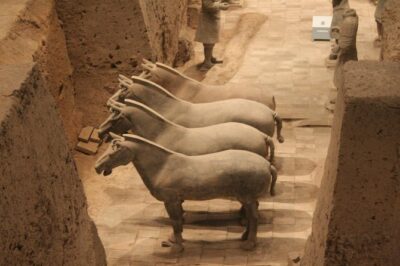 ★ 5.0Half-Day Mini Group Xian Tour to Terracotta Warriors MuseumFrom $49467 reviews
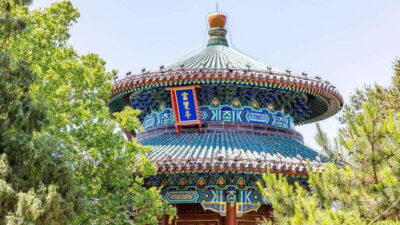 ★ 4.5Beijing:Jingshan Park (Palace Museum Garden) TicketFrom $6185 reviews
 ★ 5.0Private Chengdu Day Tour: Giant Pandas and Jinsha Site MuseumFrom $169142 reviews
 ★ 5.0Private Xi’an Tour: Terracotta Warriors, Hanyangling Museum, Cave HomesFrom $175101 reviews
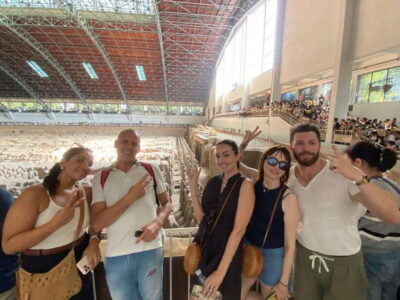 ★ 4.5Xi’an: Terracotta Army Museum Group TourFrom $2085 reviews
 ★ 5.0Beijing Half Day: National Museum of China In-depth Tour with Subway TransferFrom $11470 reviews
 ★ 4.5Terracotta Warriors Museum Ticket with Professional English-speaking tour guideFrom $4553 reviews
Browse the lists this tour appears in