
REVIEW · DUJIANGYAN & QINGCHENG MOUNTAIN TRIPS
Jinsha&Sanxingdui archaeological site private day tour
Two ancient sites, one guided story.
This tour is interesting because it pairs over 3 hours of English interpretation at Sanxingdui with a crowd-avoiding visit flow, so the artifacts start to make sense fast. I also like how you get a second context stop at Jinsha, which helps you connect what Shu people built before and after the big Sanxingdui discovery. The main thing to consider is timing and extra costs, since museum admission and lunch are not included in the base price.
Hotel pickup keeps your morning simple, and the private air-conditioned car means you are not hunting other group members. I like the mix of museum time and a real break with a Guanghan food tour, so the day does not turn into nonstop looking at glass cases. One possible drawback is that you will spend real time in the car, because Jinsha, Guanghan, and Sanxingdui are not all in the same immediate area.
The big idea behind this day is the relationship between Sanxingdui and Jinsha, both tied to ancient Shu culture. Sanxingdui is often called the Ninth Wonder of the World, with thousands of rare finds from eight sacrificial pits dating to about 1100-1000 BC, yet it left no written records. The Jinsha site, found later in Chengdu, is where you see clues about what happened after that city period, with artifacts connected to successors who lived about 3000 years ago.
In This Review
- Key things that make this tour work well
- Jinsha and Sanxingdui in one day: the real payoff
- Morning start: hotel pickup and the Jinsha site museum excavation feel
- What I’d watch for at Jinsha
- Guanghan food tour: a smart reset between two museum blocks
- How to use this break
- Sanxingdui museum, step by step: where the story clicks
- What makes the interpretation valuable
- Tips for making the most of the afternoon
- The artifacts: what to focus on besides the big wow-factor
- A practical expectation
- Price and value: what $180 really covers
- Who gets the best value
- Logistics that reduce stress (and one thing to plan around)
- Who should book this private Jinsha and Sanxingdui tour
- Should you book it, or DIY the sites?
- FAQ
- Where does the tour pickup happen?
- How long is the tour?
- Is the guide English-speaking?
- Are museum admission tickets included?
- Is lunch included?
- What do I need to bring?
Key things that make this tour work well
- Sanxingdui interpretation time: more than 3 hours of guided English so you can actually follow the story, not just read labels.
- A calmer route: unique visit routes that help you avoid the crush and understand the relics more easily.
- Two-site context: Jinsha first, then Sanxingdui, so you see continuity and change in one day.
- A Guanghan food stop: a practical break that adds local flavor between the big museum moments.
- Private logistics: air-conditioned transport and hotel pickup, handled in one package.
Jinsha and Sanxingdui in one day: the real payoff
If you only visit one museum, it is easy to treat Sanxingdui like a standalone miracle. This tour fixes that by structuring the day so you see how the discoveries relate to each other. I like that the experience is built around explanation, not just walking.
Sanxingdui is famous because the scale of the finds is huge, and because the civilization’s story is incomplete. You will hear how there were no written records in traditional Chinese history, which is exactly why archaeologists keep circling around questions like origins and fate. That mystery is part of the appeal, but it also means labels alone might not give you enough.
Jinsha helps with that. The Jinsha site was discovered in Chengdu and is often described as a way to trace the path of the Sanxingdui people after they left their city. When you move from Jinsha to Sanxingdui in one day, the artifacts feel less like random treasures and more like chapters in the same broader cultural arc.
Morning start: hotel pickup and the Jinsha site museum excavation feel
Your day begins with hotel pickup in Chengdu. The guide meets you in the hotel lobby, first floor, holding a paper with your name, which is exactly how I like it when schedules are tight. If you cannot spot the guide within 5 minutes, you use the emergency contact listed in your booking details.
Then you drive toward the Jinsha site museum. The morning focus is not just indoor exhibits. You visit the real archaeological excavation site, so you get a stronger sense of where the discoveries came from. That matters, because it turns Jinsha from a set of photos into something grounded.
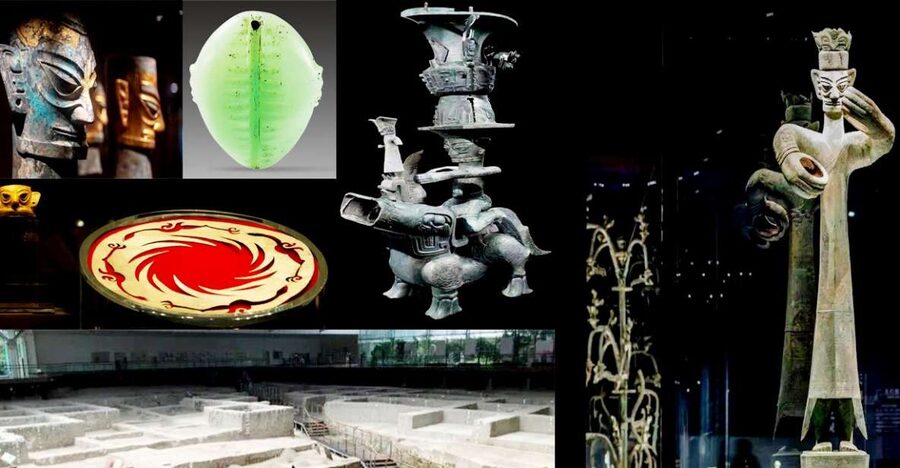
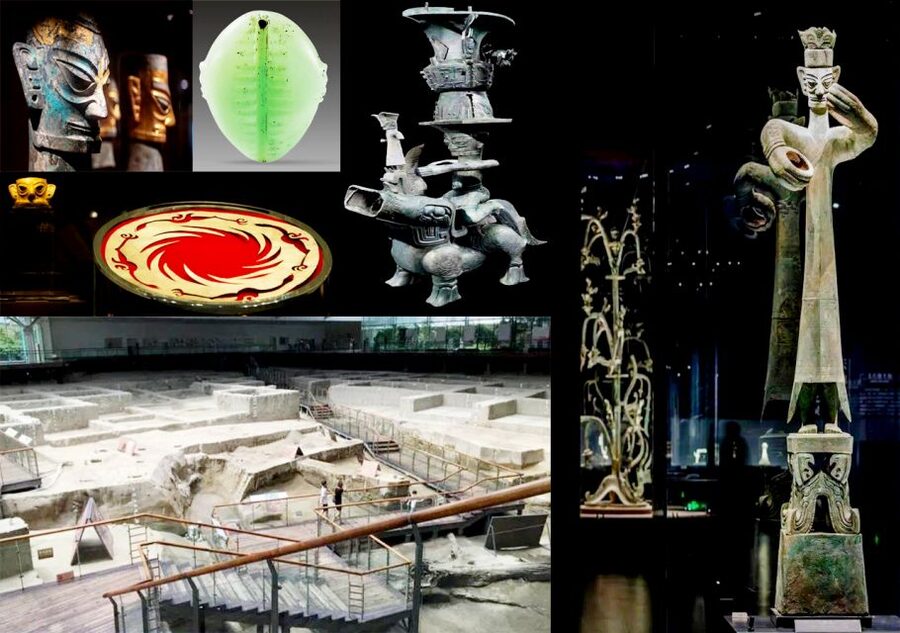
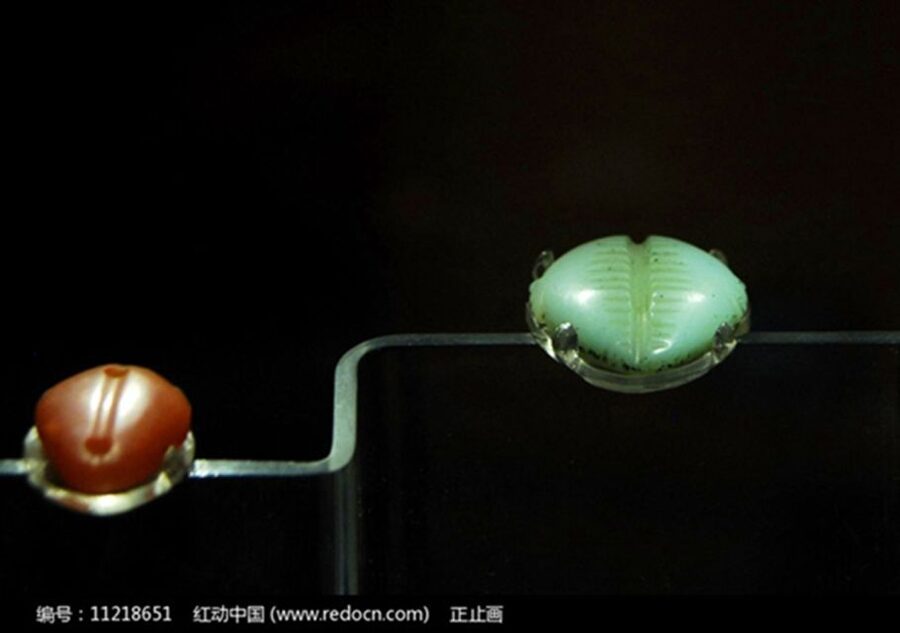
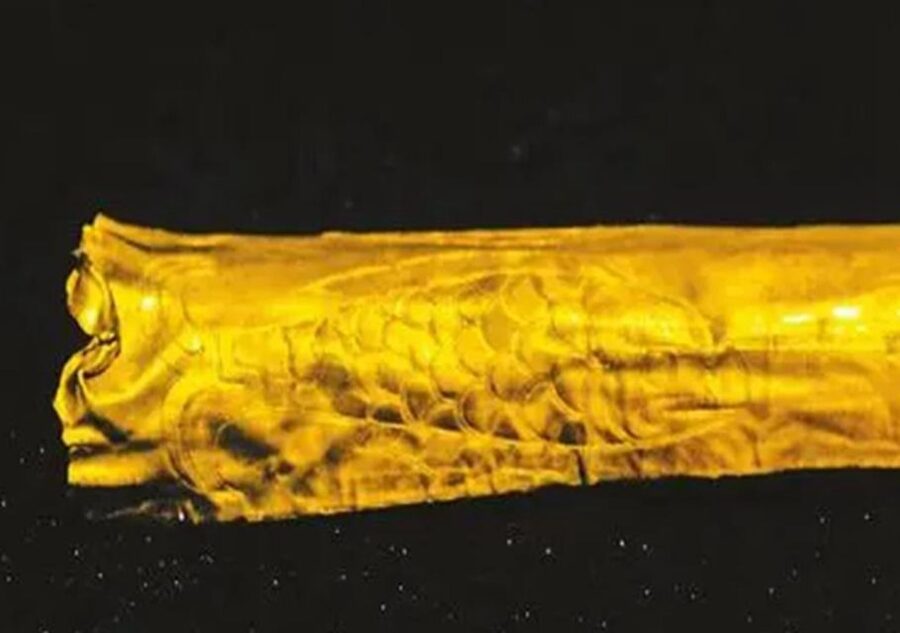
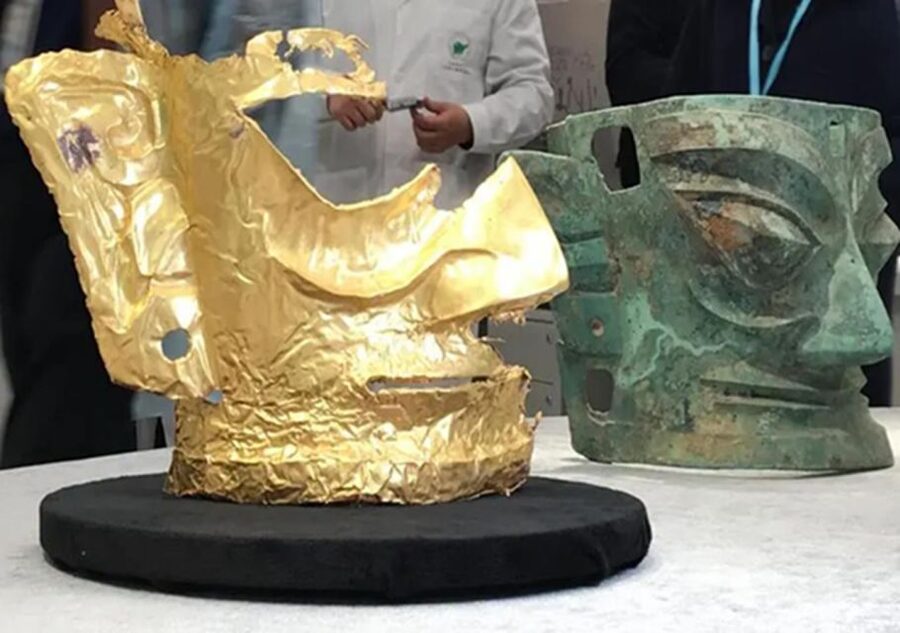
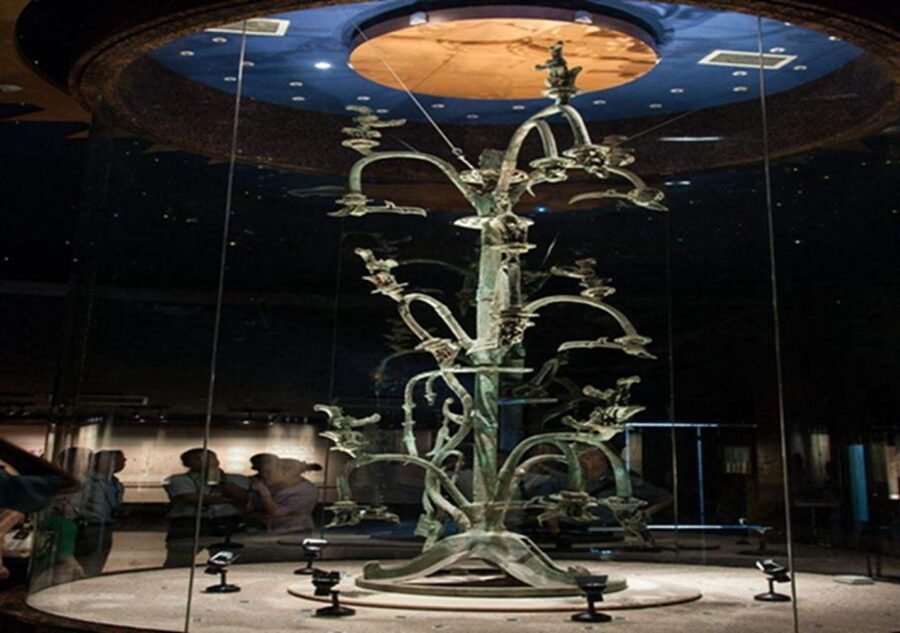
In the Jinsha portion, you are guided through standout categories like ivories, jade shells, shells used for divination, and high-impact metalwork such as golden masks. You may also see items described as a golden crown lace and the golden sun birds badge. Even without being an archaeology expert, this is the part where your eyes start to understand the visual language of the culture.
What I’d watch for at Jinsha
Jinsha is only one part of the day, so I suggest you go in with a simple goal: identify patterns. Look for repeated themes in materials and craftsmanship, especially how jade and gold objects show up alongside ritual objects. If your time feels fast, that is normal. Private timing and a guided route help you make the most of it.
Guanghan food tour: a smart reset between two museum blocks
After Jinsha, you drive to Guanghan, and the schedule includes a dedicated food tour time window. This is not an extra you have to accept, it is built in so your day stays humane.
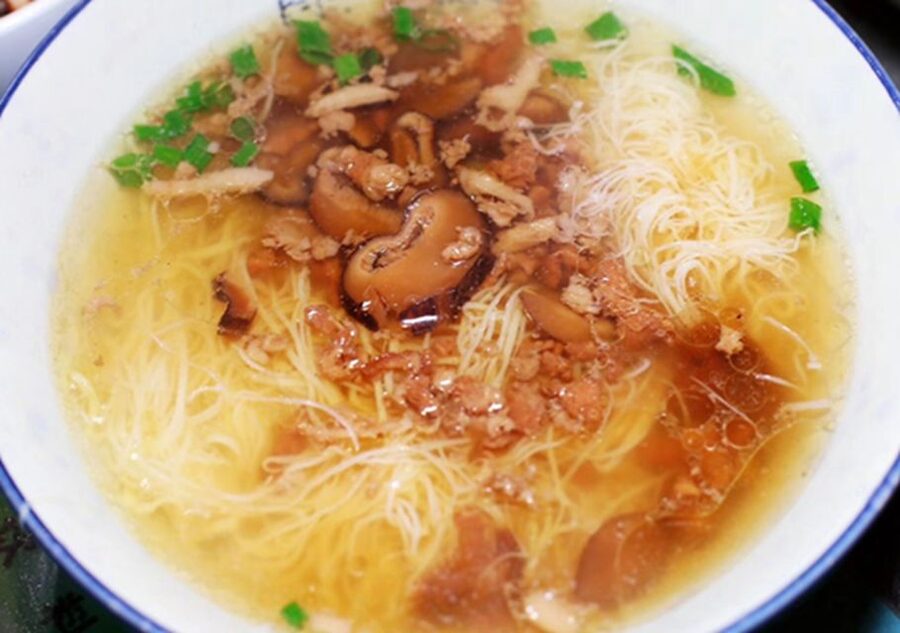
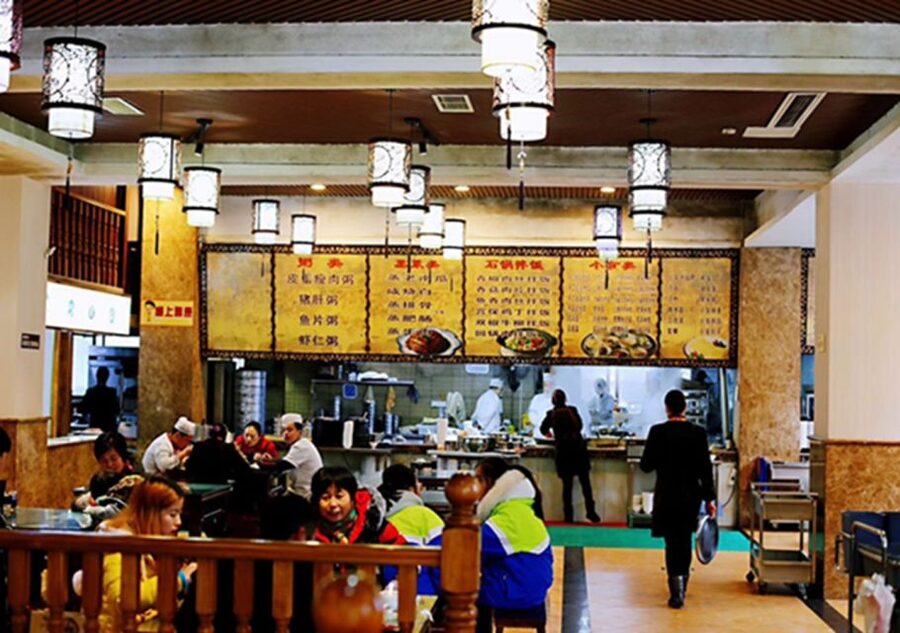
During the food stop, you try local dishes such as Golden slices noodle, wontons, and dumplings. The practical value here is timing. When museums run into each other, your brain starts to blur details, especially with lots of bronze and gold imagery. A real meal stop, even without a long sit-down, gives you space to digest what you just saw.
How to use this break
If you are sensitive to spice or strong flavors, pay attention to what you order. You will likely spend the next stretch focusing on Sanxingdui, so it helps to eat in a way that lets you stay comfortable through the afternoon. Also, since lunch is listed as not included, this food tour stop is your main structured chance to eat, so treat it as part of the plan.
Sanxingdui museum, step by step: where the story clicks
Sanxingdui is the heavy hitter, and the tour allocates focused time for it. You spend a long guided block inside the Sanxingdui museum, with the day’s centerpiece being a professional English-guided interpretation lasting over 3 hours.
This is where the unique visit routes really matter. When crowds build, it is hard to hear explanations and easy to rush past important objects. The idea here is the opposite. You get a route designed to help you understand relics easily, and that makes a difference when you are trying to connect symbols to function.
You also get guided pacing. The tour is described as visiting Sanxingdui museum step by step, which is helpful because Sanxingdui is not a place where you can just skim. Thousands of rare treasures from eight sacrificial pits are not all meant to be seen in one frantic sweep.
What makes the interpretation valuable
Sanxingdui is famous, but the context is complex. You are learning about why these objects ended up together, what sacrificial pits might imply, and how bronze-age craftsmanship could carry ritual meaning. With solid English interpretation, you are not just looking at impressive artifacts. You are learning how researchers frame the evidence and what questions remain open.
This is also where the two-site concept pays off again. Jinsha’s objects make Sanxingdui less like a sudden jolt and more like a continuation of culture, with changes you can try to spot.
Tips for making the most of the afternoon
Bring energy for close reading. Even if labels are short, your guide’s explanation can make you notice details like texture, wear, arrangement, and how objects are grouped. If you get tired, it is okay to slow down for a moment. The point is to catch the patterns, not to sprint through everything.
The artifacts: what to focus on besides the big wow-factor
Sanxingdui and Jinsha both feature objects that look dramatic in photos, but the tour is better when you look for meaning. Here are a few angles you can use while you are there.
First, focus on materials. Jinsha mentions jade shells and golden pieces, alongside divination shells and carved objects like ivories. That mix suggests a culture that treated objects as tools for ritual, status, and belief. In Sanxingdui, you are dealing with a large set of bronze-age treasures linked to sacrificial practices, which makes material choice especially important.
Second, pay attention to ritual-related items. Jinsha’s shells for divination are a clear cue that these were not random luxury goods. They point to a worldview where questions, decision-making, and outcomes were connected to ritual interpretation. Seeing those ideas early helps when Sanxingdui emphasizes treasure deposits tied to sacrificial pits.
Third, watch for recurring motifs. The mention of golden masks and a golden sun birds badge at Jinsha gives you a starting point for pattern-spotting. When you see related styles or symbolic forms in Sanxingdui’s collections, your brain starts building a link rather than collecting unrelated images.
A practical expectation
You might not leave with every historical answer, because the civilization’s origins and fate are still puzzling. But you should leave with better questions and more confident context. That is the real goal of an interpretation-heavy tour.
Price and value: what $180 really covers
The listed price is $180 per person for a 10-hour private day tour. That number matters less when you compare what you actually receive. You are getting private transportation with air-conditioning, English guide service for both the Jinsha and Sanxingdui site museum time, and admission ticket booking service. You also get 1 bottle of water per person, a unique souvenir with a panda mascot, and government tax.
What you should budget for separately:
- Jinsha museum admission (listed as USD 10 per person)
- Sanxingdui museum admission (listed as USD 10 per person)
- Lunch (not included)
- Gratuity (not included)
So, a realistic base math is that admission adds about USD 20 per person on top of the $180, before lunch and gratuity. For many people, the value is not the ticket price. It is the private guide and the time efficiency of a structured route across sites.
Who gets the best value
You will likely feel the value most if you:
- want English interpretation instead of self-guided museum wandering
- prefer private timing over joining others
- care about understanding context, not just sightseeing
If you are traveling on a strict budget and you are comfortable navigating independently, you might compare the cost of separate taxis plus museum tickets. But if you want the story told in a clear order, this package is built for that.
Logistics that reduce stress (and one thing to plan around)
This tour is private, which means your guide can manage timing in a way that fits your group. Pickup is included, and your guide waits in the hotel lobby with your name sign. The “call within 5 minutes” detail is there for a reason, and it is the kind of thing that prevents a lot of morning chaos.
The tour is also wheelchair accessible, which is a nice practical note if mobility is a concern.
The one thing to plan around is the full-day pace. You have a long day with museum time on both ends and driving between Chengdu, Jinsha, Guanghan, and Sanxingdui. If you get motion-sick or feel drained easily, you may want to bring basic comfort items like water (you do get one bottle), a light layer, and a snack strategy for between meals.
Who should book this private Jinsha and Sanxingdui tour
This is a great match for travelers who want clarity. If you like guided context and you want to connect two major discoveries in one day, the structure is exactly right.
It is also a strong choice for first-timers to this part of southwestern China, because the day is built around the big questions: what Sanxingdui was, why it is mysterious, and how Jinsha helps explain what followed. The English interpretation is not an afterthought here, it is the centerpiece.
You might consider skipping or modifying it if:
- you dislike long museum schedules
- you prefer unguided travel with flexible pacing
- you only care about one site and do not want the added transport
Also, if you are a family traveling with kids, this can work, but the best results come when you are okay with a guided pace and museum attention spans.
Should you book it, or DIY the sites?
Book this tour if you want your day to feel organized and meaningful. The pairing of Jinsha and Sanxingdui, plus English interpretation time, is designed so you can walk out with a connected story rather than a pile of impressive images.
Skip it if you are happy reading on your own and you plan to prioritize spontaneity over structure. In that case, you might enjoy a lighter plan where you spend more time at fewer exhibits.
My recommendation: if you value understanding as much as seeing, this is a solid, efficient use of your time in the Chengdu area.
FAQ
Where does the tour pickup happen?
The guide picks you up in Chengdu at your hotel. The guide waits in the hotel lobby on the first floor holding a paper with your name.
How long is the tour?
The duration is 10 hours. Starting times can vary, so you should check availability for the exact start.
Is the guide English-speaking?
Yes. The tour includes a live tour guide in English for the Jinsha and Sanxingdui site museum parts.
Are museum admission tickets included?
No. Admission tickets for both the Jinsha museum and the Sanxingdui museum are listed as USD 10 per person each.
Is lunch included?
Lunch is not included. The schedule includes a food tour stop in Guanghan for local specialties, and you should plan around that.
What do I need to bring?
Bring a passport or ID card. You should also provide everyone’s passport details as requested for the tour.
Dujiangyan & Qingcheng Mountain Trips, compared.
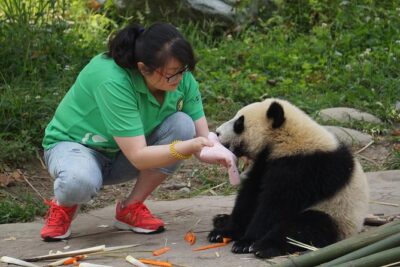 ★ 5.0Visiting Dujiangyan Yaan Wolong Panda Base Optional VolunteeringFrom $234105 reviews
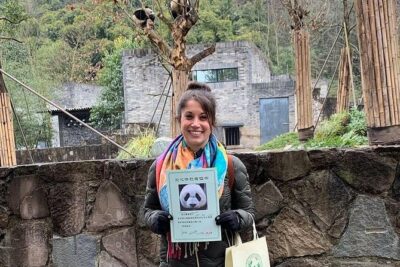 ★ 5.0Dujiangyan Panda Volunteering Experience with LunchFrom $27966 reviews
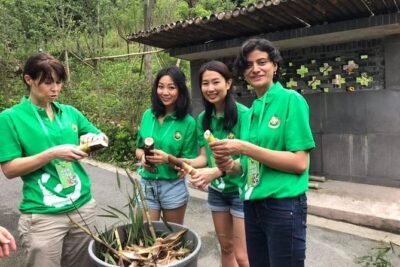 ★ 4.5Private Dujiangyan Panda Base Panda Rescue Center Volunteer for a DayFrom $30741 reviews
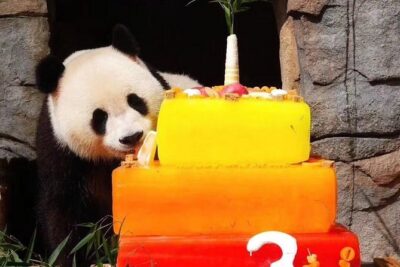 ★ 5.0Dujiangyan Panda Base and Mount QingchengFrom $6030 reviews
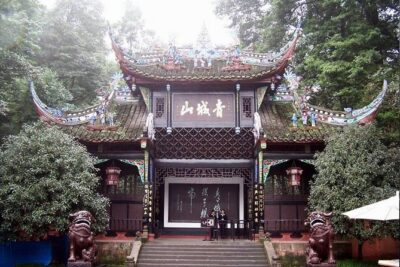 ★ 4.5Mount Qingcheng and Dujiangyan Irrigation System Private Day Tour from ChengduFrom $23026 reviews
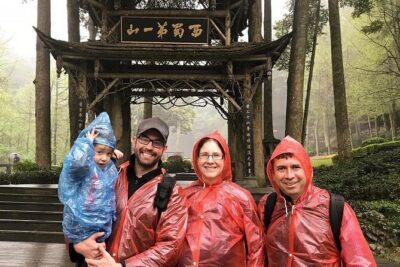 ★ 5.0All-Inclusive Private Day Tour of Mount Qingcheng and DujiangyanFrom $22926 reviews
 ★ 5.0Mount Qingcheng Tour: Explore Serene and Sacred Taoist SiteFrom $10512 reviews
 ★ 5.0Dujiangyan irrigation+Mt. Qingcheng or Panda Park Day TourFrom $9011 reviews
Browse the lists this tour appears in