
REVIEW · HISTORICAL TOURS
UNESCO Watchtowers World Heritage Ancient Villages Private Tour
Diaolou towers change your whole view of Guangdong. This private UNESCO day trip takes you about 2 hours from Guangzhou into Kaiping and Taishan, where fortress-like houses and farm-country villages tell a story of overseas Chinese life. I love how the route mixes UNESCO sites with real village atmosphere, so you are not just ticking boxes, you are seeing how people actually lived.
What I also like is the stop at Li Garden (Kaiping Garden), built by Mr. Xie Weili, a US-based Chinese, with design ideas tied to the Dream of the Red Chamber. One thing to plan for: admission fees and lunch are not included, so your day budget needs a little extra room, and the full outing can run up to 11 hours.
Key points to know before you go
- Private car with air-con plus hotel pickup and drop-off in downtown Guangzhou keeps the trip easy.
- UNESCO diaolou clusters in Zili Village and Majianglong Village focus on watchtower-style fortress homes.
- You get a local English-speaking guide and full escort for clear context at each stop.
- The pacing is flexible enough for a shorter day or a longer loop, depending on how much you want to walk.
- You will need to add admissions and lunch since they are not included.
In This Review
- Leaving Guangzhou for Kaiping’s UNESCO Watchtowers
- Private car logistics that make this day trip feel effortless
- UNESCO diaolou clusters at Zili Village: fortress homes and village texture
- Watchtower Group of Zili Village: Qing dynasty dates you can actually picture
- Jinjiangli Village diaolou cluster: farmland paths and river scenery
- Li Garden (Kaiping Garden): Mr. Xie Weili and a garden built from big ideas
- Majianglong diaolou and Ma-Xianglong Towers: towers on the Tanjiang River flats
- Chikan Movie Town: Qilou streets and an old-town walk
- Timing: why this itinerary works, and when it can feel long
- Admissions and lunch: the two costs people forget to budget
- Price and value: $255 per person for UNESCO towers and private comfort
- Who will enjoy this tour most
- Should you book this UNESCO watchtower villages private tour?
- FAQ
- Where does the tour start in Guangzhou?
- Is the tour private or shared with other people?
- What is the duration of the tour?
- Does the price include entrance fees and lunch?
- What language is the guide?
- Is hotel pickup available?
- Are mobile tickets used?
- What is the cancellation policy?
- When will I get confirmation after booking?
Leaving Guangzhou for Kaiping’s UNESCO Watchtowers
Guangzhou can feel nonstop. This tour is a clean break from that pace because you head out into countryside within a couple of hours. The setting matters here: you are moving through farmland, livestock shed areas, and fishponds, so the diaolou make sense as part of working village life, not just as a photo stop.
Kaiping and Taishan are strongly connected to overseas Chinese stories, and the architecture reflects that. Many of the watchtower-style houses look like fortified structures built in the 1900s, and they were shaped by the people who lived between village life and migration. When you see them on the ground, you start to understand why these towers became symbols, not just buildings.
Other Guangzhou trips our reviewers kept returning to
- Customised Private Guangzhou City Tour with Flexible Itinerary★ 5.0 · 107 reviews
- Gulong Gorge Skywalk Glass Bridge and Waterfall View Private Tour★ 5.0 · 103 reviews
- Private Guangzhou Full Day City Tour with Old and New Highlights★ 5.0 · 62 reviews
- Reputable Private Guangzhou Tour Guide Service by Xaq★ 5.0 · 60 reviews
Private car logistics that make this day trip feel effortless
This is a private tour, meaning your group travels together, not with random strangers. You also get a professional driver and a private car with air-con, which is a big deal for a 5 to 11 hour day. On hot days, the ride comfort is not a luxury, it is part of enjoying the stops instead of rushing between them.
A local English-speaking guide is included, and that is where the tour gains value. Diaolou and old gardens can be confusing if you are only reading signs, but a guide can connect the dots like why certain villages cluster around watchtowers, or what to notice in a garden’s layout.
One more practical point: you get hotel pickup and drop-off in downtown Guangzhou. If your hotel is outside the downtown area, you may want to confirm the meeting point when you book, since the tour description specifically calls out downtown.
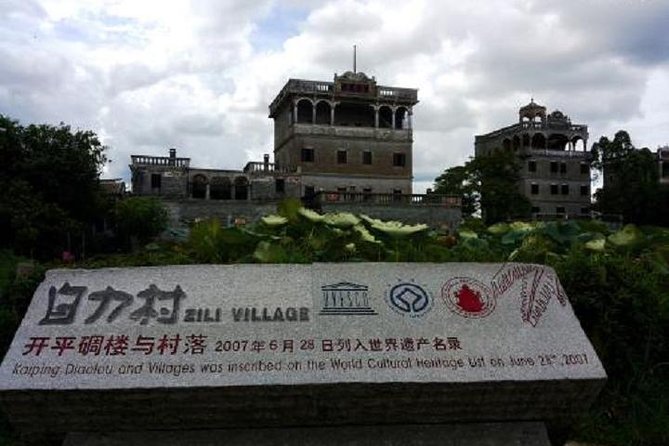
UNESCO diaolou clusters at Zili Village: fortress homes and village texture
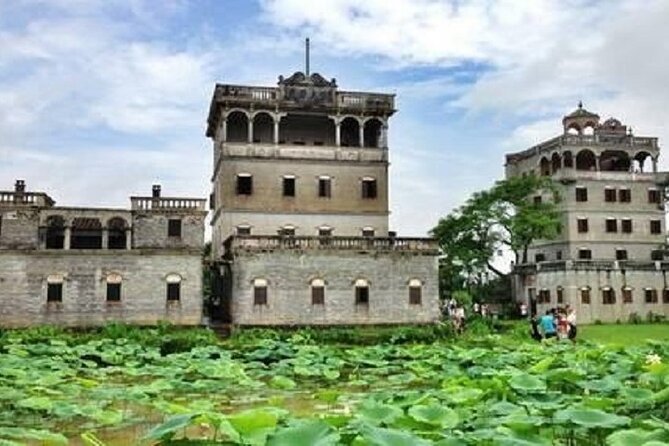
Your first stop centers on Kaiping Diaolou and Villages, starting with the Diaolou Cluster in Zili Village. This is the kind of UNESCO site where the buildings are the main attraction. The watchtowers here are described as part of Guangdong’s first World Cultural Heritage Site area, and you are looking at clusters of tower-like houses that resemble fortresses.
What you should plan to do at Zili Village is slow down and look for patterns. Watchtowers and connected buildings tend to have repeating layouts, and in clusters like this, the arrangement can tell you how families organized their compound-like spaces. If you like architecture, you will enjoy the mix of practical function and dramatic visual impact.
Timing tip: the day includes a mix of longer and shorter stops. Zili Village is usually one of the heavier visual anchors, but the visit time is set for around 2 hours in the early slot. If you prefer photos, plan your camera time early, because later stops can include more walking through lanes and village paths.
Watchtower Group of Zili Village: Qing dynasty dates you can actually picture
Next is the Watchtower Group of Zili Village, described as founded in the 17th year of Daoguang’s reign in the Qing Dynasty, which is given as 1837. That specific date is helpful because it turns the towers into a timeline you can remember. The group is made up of unincorporated villages Anheli, He’anli, and Yong’anli, and they share the surname Fang.
This is where a guide becomes extra useful. With a private tour, you can ask questions and get explanations that match what you are standing next to. You will likely spend about 1 hour 30 minutes here, which is enough time to see the complex as a set of connected village parts rather than random towers scattered in the distance.
What I like about this stop is that it is not only about one building. It is about the idea of a watchtower group and how multiple villages relate to each other. If you enjoy genealogy and family settlement stories, the Fang surname detail gives you something to hold on to while you walk.
Jinjiangli Village diaolou cluster: farmland paths and river scenery
Then you head to Jinjiangli Village Diaolou Cluster, set in the Xian Gang Township of Kaiping City. This stop is shorter, around 30 minutes, but it is one of the most “alive” moments of the day because it is tied directly to farmland and the natural layout.
You get crisscross paths on the farmland, and a river flows through the area. The description even points to daily life details like water buffaloes and geese, so this is not just an architectural exhibit. You are seeing how diaolou connect to working landscape.
The drawback is obvious but manageable: you cannot do this village justice if you rush. Because the time is brief, you will want to focus on the best viewing angles first, then take a quick walk if time allows. If you are the type who likes to linger, ask the guide to help you prioritize the viewpoints.
Other Guangzhou trips our reviewers kept returning to
Li Garden (Kaiping Garden): Mr. Xie Weili and a garden built from big ideas
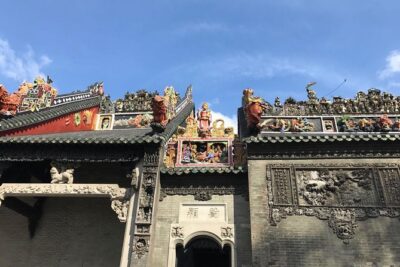
Kaiping Garden is listed as Li Garden, known for being based on the Grand View Garden depicted in the Dream of the Red Chamber. The garden was built in the early 20th century by Mr. Xie Weili, who is described as a US-based Chinese. That connection alone makes this stop more than just pretty landscaping.
If you like garden design, you should pay attention to how the classical garden features are combined with skillful layout. The tour description notes the garden’s classic garden aspects and how it uses design skill to create a specific experience. A good guide can point out how the paths, sightlines, and garden structures work together, so you understand what you are seeing.
This stop is about 1 hour. That length is about right because gardens can eat time if you follow every path. I suggest you do a quick loop first to get orientation, then go back to the areas that grab you most.
Majianglong diaolou and Ma-Xianglong Towers: towers on the Tanjiang River flats
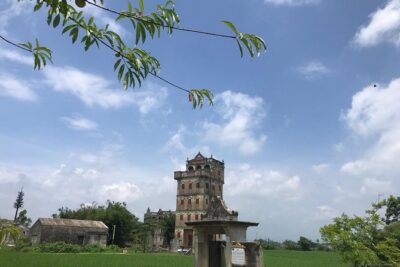
After Zili and the garden, you move to the Ma-Xianglong Towers Group in Majianglong Village. Here the description emphasizes the setting: it sits at flatland on the eastern coast of the Tanjiang River. That geographic detail matters. Towers can look different depending on terrain. On flatter land, they often read more dramatically against the sky, and the surrounding village context feels more open.
The Ma-Xianglong group is described as part of Majianglong Village, which is under Baihe Township administration. It is made up of five villages, including Yong’an and Nan’an Village of the Huang family, plus additional villages referenced in the longer description. Even if you do not catch every surname on the spot, the guide can help you connect which towers belong to which village pockets.
Plan for about 1 hour here. This is a good time to ask your guide what to notice based on the diaolou style differences between clusters. Seeing multiple UNESCO tower groups in one day helps your brain compare structure, placement, and how the villages cluster around the towers.
Chikan Movie Town: Qilou streets and an old-town walk
The last major cultural stop is Chikan Movie Town, next to the Tan River. It is described as established in the early Qing Dynasty and known for Cantonese style Qilou street buildings. Qilou are those ground-floor arcades that create a covered street rhythm, and in a place like this, walking becomes the activity.
This portion is about 2 hours, and that longer time makes sense because you are not just viewing buildings, you are moving through them. The tour description also says there are western visual influences you can spot while you walk, though the detail is cut off in the text you were given. In practice, keep your eyes open for contrasting architectural styles along the streets.
Chikan is a strong closer because it ties the day together. Earlier stops focused on fortress towers and gardens, while this one gives you a living streetscape. If you want souvenirs, snack breaks, or just a final stretch of wandering, this is the place to do it.
Timing: why this itinerary works, and when it can feel long
The total duration is listed as 5 to 11 hours, approximate. That wide range is normal for private tours, especially when travel time from Guangzhou and site pacing vary. In real life, this is the kind of outing where weekdays can feel calmer and weekend crowds can change your walking pace.
In one key piece of feedback, the trip was done in about 8 hours on a weekday, with a quiet countryside feel. That matches the idea of a day trip that does not feel like a rushed hit-and-run. You still cover multiple villages, but you are not sprinting through them.
Still, it can become long if you add extra walking time at several stops. If you are choosing between photos, walking lanes, and sitting for a minute with the guide, you can control the total feel of the day.
Admissions and lunch: the two costs people forget to budget
One drawback you should treat seriously: admission tickets and lunch are not included. That means your $255 per person price is mainly for guide time, transport, and the planned stops. You will need to carry extra cash or have a plan for payment methods for tickets at each site.
Lunch being excluded is also relevant because the tour lasts from mid-morning through afternoon or later, depending on the schedule. If you have dietary needs, it helps to plan for where you will eat once the day’s walking times are set.
A practical strategy is to ask the guide at the start what they expect for ticket lines and lunch timing. With a private car and full escort, you can usually avoid the worst surprises if you ask early.
Price and value: $255 per person for UNESCO towers and private comfort
At $255 per person, you are paying for two things that matter on a long day: private transport and guided context. A UNESCO-focused route like this has more value than you might think because the diaolou clusters are easier to understand with someone explaining how the tower groups relate to each other and to specific village structures.
For solo travelers, the private car can feel expensive, but the included hotel pickup and drop-off in downtown Guangzhou helps. For couples or small groups, this starts to look like good value because you are essentially buying convenience plus interpretation, not just seats on a bus.
Also remember the day is built around multiple stops: Zili Village clusters, additional Zili watchtower group details, Jinjiangli Village, Li Garden, Majianglong towers, and Chikan Old Town. You are not spending the entire day on one site. That spread gives you a better “whole picture” of Kaiping and the surrounding area.
Just be honest with yourself about admissions and meal costs. Add those up and your total day budget will increase. If you are trying to keep costs ultra-tight, you might compare this to public transport options. If your priority is comfort and clear explanation, this price is in the right zone.
Who will enjoy this tour most
This works best if you like architecture, local village layout, and UNESCO-style sites where buildings are the story. It is also a good pick if you enjoy culture that links to overseas Chinese migration. The tour’s descriptions repeatedly bring that theme back, from the fortress-like houses built by overseas Chinese migrant workers to Mr. Xie Weili’s US connection for Li Garden.
You will probably enjoy it if you want a break from city energy but still want structure. You are getting a full plan, pickup, a guide, and a car, so you are not figuring out schedules and transit between scattered countryside villages.
It is less ideal if you hate long days. Even at 5 hours, you are still moving between multiple places. At the longer end, it can feel like a full outing where you will want water, comfortable shoes, and a photo strategy.
Should you book this UNESCO watchtower villages private tour?
Book it if you want an efficient, guided UNESCO day trip out of Guangzhou, with private comfort and a clear itinerary. The strongest reasons are the combination of UNESCO diaolou clusters, Li Garden’s specific overseas Chinese and literary design connection, and the fact that you end with Chikan’s street-town feel.
I would hesitate only if your budget cannot handle admissions and lunch, or if you prefer to explore slowly without a set route. Also consider your walking tolerance. Even when some stops are short, the day includes village lanes and garden paths.
If your goal is to understand why Kaiping diaolou matter, and you want to see several key villages rather than one, this is an easy yes.
FAQ
Where does the tour start in Guangzhou?
The tour includes hotel pickup and drop-off in downtown Guangzhou.
Is the tour private or shared with other people?
It is private. Only your group participates.
What is the duration of the tour?
The duration is approximately 5 to 11 hours.
Does the price include entrance fees and lunch?
No. Admission fees and lunch for you and the guide are not included.
What language is the guide?
The tour includes a local English-speaking tour guide with full escort.
Is hotel pickup available?
Yes. Hotel pickup and drop-off in downtown Guangzhou is included.
Are mobile tickets used?
Yes. Mobile ticket is listed as a feature.
What is the cancellation policy?
The experience is non-refundable and cannot be changed for any reason.
When will I get confirmation after booking?
Confirmation is received within 48 hours of booking, subject to availability.
More Private in Guangzhou


More Tours in Guangzhou

More Tour Reviews in Guangzhou
Guangzhou, reviewed one booking at a time
- Glass Bridge and Water Falls Private Car Service from Guangzou
★ 4.5 · 3 reviews - 4-Hour Private Tour for Layover Travellers via Guangzhou Airport
★ 5.0 · 3 reviews - Private Guangzhou Business Tour to Visit Factory and Local Market
★ 5.0 · 3 reviews - Private Guangzhou Night Tour with Canton Tower and Bar Hopping
★ 5.0 · 4 reviews - Guangzhou Historical Day Tour By Metro & Boat
★ 5.0 · 4 reviews - Guangzhou VIP Car Tour– Tailored Sightseeing & Shopping Adventure
★ 5.0 · 4 reviews
Historical Tours, compared.
 ★ 4.0Beijing Historical Tour II including Summer Palace, Lama Temple & Panda GardenFrom $93187 reviews
 ★ 4.0Beijing Historical Tour I – Forbidden City, Tiananmen Square & Temple of HeavenFrom $93120 reviews
 ★ 5.0Tour of Jewish Shanghai led by a Jewish History ExpertFrom $96106 reviews
 ★ 5.0Beijing Historic City Guided Walking Tour + Calligraphy CreationFrom $559 reviews
 ★ 5.0Beijing Culture: Tea Ceremony, Heritage Instrument & CalligraphyFrom $7857 reviews
 ★ 5.0All inclusive Two-Day Xi’an private Heritage TourFrom $25033 reviews
 ★ 5.02-Hour Beijing Private Forbidden City Tour: History & HighlightsFrom $8028 reviews
 ★ 4.5Xi’an Full Day Sightseeing Tour – Shaanxi History Museum, Big Wild Goose Pagoda, Ancient City WallFrom $21926 reviews
Browse the lists this tour appears in