
REVIEW · WORKSHOPS
Chinese Calligraphy Class for Small Group
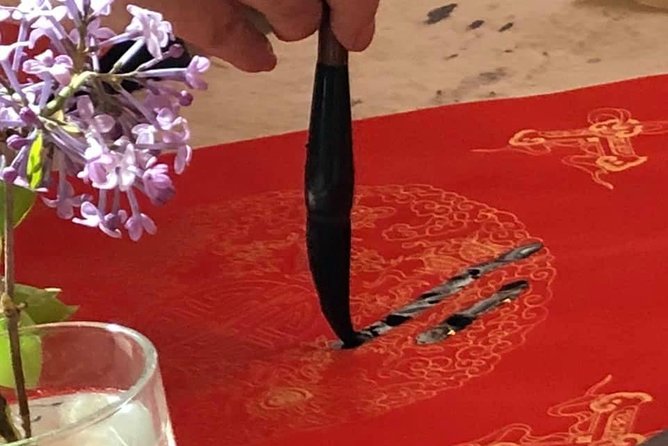
You can turn a brush and ink lesson into real Beijing memories. This small-group Chinese calligraphy class pairs hands-on practice with a calm, philosophy-style routine, and you leave with your own written piece to take home.
I especially like the small group size (max 15) because you get personal correction on posture and stroke work, not just a demo. Another big win is the flexible lesson length, from a quick 30 minutes up to 2 hours, so you can match it to a sightseeing day. The only real drawback is that the experience is mostly focused on instruction and practice time, so if you want lots of wandering and photo stops, you may find it a bit too focused.
In This Review
- Key points worth knowing before you book
- Why a Beijing Chinese calligraphy class feels practical, not precious
- Meeting at Hilton Beijing Wangfujing, and then finding the studio
- The lesson flow: inner calm first, then posture, then real stroke practice
- Step 1: Standing exercise with yin-yang ideas
- Step 2: Posture, brush handling, and the base strokes
- Step 3: Practice time, with tea
- Choosing your class length: 30 minutes can work, but longer is better
- What you actually take home: a real finished piece, not just a photo
- Small-group attention: how the 15-person limit changes your results
- What to expect from the teacher, based on what’s been praised
- The mindfulness angle: why the yin-yang part can actually help your strokes
- Price and value: $20 for supplies, coaching, and a take-home souvenir
- Getting the most out of your calligraphy class on a Beijing day
- Should you book this Chinese calligraphy class in Beijing?
- FAQ
- How long is the Chinese calligraphy class?
- Where does the class meet?
- Is the class small-group size limited?
- What’s included in the class price?
- Will I be able to participate if I’m a beginner?
- Is there an age requirement for children?
- Can I cancel for a full refund?
Key points worth knowing before you book
- Max 15 students means more attention on your brush grip, posture, and the basics of each stroke.
- Pick your length and time (morning, afternoon, or evening options) so it fits neatly around temples, markets, and meals.
- Step-by-step approach includes a standing exercise tied to yin-yang ideas, then posture, then practice.
- Supplies are handled so you’re not hunting for brush, ink, or paper in the middle of your trip.
- Tea and photos show up in many sessions, and you end up with a finished souvenir you can display.
- Meeting point is fixed at Hilton Beijing Wangfujing, so you’ll want to plan your arrival with care.
Other Beijing trips our reviewers kept returning to
- Chinese Calligraphy Class for Small Group★ 5.0 · 104 reviews
- Beijing: Dumpling Making Workshop with Meal and Tea★ 4.7 · 69 reviews
- Online Cooking Class Beijing Dumplings and Cuisine by Sunflowerli Renowned Chef★ 5.0 · 65 reviews
- Beijing Wangfujing Calligraphy Class by Forbidden City★ 5.0 · 58 reviews
Why a Beijing Chinese calligraphy class feels practical, not precious
Chinese calligraphy can sound like an art you either already have talent for, or you don’t. In reality, the best lessons break the skill into small parts. This class does that.
You start with the body basics first: how to hold yourself, where your arm sits, and how you move the brush. Then you learn the foundation strokes, which are the building blocks behind every character. Once those mechanics click, the rest becomes practice, not mystery.
The other thing I like is the overall tone. It’s not a museum lecture. It’s you, ink, paper, and a teacher who can point at your hand and say, adjust this. One review summed up the feeling well, you actually get to feel the brush and ink on paper, which is what you should aim for in any hands-on cultural activity.
Meeting at Hilton Beijing Wangfujing, and then finding the studio
The class meets at the Hilton Beijing Wangfujing, at the hotel lobby entrance area. The location is convenient if you’re staying around Wangfujing, and it’s described as near public transportation.
That said, do one small thing to save stress: when you’re walking there, pay attention to building numbers. One helpful note from a prior participant is that the arrival instructions can point you to the road, but not the exact spot. The arts center location has an entrance that’s shared with a mixed martial arts club, and there are restaurants on either side. If you arrive and the first entrance you see doesn’t match, keep looking for the correct building number.
If you’re the type who likes to be early (you should be), you can give yourself time to confirm you’re at the right door before class starts.
The lesson flow: inner calm first, then posture, then real stroke practice
The class runs as a structured routine with three main steps. You can think of it as: reset your body, set your technique, then produce something you can take home.
Step 1: Standing exercise with yin-yang ideas
Before you pick up the brush, you’ll do a standing exercise. The goal is to help you find calm and loosen the impatience that comes from rushing. This part is tied to yin-yang theory, framed as a way to center yourself rather than just a philosophy lecture.
If you tend to run on adrenaline during travel days, this is a nice counterweight. It also makes a difference for calligraphy, because your strokes look smoother when you’re not holding tension in your shoulders and wrists.


Step 2: Posture, brush handling, and the base strokes
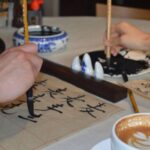
Next comes the practical section. Your art teacher shows you the correct posture for calligraphy practice and how to use the writing brush. You also learn the basic stroke approach, which is the difference between randomly filling space and writing with control.
This is where the small-group format pays off. When you only have one or two people sharing the attention, the teacher can correct things quickly, like the angle of your wrist or the way pressure changes during a stroke.
In multiple reviews, instructors were praised for being patient, especially with beginners. That matters because calligraphy feedback is highly physical. If your hand position is slightly off, you usually need a correction in the moment.
Step 3: Practice time, with tea
Then you practice. The class includes time for doing the strokes and working toward your finished piece. Tea is part of the experience, and reviews mention hot tea and a friendly chat atmosphere during the session.
It sounds small, but it changes the vibe. Tea slows you down just enough to focus on what you’re doing. Calligraphy is not like typing. You can’t rush quality.
Choosing your class length: 30 minutes can work, but longer is better
Your booking lets you choose the class length, with options including 30 minutes, 45 minutes, 1 hour, 1.5 hours, and 2 hours. The tour summary lists about 1 hour, but the full menu of times is wider, so check what you actually select.
Here’s how to choose:
- If you want a try-it-now souvenir, a 30-minute or 45-minute option can be a good fit. You’ll likely get through basic guidance and a smaller amount of practice.
- If you want to leave feeling like you learned something you can reuse later, pick the 1 hour or longer option. One review specifically advised doing the hour, since 30 minutes felt too short.
- If you’re traveling as a family or want more coaching time, the longer sessions tend to be more satisfying. People also mention adding extra time during their lesson when they enjoyed it.
If you’re cramming Beijing sightseeing into a tight schedule, the flexible time slots are a real advantage. Morning, afternoon, or evening class options let you plug this activity into the rest of your day instead of rearranging everything around it.
What you actually take home: a real finished piece, not just a photo
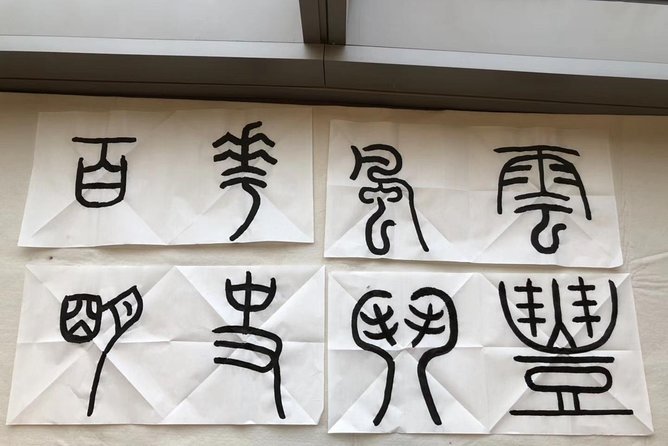
The overview promises you’ll walk away with a special memento, and the class uses calligraphy supplies during the session. In practice, you end up with a finished work you can take home to hang or display.
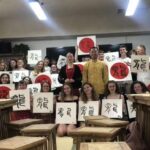
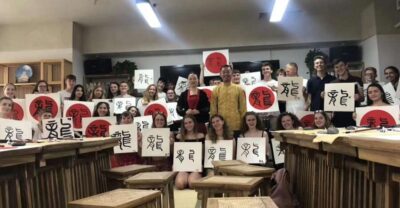
What that “final product” looks like can vary. Reviews describe outcomes like a canvas with your written word and also large red hanging ornament pieces that participants painted. The common thread is that you produce something you can bring back, so the class doesn’t feel like a one-hour performance where you leave empty-handed.
If you plan to display your piece at home, do a quick check before you start: ask what the final format will be and how to handle it for transport. Ink and paper are easy to damage if you fold or press them in a crowded bag.
Also, if photography matters to you, note that reviews mention instructors taking lots of pictures for memory keeping. If that’s important, it’s smart to ask for it near the start so you have time for a few good shots.
Small-group attention: how the 15-person limit changes your results
The experience caps at 15 travelers. That might not sound tiny at first, but for a brush-and-ink skill, it’s the difference between:
1) watching the teacher write, and
2) having your technique corrected while you practice.
Most reviews emphasize patience and careful instruction. That fits the pattern of small-group teaching. Beginners usually need repeat guidance: grip, posture, then stroke order or pressure. With a larger group, you often wait your turn.
If you’re worried about feeling awkward trying something new, don’t. Calligraphy is built for beginners. The goal is not to write like a master in one class. It’s to learn control and walk away proud of what you made.
What to expect from the teacher, based on what’s been praised
The teacher role is central here. The experience is described as having an excellent art teacher, and reviews praise instructors for being attentive, patient, and willing to explain cultural meaning alongside the techniques.
You might meet instructors such as Richard, David, or Robert Lee, depending on the session. The common praise across names is how they teach beginners, stay patient when someone needs extra time, and explain the “why” behind the strokes and the calm routine.
A few small extras show up in reviews:
- hot tea during the session
- help settling you if you’re running late
- lots of photos for memories
- practice challenges that make the hour feel fun, not just instructional
Those are not always guaranteed every time, but the pattern is consistent. When you’re choosing a calligraphy class, that teacher care is usually what determines whether the lesson feels worth your time.
The mindfulness angle: why the yin-yang part can actually help your strokes
Some cultural activities include a mindfulness segment that feels decorative, like a timed breathing exercise. Here, the standing exercise connects to the calligraphy practice.
If your goal is to write with steady brush movement, you want your body calm and your posture stable. The standing exercise is basically a technique support tool. It’s also a cultural doorway. The lesson frames it with yin-yang ideas linked to inner peace and getting rid of impetuous energy.
You don’t need to be into philosophy to benefit. Just treat it like a physical warm-up. When your shoulders drop and your wrist relaxes, your strokes tend to look more intentional. That’s what you’ll notice on your paper.
Price and value: $20 for supplies, coaching, and a take-home souvenir
At $20 per person, this is priced in the “best kind of affordable” range. The big value factor isn’t just the instruction. It’s that calligraphy supplies are included, and you’re expected to leave with a finished memento.
In many cities, if you pay for a short workshop without materials, you’ll still spend extra for paper, brush, ink, and a finished output. Here, the class is structured so you practice during the time you pay for, with materials provided.
The other value lever is the class length. If you only do 30 minutes, the lesson is shorter and you may feel you rushed the learning. If you can swing it, choosing the 1 hour or longer option often feels like better value because you get time for both technique and finish work.
Also, the group size limit means your teacher time is less diluted. In skill classes, that’s what you should pay for.
Getting the most out of your calligraphy class on a Beijing day
This is a good activity when you want one calm block of time in a trip full of motion. You can fit it next to other Beijing highlights, especially if you’re already around Wangfujing.
Practical tips to keep it smooth:
- Wear clothing that lets you move your arms freely and comfortably. Your posture matters.
- Arrive a bit early, so you’re not rushing into Step 1.
- Bring a bag you can protect paper in. If you take a canvas or ornament home, you’ll want it flat.
- If you’re taking photos, do it lightly during the writing section. Too much distraction can throw you off.
One of the underrated pleasures of calligraphy is how it slows your brain down. The hour or so you spend writing gives you a different angle on Beijing than the usual sightseeing snap.
Should you book this Chinese calligraphy class in Beijing?
Book it if you want a hands-on cultural experience with personal coaching, included supplies, and a take-home result. It’s also a strong choice if you like the idea of connecting technique to mindset through yin-yang ideas and calm posture work.
Skip it only if your priority is pure sightseeing time. This class is about learning and creating, not roaming.
If you can, choose the longer option. Many people start with a shorter time and wish they had more practice. Even if you’re a first-timer, that extra time helps you get from instructions to actual control, and you’ll enjoy the finished piece even more when you see it in your hands.
FAQ
How long is the Chinese calligraphy class?
Class lengths are offered in multiple options, including 30 minutes, 45 minutes, 1 hour, 1.5 hours, and 2 hours.
Where does the class meet?
The meeting point is at the Hilton Beijing Wangfujing Hotel lobby entrance area in Beijing.
Is the class small-group size limited?
Yes. The activity has a maximum of 15 travelers.
What’s included in the class price?
The price includes the art teacher, calligraphy instruction for your chosen time length, and calligraphy supplies to use during the class.
Will I be able to participate if I’m a beginner?
Most travelers can participate. The class is designed as an instruction session with guidance on posture, brush use, and basic stroke practice.
Is there an age requirement for children?
Children must be accompanied by an adult.
Can I cancel for a full refund?
You can cancel for a full refund up to 24 hours in advance of the experience start time.
More Workshops in Beijing

More Tour Reviews in Beijing



Beijing, reviewed one booking at a time
- Xian: Must see Eternal Love or Camel Bell Legend show Ticket
★ 5.0 · 3 reviews - One day tour to downtown Tianjin from Beijing by high speed train
★ 5.0 · 3 reviews - Ming Tombs Sacred Way & Underground Palace & Water Wall P Tour
★ 5.0 · 3 reviews - Beijing Mutianyu Great Wall Small Group Tour
★ 4.5 · 3 reviews - Return Bus to Badaling Great Wall
★ 3.0 · 3 reviews - Private Tour to Lama Temple, Tian’anmen Square and Forbidden City
★ 5.0 · 3 reviews
Workshops, compared.
 ★ 5.0Half-Day Chengdu Cooking Class with a Local Market VisitFrom $90465 reviews
 ★ 4.9Beijing Calligraphy ClassFrom $20112 reviews
 ★ 4.7Beijing: Dumpling Making Workshop with Meal and TeaFrom $3569 reviews
 ★ 5.0Online Cooking Class Beijing Dumplings and Cuisine by Sunflowerli Renowned ChefFrom $2065 reviews
 ★ 5.0Beijing Wangfujing Calligraphy Class by Forbidden CityFrom $2058 reviews
 ★ 5.0Beijing Wangfujing Calligraphy Class Nearby Forbidden CityFrom $3556 reviews
 ★ 4.8Chinese Kungfu class in old temple beside Forbidden CiFrom $4553 reviews
 ★ 5.0Lijiang Naxi Cuisine Cooking Class & Market VisitFrom $5948 reviews
Browse the lists this tour appears in