
REVIEW · WORKSHOPS
Noon Calligraphy Class
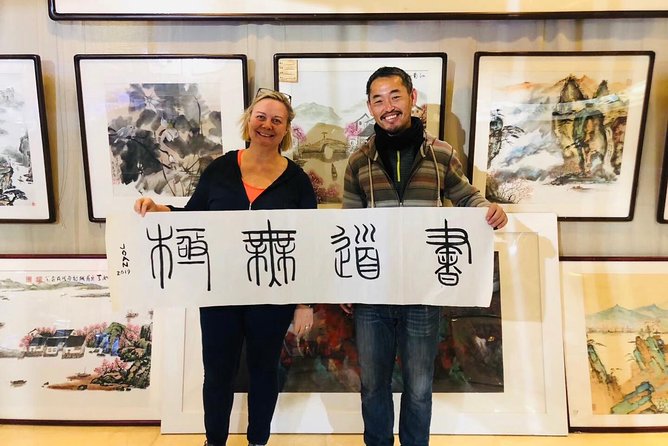
Chinese calligraphy is surprisingly calming. This Beijing class puts you at a desk with ink, brush, and rice paper, guided by an art teacher so you can actually write something yourself. I really liked the hands-on practice and the cultural meaning you get while forming strokes, especially in sessions led by teachers like Richard. One consideration: the class comes in several lengths, so if you choose the shortest option, you’ll have less time for practice.
You can pick among daily time slots, which makes this a smart midday break around Wangfujing. The group stays small (max 15), and you can ask questions while you learn basics like brushes, ink stones, and rice paper. If you’re traveling with kids, this can work well too, since children must be accompanied by an adult.
The Hutong Calligraphy Class sits in downtown Beijing, with the meeting point at Hilton Beijing Wangfujing. Expect a focused hour at the table, not a big sightseeing circuit, but you’ll leave with a finished piece you can take away.
In This Review
- Quick take: what makes this Beijing calligraphy class work
- A Midday Break in Wangfujing for Real Brush Practice
- Price and Value: Why $20 Is a Fair Deal for This Skill
- Pick Your Time Slot and Class Length Without Stress
- The Hutong Calligraphy Class: Ink Stones, Brushes, Rice Paper, and Seals
- Meeting Your Teacher: Richard, Li, and the Lesson Style That Actually Works
- What You Take Home, and How to Use It After
- Who Should Book This Noon Calligraphy Class in Beijing
- Should You Book This Noon Calligraphy Class?
- FAQ
- How long is the calligraphy class?
- How much does the class cost?
- Where do I meet for the class?
- Is the class limited to a small group?
- What’s included in the price?
- Can children join?
- How does cancellation work?
Quick take: what makes this Beijing calligraphy class work
- Small-group format (max 15) helps you get attention while you practice strokes
- Teacher-led instruction with Q&A keeps beginners from feeling lost
- Materials are provided so you can focus on learning ink, brush, and rice paper technique
- Several time lengths (30 minutes, 1 hour, 1.5 hours) let you match your schedule
- A take-home final piece gives you something tangible to remember the experience
- A relaxed mood is part of the payoff, often described as meditative
Other Beijing trips our reviewers kept returning to
- Beijing Calligraphy Class★ 4.9 · 112 reviews
- Chinese Calligraphy Class for Small Group★ 5.0 · 104 reviews
- Beijing: Dumpling Making Workshop with Meal and Tea★ 4.7 · 69 reviews
- Online Cooking Class Beijing Dumplings and Cuisine by Sunflowerli Renowned Chef★ 5.0 · 65 reviews
A Midday Break in Wangfujing for Real Brush Practice
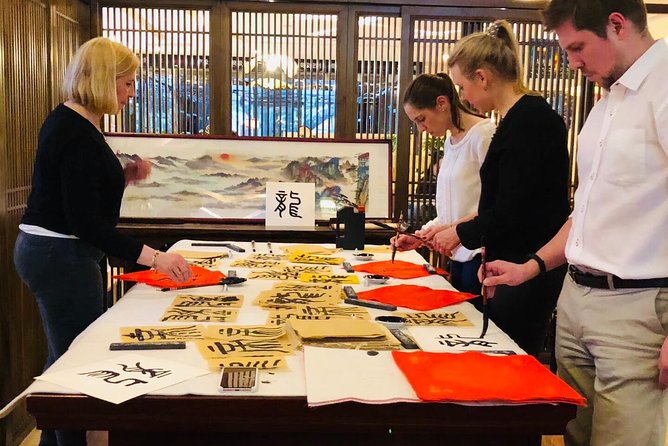
If you want a Beijing experience that feels personal instead of checklist-tourish, this is a great option. The whole point is to slow down and make marks correctly, stroke by stroke, with guidance from an art teacher. It’s also handy that you can choose from multiple daily class times, so you can fit it around your other plans, including midday.
What makes it especially appealing is that calligraphy isn’t just copying characters. You’re learning how Chinese writing works as art. The class frames calligraphy as a physical language, where brush movement, ink flow, and rhythm matter. That sounds abstract, but once you’re holding the brush, it becomes very concrete.
I also appreciate that it’s not a “watch and applaud” situation. This is practice time. You’ll do exercises and then build toward a final work. Reviews highlight that students do quite a bit of repetition before completing a piece, which is exactly what beginners need.
One more practical win: the meeting point is Hilton Beijing Wangfujing, and the class is in central downtown Beijing. That makes it easier to plug into a day without complicated logistics.
Price and Value: Why $20 Is a Fair Deal for This Skill
At $20.00 per person, this is priced like a focused workshop rather than a long guided tour. You’re getting an admission ticket, teacher guidance, and calligraphy supplies used during class. For many visitors, that supply list is the part that would be annoying to handle yourself, because ink stones, brushes, and rice paper are not the easiest things to buy and learn with on your own.
You also get real practice time. If you book the 1-hour (approx.) option, you have enough time to get instruction, try several strokes, and then complete a take-home piece. If you have more time and want to improve what you can do, the longer 1.5-hour option is a nice choice because it gives you breathing room for more attempts.
I’d call it good value if you match the activity to your goal. If your goal is to stroll through a historic neighborhood and only dabble, this may feel like too much sitting. If your goal is to create something Chinese calligraphy-related that you can actually keep, it’s a strong deal.
One small note to keep your expectations lined up: because it’s a short class, you’re not leaving as an expert. You are leaving with better control and a finished piece, which is a totally different (and more satisfying) win.
Pick Your Time Slot and Class Length Without Stress
This isn’t locked into one strict schedule. You can select among multiple daily class times, and you can also choose the class length when you book: 30 minutes, 1 hour, or 1.5 hours.
That choice matters more than it sounds. Here’s how I’d think about it:
- 30 minutes is best if you want the experience quickly and are okay with fewer practice rounds.
- 1 hour is the sweet spot for most people, since it matches the common “about 1 hour” duration.
- 1.5 hours is your best bet if you learn slowly, want more corrections, or want a more complete feeling of what the teacher is teaching.
The class is designed for most travelers, but you’ll want to plan around the group format. It caps at 15 travelers, so the teacher can work with you while keeping the pace moving.
You’ll meet at Hilton Beijing Wangfujing (王府井东街8号, 100006). The activity ends back at the same meeting point, which is convenient if you’re trying to connect smoothly with the rest of your day.
You’ll also receive confirmation at booking time, and you’ll use a mobile ticket. That reduces the hassle on arrival, especially if you’re navigating Beijing while already tired from walking.
The Hutong Calligraphy Class: Ink Stones, Brushes, Rice Paper, and Seals
This class is built around the core tools of Chinese calligraphy. You’ll learn how to work with ink strokes, brushes, rice paper, and ink stones. The teaching approach is practical: the teacher demonstrates, then you repeat until the strokes look more like what they’re aiming for.
A standout topic here is seal carving. The class includes guidance related to seal carvings, which many beginners have never even seen. Seals are an important part of Chinese calligraphy culture, and even a basic introduction helps you understand why calligraphy is not only about legible characters, but also about identity, style, and tradition.
You’ll also get a cultural frame for what you’re doing. The class describes calligraphy as a tangible expression of language, where time and rhythm show up in the traces left on silk or paper. In practical terms, it means the class emphasizes motion and consistency. Instead of thinking only about spelling, you start thinking about how the brush travels.
The setting is in downtown Beijing, at No. 8 Wangfujing Dongjie, Dongcheng District. That location is part of why this is so easy to pair with other activities in the same general area. You’re not forced into a long trip just to try calligraphy for an hour.
Also, the class gives you a chance to ask questions. That’s not a small detail. When you’re trying to coordinate hand motion and brush pressure, curiosity helps you improve faster, and it keeps the class from turning into silent copying.



Meeting Your Teacher: Richard, Li, and the Lesson Style That Actually Works
The most praised part of this experience is the teacher. Reviews repeatedly mention an excellent art teacher and highlight kindness, clarity, and practice-focused instruction.
In some sessions, you may be taught by Richard, who comes across as kind and informative. Students describe him as giving lots of practice before the final piece, which is exactly the right structure for calligraphy beginners. If you’ve ever taken a class where you’re thrown into the “final project” too quickly, you’ll appreciate this pacing.
Other sessions may be led by Li, and students mention that the instructions are practiced and steady. That matters because calligraphy is physical. If your instruction is inconsistent, your strokes can look inconsistent too. A practiced approach keeps your learning on track.
One thing I like about the teaching style is the emotional tone. Reviews describe the class mood as light-hearted, then calming as students settle down. That matches how calligraphy works best. You need a relaxed mind to keep your hand steady, especially when you’re trying to get the stroke direction and tempo right.
You’re also not limited to one kind of learning. Some classes include explanation of deeper meaning behind the words being written. Even if you don’t understand every cultural nuance at first, that context helps your brain care about the strokes you’re making.
What You Take Home, and How to Use It After
The biggest practical reward is that you finish a piece and you can take it home. That’s the difference between calligraphy as a performance and calligraphy as a skill you try for yourself. You’ll have a tangible object that represents what you practiced in the class.
You also leave with a better sense of how hard calligraphy actually is. That sounds negative, but it’s honest. When you feel the drag of ink on rice paper and the way each stroke has a start, travel, and finish, you realize why Chinese calligraphy has such artistic weight.
If you’re thinking about what to do with your finished work after, you’ll have options. You can frame it, display it, or even gift it. It also makes a great memory marker for a trip, because it’s something you created, not something you only looked at.
One more small benefit: the calm feeling carries over. Students describe it like morning meditation, with the drawing process felt almost meditative. Even if you’re not chasing mindfulness, it’s a nice mental reset in the middle of a busy sightseeing day.
Who Should Book This Noon Calligraphy Class in Beijing
This class fits best if you want something hands-on, cultural, and low-stress. It’s ideal for:
- Beginners who want clear instruction and practice
- People who like calm activities, not loud, crowded tours
- Couples and friends who want to do something creative together
- Families with children, as long as kids are accompanied by an adult
- Rainy-day planners, since it’s a simple indoor activity with a relaxed pace
It may be less ideal if you:
- Want long, moving sightseeing with lots of stops
- Expect an advanced workshop focused on professional-level technique
- Need a completely English-only explanation style with no visual teaching support (the class is teacher-led, but exact language support isn’t specified)
That said, the structure is beginner-friendly. Most travelers can participate, and the small group size helps the teacher guide you as you go.
Should You Book This Noon Calligraphy Class?
Yes, if you want a real Beijing experience where you make something with your own hands. At $20 per person, with supplies included and a teacher who guides you through strokes and meaning, it’s a good value for the time.
I’d book it if you can spare at least 1 hour. The 1-hour option is often the best match for the payoff, especially if you want enough practice to produce a take-home piece. If you’re the type who likes extra repetition, choose the 1.5-hour class.
If your schedule is tight and you just want a quick taste, the 30-minute option can still work. Just go in knowing you’ll have less time for practice.
If you’re in Beijing around Wangfujing and you want something authentic that doesn’t require museum stamina, this is one of those activities that turns into a highlight fast.
FAQ
How long is the calligraphy class?
You can choose among 30 minutes, 1 hour, or 1.5 hours when you book. The activity is also commonly listed as about 1 hour.
How much does the class cost?
The price is $20.00 per person.
Where do I meet for the class?
You meet at Hilton Beijing Wangfujing, Wangfujing Dongjie 8, Dongcheng District, Beijing (postal code 100006).
Is the class limited to a small group?
Yes. The class has a maximum of 15 travelers.
What’s included in the price?
The class includes an admission ticket, the teacher-led calligraphy session for the time you choose, and calligraphy supplies to use during class.
Can children join?
Children are allowed, but they must be accompanied by an adult.
How does cancellation work?
Free cancellation is available if you cancel up to 24 hours in advance of the experience start time for a full refund. Changes made less than 24 hours before start time are not accepted.
More Workshops in Beijing
More Tour Reviews in Beijing



Beijing, reviewed one booking at a time
- Xian: Must see Eternal Love or Camel Bell Legend show Ticket
★ 5.0 · 3 reviews - One day tour to downtown Tianjin from Beijing by high speed train
★ 5.0 · 3 reviews - Ming Tombs Sacred Way & Underground Palace & Water Wall P Tour
★ 5.0 · 3 reviews - Beijing Mutianyu Great Wall Small Group Tour
★ 4.5 · 3 reviews - Return Bus to Badaling Great Wall
★ 3.0 · 3 reviews - Private Tour to Lama Temple, Tian’anmen Square and Forbidden City
★ 5.0 · 3 reviews
Workshops, compared.
 ★ 5.0Half-Day Chengdu Cooking Class with a Local Market VisitFrom $90465 reviews
 ★ 4.9Beijing Calligraphy ClassFrom $20112 reviews
 ★ 5.0Chinese Calligraphy Class for Small GroupFrom $20104 reviews
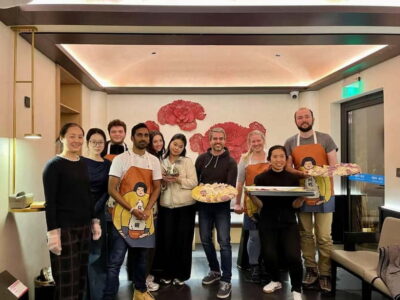 ★ 4.7Beijing: Dumpling Making Workshop with Meal and TeaFrom $3569 reviews
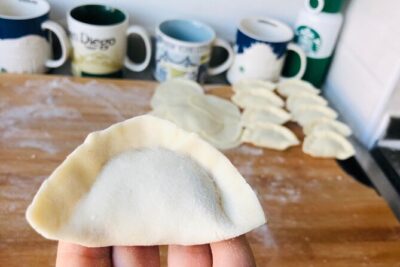 ★ 5.0Online Cooking Class Beijing Dumplings and Cuisine by Sunflowerli Renowned ChefFrom $2065 reviews
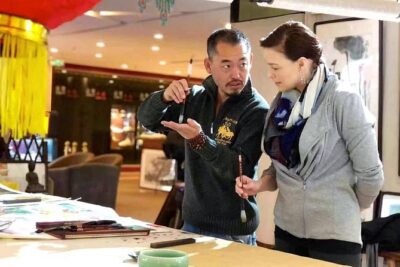 ★ 5.0Beijing Wangfujing Calligraphy Class by Forbidden CityFrom $2058 reviews
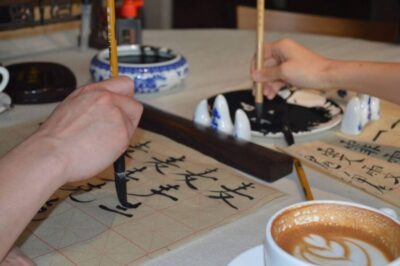 ★ 5.0Beijing Wangfujing Calligraphy Class Nearby Forbidden CityFrom $3556 reviews
 ★ 4.8Chinese Kungfu class in old temple beside Forbidden CiFrom $4553 reviews
Browse the lists this tour appears in