
REVIEW · CHINESE COOKING CLASSES & DUMPLING MAKING
Shanghai-Cooking Dumpling & Meal in Local Family-w/Vegan
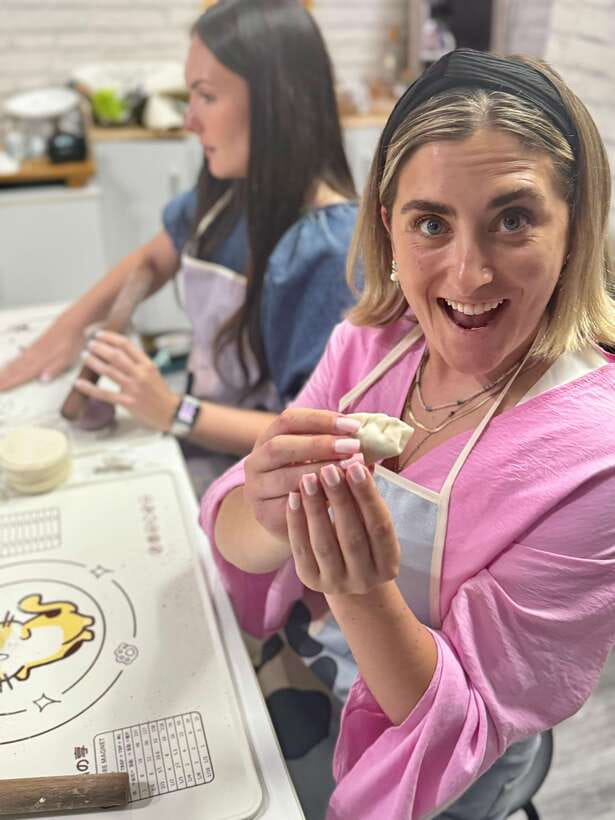
Dumplings in a real Shanghai home. In Jing’an, you get dumpling-making taught from zero to one in English, then you finish with a local meal that goes well beyond the dumplings.
This is the kind of class where food depends on the family’s plan that day, so one possible drawback is that you need to message the host after booking about allergies, vegan needs, or any specific foods you do not eat.
In This Review
- Key highlights worth your time
- Meeting Bonnie in Jing’an, and what $82 buys you
- The 2.5 hours of cooking class: from dough to pleats
- The 40 minutes of tasting: Shanghai dishes beyond your dumplings
- The travel tips you get while you cook and eat
- Dietary fit: vegan options, allergies, and what you must tell them
- Who should book this dumpling class, and who might not
- Should you book this dumpling-making family meal?
Key highlights worth your time
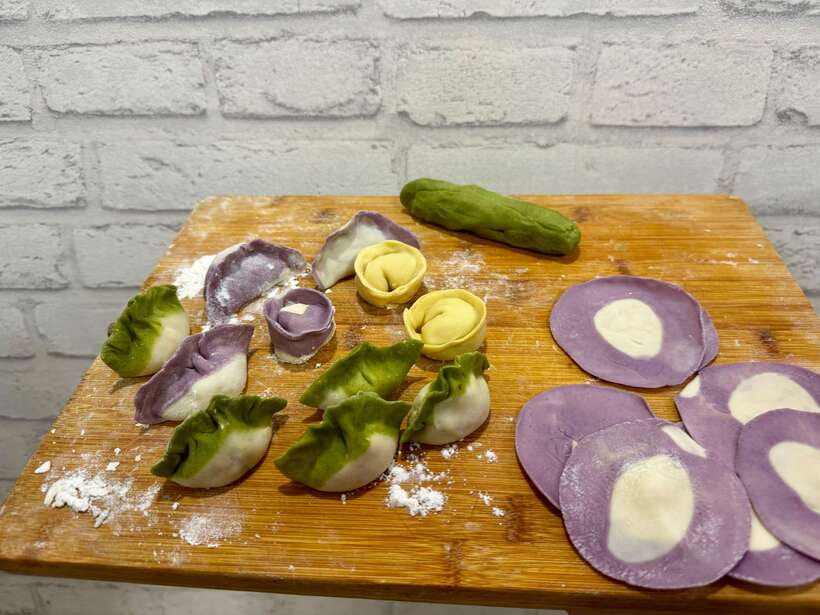
- English-led dumpling skills so you can follow the technique and not just watch
- Small group of up to 6 which means more hands-on time shaping dumplings
- Bonnie plus her family brings that home-cooking feel and family tricks for better dumpling results
- A real meal after cooking with multiple Shanghai dishes, not just the dumplings you made
- Tea, snacks, and local beverages to keep the energy up during the workshop
- Free travel tips for Shanghai and nearby cities to help you move around with less stress
More kitchens to fold dumplings in
- Shanghai-Cooking Dumpling & Meal in Local Family-w/Vegan★ 4.9 · 36 reviews
- Private Shanghai Night River Cruise and Hot Pot Dining Experience★ 5.0 · 15 reviews
- Hot Pot Dining Experience with Hot Spring Bathing or River Cruise in Shanghai★ 5.0 · 13 reviews
- 2.5hrs Chinese Kitchen Cooking Class: Xiaolongbao Soup Dumplings★ 5.0 · 12 reviews
Meeting Bonnie in Jing’an, and what $82 buys you
You start in the Jing’an area, at 兴亚广场商务楼, which is easy enough to reach once you know the nearest metro stop: Metro Line 8, 中兴路 (Zhongxing Road) station, Exit 2. From there, the experience is designed to feel like a family visit, not a classroom.
Price is $82 per person for a total of 3.5 hours. That’s not the cheapest cooking class you’ll find, but it’s also not just a brief demo. You’re paying for instruction, materials, hands-on practice, plus food during and after the class. On top of that, you get travel tips that are specifically meant to help you navigate Shanghai and surrounding cities in a practical, local way.
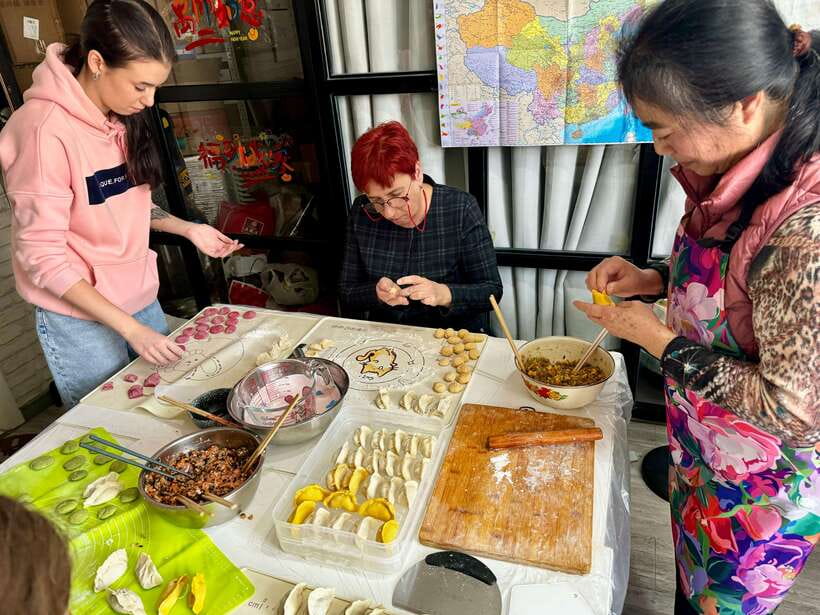
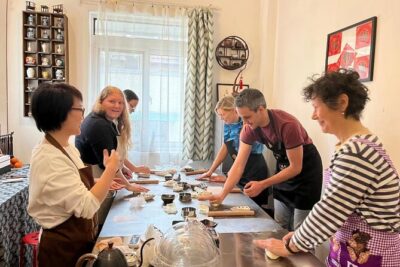
One thing I like here is the group size: up to 6 participants. In a dumpling class, that matters. More people means less attention while you’re folding pleats and sealing wrappers. A small group also makes it easier to ask questions about technique or what you’re eating.
The comfort factor is also real. This is hosted in a local home setting, guided in English by a dumpling master named Bonnie, with her mother involved in the cooking and teaching. Multiple family members may contribute, which makes the vibe warm and busy in a good way.
The 2.5 hours of cooking class: from dough to pleats
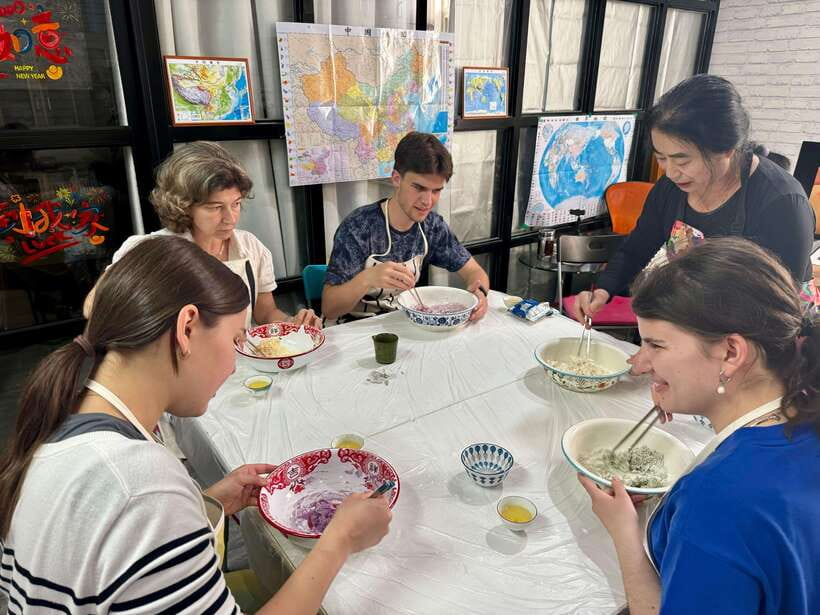
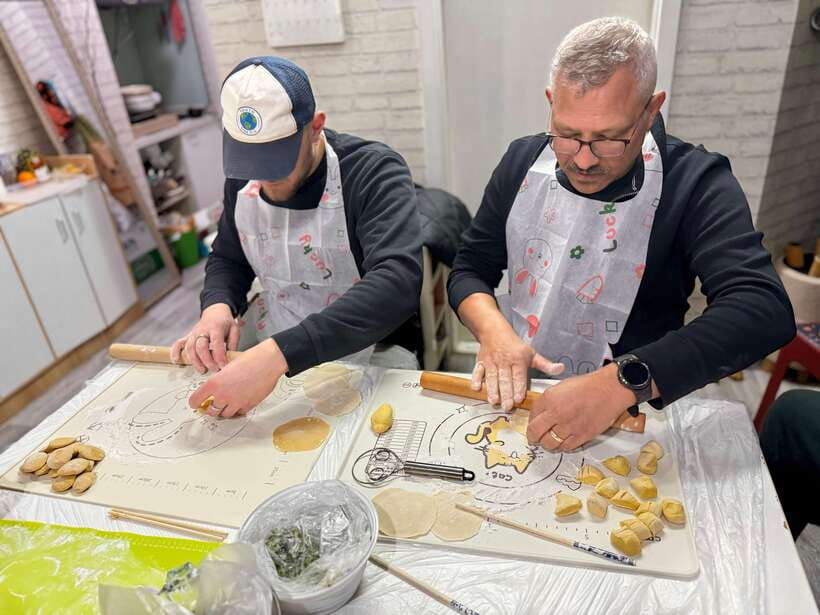
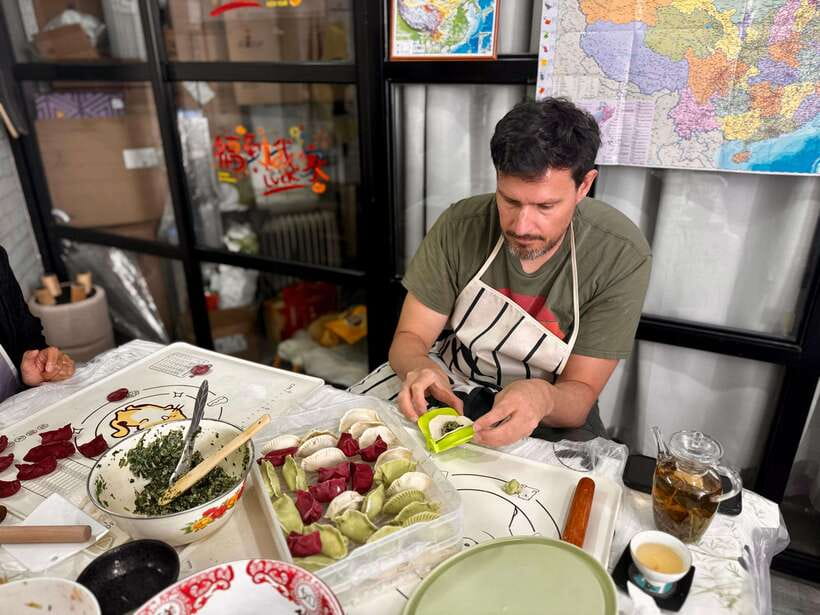
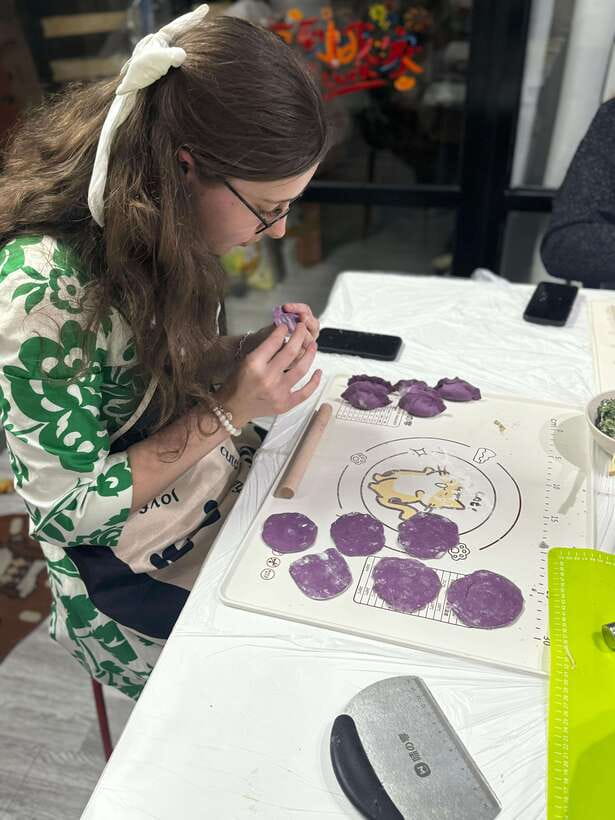
The cooking portion takes about 2.5 hours, and it’s built around doing the work yourself. You’re not just cutting, mixing, and then eating. The point is to learn how to make dumplings properly, from the foundation up.
Here’s what the class experience typically feels like:
- You begin by preparing dumpling dough and learning wrapper basics.
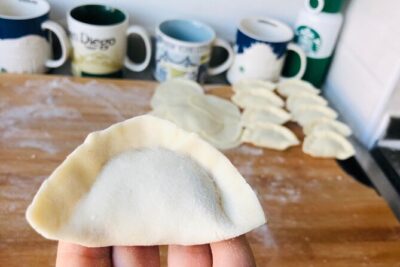
- You then shape wrappers and mix fillings guided by Bonnie.
- Finally, you form the dumplings using technique you practice yourself, with hands-on correction.
You’ll likely make more than one kind of dumpling or at least work with different fillings. In the feedback from past participants, I see a pattern: people leave feeling confident because they actually made dumplings multiple times, not once for the photo.
The best part is when the instructions click. When you’re sealing dumplings, small differences change everything. If the dough tears, the filling leaks. If the seal is too thick, it cooks unevenly. Bonnie’s style (calm, step-by-step, and very hands-on) is what helps the learning stick, especially if your Chinese cooking experience is close to zero.
You’ll also get a bit of context as you work, including how dumplings fit into Northern Chinese food culture. That background matters because it makes the technique feel purposeful instead of random motions.
Practical tip for you: wear something comfortable you can move in. You’ll be working on the table, using your hands a lot, and you’ll want to focus instead of fussing with clothing.
The 40 minutes of tasting: Shanghai dishes beyond your dumplings
After you cook, you move into about 40 minutes of food tasting, and this is where the experience stops being a simple cooking workshop. The meal is meant to show you more of Shanghai (and Northern Chinese) flavors, not just celebrate your dumpling skills.
From what’s been shared by past participants, the table can include a mix of:
- century eggs and salted eggs
- stinky tofu
- mushrooms and pork
- jellyfish with cucumber
- chicken
- tofu noodles with pak choi (bok choy)
- lotus root with spicy seaweed
And of course, you eat the dumplings you made as part of the spread.
Two reasons this is valuable for you. First, tasting helps you understand what you just learned. If your dumplings were shaped a certain way and you can taste how the filling behaves, technique starts to make sense. Second, Shanghai food is not only dumplings. You get a wider taste of local dishes, plus the chance to ask questions about unfamiliar items while you’re still in the home environment.
If you’re wary about trying strong flavors, take it step by step. Options can include very aromatic items like stinky tofu, and some dishes will be savory and intense. The upside is that this is a guided meal, with Bonnie available to explain what you’re eating and what to expect.
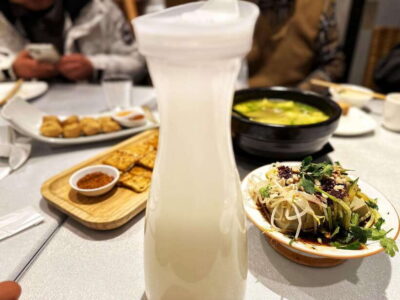
Drinks are included too. Tea is part of the experience, and some participants also mention rice wine alongside the tea. If you avoid alcohol for personal reasons, message the host in advance so you’re not surprised by what’s offered.
The travel tips you get while you cook and eat
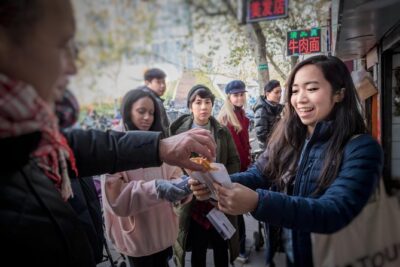
One of the smartest inclusions here is not food at all, it’s navigation. You get free travel tips tailored from a local perspective, aimed at helping you avoid the worst crowd patterns and still see the places that matter.
The guidance can cover:
- hidden local delicacies tucked away in alleys
- modern art exhibitions
- classic gardens
- skyscraper observation decks
What you can do with that, practically, is plan your days more confidently. Cooking classes often end with a few generic suggestions. This one is framed as you being a temporary Shanghai expert, with suggestions that match your interests.
Because the tips are happening in the same space where you’re asking questions, you can get clarity fast. You’re not trying to interpret a map later, after your energy is gone. Instead, you can ask about which sites fit together, what to see first, and how to move through the city without turning your trip into a queue-hopping contest.
Other Shanghai trips our reviewers kept returning to

Dietary fit: vegan options, allergies, and what you must tell them
This is the part you should treat seriously, because it’s the only real “gotcha” category in the data provided.
The host asks you to contact them after you book to share:
- allergies
- vegan needs
- any specific foods you don’t eat
This matters because dumpling filling and the extra dishes at the table can be very ingredient-specific. If you don’t tell them, you risk getting options that are technically vegetarian but not vegan, or dishes that contain ingredients you can’t eat.
Good news: the class is set up to handle these requests when you communicate clearly in advance. Past participants mention that preferences and allergies were asked for, and that there are vegetarian and non-vegetarian options.
You’ll reach out via WhatsApp, so you can keep it simple and direct. If you’re vegan, say what you avoid (for example, eggs and dairy if relevant). If you have allergies, list them clearly. That message is the bridge between a great meal and a stressful one.
Who should book this dumpling class, and who might not
This fits best if you want:
- hands-on cooking instruction, not just a watch-and-learn demo
- a small group experience in a local home
- more than dumplings for dinner, with real Shanghai dishes after cooking
- an English-speaking guide who can explain technique and culture as you go
- added value in the form of Shanghai travel tips you can use right away
It can be especially good for first-time visitors to Shanghai who feel overwhelmed by the sheer number of things to see. The travel suggestions help you connect the cooking experience to a broader trip plan.
Who might hesitate? If you have strict dietary restrictions and you’re not comfortable messaging the host right after you reserve, then this will be harder to manage. Also, if you avoid strong-smelling foods entirely, you might find some dishes on the tasting table challenging, since items like stinky tofu are known to appear.
Should you book this dumpling-making family meal?
If you want a meaningful Shanghai experience that goes beyond tourist checklists, I’d book it. The combination is hard to beat: small group, real hands-on dumpling-making from scratch, a guided meal with multiple local dishes, and travel tips from Bonnie while you’re already in the home setting.
Do book it if:
- you’re excited to learn technique, not just eat
- you’re okay with a home-cooking menu that can vary day to day
- you message the host on WhatsApp with your vegan needs or allergies
I would skip or reconsider if:
- you cannot communicate dietary needs after booking
- you dislike unfamiliar regional foods and strong flavors, and you’re not comfortable asking for adjustments
Bottom line: this is value in the way it’s built. You’re paying for time, instruction, ingredients, and a real local meal, plus you leave with practical Shanghai guidance you can actually use.
More Food in Shanghai

More Tour Reviews in Shanghai




More Kitchens, More Dumplings

Shanghai, reviewed one booking at a time
- Zhujiajiao Water Town and Shanghai City Highlights Private Day Tour
★ 5.0 · 3 reviews - Zhujiajiao Water Town Private Tour with Local Farm Visit and Fruit Picking
★ 5.0 · 3 reviews - Tongli Water Town Self-Guided Tour with Private Transfer from Shanghai
★ 5.0 · 3 reviews - Shanghai by Night with Fine Local Dinner and VIP River Cruise Experiences
★ 5.0 · 3 reviews - Shanghai Acrobatic Show Tickets
★ 5.0 · 3 reviews - Private Shanghai Layover Tour to Zhaojialou Water Town with Lunch or Dinner
★ 5.0 · 3 reviews
Chinese Cooking Classes & Dumpling Making, compared.
 ★ 4.4Xi’an: Great Tang Dynasty Night Show & Dumpling Meal OptionFrom $34177 reviews
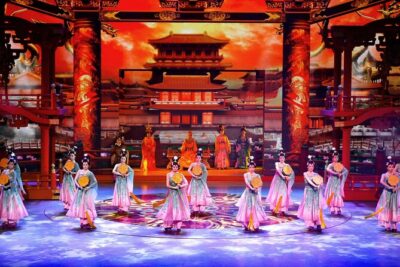 ★ 4.5Xi’an Tang Dynasty Show Ticket Optional Dumplings or Royal DinnerFrom $3775 reviews
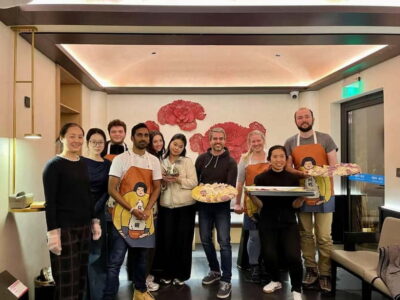 ★ 4.7Beijing: Dumpling Making Workshop with Meal and TeaFrom $3569 reviews
 ★ 5.0Online Cooking Class Beijing Dumplings and Cuisine by Sunflowerli Renowned ChefFrom $2065 reviews
 ★ 4.9Beijing Hutong Food Crawl Delights: Peking duck, Hotpot&MoreFrom $8032 reviews
 ★ 4.5Skip the Line: Xi’an Tang Dynasty Show Ticket & Dumpling Dinner or Royal BanquetFrom $3728 reviews
 ★ 4.0Xi’an Dumpling Banquet and Tang Dynasty ShowFrom $10121 reviews
 ★ 5.0Vegan Soup Dumpling Making in ShanghaiFrom $9617 reviews
Browse the lists this tour appears in