
REVIEW · LHASA & THE TIBETAN PLATEAU
15 Days Mt Everest and Mt Kailash Kora Pilgrimage Group Tour
Two holy mountains in one trip feels impossible. This 15-day Tibet group tour strings together classic Lhasa sights with Everest Base Camp camping and a real Mt. Kailash Kora trek, all while keeping the logistics simpler through shared transport, an experienced guide, and included permits. I like that it is built as a full circuit, not just a quick highlights reel, and you get both the sacred and the hard-to-reach parts of western Tibet.
I also like the practical safety net for high altitude, including an oxygen tank for emergencies and a provided sleeping bag. The only drawback to take seriously is the effort level and altitude, with multiple passes above 4,600m and the 5,630m Dromala pass during the Kora trek, plus a paperwork timeline tied to the Tibet Travel Permit.
In This Review
- Key Things I’d Prioritize About This Tour
- The Big Picture: Why This Everest Plus Kailash Plan Makes Sense
- Lhasa Arrival and the Lhasa Classics: Where Tibet Starts to Feel Real
- Drepung Monastery, Tibet Museum, and Norbulingka
- Potala Palace, Jokhang Temple, and Barkhor Street
- A small caution for Lhasa days
- The Lhasa to Shigatse Route: Yamdrok Yumtso, Glaciers, and a Strong Stop in Gyantse
- What to watch for on this day
- Into the Everest National Nature Reserve: High Passes and Base Camp Camping
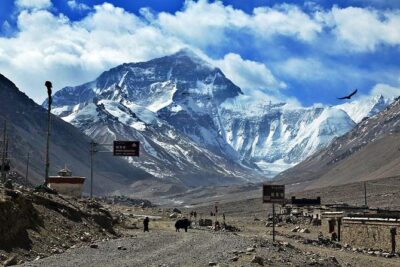
- Everest Base Camp sunrise, then Saga and Shishapangma views
- The value of including oxygen
- The Long Road to Kailash: Patience Pays Off
- Kailash Kora Trek: Eco-Bus, Porters and Yaks, and the Dromala Pass Challenge
- Day 8: Eco-bus to Sarshung Valley and the trek start
- Day 9: The hardest day, Dromala pass at 5,630m
- Day 10: Manasarovar, an easier trek segment, and finishing the Kora circle
- Trek logistics that the tour actually helps with
- Sakya and the North Route Back to Lhasa: Less Famous, Still Memorable
- The Lhasa Free Day and the Wrap-Up Transfer
- Price and Logistics: Does $2,280 Really Add Up?
- Who This Tour Fits Best, and Who Might Struggle
- Should You Book This Everest and Kailash Tour?
- FAQ
- What are the trip start and end arrangements?
- Are airport transfers included?
- How large is the group?
- Does the tour include Tibet permits and required documents handling?
- Is oxygen provided for emergencies?
- What sleeping and trek gear is included?
- Are entrance fees and breakfasts included?
- If I cancel, is it refundable?
- Is there an extra cost for solo travelers?
Key Things I’d Prioritize About This Tour
- Small group, max 12 people, which helps at monasteries, on long drives, and during the trek logistics
- All entrance fees and permits handled, including government tax and permit express delivery
- Oxygen tank plus sleeping bag included, useful for peace of mind at altitude
- Everest Base Camp camping day paired with sunrise timing that depends on weather
- Kailash Kora itinerary built around real altitude work, including the Dromala pass at 5,630m
- A mix of accommodation styles, from hotels and guesthouses to tent nights on the Everest and Kailash sides
More of the plateau, reviewed
- Tibet Tour 8 Days Lhasa to Everest Base Camp Small Group Tour★ 5.0 · 578 reviews
- 4 Days Lhasa City Essential Group Tour★ 5.0 · 25 reviews
- Private Guided Day Tour Potala Palace and Sera Monastery★ 5.0 · 22 reviews
- 15 Days Mt Everest and Mt Kailash Kora Pilgrimage Group Tour★ 4.5 · 17 reviews
The Big Picture: Why This Everest Plus Kailash Plan Makes Sense
This tour tries to do something most itineraries struggle with: connect eastern Tibet culture and classic Lhasa monasteries, then swing you all the way north toward Everest, and finally over to far western Tibet for Kailash. That is a lot of moving parts, but the route is structured so you are not constantly re-planning your next step.
You will live in two worlds. In Lhasa you slow down for temples, courtyards, and markets. Then you switch gears to long road days, high mountain passes, and a trek where your body does the heavy lifting.
The practical win is that your core logistics are bundled. You get airport and hotel transfers in Lhasa, licensed ground transport, entrance fees, and permits. You are not left hunting down tickets or trying to figure out timing for monasteries, lakes, and the Kailash side transport.
Lhasa Arrival and the Lhasa Classics: Where Tibet Starts to Feel Real
Your trip begins with an airport pickup from Lhasa Gonggar Airport to your hotel, scheduled for 9:30 am, 1:00 pm, and 4:00 pm. That matters because first-day timing in Tibet can set the tone. You do not want to spend your first half-day sorting out transfers on your own.
Drepung Monastery, Tibet Museum, and Norbulingka
On day two, you start with Drepung Monastery, one of the big Gelug monasteries in the area. This is the kind of stop where the scale surprises you, and you get a feel for how monastic life has shaped Lhasa for centuries. The tour sets aside about two hours, which is enough to walk, take in the architecture, and not feel rushed.
In the afternoon, you visit the Tibet Museum for everyday details, from clothing and house architecture to festival customs. This is useful if you want context before you hit the most sacred sites. It helps you connect what you are seeing in temples to real life in Tibet, instead of treating everything as separate sights.
Then comes Norbulingka, the Dalai Lama’s summer retreat, often described as a royal garden experience. It is a different pace than monastery halls and prayer floors, and it gives you a breather after a dense day of history and religion.
Potala Palace, Jokhang Temple, and Barkhor Street
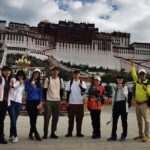
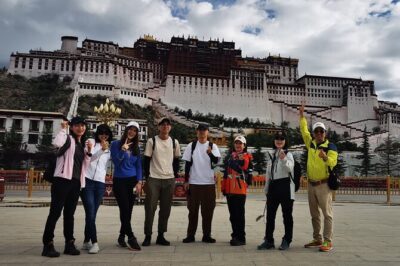
Day three is the high-attention day in Lhasa. Potala Palace is your morning focus, and it is framed in the tour as the Dalai Lama’s winter palace. Walking the site gives you that classic Lhasa skyline feeling, and it is easy to see why this place is so central to the city’s identity.
After lunch you visit Jokhang Temple, described as the most sacred temple in Tibet, built in the seventh century. The highlight is a major sacred statue inside, and even if you are not a devotee, you will feel the reverence around it. Expect two hours here, so you can look closely and still absorb the atmosphere.
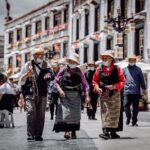
Finish the day with Barkhor Street, a busy ring around the holy area where you can pick up traditional Tibetan souvenirs. This is also where you get quick, real-world texture, because it is not just museum lighting and guided pacing.
A small caution for Lhasa days
The Lhasa portion is packed, with multiple heavy cultural stops on day three alone. If you are sensitive to crowds or long walking sessions, plan to take breaks when you can. Also, be ready for altitude differences even within Lhasa, since you are already at elevation before the trek begins.
The Lhasa to Shigatse Route: Yamdrok Yumtso, Glaciers, and a Strong Stop in Gyantse
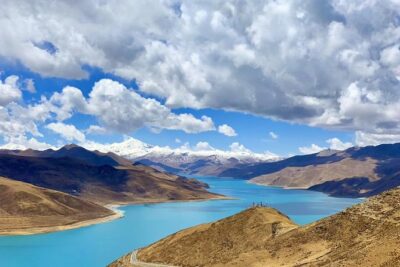
Day four turns travel time into sightseeing time, which I really like. Your drive includes Yamdrok Lake (Yamdrok Yumtso), described as a holy lake with stunning scenery on the way to Shigatse. You only get about an hour there, but it is exactly the kind of stop you want on a road trip, a place to pause and take photos before the next pass and monastery shift.
You also pass by the Karola Glacier on the roadside, with the tour noting it is about 300m from the main highway. This is not a long hike, but it is a memorable view, especially if the light is good.
Then you reach Pelkor Chode Monastery in Gyantse. The tour calls out its intact murals and statues, and two hours is a fair block to take in detail without feeling like you are rushing a checklist.
What to watch for on this day
The main drawback here is fatigue from the drive. Even when the scenery is strong, you still sit for long stretches. Bring layers for temperature shifts, and keep hydration in mind since you will already be moving at altitude.
Into the Everest National Nature Reserve: High Passes and Base Camp Camping
Day five is one of the biggest “this is serious now” days. You visit Tashilunpo Monastery, noted as the home of the Panchen Lama, then you continue toward Lhatse. The itinerary frames this as a long driving day with mountain passes and a gradual shift toward the Everest National Nature Reserve.
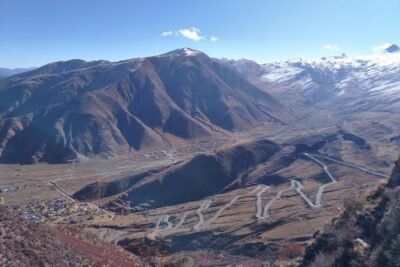
Along the way you cross Tsola Pass (4,600m) and Gyatsola Pass (5,248m). Those numbers are not trivia. They are why your pace matters and why you should take altitude seriously even if you feel fine at first.
Then you enter the Mt. Everest National Nature Reserve, with panoramic views highlighted by the tour description. On the ground, this is the day where the “big mountain” feeling starts to dominate.
Everest Base Camp sunrise, then Saga and Shishapangma views
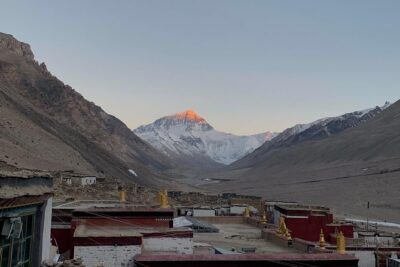
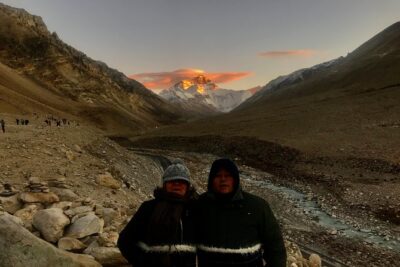
Day six includes a chance to rise early for sunrise at Everest Base Camp, with timing dependent on weather. I like that the tour is honest about that variable. If conditions are clear, you can get a moment that feels almost unreal. If not, at least you are still moving through a high-altitude area with dramatic views and stops.
After the Base Camp moment, you drive to Saga. You pass Peikucuo Lake, and the tour notes views of Mt. Shishapangma (8,012m) on the way. That is a strong bonus because it keeps your day from feeling like one single viewing window.
The value of including oxygen
This is where the included oxygen tank matters most. It is not a guarantee against altitude, but it is a sensible add-on when you are crossing passes and spending time high. Combine that with the provided sleeping bag and it signals that the operator is planning for conditions you cannot fully control.
The Long Road to Kailash: Patience Pays Off
Day seven is a full travel day toward Kailash, and the itinerary tells you to expect a lot of time on the road. That sounds vague, but it is common in far western Tibet because distances are huge and options are limited. The promise here is that you get mountain views along the way, both to the south and north across Trans-Himalayan scenery.
This is also the day where your mental approach matters. Treat it as part of the experience, not downtime. On long drives you start to notice how quickly the terrain changes, and how different the sky feels at altitude.
Accommodation on these days stays bundled, with the tour including hotels and other listed lodging types. Exact room types are not spelled out in the details you provided, but you should expect a mix based on your location and altitude.
Kailash Kora Trek: Eco-Bus, Porters and Yaks, and the Dromala Pass Challenge
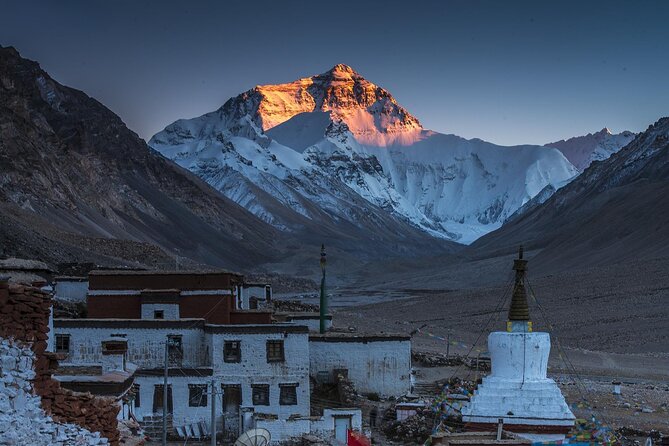
Days eight through ten are the core of the trip. This is where you leave the comfort of road travel and do the Kora trek.
Day 8: Eco-bus to Sarshung Valley and the trek start
You take an eco-bus to Sarshung valley, included in the cost, then start trekking from there. The plan includes meeting porters and yaks at Sarshung Valley. Importantly, the itinerary mentions that hiring yaks and horses involves cost, so assume that any animal assistance is not automatic unless you arrange it through the trek side.
Tactically, day eight is about finding your rhythm. You are heading toward the high point of the route, so keep effort steady rather than sprinting early.
Day 9: The hardest day, Dromala pass at 5,630m
Day nine is the tough one, built around climbing the Dromala pass (5,630m). After a brief break at the top, you descend into the long valley for lunch stops. This is a day where your body is in charge. Even if you have good fitness, you will feel the altitude.
The best way to handle this day is to keep your pace conservative and use breaks strategically. Short pauses help. Deep breaths help. Over-exerting on the climb is the easiest way to feel miserable later.
Day 10: Manasarovar, an easier trek segment, and finishing the Kora circle
Day ten is described as an easier trek day. You complete the Kora with a 9km trek, then take the eco-bus back to Darchen.
You also visit Lake Manasarovar, and the tour shares the belief that completing a kora around the holy mountain for one circle can rid sins. Whether you view it spiritually or culturally, you will still feel why people make the journey. The setting makes the walking meaningful.
Trek logistics that the tour actually helps with
The tour is set up so you have structured start points, named passes, and defined pickup and drop transport by eco-bus. That reduces confusion and keeps the trek from turning into a self-navigation project.
Also, the tour provides a sleeping bag, which you will value on nights tied to tented or colder accommodations, especially during the Everest and Kailash sections.
Sakya and the North Route Back to Lhasa: Less Famous, Still Memorable
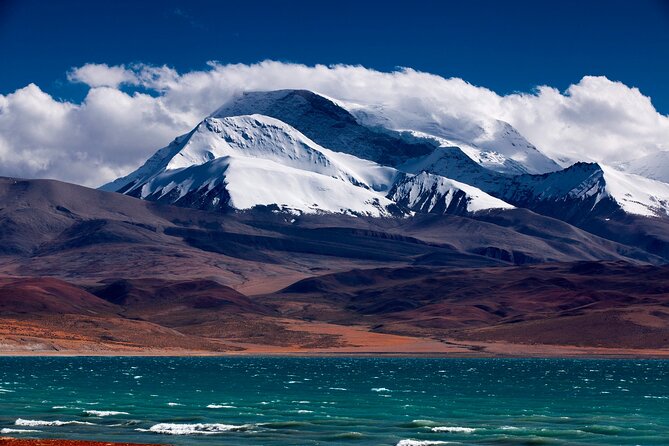
Day eleven shifts back to driving, from Zhongba to Lhatse. The itinerary says there are no major scenic stops planned, but you still get endless scenery and crossing 7 high mountain passes, plus unnamed lakes and rivers. This is the kind of day that can feel monotonous at first, then suddenly turns into a favorite because you realize you are seeing the real Tibet beyond the postcard stops.
Day twelve brings you to Sakya Monastery, described as the main monastery of the Sakyapa, built in the 1360s. The walls around the monastery are noted as having partially preserved paintings and carvings in the itinerary description, and the stop gives you a change of spiritual scenery from the Gelug-dominant Lhasa days.
Day thirteen is a long drive back to Lhasa via the northern route along Yarlung Tsangpo valley. You also stop in Nyemo to visit a Tibetan incense workshop. This is a nice shift toward crafts and small local production, and it gives you something you can take home beyond photos.
The Lhasa Free Day and the Wrap-Up Transfer
Day fourteen is free time in Lhasa, with your guide available. The tour notes that if you want extra activities, they need approval from other members. That tells you two things: your free day is flexible, and you are still traveling as a group.
Day fifteen ends with a transfer to either Lhasa airport or the railway station, depending on your next route.
Price and Logistics: Does $2,280 Really Add Up?
At $2,280 per person for a 15-day trip, the price looks steep at first glance. But when you compare what is included, it starts to feel more rational than it appears.
Your tour cost includes:
- Hotels, guesthouses, and nomad tent style accommodation as listed in the plan
- A licensed vehicle with parking and gas
- An experienced local English-speaking guide
- All entrance fees named in the itinerary
- Permits for Tibet, plus express delivery fees for the permit
- Oxygen tank for emergencies
- Sleeping bag
- Two bottles of mineral water per person per day
- Shuttle bus fees to Kailash and back (USD 10 per person each way)
- Airport pickup and hotel transfers, including Lhasa railway station transfer on first and last day conditions
The biggest thing you are paying for is not the scenery itself. You are paying for the coordination of permits, vehicles, timed entries, and the very specific Everest and Kailash route structure that requires real planning.
What is not included matters too. You will handle tourist travel insurance, your personal expenses, and any meals not specified by the included breakfast count. It also does not include your flight or train to and from Tibet.
My take: this price is best if you want less stress. If you are the type who loves doing permits and ticket hunting yourself, you could build a DIY plan. But for most people, the value is in not having to stitch together every moving part.
Also, solo travelers may face a single supplement, since the quote is based on twin rooms. The tour notes an option to match you with another traveler to share twin rooms, potentially reducing that fee.
Who This Tour Fits Best, and Who Might Struggle
This tour fits you if you:
- Want a small-group format with limited group size
- Are comfortable with high altitude travel and have strong physical fitness
- Want the full combo of Lhasa culture plus Everest Base Camp plus Kailash Kora in one organized package
- Like having entrance fees and permits handled for you
It may not fit you if you:
- Have difficulty with long drives and multiple high passes
- Prefer a slower pace with fewer packed days
- Are not confident managing altitude, especially around the Kora and high pass day at 5,630m
A quick reality check: this is not just sightseeing. It includes a trek with the hardest day anchored to Dromala pass and a very different kind of day-to-day rhythm.
Should You Book This Everest and Kailash Tour?
If your dream is to do Everest Base Camp and Kailash Kora without turning your trip into paperwork and puzzle solving, I think this is a solid choice. The operator bundles the hard parts: permits, entrance fees, oxygen for emergencies, and the trek transport structure. With a strong rating and high recommendation rate, this tour also signals that most people feel it delivers on the promise.
My advice is to book only if you can honestly handle the physical side. Be ready for high-altitude days, long driving segments, and the Kora pass challenge. If you meet that test, you are in for one of the most unusual and memorable combinations Tibet can offer, equal parts sacred and demanding.
FAQ
What are the trip start and end arrangements?
The tour starts in Lhasa and ends on day 15 with transfers to either Lhasa airport or the railway station for your next destination.
Are airport transfers included?
Yes. Pickup from Lhasa Gonggar Airport to your hotel is scheduled for 9:30 am, 1:00 pm, and 4:00 pm on the first day. Drop-off from your hotel to Lhasa Gonggar Airport is scheduled for 8:30 am, 12:30 pm, and 2:30 pm on the last day.
How large is the group?
This tour has a maximum group size of 12 travelers.
Does the tour include Tibet permits and required documents handling?
Yes. The tour includes all necessary permits to Tibet and an express delivery fee of the Tibet Travel Permit. You are required to provide copies of your passports and China visa in advance.
Is oxygen provided for emergencies?
Yes. An oxygen tank for emergency use is included.
What sleeping and trek gear is included?
A sleeping bag is included. The tour also includes eco-bus transport related to the Kailash portion as described in the itinerary.
Are entrance fees and breakfasts included?
Entrance fees listed in the itinerary are included. Breakfast is included on 10 mornings as stated in the inclusions.
If I cancel, is it refundable?
No. The experience is non-refundable and cannot be changed for any reason.
Is there an extra cost for solo travelers?
Yes. The quote is based on twin rooms, so solo travelers pay a single supplement at booking. The tour says it will try to match solo travelers to share a twin room, and then the single supplement can be refunded.
More Tours in Lhasa
More Tour Reviews in Lhasa
More Of The Plateau
Lhasa, reviewed one booking at a time
- 8 Day Tibet Classic Tour
★ 5.0 · 5 reviews - 15 Days Mt Everest and Mt Kailash Kora Pilgrimage Group Tour
★ 4.5 · 17 reviews - Private Guided Day Tour Potala Palace and Sera Monastery
★ 5.0 · 22 reviews - 4 Days Lhasa City Essential Group Tour
★ 5.0 · 25 reviews - Tibet Tour 8 Days Lhasa to Everest Base Camp Small Group Tour
★ 5.0 · 578 reviews
Lhasa & the Tibetan Plateau, compared.
 ★ 5.0Tibet Tour 8 Days Lhasa to Everest Base Camp Small Group TourFrom $949578 reviews
 ★ 5.07 Days Lhasa to Kathmandu Overland Small Group Tibet Tour via EBCFrom $989188 reviews
 ★ 5.010 Days Tibet Everest Base Camp and Namtso Small Group TourFrom $1,329108 reviews
 ★ 4.54 Days Lhasa Impression Small Group TourFrom $50967 reviews
 ★ 5.06 Days Central Tibet Culture Small Group TourFrom $79953 reviews
 ★ 5.08 Days Lhasa Gyantse Shigatse Mt Everest Group TourFrom $1,10052 reviews
 ★ 5.04 Days Lhasa City Essential Group TourFrom $60525 reviews
 ★ 5.0Private Guided Day Tour Potala Palace and Sera MonasteryFrom $74522 reviews
Browse the lists this tour appears in