
REVIEW · LHASA & THE TIBETAN PLATEAU
Tibet Tour 8 Days Lhasa to Everest Base Camp Small Group Tour
Tibet can feel like a world of its own. This small-group Lhasa to Everest Base Camp tour strings together classic Lhasa monasteries, major road views, and the big payoff at Everest Base Camp, all with a guide to keep things smooth. I especially like that the trip handles the heavy lifting for you, with permits, entry tickets, and key transport built in. One thing to weigh: you are driving long days at altitude, so you’ll want a realistic plan for stamina and weather.
What works best is how the days are paced around the sites you actually want, not a random checklist. You get morning classics like Potala Palace and Jokhang Temple in the heart of Lhasa, then monastery visits like Sera with the monk-debate vibe timed in the afternoon. I also like the practical touches for comfort, including an oxygen cylinder in the vehicle and winter warmth support at the Rongpuk guest house window (Nov 15 to Feb 15). The only drawback I see is that lunch and most dinners are not included, so budget extra meal stops and keep your energy up.
You’ll travel by comfortable van or minibus with an experienced local driver, in a group capped at 12 travelers, which is small enough to ask questions and get help quickly. If you prefer a “figure-it-out” trip, you might find the structure limiting. If you want Tibet to feel organized but not rushed, this is a strong match.
In This Review
- Key highlights to know before you go
- Price and what $949 really covers
- The structure: how an 8-day Lhasa to Everest Base Camp trip stays manageable
- Day 1 in Lhasa: arrival support and that first river drive
- Potala Palace, Jokhang Temple, and Barkhor kora: the Lhasa hits in one day
- Drepung, Sera, and the monk debate window that actually matters
- Road day to Gyantse and Shigatse: Gampala Pass to Yamdrok Yumtso
- Everest Base Camp day: permits, passes, and a long 12-hour push
- Rongbuk Monastery and the sunrise viewpoint: the calm before the Everest moment
- Shigatse culture on the return: Tashilunpo and the Panchen Lama seat
- Winter care and oxygen: two practical comfort layers that matter at altitude
- Included accommodations and meals: what you get, what you need to budget
- Who this tour suits best
- Should you book this Tibet Vista 8-day tour?
Key highlights to know before you go
- Small group size (max 12) means easier guide access during busy stops
- Permits and logistics included help you avoid the most stressful admin
- Oxygen in the car and winter warmth support at Rongpuk can take the edge off
- High-altitude road route includes major passes like Gampala Pass (4,790m) and Gyatsola Pass (5,248m)
- Everest Base Camp day is long but designed around the drive and key viewpoints, including Echo bus access
- Guided religious sites like Potala, Jokhang, Barkhor kora, Drepung, Sera, and Tashilunpo make context easier
More of the plateau, reviewed
- Tibet Tour 8 Days Lhasa to Everest Base Camp Small Group Tour★ 5.0 · 578 reviews
- 4 Days Lhasa City Essential Group Tour★ 5.0 · 25 reviews
- Private Guided Day Tour Potala Palace and Sera Monastery★ 5.0 · 22 reviews
- 15 Days Mt Everest and Mt Kailash Kora Pilgrimage Group Tour★ 4.5 · 17 reviews
Price and what $949 really covers
At $949 per person, this tour is positioned as a “pay once, travel calm” package. The big value is that you’re not just buying a bus ride. You’re also buying the parts that can eat your time in Tibet: getting the Tibet Travel Permit and necessary permits (excluding the China L visa), entry tickets for the sites listed on the route, accommodations with breakfast in Lhasa and Shigatse (twin-sharing), and airport or train pickup and drop-off to get you into the trip without extra arranging.
You should also be clear on what’s not included. Lunches and dinners are excluded in general. The plan includes only one welcome dinner when you meet the group in Lhasa, plus one lunch included. That matters because on long driving days, you’ll want to avoid getting stuck hunting for food. If you’re the type who likes predictable meals, plan for this ahead of time.
Also check your room situation. The price is based on double occupancy. If you want a single room, there’s a single room supplement that depends on availability.
The structure: how an 8-day Lhasa to Everest Base Camp trip stays manageable
This route is built as a sequence of “big moments” plus the in-between travel needed to reach them. You start in Lhasa, then gradually move through Shigatse and the road corridor toward Everest. The itinerary avoids the classic mistake of stacking too many major stops into one city. Instead, you get dispersed highlights across days, which is exactly what a place like Tibet requires.
You’ll typically travel by comfortable van or minibus with a local driver, and gasoline is included. Drinking water is provided during the trip, and there’s a Tibet handy map in the package. These are small items, but they reduce friction when you’re tired from altitude and long sight drives.
Your group size also changes the experience. With up to 12 travelers, you’re less likely to feel like a number in the back of the van. It’s easier for your guide to answer questions, handle timing, and keep the rhythm of the day aligned.
Day 1 in Lhasa: arrival support and that first river drive
Your first job is simple: arrive. On landing at the airport or on train arrival, a Tibetan guide meets you and transfers you to a downtown Lhasa hotel. Along the way, you pass the Yarlung Tsangpo River scenery, which helps you start feeling like you’re in a real place, not just a waiting room for next day’s sightseeing.
This day is intentionally light. That’s smart because altitude can make normal things feel harder. Even if you feel fine, you’ll likely appreciate having time to settle in, hydrate, and adjust.
Potala Palace, Jokhang Temple, and Barkhor kora: the Lhasa hits in one day
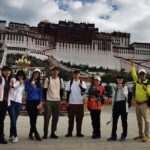
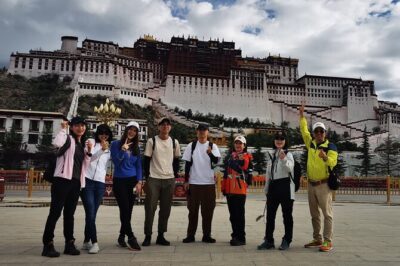
Day 2 is classic Lhasa, done in a way that keeps context intact. You go first to Potala Palace, described as the winter palace of the Dalai Lama, used since the 7th century by the 33rd great king of Tibet. Standing there, you get the sense of continuity, power, and belief in one tight geographic cluster.
Then it’s to Jokhang Temple, founded in the 7th century. Inside, you can see the statue of Buddha Sakyamuni at age twelve, and around it you’ll feel why this temple matters to daily Tibetan life, not just tourists.
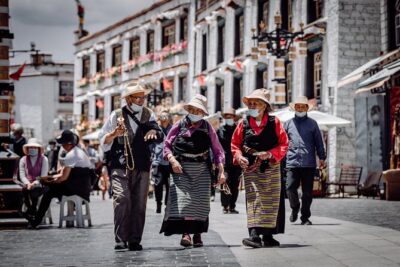
Your route ends at Barkhor Street, where you can join a kora (a religious circuit around the temple) with pilgrims and locals. This is also where you can explore the old market and taste Tibetan tea with locals. I like this stop because it’s not “one more photo.” It’s a living ritual, and your guide helps you understand what you’re looking at.
Practical note: the plan gives time blocks for each stop, but you’ll still want comfortable walking shoes. Lhasa old streets can be uneven, and your energy may vary day to day.
Drepung, Sera, and the monk debate window that actually matters
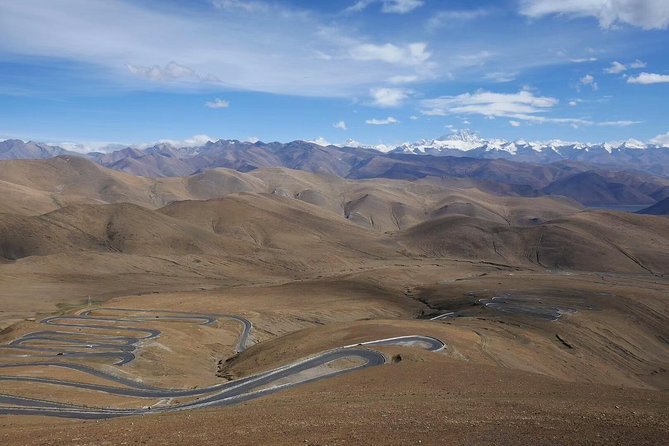
Day 3 leans religious, but in a way that gives you more than just impressive buildings. First you visit Drepung Monastery (Zhebang Si). The plan also includes Dadong Village, described as a well-protected ancient Tibetan village about 25 kilometers southwest of Lhasa. That mix is useful. You’re not only consuming monuments. You’re also seeing how Tibetan heritage lives beyond the main city sites.
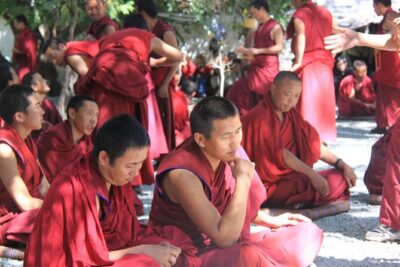
In the afternoon, you go to Sera Monastery, one of the “great three” Gelug monasteries of Tibet. The standout here is the monks debating around 3 to 5 in the afternoon. If you’ve only ever seen monasteries as quiet, this gives you the human energy of study and argument, the way tradition can be active rather than static.
A small warning: debate timing can depend on local schedules and conditions. Your guide can help you time it correctly, but keep your expectations flexible. The payoff is still strong because you’re watching something specific, not just wandering halls.
Road day to Gyantse and Shigatse: Gampala Pass to Yamdrok Yumtso
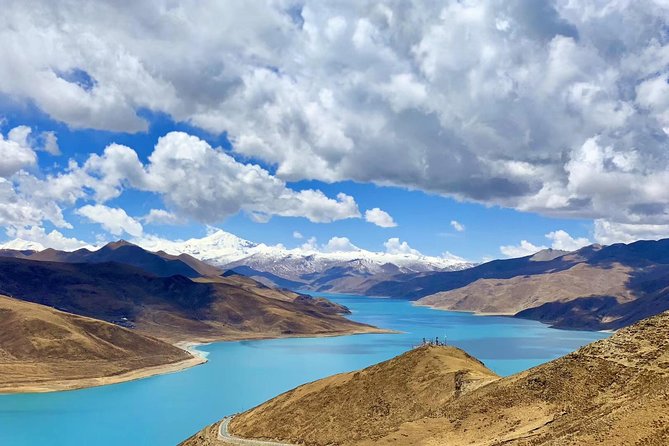
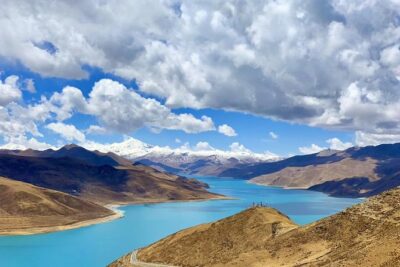
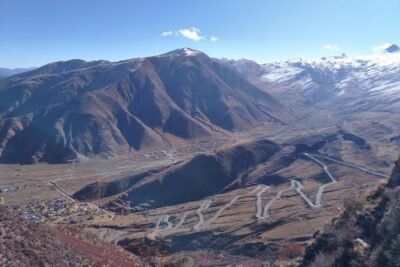
Day 4 is one of those days that defines the Tibet road experience. You leave Lhasa toward Shigatse, and on the way you cross Gampala Pass (4,790m). Then comes Yamdrok-tso, a lake around 4,400m. It’s framed in the plan as surrounded by snow-capped mountains, and the stop is short but scenic.
Next up is Karo La Glacier on the roadside. The itinerary also mentions a pause at Manak Dam Lake, a chance to hang prayer flags at Simila Mountain Pass, and then arrival in Gyantse, Tibet’s third largest city after Lhasa and Shigatse.
Gyantse time is not just a drive-by. You visit Pelkor Chode Monastery, see Gyantse Kumbum, and get far views of Gyangtse Fortress. These pieces work well together because they show architecture that blends into route travel. You’re not only reaching a destination. You’re seeing Tibetan culture shaped by geography.
Then you continue to Shigatse after about 1.5 driving hours from Gyantse, and Shigatse becomes your base for the next stage.
Trade-off to understand: this is still a long day on the road. If you’re prone to motion sickness, prepare for it. If you’re okay with scenic driving, it can feel like the tour is constantly rewarding you with new views.
Everest Base Camp day: permits, passes, and a long 12-hour push
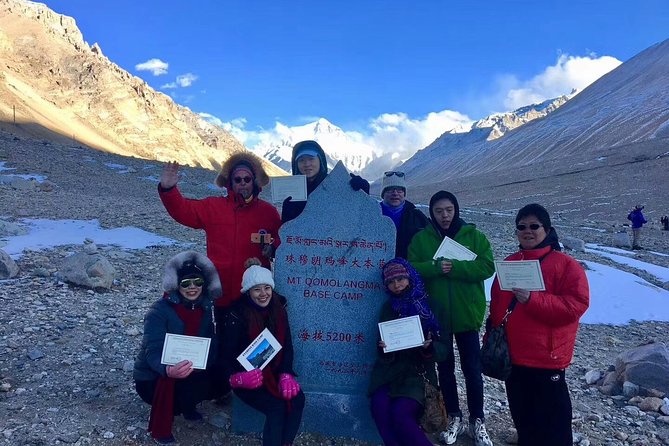
Day 5 is the big one, and it comes with a clear rhythm. Before heading toward Everest area views, you handle your Alien’s travel permit (as described in the plan) and then drive to Lhatse for lunch. The tour then goes over Tsola Pass (4,600m) and Gyatsola Pass (5,248m) before entering the Mt. Everest area.
The base camp approach is described as a long day, with about 12 hours total on the day’s stop block. That’s normal for road travel in this part of Tibet, and it’s why earlier days focus on setting you up for the altitude and timing. You’ll want to treat this day like an expedition, not a quick outing.
Also note: the package lists Everest Base Camp Echo bus access as included, plus a platform service fee. That matters because it reduces the amount of scrambling you would otherwise do once you reach the area.
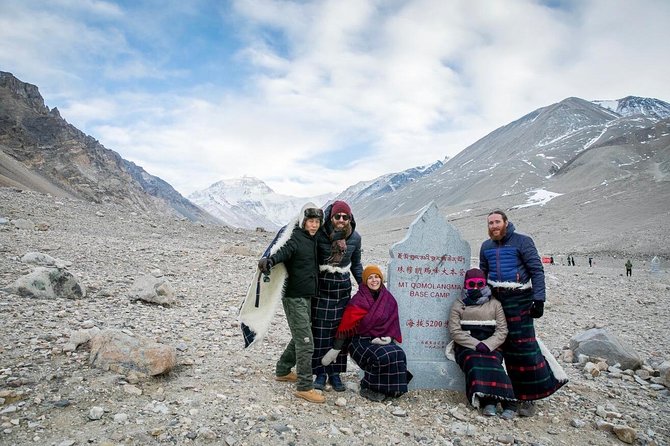
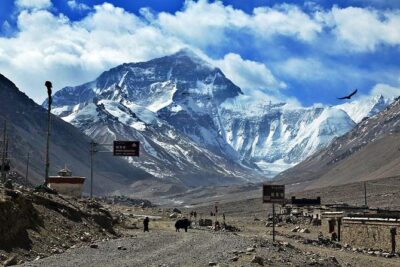
What you should know for the experience itself: you’re going to see Everest from a base camp viewpoint where conditions can shift quickly. Clouds, wind, and visibility can change in minutes. If the weather cooperates, this day can feel life-changing. If it doesn’t, you still get the reality of the region and the effort it takes to reach it.
Rongbuk Monastery and the sunrise viewpoint: the calm before the Everest moment
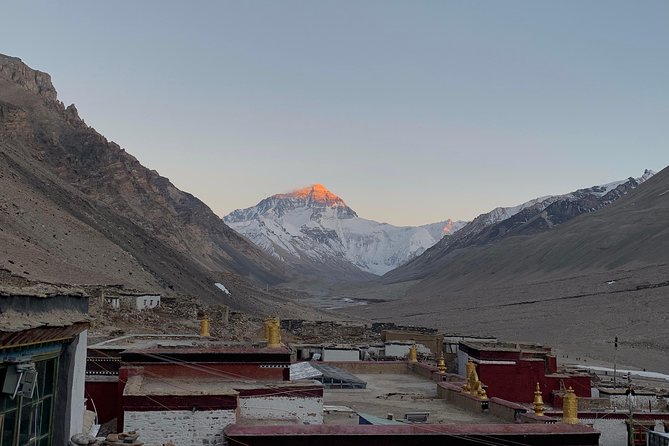
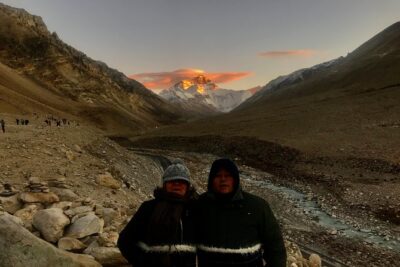
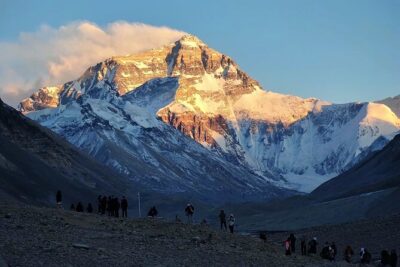
Day 6 is built around a classic idea: see Everest’s profile when the light first starts working. In the morning, you can watch the sunrise appear on top of Mt. Everest from Rongbuk Monastery, with the plan describing a full view of the mountain as a snow-capped pyramid.
The schedule mentions Rongpuk as the vantage point for the region, which helps you understand what your time is for. This isn’t a rushed photo stop. It’s designed to let you sit with the view as the sky changes.
Time block is listed as 1 hour. That tells you what to expect. You’ll likely get a focused, guided window rather than a long hangout. Dress warm. Even if the air isn’t biting where you stand, the combination of altitude and early morning can feel sharp.
Shigatse culture on the return: Tashilunpo and the Panchen Lama seat
Day 7 brings you to Tashilunpo Monastery, described as the seat of Tibet’s second highest incarnation, the Panchen Lama. This day offers a different energy than Lhasa. Lhasa feels like the historic center of political and spiritual gravity. Shigatse and its monastery sit in a wider tapestry, and Tashilunpo gives you another key piece of Gelug tradition.
After the monastery visit, you drive roughly 175 miles (280 km) back to Lhasa by far-enough distance to count as another travel block. The tour doesn’t try to turn this into a second sightseeing spree. It’s mainly about getting you back comfortably.
Winter care and oxygen: two practical comfort layers that matter at altitude
This tour includes two comfort measures that you’ll feel, especially if you travel during colder months or you’re altitude-sensitive.
First, there’s an oxygen cylinder in the car (4L or 7L). It’s not a magic solution, but it’s a real support tool for road days and changing elevations.
Second, the plan includes winter care service from Nov. 15 to Feb. 15, specifically at Rongpuk Guest House, with a hot water bottle and an electric blanket to keep warm. That kind of detail is worth paying attention to because Rongbuk area conditions are often more about staying functional than sightseeing in comfort.
Between oxygen support, provided drinking water, and the vehicle rhythm, you have more ways to manage the day than if you were planning solo.
Included accommodations and meals: what you get, what you need to budget
You’ll stay in Lhasa and Shigatse with hotels that include breakfast and twin-sharing accommodations. That’s helpful because it reduces one more decision you’d otherwise make on a place where planning can be paperwork heavy.
Meals are where you should be ready to manage expectations. The plan clearly states that lunches and dinners are excluded, with only one welcome dinner and one lunch included. On days with long drives, you’ll likely stop for meals en route, but you will still need to pay for most of them.
My advice: build a light strategy. Keep snacks you can tolerate in your day bag. If you’re sensitive to cold food, choose something that works for you even when you’re tired.
Who this tour suits best
This is a good fit if:
- You want Everest Base Camp plus classic Lhasa and Shigatse cultural stops in one organized package
- You prefer a small group where your guide can actually help during busy religious sites
- You’d rather not handle permits and day-to-day transport details
It might be less ideal if:
- You strongly dislike long road days
- You want a high degree of free time with flexible routing
- You’re hoping for meals to be fully included, because lunches and dinners are not
Also, the tour notes that travelers should have moderate physical fitness. That doesn’t mean extreme hiking, but it does mean you’ll be standing, walking, and adjusting to altitude.
Should you book this Tibet Vista 8-day tour?
If your goal is a guided, well-structured Lhasa to Everest Base Camp route that takes care of permits, transport, and major site entry, I’d say it’s a smart way to go. The combination of a small group (max 12), an English-speaking guide, and practical altitude support (oxygen in the vehicle and winter warmth at Rongpuk) makes this feel less like a gamble and more like a planned expedition.
I’d book it if you like having the schedule done for you, especially on the Everest road day where timing and logistics really matter. I wouldn’t book it if you hate fixed plans or you need fully included meals every day.
If you’re aiming for your Tibet experience to be authentic and meaningful without turning your trip into paperwork and logistics, this is the kind of tour that can get you there with fewer headaches.
More Tours in Lhasa
More Tour Reviews in Lhasa
More Of The Plateau
Lhasa, reviewed one booking at a time
- 8 Day Tibet Classic Tour
★ 5.0 · 5 reviews - 15 Days Mt Everest and Mt Kailash Kora Pilgrimage Group Tour
★ 4.5 · 17 reviews - Private Guided Day Tour Potala Palace and Sera Monastery
★ 5.0 · 22 reviews - 4 Days Lhasa City Essential Group Tour
★ 5.0 · 25 reviews - Tibet Tour 8 Days Lhasa to Everest Base Camp Small Group Tour
★ 5.0 · 578 reviews
Lhasa & the Tibetan Plateau, compared.
 ★ 5.07 Days Lhasa to Kathmandu Overland Small Group Tibet Tour via EBCFrom $989188 reviews
 ★ 5.010 Days Tibet Everest Base Camp and Namtso Small Group TourFrom $1,329108 reviews
 ★ 4.54 Days Lhasa Impression Small Group TourFrom $50967 reviews
 ★ 5.06 Days Central Tibet Culture Small Group TourFrom $79953 reviews
 ★ 5.08 Days Lhasa Gyantse Shigatse Mt Everest Group TourFrom $1,10052 reviews
 ★ 5.04 Days Lhasa City Essential Group TourFrom $60525 reviews
 ★ 5.0Private Guided Day Tour Potala Palace and Sera MonasteryFrom $74522 reviews
 ★ 4.09 Days Lhasa Gyantse Shigatse Everest Namtso Group TourFrom $1,44321 reviews
Browse the lists this tour appears in